
Too Many Notebooks (Or Anything Else)? Don’t Kill Your Stuff—Transform It
Use the container concept to learn how to keep only what fits
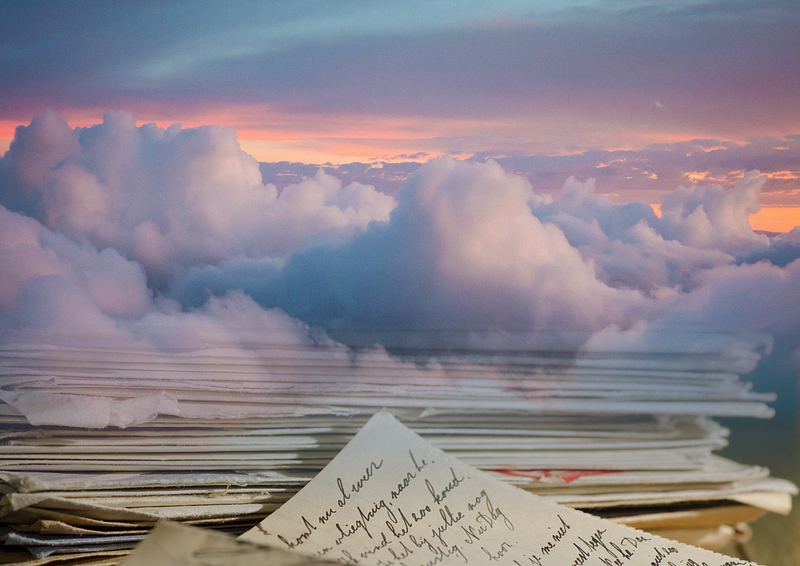
When I was studying for my Bachelor of Design, everything we did relied on paper.
Typesetting, photos, plans, paintings, prototypes, presentations — all of it required varying grades and textures of pressed, stretched, and finished tree fibres. This was the late 1980s, when CDs looked like impossibly small, silvery vinyl records and Apple computers were nothing more than a novelty. Paper was king and we, its loyal subjects.
How could we have known that the tsunami of the digital revolution was taking its first quiet inhale?
Those deceptively still waters were still a curiosity to be explored by an adventurous few. On its way was a slow-motion digital deluge that would change not only the world of design, but every industry that transmitted information and remembered things by making marks on paper.
In those initial, heady days of digital discovery, being paperless wasn’t yet possible. Some people dove head first into the waves while others, unable to see the point, held back.
I mean, who could guarantee that those unholdable bleepedy-blips wouldn’t disappear right when we needed them?
Killing Me Softly, Saving My Soul
Three decades later we’re at the point where if you’re using paper on a daily basis — some vocations excluded — it’s almost certainly a conscious choice.
You now have more options than time to explore them all, so if you’re using analog over digital, it’s because that’s what you want to do. Maybe you or someone you know has even gone full circle, returning to analog because of digital overload.
Analog overwhelm is also a real thing, I’ve discovered, even in a mostly digital world.
Browsing for new notebooks was something I used to do for fun, but as the books I welcomed into my inner sanctum became my friends, stacks and boxes of them began to take over the spaces that visual and mental peace used to inhabit.
Paper in general and notebooks in particular had become a weight I no longer wanted to carry, but how do you even start to think about evicting — or worse, killing — your papery friends?
Softly, that’s how.
You stand at the scanner whispering soothing words and gentle promises of digital perpetuity, then you hold their papery hands all the way to the shredder, incinerator or compost heap. It’s okay, you croon — your soul is safely where it belongs.
Whovians: River Song will look after you.
Hogwartians, repeat after me: there’s no such thing as a horcrux for us mere muggles.
If you’re drowning in files of paper, diaries, journals and daily notebooks, identify and store the ones you value most, then gently, lovingly, remove or transform the rest.
Apps that can help
- Scanner app, upload to your cloud service of choice
- Annotate your photos right there in your photos app
- Evernote
- Notejoy
- NeoFinder — go check this one out if you’re looking for a free DAM app
Paper That Really Matters, and Paper You Love — Keep Only What Fits
Your life is made up of a series of nesting containers.Your body is one, and so is your brain, but decluttering those is a topic for another day!
Start with viewing your house, and each room in it, as a container. Each shelf, cupboard, and surface in your home is also a type of container.
The container concept as defined by Dana White invites you to define the boundaries of your house, rooms, shelves, and stay within them.
You get to keep anything you want, as long as it —
- adds to, not detracts from the tranquility of your home
- has enough breathing space around it to not looking like a trash heap, and to be easily retrievable.
I’m going to state the obvious here and say that the purpose of containers is to contain things. Contain, as in impose boundaries upon. When things are appropriately contained, they aren’t busting at the seams of their containers, or piled on top or at the sides of them, pretending they belong.
Whatever size house and room containers you’re dealing with, take a look at the space taken up by the paper your past self once marked as keepable.
You probably have papers that fall into several of these categories:
- Legal
- Historical
- Sentimental
- Creative
- Temporary (pictures the children in your life drew last week, visual cues (eg. post-it notes), your current notebook or scratchpad)
So you have your papers, and you have your containers. Put the former into the latter, and stop when they’re pleasantly full. Not overfull.
If there are things left over, the game goes like this: one thing in equals one thing out. Keep doing this and your priorities will reveal themselves fairly quickly.
But it feels too hard! I can’t do it!
A note from someone (me) who’s familiar with emotional trauma being stored in their stuff: when the thought of getting rid of things makes you cry, step back for a moment.
*Deep breath in, slow breath out*
Acknowledge that feelings are feelings and stuff is stuff, and that it is possible to separate the two. Walk away from the piles if you have to, but hold on to that thought and live with it a while.
Turn it over in your mind and allow the thought of it to seep into your lizard brain, spilling over the inflammation as a healing balm; one that’s also a ladder out of that primal pit. When you’re ready to tackle even the first rung, it’ll be there.
While I’m not generally a joy sparker, I once had great success using Marie Kondo’s shaking it out method. I literally just picked up each thing that triggered an emotional response, and shook it with all that I had.
I can’t explain how it works, but doing this helped me break through a barrier that had previously defeated all efforts to un-overflow my containers for decades.
Go Forward and Contain
I still live with piles of paper, and other stuff, but I’m a few rungs further up the ladder than I’ve ever been.
Please be aware that minimalism has been and always will be, subjective. Call it Enoughism if that works better for you.
Peruse your containers with as objective an eye as you can manage to muster. How would a stranger see your piles of stuff? Take a deep breath, then choose to keep what fits, not what’s stopping you enjoying the things you value most.
Remember: what works for paper will also work for other things that might be waiting for their ticket to freedom. I mean, why keep things prisoner in your home if they aren’t serving you?
Transform them! Release them! Bask in the space they no longer take up, and welcome the peaceful creativity that’s just waiting to flow into your life.
If you enjoyed this story and don’t want to miss the next one, click here to subscribe. Not everything I write will be in this genre, but hey, you can always delete and wait for the next one that interests you!
Not a Medium member? Get unlimited access to all the brilliance on this amazing platform for $5 a month (or less, with an annual subscription). Here’s my referral link: it gives me a small commission at no extra cost to you.


