
Beware the Trap of the 2-Minute Rule
Simple ways to stop a million low-priority tasks distracting you from what matters most
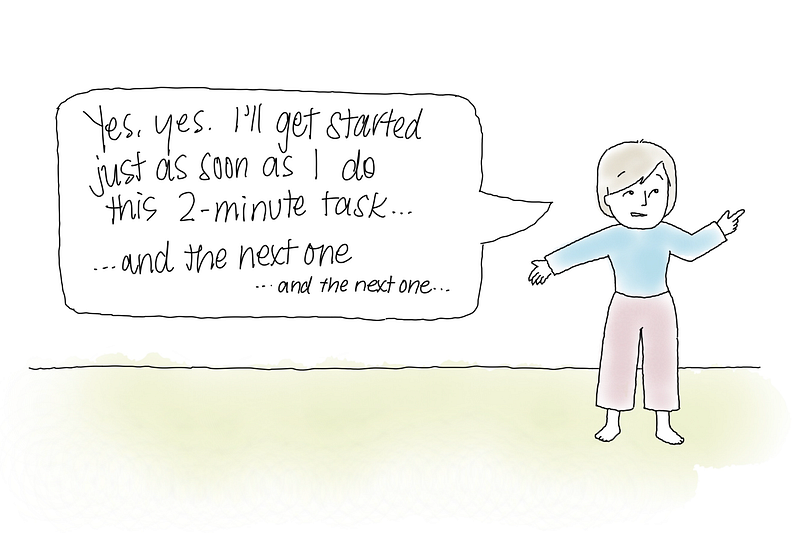
The 2-minute rule is amazingly simple and effective, but misapplied, it can also be a productivity-destroying trap.
In his Getting Things Done method, David Allen describes the 2-minute rule like this:
If it takes less than 2 minutes, then do it now.
James Clear promotes it as a way to beat procrastination and develop good habits. Chris Bailey views it as “a shield that defends your to do list from unimportant things”.
Sounds good! So what’s the problem?
The Problem: Lack of Vision
Since discovering this rule, I’ve looked at the world differently. Everything, and I mean everything can be broken down into 2 minute chunks! Especially the fun stuff that I’d rather be doing instead of eating that elephant.
There’s no end to the number of attractive tasks that seem useful, that can be done in 2 minutes or less.
I don’t mean to boast, but I’m magnificently capable of flitting from one 2-minute task to the next, without ever going overtime on any one of them.
Oh, you should see me in action!
With almost no effort I can fill the whole day with a disjointed mass of things that have me dancing around the edges of where I need to be, without getting closer to the core of it.
Here’s a brief sampler of things I can do in less than 2 minutes:
- Tweak my Obsidian planner (again)
- Floss my teeth
- Check out Design Seeds for more colour inspiration
- Stretch my hamstrings
- Sketch ideas for my next wisdom-quote poster
- Practice one piano scale
- Clean my keyboard and trackpad
You see the problem?
I’m a solopreneur and I work from home. The 2-minute rule can be my downfall, if I let it. If I don’t truly understand or apply it properly.
The Solution: Keep Your Eye on the Mark
The true nature of the problem relates to the vision I have — or don’t have — for what matters most. When I’m crystal clear about where I’m heading and why, all those 2-minute distractions fall into their proper place.
This is why I run all my mini-tasks through a filter. It only takes seconds and quickly tells me whether that task will be a good use of my time.
It looks something like this:
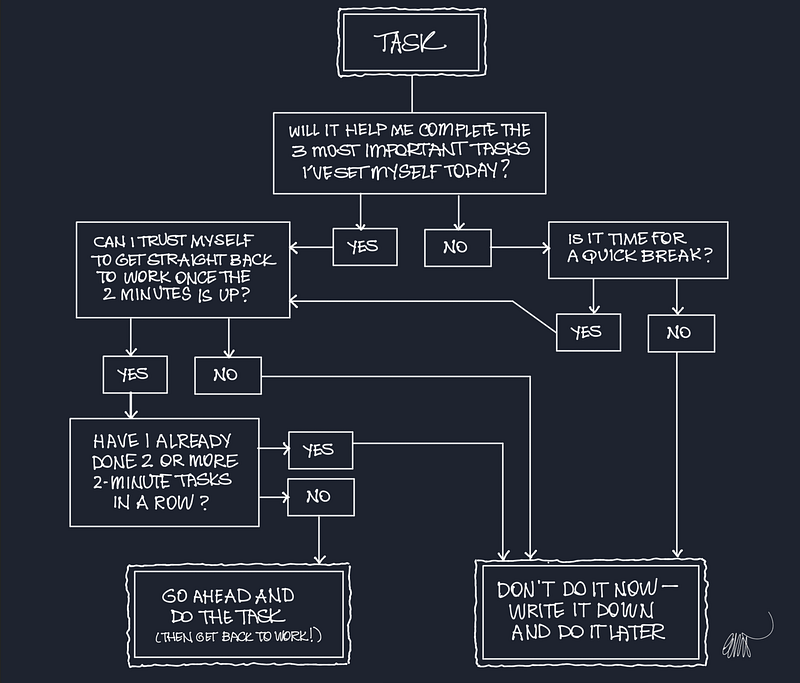
To avoid misapplying the 2-minute rule, I follow these three steps:
- Define my 3 most important tasks of the day (MITs)
- Tackle the hardest task first
- Be intentional and honest when micro-tasks pop up
A tip I learned from my senior high school history teacher serves me well to this day: when stopping to cut your toenails seems more important than the essay due tomorrow, write it down. Keep a running list of every task that’s distracting you from what you know you need to be doing and don’t let yourself do them until it’s done!
Mr Stewart also taught us about the importance of getting a good night’s sleep and taking time for fun and relaxation. It’s not about working non-stop; it’s about making steady progress toward what matters most, and not letting 2-minute tasks lure you into the procrastination/distraction trap.
Used Well, the 2-Minute Rule is a Powerful Thing
In truth, I’m a huge fan of the 2-minute rule. I love establishing powerful habits with a few quick actions, repeated.
If someone asks me to do something that’s only going to take 30 seconds, and says “Not now, just whenever you have time,” I’ll stop what I’m doing more times than not, and just get it done.
If I don’t, it becomes one more thing I have to schedule in and remember to do later.
That’s very different from the procrastination trap made from the sticky bait of “I’ll just take a two minute break from this task I want to avoid.” Two minutes can easily blow out into ten or twenty, and can lead into a dozen other unrelated tasks.
Summary (and a Book Recommendation)
When the 2-minute rule stops working, the actual issue is lack of vision. When you have a clear image of where you’re going and why, you’ll tackle each step, searching for ways over each obstacle instead of seeking distractions from them.
You’ve heard of James Clear’s Atomic Habits, but have you seen The Four Maps of Happy Successful People by Robert Allen? It teaches a unique approach to finding your vision and programming your mind to stick to it.
For a few months, I drew the four maps almost daily and found them a powerful influence on my thinking. Even though it’s been a while, I still remember and benefit from the vision they helped me define.