
Tompion
A butt plug for bears?

Today’s New York Times Spelling Bee letters:
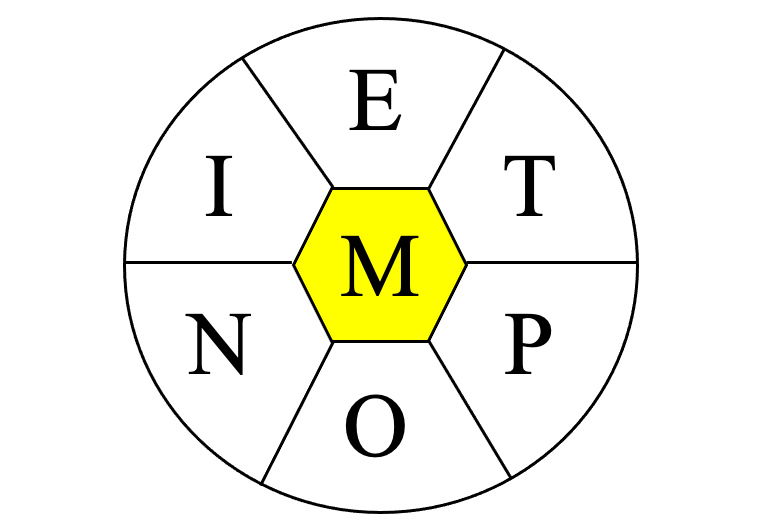
E, I, N, O, P, T, and center M (all words must include M)
Merriam-Webster says…

Silly little dictionary! Don’t you know that tompion can’t possibly be a word if The New York Times says it ain’t?
For a complete list of rejected words, check out the Spelling Bee Master.
What’s your favorite dord* from today’s puzzle?
My Two Cents
When I started perusing the list of today’s rejected words, courtesy of the Spelling Bee Master, I did not think I’d end up writing an article about bears using butt plugs. Which, to be fair, was a bit of clickbait, as bears don’t use butt plugs. They prefer regular dildos, obviously.
Just kidding. Maybe? Actually, I have not the faintest clue about the habits of bears when it comes to sexual toys. Roald Dahl does, seemingly, from the description of one in a novel he wrote for adult readers. Yes, the author of Fantastic Mr. Fox; Danny, the Champion of the World; and Charlie and the Chocolate Factory was also quite raunchy when it came to crafting stories for grown-ups.
Speaking of butt plugs, my intensive 15-minute research also revealed a now infamous modern sculpture known as the Buttplug Gnome, created by Paul McCarthy. No, not the Beatle who died and was cleverly replaced so many decades ago ––that’s McCartney, by the way–– but the contemporary American sculptor born in 1945 and, as of this writing, still alive and not replaced with a double.
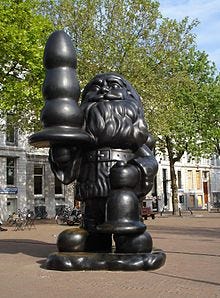
In the same way that officially the title of this artwork is Santa Claus, officially the gnome (or Santa) is holding a Christmas tree. However, the McCarthy has said in interviews that it might as well be a butt plug and that “the sculpture is also about the consumer community — as a commentary on material consumption in the Western world.” If you ever want to see this statue live, you can check it out in Rotterdam, Netherlands.
Back to our daily dord*. So, what is a tompion? And does it really have to do with butt plugs or plugging anything else? Read on to find out!
We are the tampions, my friend
Tompion is a variant of the more common spelling, tampion. And a tampion is…
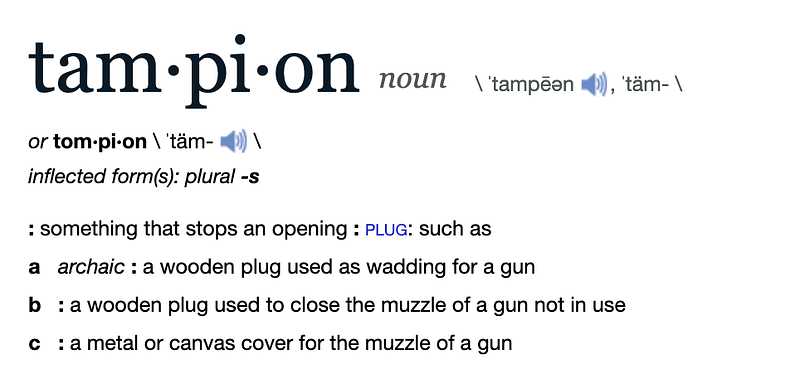
Our friends at Merriam-Webster tell us that the word comes from the Middle English tampion, tampine, tampon, from the Middle French tampon, tapon, meaning “plug”. And according to Robert Simmons’ 1812 guide, The Sea Gunner’s Vade-Mecum, being a new introduction to Practical Gunnery, expressly accommodated to the use of the Royal Navy, tompion (with two o’s) is what the plug is called by sailors of the Royal Navy.
Tompions can be made of a wood, metal, canvas, rubber, or even plastic, and nowadays may have intricate designs and metalwork. Although tompions are used in land artillery, they are typically seen plugging and covering the muzzles of naval guns.
Tompions began as a way to protect ship cannons from rust. When not in action, the barrels were covered by a tompion. A round was left inside, along with some oil. The round would roll back and forth with the waves and keep the inside of the cannon lubricated.
Later developments in naval guns meant that muzzles were constantly exposed to the elements. Simple wooden and rubber tompions were used to cover the ends of the weapons.

Over the years, tompion designs became works of art. They were made of metal and embossed or engraved with military symbols. Today, many of these have become collectors’ items.
The photo below shows the tompions on the British battleship HMS Queen Elizabeth in 1917.

My guess is the two men are congratulating each other on a plug well done.
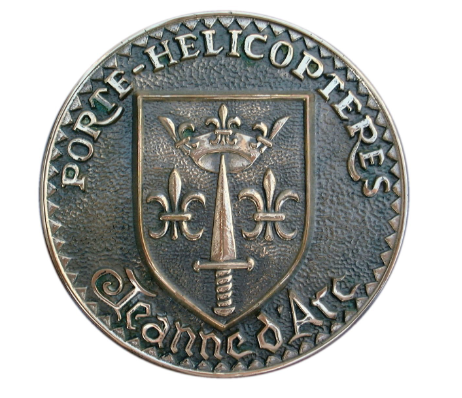
And this is a close-up of a tompion used on the French helicopter cruiser Jeanne d’Arc, which was in service mostly as a training vessel from 1964 to 2010.
Bear with me
I have always been fascinated by hibernation, that state of minimal metabolic activity that some animal species go through, typically in the winter. (Estivation is the equivalent term for summertime dormancy.) Scientists used to exclude bears as true hibernators because their body temperature did not get reduced as much as that of other winter-dormant animals like the ground squirrel, the mouse lemur, and the European hedgehog. (American hedgehogs just go down to Florida for the winter.)
However, over the last decade or so studies have shown that bears go into and come out of their prolonged dormant states due to a combination of environmental and physiological cues. During hibernation, bears recycle their proteins (to avoid muscle atrophy) and their urine, which allows them to not pee for months at a time. Obviously bears neither eat nor drink while hibernating, but live off their stored fat.
But perhaps the weirdest thing about bear hibernation is the fecal plug.
As the National Park Service explains…
It was once thought that bears ate roughage prior to den entrance to scour their digestive tract and form a plug in the anus to prevent them from eating any more food that fall. Actually, the plug, made up of feces, dead intestinal cells, hair, and bedding material, forms during hibernation and not before… Bears continue to produce some feces during hibernation yet they do not defecate… It is possible this plug may keep the bear from defecating inside the den during hibernation as fecal plugs are found just inside or outside the dens of bears that have just emerged.
So what does this have to do with tompions? Well, in Roald Dahl’s novel for adults, My Uncle Oswald, a character describes these fecal plugs using that term:
MY CHEMISTRY TUTOR at Cambridge was called A. R. Woresley. He was a middle-aged, shortish man, paunchy, untidily dressed, and with a grey moustache whose edges were stained yellow ochre by the nicotine from his pipe. In appearance, therefore, a typical university don. But he struck me as being exceptionally able. His lectures were never routine. His mind was always darting about in search of the unusual. Once he said to us, “And now we need as it were a tompion to protect the contents of this flask from invading bacteria. I presume you know what a tompion is, Cornelius?”
“I can’t say I do, sir,” I said.
“Can anyone give me a definition of that common English noun?” A. R. Woresley said.
Nobody could.
“Then you’d better look it up,” he said. “It is not my business to teach you elementary English.”
“Oh, come on, sir,” someone said. “Tell us what it means.”
“A tompion,” A. R. Woresley said, “is a small pellet made out of mud and saliva which a bear inserts into his anus before hibernating for the winter, to stop the ants getting in.”
Granted, bears don’t actually “insert” the fecal plugs in the way one’s wild imagination would picture, but it’s interesting to think of a bear being concerned about ants crawling up its ass while it sleeps for a few months.
Now you know. Next time you’re in the woods and you see a bear emerging from hibernation, you can tell your friends you want to go into the den to check for fecal tompions. Your friends will think you’re crazy, of course. Not because it’s dangerous to explore a bear’s den… but because the editors of the Spelling Bee decided that tompion is a dord*.
You can check out my previous entry on another dord* here:
*What the heck is a dord, you ask? Here’s the answer: