
To Stop A New Dark Age, Australia Must Develop Its Rare Earth Industry
Rare earths are required for all modern electronics — the global community cannot rely solely on China to meet these needs
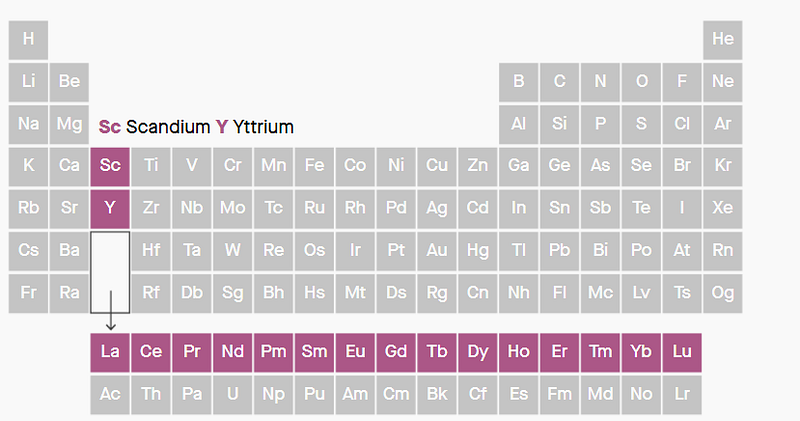
Life in the 21st century relies upon electronics.
Smart phones, electric cars, computers, and colour TVs all form a major part of our day to day existence.
It’s not just consumers and office workers either — our military forces too use them in a myriad of different applications — from fighter jets to missile systems.
All of these technologies are laced with rare earth metals.
There is a major problem with this however: only one major supplier exists in the market.
That provider is China.
Why is this a problem?
With 80% of global market share, China can easily throw a spanner into global supply chains by shutting off supply to countries who displease it.
In fact — its happened before.
In 2010, when the Japanese coastguard had a run in with a Chinese fishing trawler in the contested Diaoyu/Senkaku islands, in the South China Sea, Beijing imposed an embargo on exports of rare earths to Japan.
With the electronics sector being such a key component of the Japanese economy, this understandably caused a lot of alarm.
Japan is not the only one to cross sabres with China however. With the latter being a rising power asserting itself in many arenas— it is increasingly at odds with others in the international community.
Many, including its neighbours (notably India and those bordering the nine-dash-line), Australia, the US, and Europe have roused Beijing’s ire in recent times.
In the event of a hot war — China could easily cut off supplies of these vital elements — crippling the war effort and wreaking havoc in their economies.
Establishing a viable alternative supplier of rare earth metals is a matter of international security.
Why should Australia be the one to act?
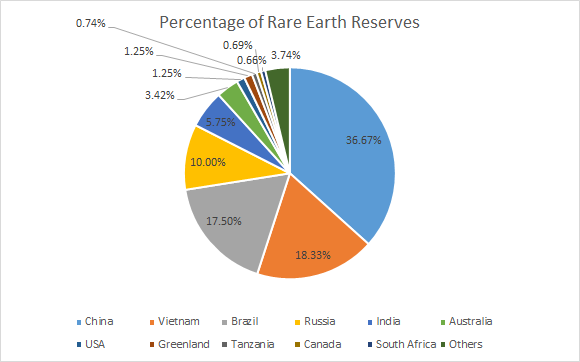
Rare earths — despite the name, are not that rare.
There are a number of countries around the world with sizeable deposits. Australia is sixed among them.
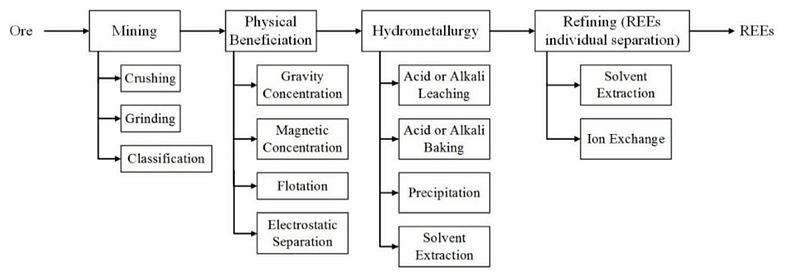
Establishing an industry around it however is not a straightforward activity.
It involves a fraught extraction and refining process, as well as challenges in establishing a profitable business model integrated into global supply chains.
This requires a level of technical sophistication, effective environmental laws, and adequate financial backing. This means that it can easily take over a decade to establish a viable rare earths industry.
This is where Australia is streets ahead of other potential suppliers.
Extracting and Refining Rare Earths
While wide spread, they are not found in heavy concentrations. Further, they are typically found in mines focused on other minerals like iron or gold.
The process of extracting the rare earths from these mixed ores — if not done carefully can cause massive damage to the environment. Soil can be rendered incapable of supporting crops, and contaminated waterways impact fish, birds and all related eco-systems.
Further — a common byproduct of the process is radioactive waste in the form of thorium which must be carefully managed.
“…we must ensure that rare earths are responsibly sourced”
Just as we seek to avoid conflict diamonds, or tuna fisheries who rely on slave labour, we must ensure that rare earths are responsibly sourced.
In Australia — there are a number of already operational businesses across the land. Being a developed nation, we can have greater confidence in the adequacy of laws and regulation governing their activities.
Further diversifying risk — these Australian businesses have set up refineries in Texas, and Malaysia.
Integrating into Supply Chains
Companies like Boeing or Samsung do not make their products by directly shipping rare earths to their factories and assembling them.
Rather — these companies use pre-made parts from their suppliers (based in different parts of the world) who inturn have used rare earths to create their value added products.
Thus, it is not simply a matter for a country like America or Germany to flip a switch and establish local mines and refineries for rare earths. Companies right through the supply chain globally — who use rare earths to build their intermediary components (used by downstream companies) need to switch to sourcing rare earths outside of China.
Once again — this will take time to establish and is not directly within the control of the world’s major defence and consumer electronics manufacturers or their host nations.
Australia’s geographical position near Asia, where many of these manufacturers are based, sees it being well placed to integrate into this part of the global supply chain.
Business Model Volatility
Historically — China’s cheap pool of labour and weak environmental regulation has meant that they could produce rare earths at a very low cost.
This has flooded the market, making it economically unviable for new entrants.
A new entrant must have adequate financial backing from the state, the global community, and investors.
This need not be through direct nationalisation of operators, but also through providing subsidies to actors throughout the local industry.
Australia’s financial markets are mature enough to gain the trust of international investors; and its government’s strong relationships with those in the US, Japan, an Europe sees it as an ideal partner into which they can throw their backing.
The global community can no longer afford to rely on China to provide meet its rare earth related needs.
Given the urgency to ameliorate national security concerns — an alternative must be established as soon as possible.
The complexities involved in establishing a viable rare earths industry mean that the best way forward is to develop it in a country that is already in the game. This country must also have a mature technical, environmental, and financial environment.
This makes Australia the obvious place in which to focus efforts.
What are your thoughts?
Let me know in the comments below!
You may also like:


