
To Protect and Serve All Equally
How openly biased officers have been escaping punishment.
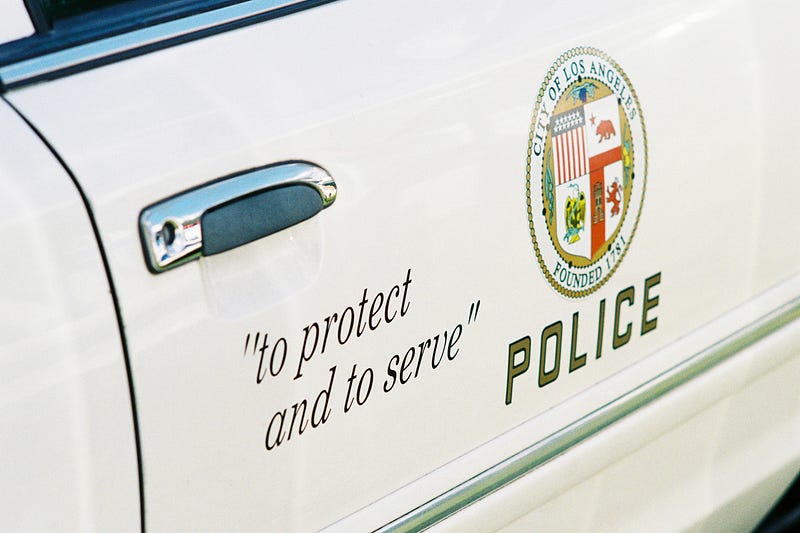
Eyes have seen and ears have heard of all the atrocities and tragedies committed by some law enforcement and most committed with an ill and biased agenda. Law enforcement is supposed to uphold an oath, “to protect and to serve.”
Communities of color have known that law enforcement is infested with officers who do not intend to uphold the oath they pledge to but do everything under its disguise to inflict fear, harm, and danger to their elected prey.
Confirming what the world now knows especially after the global surveillance of the murder of George Floyd by ex-officer Derrick Chauvin with his knee on Floyd’s neck as he choked the last breath out of his body. Thus Floyd’s death was followed by more videos showing how law enforcement had killed other Blacks and/or harmed them.
Recently a state auditor’s office audit confirmed what the public already knew and that was that law enforcement is biased when enforcing the law or their agenda associated with the law.
Specifically, California has five law enforcement agencies that have been found guilty of biases among their officers against people of color, immigrants, women, and LGBTQ but in contrast provide some means of support toward groups who have similar agendas such as the Proud Boys, Three Percenters, and other white supremacy groups.
Some law enforcement officers have shown via various media outlets their support of these racist groups at protests giving them carte blanche to do whatever against non-white groups or groups in support of justice and anti-racism.
The horrendous side of such law enforcement gone wild is that the law enforcement agencies have failed to incorporate sufficient policies to ward off this biased policing behavior. Also, there is nothing in place to deal with acts of biased cruelness or when identified, how to proceed. Without checks and balances, these law enforcement agencies are at a loss of correcting such behavior among their rank.
With much outcry from the public who believes in justice and equality for all have made their voices heard and this audit was done at the request of state lawmakers. It is even more obvious now that some policies are needed like yesterday.
In the past, complaints about biasness within these law enforcement agencies have been overwhelmingly dismissed after internal investigations. In other words, these agencies have been getting away with murder, literally.
On national television, on January 6, 2021, the insurrection at the United States Capitol was comprised of police officers being a part of overthrowing a legal presidential election that had been challenged in many courts prior and thrown out. Their participation speaks volumes about their respect for the law that they are trained to uphold and how their ill behavior is incapable.
A recent Times investigation of California police officers who took part in the insurrection showed that police agencies that participated in the insurrection were polled and it was discovered that these agencies paid little to no attention, (2%), of 3,500 allegations filed between 2016 to 2019.
When the head of the department is biased in policing, very little else can be expected from its officers. L.A. Country Sheriff Alex Villanueva has come under fire for unethical behavior over the past recent years. It has been documented that the Los Angeles Police Department has been accused of showing sympathy to far-right protesters at demonstrations.
Similar to the Los Angeles Country Sheriff’s Department, the California Department of Corrections and Rehabilitation, and the San Bernardino, San Jose, and Stockton police departments have been found to commit biases.
One biased department is too many, as each department comprises a lot of officers and that biased attitude is magnified. It alone takes one department to betray the community’s trust and their disbelief in law enforcement.
This audit looked at polls, posts on social media, and complaints to determine the magnitude of police biases of deliberate hateful and derogatory speech targeting various marginalized groups.
Over the time of the audit, much-biased behavior of law enforcement was found in numerous situations such as using excessive force hitting a Latina’s face against a pole during a car accident, posting on social media an image of a transgender woman using degrading words, a pic of World Trade Center burning on September 11, 2001, captioned with degrading rhetoric against Muslims in politics, support of the Three Percenters, Proud Boys and their masculinity as both participated in the insurrection of the U.S. Capitol, a Black incarcerated youth was teased about watermelon and chicken, a gay youth was joked about looking like a girl, and derogatory description of a Vietnamese landlord whom they were called to deal with a dispute with her tenant with limited English demanded her to pay the tenant’s cash deposit, threatening her with jail, joked about her financial situation, having a gambling addiction and place her into the patrol car until a neighbor paid the cash.
Too often the above behavior has gotten minimum attention and the officers often faced little to no punishment, i.e. unpaid leave or suspension. These law enforcement agencies focused should be on restoring trust in the community by ridding their department of All these biases.
While this audit has warranted some changes within law enforcement agencies regarding disciplinary actions against the officers who committed such crimes, has come under the scrutiny of the labor unions, a staunch protector of its members.
Surprisingly, many of the officers are still not wearing body cameras. Also, some who wear them, don’t turn them on. This shows no intention of adhering to the law they are supposed to uphold. Ironically, law enforcement pushed back the auditors who challenged the necessity for all officers to wear body cameras until the audit is completed. Why wait?
These cameras are designed to protect the police and the community that they are supposed to serve. Also, in legal matters, the cameras would speak for themselves. Out of the various state law enforcement agencies, some are implementing some checks and balances to limit biases within their ranks but much more is needed overtime to be effective and win back the community’s trust.
In conclusion, while many laws and policies exercise a zero-tolerance of certain laws and behavior, then law enforcement agencies should be forced to adhere to a zero-tolerance of biases in law enforcement. In solving a problem, this is where it all should start and then onto external apparatus and training processes.
Biased officers possess the ability to treat all fair but choose not to treat individuals fairly while enforcing the law based on skin color or their ideology.
For additional reads:


