
To Lucid Dreamers Everywhere
From Beyond The Constraints of Reality

How would you describe ^ this picture ^ to someone who couldn’t see it?
To capture the infinite universe reflecting on the comparatively minuscule ocean in an image is impressive, whether it’s digitally enhanced or not.
Even for the most talented writers, conjuring a mental image this magnificent would be a challenge. (Prove me wrong!)
Attempting to delineate the realm of dreams with only words feels like trying to mime Shakespeare.
When I write about my dreams, it’s for the purpose of remembering them, not describing them.
I write whatever I can recollect when I wake up in a state of delirium, so they’re difficult to translate. But I know what I mean, you know what I mean?
I don’t know if it’s possible to accurately portray this realm in writing, so I’m hesitant to write about it. However, I love reading about other people’s experiences, with lucid dreams specifically, so I’ll do my best to share mine.
I’m running from an unknown entity, Realizing this is a dream I’ve had A disembodied voice asks, “Are you dreaming?”
Suddenly I’m running under water Am I drowning? Am I dreaming? Can I fly?
Dreams often have no timeline or sequence of events. They are more chaotic when life is more chaotic. Do dreams reflect life or the other way around?
I’m flying A sensation so familiar, Like swimming weightless on the wind…
Now I’m falling Why do I know how that feels?
Have you ever experienced the sensation of flying in a dream? Imagine rising slowly above the trees and over rooftops; gravity is no longer a concern, reality is out of mind, and then it’s over.
Where am I? I’m running again What happened to the monster? I turn to confront it I see myself Who am I?
Dreams are like riddles from the subconscious. They have their own language that is specific to you, I believe that’s the reason they’re so difficult to describe.
My dreams sometimes take place in claustrophobic labyrinths; a combination of brick walls and other unfamiliar surfaces.
More often than not, I am in a limitless void with no floor or ceiling.
When I become aware of the fact that I’m dreaming, everything changes.
Being conscious during a dream and establishing control of the dream are different levels of lucidity. Regardless, there are no rules here.
There have been many theories about the meaning of dreams throughout history. Ancient Egyptians believed they were messages from the gods, Sigmund Freud considered dreaming “A royal road to the unconscious.”
Artists and creative people seem to be more in touch with their subconscious, and more aware of their dream lives than others.
“I dream of my painting and then I paint my dream.” — Vincent Van Gogh
If life imitates art, Does art imitate dreams?

The first time I can remember lucid dreaming, I was a young child in the midst of a nightmare.
I used to sleep walk a lot, not sure if that’s related.
I remember being forced to read something against my will, but I couldn’t make sense of the words — reading in dreams is apparently impossible. Is this because the language we use only exists in this reality?
My arms are still tattooed in my dreams. Art translates better than language.
There were voices insisting I narrate the words in front of me. I was trying to close my eyes in the dream, but all I could see was this incomprehensible text. Then I realized, “This isn’t real.”
I eventually forced my eyes open, but ended up in a state of sleep paralysis.
The voices that had been harassing me were still torturing me from a distance; I felt surrounded even though I knew I was safe in my bedroom.
I couldn’t move. I tried to scream. I didn’t understand what was happening.
I don’t really remember waking up or going back to sleep, but I do have a vivid memory of this dream.
It’s strange because I loved reading as a child and still do, but something about being demanded to read aloud was terrifying to me. I was forced to grow out of that in school and ended up loving theater — go figure.
Maybe we are supposed to learn from our fears by facing them. Maybe what we’re really afraid of is who we will become if we embrace The Shadow.
As an adult, I often have what some call “anxiety dreams,” specifically about being late for work or other important things.
Time is not relevant in most dreams, nor is it linear.
It doesn’t make sense to be worried about what time it is in a dream, yet I do. I often find myself running around frantically looking for a clock and/or my car keys.
Side note: Screens don’t exist in my dreams. Have you ever checked your phone or watched tv in a dream?
When I do find out what time it is, usually by asking a random character that appears, I’m always hours late for some unknown responsibility.
I frequently end up on a rollercoaster (very random, I hate them in real life) and experience the sensation of involuntary free falling from a very high elevation multiple times.
At some point I am no longer on the roller coaster. The transitions between these scenes are very abrupt, yet each scene seems to go on forever. It’s as if my consciousness is jumping back and forth between timelines.
I have very little control.
Again, I feel the need to find out what time it is.
I struggle with time management in real life, and often end up arriving later than I intend to. Again I wonder; Do dreams reflect life or the other way around?
In dreams like this, I am always looking for something or someone I’ve lost, while trying to get somewhere that seems impossibly far away.
The roller coaster scene has become familiar enough that I recognize it as a dream, and then become conscious of the fact that I’m dreaming.
I often use this as an opportunity to try to contact people I love who are no longer alive.
The interactions are brief, and always interrupted by another abrupt transition. They are not verbal, but spiritual expressions of love.
I cherish these fleeting moments of connecting to the other side.
That is the true power of lucid dreaming.
Are you a lucid dreamer?
Are you always conscious during dreams?
Do you ever randomly remember a dream you had the night before? You might be more lucid than you think.
If you ever find yourself in a lucid dream, look for a mirror. Even better: imagine a mirror and it will appear to you. Let me know what you see…
Psychologists and psychics alike have theorized that dreams can give you insight into the future. Does this explain déjà vu? Maybe it’s just an illusion, but what if it’s not?
I have another vivid memory from childhood; my friends and I were on a soccer field behind our school. It was a rainy day, there were geese everywhere.
“I’ve seen this before…” I thought to myself, “My friend is about to step in goose poop…”
I knew it was going to happen, I remembered it from a dream. Then it happened.
I told my friends and they of course thought it was a silly coincidence.
Obviously this could have just been a regular occurrence that felt like a memory because I spent a lot of time wandering school grounds with my friends, but it felt like I was repeating the exact sequence of something I had done before.
This feeling happens randomly, and only for seconds at a time, but it seems like more than an illusion.
I learned about déjà vu later in life and often wonder if it’s some kind of glitch in the matrix.
What if we have dreams about random events in our future and only remember them when we see them again?
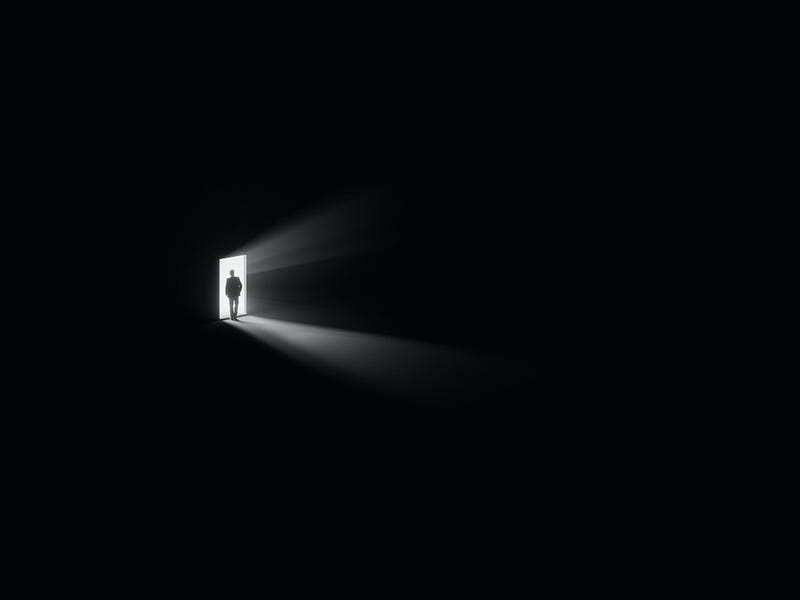
One of my goals in life is to accurately portray my dreams in film.
The layers of hallucinated worlds in Inception were very captivating; it’s a brilliant representation of the multi faceted realm of dreams. I’ve never seen anything like it, which I love in a movie.
Requiem For a Dream contains some of the best rendering of nocturnal visions; this film certainly illustrates the effects of drugs like no other.
The way I want to portray dreams is completely different from these or any other dream sequences I’ve seen.
Stay tuned…
In my recent story about resisting (and embracing) the Shadow, I mentioned that my dreams always feel unfinished.
I feel the same way about my writing.
Much like inner work, creative work is never ending.
Those of us who choose not to neglect the metaphysical elements of this life have to learn to welcome the challenges that come with it.
Lucid dreaming can be a blessing and a curse.
Sometimes we have to force our minds to rest, but I would rather have an overactive imagination than no imagination at all.
It seems to me that there is no in between. There is only this side and the other one.
Next time you’re flying in a dream, look around! Maybe I’ll see you up there.
Thank you for reading!
I really would love for you to share your dreams in the comments!
Follow me for more fun :)
Also follow ILLUMINATION & @ThoughtThinkers for a variety of stories from myself and fellow creatives ❤


