
To Drink or Not to Drink?
An objective exploration of conscious alcohol consumption
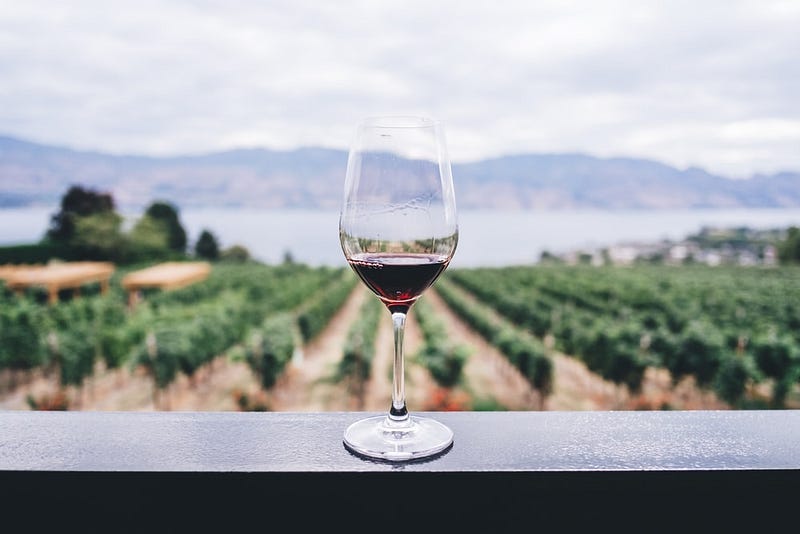
It’s been a couple of months since I’ve had a drink. 10 months to be exact. Which is quite a long time for someone who used to drink multiple times per week, and loved it.
It wasn’t alcohol addiction that made me stop drinking, but a journey with the psychedelic brew Ayahuasca. I was never an alcoholic, but I definitely had some problematic “grey area drinking”. Like most of us, I was using alcohol to let loose, celebrate, socialize — but also sometimes to escape, numb, or cope.
The reason I cut out alcohol was that I genuinely felt my life would be better without alcohol in it. As an aftereffect of the plant medicine, I also no longer craved it. I truly credit Ayahuasca here because I think if I had had the intention to stop or limit drinking but still had (physical) cravings for it, I would have probably still gone for it.
The alcohol-free life has been liberating and has enriched my life in many ways. But I also realize that the pandemic and quarantine have made it infinitely easier to abstain. I’d always been a social drinker, it helped the introvert in me enjoy bigger gatherings by turning down the volume switch on my environment just enough so I could be a bit more at ease.
But now, as we begin to re-enter normal life as we knew it pre-pandemic, I have to ask myself: Is my life still better without alcohol?
There Are Many Reasons To Drink — That’s Why, After All, So Many People Do It
I know there’s a lot of writing out there on sobriety. The fact is, for some people, sobriety is a necessity. They don't have the luxury of choosing.
But for those who do, for the longest time, the overarching thesis has been that if you can drink alcohol, you do. Why would you give it up if you didn’t have to?
And then came Ruby Warrington and the Sober Curious movement, advocating for a different angle: what if you can drink alcohol but maybe still won’t?
If you want a refresher on all the reasons we shouldn’t drink, read “Sober Curious” or, my favorite, “Quit Like A Woman” by Holly Whitaker.
What about the other side of the coin? What if you fall in the camp of getting to choose and want to explore reasons to continue drinking?
If you’re asking yourself that question, chances are you're already much more likely to have a better relationship with alcohol. Because most people don’t even ask themselves that question. We drink because everyone drinks.
So, what are some of the reasons that everyone drinks?
Altered state of consciousness
We humans have been altering our consciousness for thousands of decades. It seems to be inherent in our nature. And for most parts of the world, alcohol has evolved into the most dominant tool to do it. Alcohol traces back to ancient Egypt and has been found as early as 5000BC in Iran.
Whether it’s the best or even safest means to alter our minds is debatable. I’d certainly disagree. I think there are less addictive substances and much more rewarding experiences like psychedelics.
But whichever we choose, it’s natural to want to escape the shackles of our most useful, and at the same time, most destructive tool: our own mind. Alcohol allows us to let go and disassociate from the ego. It may quiet your inner critic (but also may make it louder), and it prompts us to behave more freely, more carelessly.
Bonding and connection
Alcohol is a social drug. It has a front seat at all key milestones during our life. Birthdays, graduations, promotions, even funerals. When we convene to celebrate, we do so with alcohol.
Personally, this has always been the biggest driver in my own drinking. Under the influence of alcohol, it’s undeniably easier to form deeper relationships with strangers (or people we already know).
Ruby Warrington would argue that this is because alcohol down-regulates the part of our brain that is concerned with what other people think of us. Alcohol really is a truth serum. Whether we make fun memories during a night out after a few too many shots, or we’re having a wine-induced heart-to-heart with a dear friend, alcohol can definitely have a positive impact on our relationships.
There’s a saying that goes “I’d argue that alcohol has created more lives than it has taken”, and I’d probably have to agree.
Social anxiety and relaxation
There are many people who drink (especially socially) to ease themselves. Whether you’re simply insecure or have social anxiety, or you’re an introvert like me. If you’re not the type of person who’ll walk into a room full of people, be the life of the party, and enjoy themself while doing it — the likelihood is high that alcohol will be your friend.
As I teased earlier, for me it was my empath nature that often drove me to drink. I wasn’t conscious of it back then, but the reason I found so much comfort in drinking in social situations was that I often felt overwhelmed by all the stimuli around me. Alcohol helped me tune down some of the noises so that I could enjoy myself and not be preoccupied with everything people around me felt, said, or did all the time.
Coping and escape
When we use alcohol as a coping mechanism we’re walking a very fine line. Because when it happens too often or becomes our main coping tool, we’re on the path to addiction. But we also have to acknowledge that “deferring” is a coping skill that can be useful at times, and alcohol is a very efficient tool to defer.
Of course, alcohol never helps solve any problems, but it can take our minds off of the problem for at least a while so that we’re able to face it when we feel ready to do so. For example. I’m thinking here of the overwhelmed and tired mum who has a rare night out with her girlfriends and manages to forget about all her home responsibilities for one evening. “I needed that” is something we’d hear, and if the person has a healthy relationship to alcohol they’ll go back and deal with their life the next day.
Or think of the girlfriend who just had her heart broken into pieces that just needs a friend and a bottle of wine to console her. If she’ll wake up the next day and let herself feel the feelings then, there’s absolutely nothing wrong with a little deferral. Because deferral doesn’t equal escape. You’ll still deal with the thing that’s causing you distress, but before you do, you just allow yourself a little break from it.
The Best Thing We Can Do Is Listen To Our Intuition About Whether Or Not Alcohol Enriches Our Life
So we’ve explored some of the upsides of (conscious) alcohol consumption, which now stands in contrast to several negatives, namely:
- Feeling hungover is just the shitties and most unnecessary state of being, and it gets worse and worse as we get older
- Alcohol is not good for our physical body — despite the well-known argument that a glass of red wine prolongs our life, alcohol is ethanol and with that toxic, and our body simply does not love it (hence, the hangovers)
- Alcohol also can be detrimental to our emotional health, by triggering low moods, depression, anxiety, and disrupting our sleep patterns
- There’s always a risk for abuse and addiction
- It also interferes with memory and learning
- In addition, I’d argue that it will make you less present in any given situation, which in fact hampers your ability to find joy from what you’re doing while you’re drinking
Alcohol is a depressant, and it’s the biggest paradox to me and many others that we use a depressant to celebrate peak life experiences.
It simply doesn’t make much sense.
In the end, everyone needs to look at their own list of pros and cons and make a judgment about the net impact of their drinking. And since most people seem to be drinking, they either don’t approach it as intentionally as us (me, the experimenter, and you, the reader) or they do and they’ve come to the decision that the downsides are worth it.
And I get that. Plus, we’re social animals, and resisting a behavior that is so deeply ingrained in our culture requires a lot of effort.
Is it really worth it?
Only you can decide that for yourself. I won’t tell you drinking is good or bad for you. What I will tell you though is that I encourage you to explore your relationship with it as deliberately and as objectively as possible.
It’s time to flip the narrative and instead of justifying reasons why alcohol shouldn’t be in our life, justify why it should be.
You can begin by asking yourself a few questions:
- What are usually the situations when you reach for a drink? How do you feel right before, during, and after?
- Is the regret about drinking worth the fun that you had while doing it?
- How is drinking impacting your overall health and your emotional well-being? Do you observe any patterns?
- What would it feel like to not drink? What would be other ways to celebrate, alter your mind, find joy, be more open, let loose?
I’ve Decided To Remain A Non-Drinker — For Now
Over Memorial Day, I went to Joshua Tree with a small group of friends. All of them were absolute wine enthusiasts (and connoisseurs), and I knew they’d bring excellent wine.
After 10 months of sobriety, I began thinking: what if I had a glass here and there, for the taste, the ambiance, the nostalgia?
I felt conflicted as I began to explore the option to drink again.
Luckily, there was a small incident right before the trip that made the decision easy for me.
Similar to alcohol, I’ve cut down drastically on caffeine since my Ayahuasca journey. It seems stimulants really don't go that well with all that plant medicine and meditation. So now I revert to decaf (because I still love the taste of coffee) or matcha (if I’m in need of an upper).
Anyways, I was out with friends a few days before the trip and craved a coffee, but the restaurant didn’t have decaf. I decided to just order a regular cappuccino. I was wired for the rest of the day, which was fine.
But then I woke up the next day, and I felt off.
That feeling that I haven’t felt in a very long time, yet one that still felt all too familiar. That feeling of incompleteness.
Like something was lacking. I immediately felt that I needed more caffeine to make my day or at least get it started. Once again, I realized how sensitive I was to stimulants (which goes hand in hand with being an empath). And I also quickly realized that this would be precisely how I’d feel after one or a few glasses of wine.
Incomplete.
A sensation that’s been a stranger for months now, months during which I evolved to waking up every morning full of energy, ready to start the day, and feeling good about my choices.
And I decided that wasn’t something I was willing to give up (yet).
Because to me, nothing — not even the fanciest wine — would taste as great as my untampered, natural state of being would feel: complete, whole, good to go as I am, right here, right now.
For now, I will stick with ecstatic dancing to let loose, psychedelics and breathwork to alter my consciousness, movies and books to escape or defer, boundaries to manage my social life, and radical honesty and vulnerability as fuel for deeper, more meaningful connections.
Want to stay in touch? Join my e-mail list here.