To Celebrate The Fourth of July I Murdered a Porcupine
I know That The Personal Essay is Dead, but so Is the Fucking Porcupine
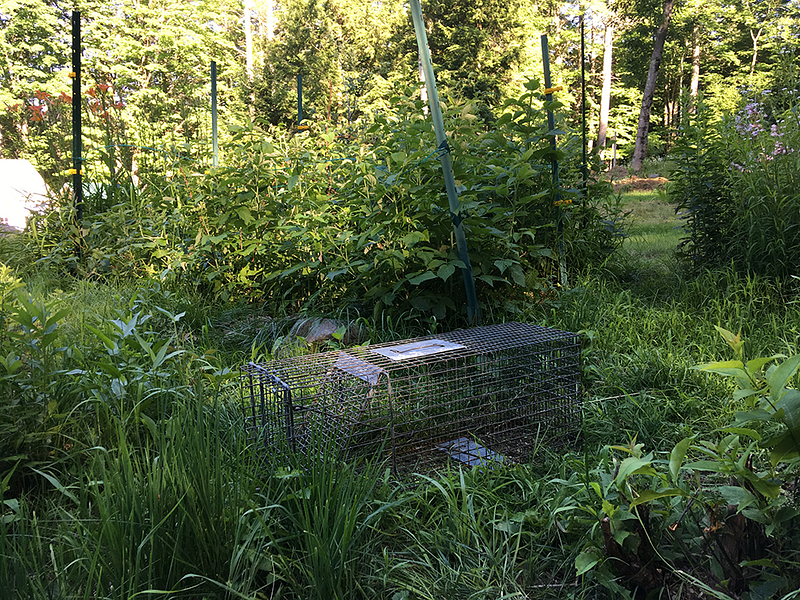
I got up at dawn. I knew it was dawn because I have an app on my Apple watch that plots the movement of the sun on an arc. I looked at the computerized depiction on my wrist, then looked out my window to confirm what it told me. The weak light bringing the outlines of pine trees into focus was from a sun still inching toward the horizon. Once up, curiosity and obligation sabotaged my usual routine of drinking coffee and staring out of windows at my slowly illuminating property. Not wanting to wake up the boss, I got dressed in the closet without turning on the light. It’s not hard for me to do that. I can feel the dirt on my trashed khakis. I know where the socks and underwear are kept. My boots are by the door. Wearing the uniform of an executioner from a dystopian Frost poem, I stepped out into the early summer morning. Wet grass, swarming mosquitoes, and the smells of nighttime growth all compressed the external quiet to some place deep in my chest. I walked calmly up to the raspberry patch where I had set the trap. She was there. Silent and alive.
As much as I have labored to convince myself that “she had to go”, there is no way to settle on that conclusion because it is simply not true. The porcupine had been in our yard with some regularity since late winter. Her offenses by July were numerous. She had chewed up four young apple trees, eaten all of the milkweed, and reduced the joe pye weed to nothing. Four times she ate all of the pink roses just as they bloomed. She climbed into the middle of the red rose bush and broke so many of the branches that it looked like a deflated balloon instead of the explosion of flora I envisioned while pampering it all spring. Last, there was the issue of the dog.
I say a lot of bad things about my dog. She is dumb, but I often tell people that her stupidity is a good reminder of how unimportant intelligence is. I say, “We all love Aggie, don’t we? And she can’t figure out how to go around a fence to get a ball.” At thirteen she is an elderly “spaz lab”. She still gets freakishly excited by simple things. Put on the boots you sometimes wear on a walk and she will start panting, jittapating, and shaking like she has to pee. She was kicked out of doggy daycare for “over exuberance” and washed out of an ASPCA “beginner” class. Despite her faults, she’s not guilty of any of the really difficult dog behaviors. She doesn’t run off, jump up, counter surf, bark, or chew things. Add to that list of “admirable traits” the fact that she has only attacked a porcupine once in her life.
That once was enough, though. It was a horrible ordeal. Our suspicion is that Aggie wasn’t well treated as a puppy in Indiana. As a result, she is tactilely sensitive in the extreme. She tolerates being petted, and will nuzzle your groin when she wants something, but as soon as you approach her with any kind of purpose she freaks out. She won’t let you clean her ears, clip her nails, or even pull out the clumps of hair that cling to her when she is blowing her coat. When she bit a porcupine, and had a mouth full of quills, she wouldn’t let me touch her.
I can’t remember what it cost to take a day off work and bring her to the vet. I just remember that it was much more money than I thought it would be. They have to put her under when she gets treated. The propofol dose costs a hundred bucks by itself. They gave her IV antibiotics and a prescription for more. It was yet another chapter in the “I had dogs as a kid but I don’t remember us doing anything like this” memoir. The bill was so jarring that I called my dad to ask what they used to do in New Hampshire during the thirties. I knew he had a dog named “Buddy” who repeatedly bit porcupines. I expected to hear a Greatest Generation tale about putting the dog in squeeze shoot and going at it with a marlin spike and a bottle of iodine, but that’s not what he told me. He said, “We would put the dog in the car and drive to Concord. The vet knocked him out with ether and then took the quills out with a pair of pliers. Your grandfather always complained about the cost. I think it was $30 each time.”
It would be easy to defend my killing of the Raspberry Patch Rambler by pointing to the dog. “She was a constant threat,” I’d say, but I know that’s not the case. Like I said, the porcupine had been a resident since late winter. Aggie barked it off of the property almost every night without biting it. The “dog problem” was really me disasterizing my job of letting the dog out. Each time I opened the door at night, I went on a imaginary trip to the Emergency Animal Clinic where the receptionist handed me a bill for a couple hundred bucks more than whatever I had in my checking account.
The dog was doing her best to keep the porcupine at bay and out of the yard, but her best wasn’t good enough. She is an old dog. She doesn’t hear that well anymore and is very fond of her dog bed. She has to sleep sometimes, and while Aggie was sleeping the porcupine started in on the raspberries.
When I found a whole row of the “early fruit” raspberries pulled down, cut in half, and partially eaten — the large green berries fated never to ripen — I decided that something had to be done.
If you want to rid yourself of a porcupine and you are willing to kill it, the easiest method is with a shotgun and a flashlight. Porcupines are ecologically-naive, and slow. If you chase them across the lawn they often climb a tree, slowly. I have a .410 shotgun and a headlamp. If I had gone that route, I might have enjoyed some moral cloud cover provided by executing justice in mid-crime, perhaps catching the porcupine with a raspberry stalk hanging from her mouth, but I wasn’t there quite yet.
On the morning that I walked up to see that, exactly as expected, she was quietly sitting in the trap, I was still contemplating “relocating” her. There were several options I had thought about. As I stood in the growing light of the early morning, I realized that all of them were dodges. All of them represented handing the “problem of the porcupine” to someone else. There didn’t seem to be any place I could drop the animal where the mental video of her waddling out of the trap didn’t eventually segue into a scene of another person in a car, with a whimpering dog, making the trip to the Emergency Vet Clinic. It seemed like the “hard right” should win over the “easy wrong.” I went and got my .22. Then I put a bullet into the back of the creature’s head.
I wish I could say that she died instantly, but anyone with experience in killing animals knows that they often don’t die the way you wish they would. Not wanting to suffer the recriminations of watching the poor creature “bleed out”, I put a second bullet into her and splatted the pant leg of my khakis with blood.
During the summer I do a lot of painting. I’m painting our guest room right now. The previous shade of blue has bled through three coats of paint, which means that I have had a lot of time to listen to audible books. I have been listening to “Eager: The Surprising, Secret Life of Beavers and Why They Matter” by Ben Goldfarb. There are many lessons in the book, but the clearest one may be that, despite our big brains and technological achievements, humans can’t tell the difference between a pest and a keystone species.
My .22 is a single shot, bolt-action, rifle. I promise you that when I was inserting the cartridge into the gun, I imagined a granddaughter telling a group of astounded and dismayed dinner guests, “my grandfather used to trap and KILL porcupines,” the implication being that I was too stupid and ignorant to fathom the porcupine’s role in preventing [insert ecological tragedy of the future].
Despite my best machinations, I couldn’t call the porcupine a “pest.” Sure, she was a pest to me, but she was just porcupining. Even my trumped-up “threat to the dog” was really just worry about a vet bill. The fact was, she hadn’t hurt anyone. Her biggest “crime” was pruning some invasive species I had planted in her habitat.
The Boss is from Brooklyn. The .410 and .22 are as foreign to her as the porcupine. I could tell her about the blood, but I didn’t want her to see it, so as soon as I came back in the house I put my pants right in the wash and, like a modern-day Lady MacBeth, used a scoop of Oxy-clean, set the soil level to “heavy,” and hit start. You may not know this, but the best way to cover up an environmental crime is by recklessly using too much soap, fresh water, and electricity on a single pair of pants.
Lady porcupine was still in the trap. I had left her dead in the cage. I went to start my rounds of watering, pinching off the suckers on tomato plants, and looking for Japanese beetles.
While I was cooking breakfast I got kind of nauseated by the frying bacon. I thought at first it was because the connection between the pig I was about to eat and the “quill pig” I had just shot was all too obvious. My mind went to the big pig. I knew that pig. I had bought half of him on the hoof a year ago and visited him twice during his summer of life. That pig was sent to the butcher. He came back neatly wrapped, in frozen bundles of white paper with 2018 stamped on them. I’ve slaughtered animals a few times in my life. When I was on the Navajo Nation I held the head of a sheep while a woman named Margaret Tso (“Big Margaret”) slit its throat. I’ve helped “process” chickens. None of that made the porcupine-pig connection easier. Death in the raspberry patch had bled into death on a plate.
I haven’t grown more callous with age. I was cruelest at about 12. There are a lot of small animals… fish, amphibians, reptiles, mammals and birds… that I will have to face in the Last Judgement. I’m fully aware of what is keeping me bound to the wheel of samsara. I can see my victims in the mind’s eye of my nagging conscience, arrayed like an illustrated group portrait in a children’s book, except that their faces are set in anger, and each of them is pointing at me and saying, “Yes, that’s the fucker.”
“Maybe I should become a vegan,” I thought. “Meat is murder,” isn’t it? The racist told me so. Just because he’s a racist doesn’t mean that Morrissey isn’t right. Right? I ate some bacon, but I have to admit that most of the half pound I cooked is still sitting a Tupperware container in the refrigerator.
When we were getting ready to go outside, the Boss asked me if porcupines are monogamous. “If you want me to say that nobody will miss that porcupine, I can’t say that,” I said. “Chances are she was a female nursing a kit. That’s why she was going house on our yard.”
My guess was that the big porcupine was a female, and I was right. When I put on a glove and pulled her body from the trap by her hind foot, she was big. I could see the teets on her belly. I think she weighed about twenty pounds. It seemed unlikely that she was solitary. I carried her across the yard, her big body inelegantly hanging by one foot, blood covering her shattered head. In my dorky green sun hat and glasses I looked like some kind of deluded suburban trapper. An image from an LL Bean catalog gone horribly wrong. A Normal Rockwell print jaded and fucked up by Trump’s America. I carried her down to the swamp and swung her onto a mound of mud and brush. The coyotes will find her there.
Later in the day, when I was weeding the “Mare’s Tails” out of a pizza garden I had planted with a pollinator mix, I felt like an agent of death. I use an electrified “tennis racquet” to zap deer flies when I do my rounds in the yard. I swat at mosquitoes, poison mice, drop Japanese beetles into pickle jars of soap and water, and spray roundup on “invasives” I don’t like. I plant what I want to plant. Cut what I want to cut. Shape things the way I want to shape them.
But I do it all with a every growing sense of hamartia. I read “The Hidden Life of Trees: How They Communicate — Discoveries From a Secret World” by Peter Wohlleben. It was one of the most unsettling books I have ever read. I have opened up about two acres of land on my property, which means I have put the chainsaw to a lot of trees. About a decade ago I started apologizing to them. I place a hand against their trunk while holding the chainsaw and say some stupid prayer of thanksgiving and sorrow. It’s so dumb. It’s so ad-hoc. It’s so divorced from any cultural context that it is immediately betrayed for what it is — a delusional balm of self-centered snake oil to assuage a screaming conscience.
You can see some of the machinations between my id, ego, and superego here.
Maybe the Jains have it right.
While I was weeding, I heard a loud buzzing and shouted “Fuck”. My semi-domesticated European honey bees were not doing what I wanted them to do. There was a giant mass of workers coagulating in the upper reaches of a tall oak tree. A hive had swarmed. A hive I had split, supered, and given extra space to. My Georgia-bred Italian queen was leaving with maybe twenty thousand of her daughters to find a hole in a tree somewhere. I would be left with the vagaries of unhatched virgin queen. Honey bees are the most studied and written about insect in the world, but if you get two beekeepers together you’ll hear three opinions. For all my study and experience, I can’t manage a family of creatures with virtually no brain.
St. Francis said that he enjoyed failure because it reminded him that he wasn’t in control of his life. Failure is the mother of humility, but we live in an immodest age. I’m not fond of failure or the acceptance it should engender. That raspberry patch is version three. I’ve moved it twice before, changed cultivars, and attempted to ammended the soil. The roses the porcupine was eating are the replacements for a Himalayan Musk Rambler that did not live up to the description provided by the White Flower Farm catalog. I have bathed five phlox plants with so many organic ointments in an effort to stave off powdery mildew that they seem to have been “baked” rather than grown. I should be humbled by my yard. I should be awed. Instead, I swagger out into the green swinging a Shindawa weed wacker, like some character in a Byron poem shaking his fist at the sun.
I want a new religion. I envy someone like Pamela J. Peters who, in the face of difficulty, can tap into a tradition of knowledge and wisdom that seeks to “walk in beauty.”
In the West, we have a hard time doing that. Our oldest stories start where we left the path. We sold our birthright for a bowl of soup. There is a reason the Hebrew scriptures start with an expulsion and Enkidu lamented eating bread. Most of the heroes I admire were hell-bent on replacing the chthonic “earth” deities of the past. Despite the criticism, I’m still a fan of Robert Graves’s White Goddess. It’s the story I want to be true.
Where do I go with my solastalgia? The plastic straw, the trip on an airplane, and the dead porcupine are all symptoms of the same malady, aren’t they? Where is the revival tent where I can go and be “born again” to the earth?
At my school, things are different. Technology has changed what we do, how we communicate with parents, and how our students understand themselves and relate to others. I keep saying, “things have to change. What worked in the past isn’t working anymore.” It sounds progressive, but really it’s just another controlling attempt on my part to fix things the way I want them fixed.
I could have let the porcupine live. She probably wouldn’t have destroyed all of the raspberries. I could have let her eat what she wanted to eat and then seen what grew. If I wanted more raspberries, I guess I could have bought some trucked in from Mexico.
Or maybe I could have just stoped eating raspberries.