
How Long Should We Rest Between Sets in The Gym?
How long should we rest to maximise strength and build muscle?
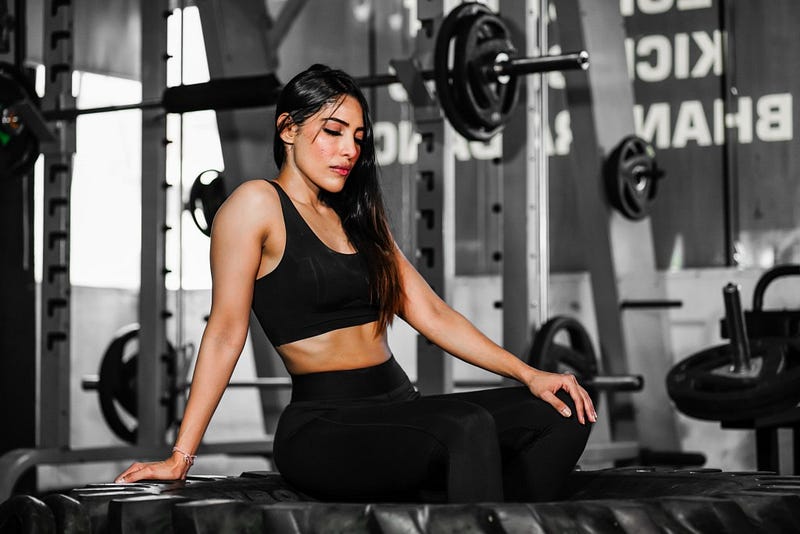
Rest periods are key to maximising our performance in the gym to reach our fitness goals.
To maximise our results, we need to train at a high-intensity level. In order to train at this high intensity, we need to recover adequately between sets.
Moreover, our specific fitness goal influences the optimum amount of time we should rest between sets.
So, how long should we rest between sets to maximise our muscle growth and strength gains?
What are rest periods for?
During a workout, exercises are split up into periods of exercising called sets, and then rest periods.
A set usually lasts around 30 seconds, because our phosphagen system creating anaerobic energy through ATP production only provides this ‘high-force’ energy for around this long.
After each set, we rest to recover and restore our energy for the next set.
Rest periods that are too short means we can’t recover adequately to train at the appropriate intensity level to get results.
Why do rest periods vary?
Different fitness-based goals require different physiological processes to achieve them.
For example, a marathon runner isn’t training to maximise how much they can squat for one rep. Likewise, a strength athlete isn’t training to maximise how fast they can run 42km.
Therefore, the body works in different ways to achieve differing fitness goals.
Even in a gym, two people doing the same exercises might have a completely different approach to their workout structure.
Some people lift weights with the primary goal to lose weight and “tone up” (which isn’t really a thing), so their rest periods are much shorter than somebody with the primary goal to build strength.
These people should do a lot of full-body circuits with short rest periods. But this isn’t article isn’t about fitness!
It’s about growing bigger muscles and getting stronger.
So, what does the science say about the optimum rest period for increasing strength and building muscle?
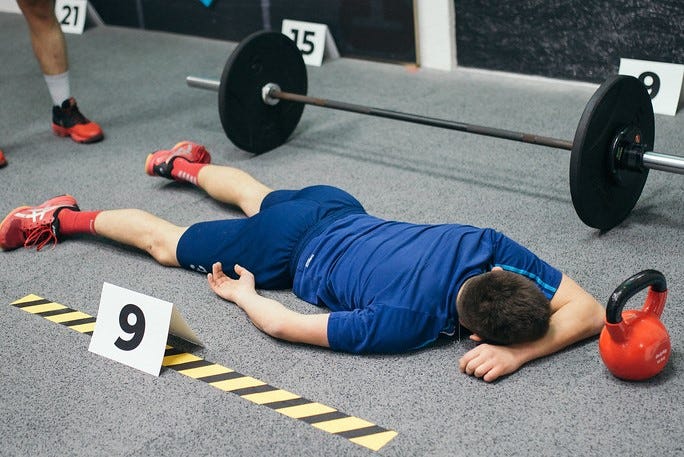
Optimising rest periods for strength
For strength, we need to rest long enough to recover from the previous set and have the maximum energy available for the next set.
Basically, strength training needs to be at an intensity level high enough to force our bodies to adapt and grow stronger by lifting a heavy weight for low reps. If we can’t hit the desired weight because we’re fatigued, we won’t adapt.
The ideal rest period for strength training is around 3–5 minutes. Strength training involves compound lifts which work a number of large muscle groups which means they are more taxing on the body and harder to recover from than isolation exercises.
Rest periods can depend on how heavy you are lifting. For example, a heavy triple (3 reps) at a high percentage (say 85–90%) of our one-rep max (1RM) is more fatiguing than a set of six reps at 60% of our 1RM.
“…Rest in between sets of 180–300 seconds is suitable for improvements in maximal strength, 1–2 min for gains in hypertrophy.” — Borde et al., 2015
Optimising rest periods for building muscle
It was commonly thought in the lifting community that rest periods of 1 minute were optimum for building muscle.
Across much of the exercise literature, it’s agreed that the most effective rest period for building strength is 3–5 minutes and 1–2 minutes for building muscle (hypertrophy).
“Hypertrophy-style protocols typically involve… short rest intervals (30–90 seconds), whereas strength-style protocols typically involve… and longer rest intervals (3–5 minutes).” — Gonzalez, 2016
However, a 2016 study by Schoenfeld and colleagues suggests that this might not always be the case. They found that 3 minutes of inter-set rest is typically better than 1 minute for both increasing strength and building muscle.
“Longer rest periods promote greater increases in muscle strength and hypertrophy in young resistance-trained men.” — Schoenfeld et al., 2016
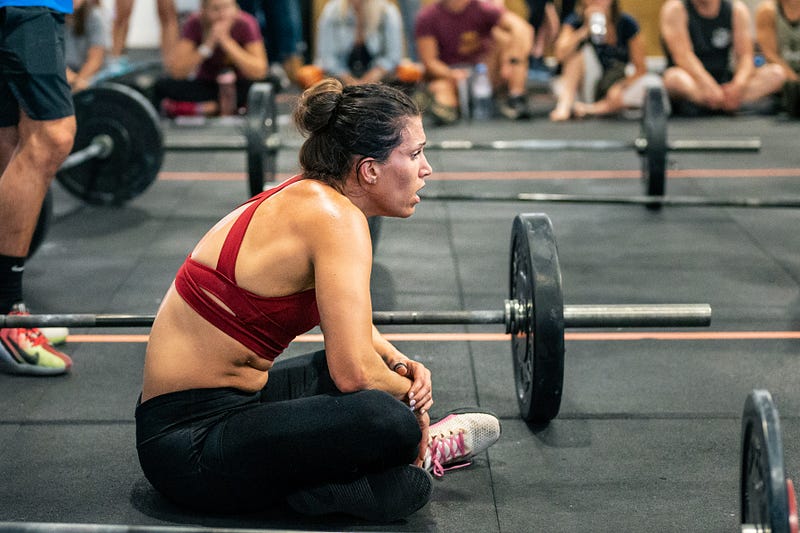
Key variable: how long do you want to spend in the gym?
If we want to maximise muscle growth, should we rest for 3 minutes or longer between sets?
Well, that depends on how long you want to be in the gym…
Many of us live busy lives, so time management is key when it comes to exercising. For others, we love every minute we spend in the gym and can’t get enough.
For those of us that need to manage our time efficiently in the gym — if we spend 5 minutes between every set, we’ll be in the gym all day.
To build strength, 3–5 minutes of rest between sets should be enough. 10 minutes of rest might be slightly better — but, then our workout could end up taking 3+ hours.
That’s the trade-off — the time you spend in the gym to achieve results. Is it worth doubling the time of your workout to achieve slightly better results? For some, that might be a yes. For most, probably not.
Therefore, reducing our rest periods to one minute for our isolation exercises that focus on hypertrophy, will help to reduce the time of our workout.
And, you shouldn’t stress if you’re short on time — you can still build muscle with short rest periods. A 2017 metanalysis from Grgic and colleagues found that as long as you rest for at least a minute, “both short and long inter-set rest intervals may be useful when training for achieving gains in muscle hypertrophy”.
However, it is debatable whether longer rest periods might be slightly better than short rest periods for building muscle.
Discussion and Final Thoughts
Part of the reason long rest periods have been connected to strength training is that strength training uses compound lifts that work out several muscle groups. Therefore, they’re more physically exhausting on the body than the isolation exercises commonly used for hypertrophy training.
Hence, this factor influences the separation between the two key goals in training of building muscle or increasing strength. However, recent science reveals that there is more overlap than we previously thought with key training variables such as rest periods.
Best practice differences between strength training and hypertrophy stimulus aren’t so black and white.
As a general rule of thumb, isolation exercises won’t require as much rest between sets as compound exercises. 1–2 minutes of rest should be enough for isolation exercises to maximise building muscle.
However, because they’re more fatiguing, compound lifts such as a squat or bench press will require more rest between sets, regardless of whether our goal is strength or muscle. Therefore, 3-5 minutes of rest after a compound exercise might better allow us to properly recover for the next set.
Moreover, every individual will be different. Rest periods can also be determined by how you feel. If you’re fatiguing during sets of heavy squats and can’t lift as much as the previous set or previous workouts, you probably need longer rest periods.
And there you have it!
In this article, we’ve explored how to optimise rest periods in the gym to build muscle and increase our strength.
Thank you for reading.
If you enjoyed the content, you might enjoy this article about five muscle-building foods that you should have in your pantry.
Subscribe to be notified when I publish new content.


