
To build a business empire, own an opinion (not a marketing budget)
The internet is home to some of his biggest haters.
Others think he is a genius.
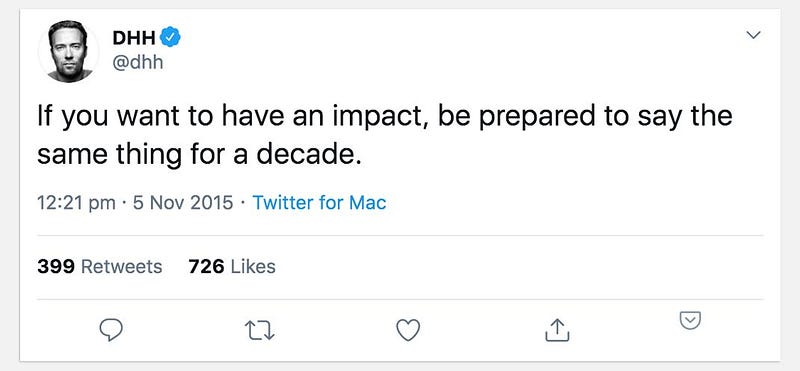
While his cynics and fans aimlessly scroll through Twitter on a typical afternoon, he steps on the cyber stage for the 12th time that day to share yet another strong opinion:
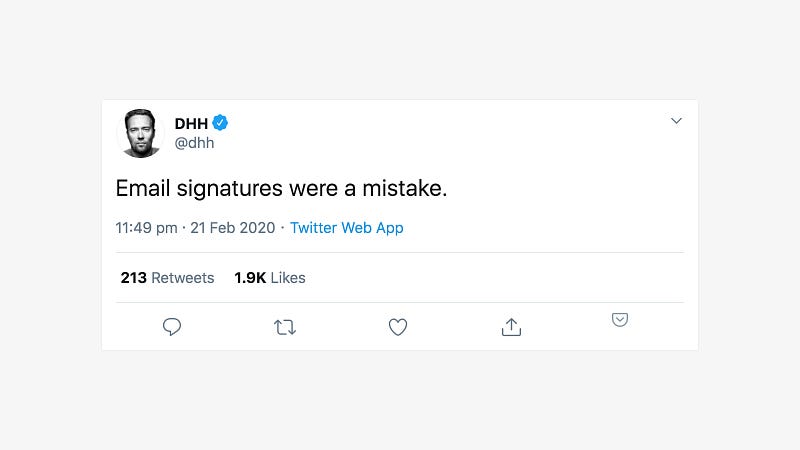
Haters gonna hate. But likes and retweets from raving fans start pouring in almost instantly.
That’s @DHH as the web knows him: one of the founders of Basecamp, a remote software company, and one of the online world’s most polarizing figures.
His blog posts and tweets that contain strong opinions may leave you with mixed feelings.
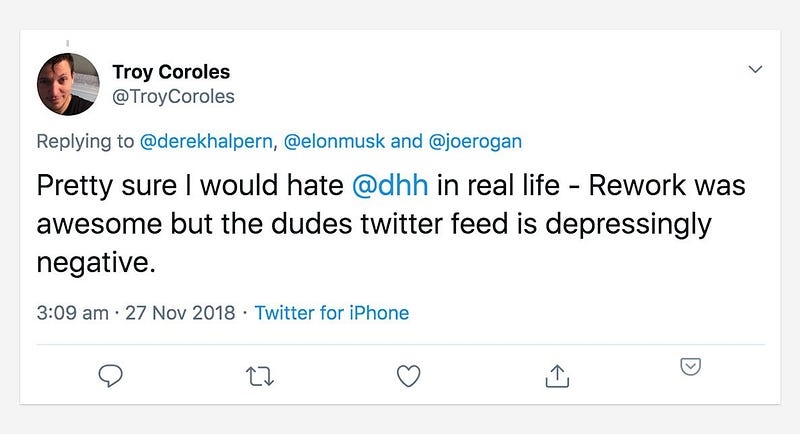
Whether readers find his style depressing and can’t stand the constant shouting or see him as an outspoken champion of brutally honest commentary doesn’t seem to phase him.
He won’t stop calling people out on their wrongdoings. Here are just a few of the companies he recently addressed within a single three-day period.
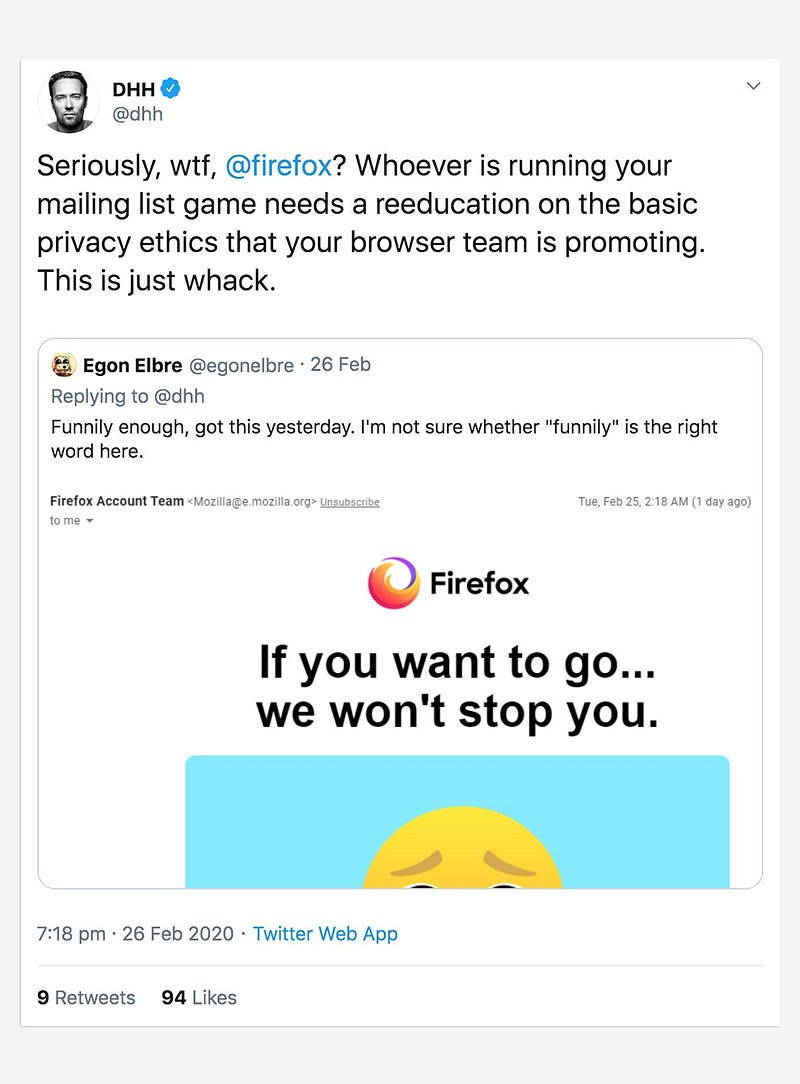
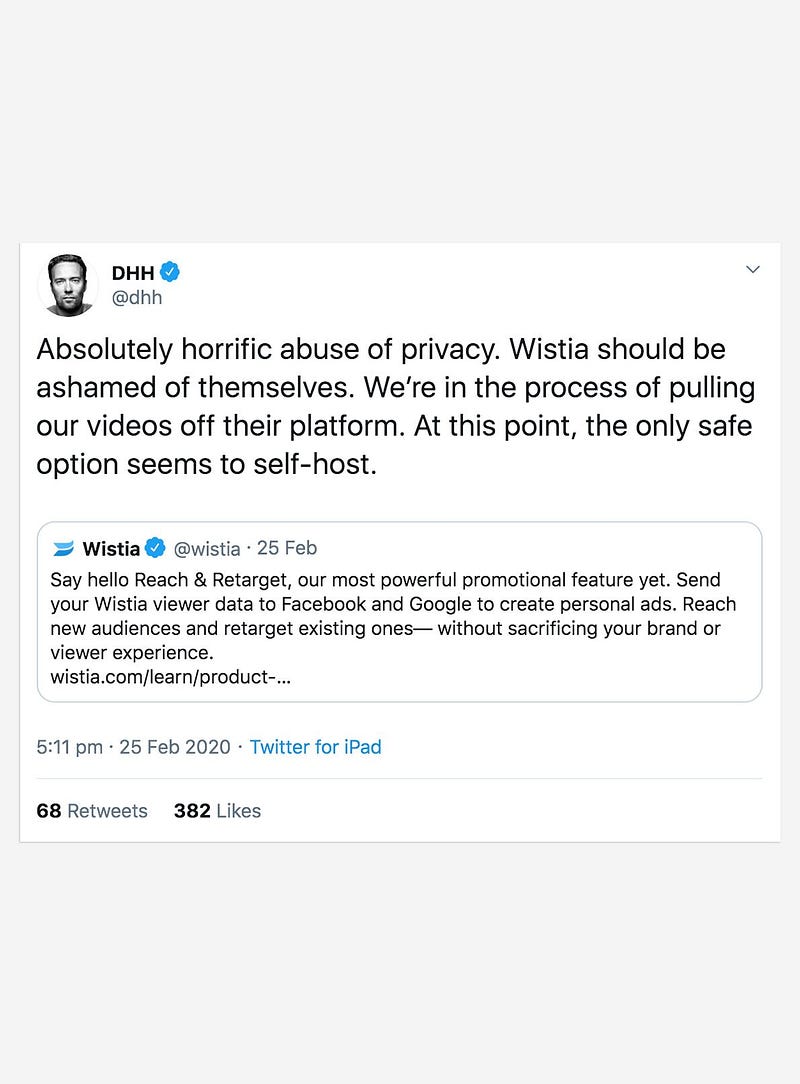
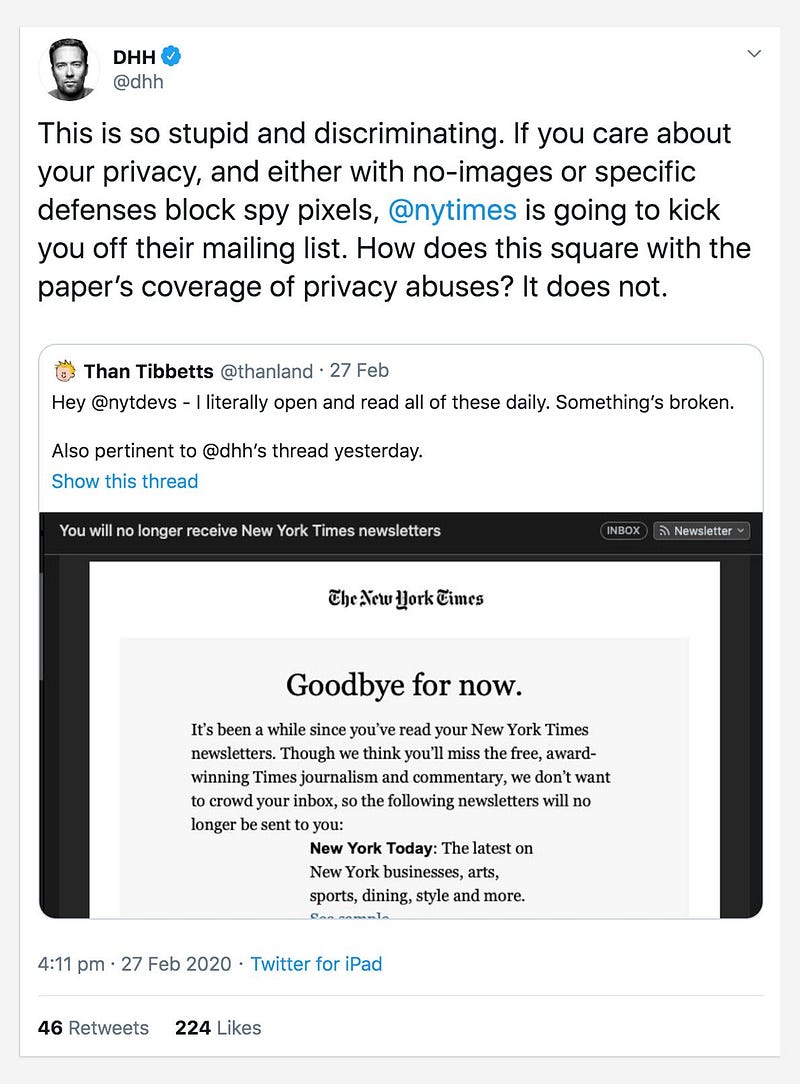
His recent tweets have expressed some radical ideas about the way the email should work. On his radar are those who violate your privacy or employ unethical tactics to hit your inbox.
Targeting this topic comes as no surprise — DHH and his Basecamp co-founder Jason Fried have just launched their latest product, HEY.
It’s an email service that promises to fix what’s broken with email today.
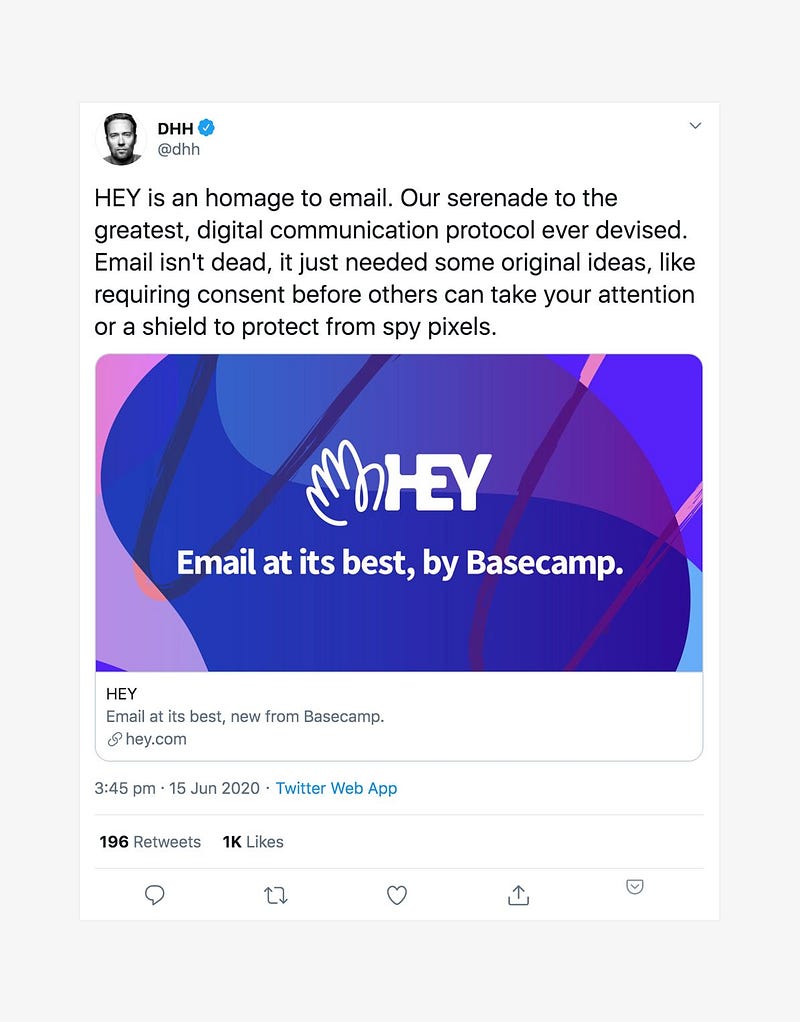
Whether you call it a smart launch campaign or believe sharing strong opinions is simply in their DNA, Jason and DHH are doing it again, this time with HEY.
They are about to follow the same path that years ago led them to success with Basecamp: They are beginning to sell (I mean, tell) an opinionated narrative that disrupts the thinking around how the “email” should work today.
True disruptors shift how people think not only about their product, but about themselves, the industry, and the world.
They don’t sell a product, they sell a whole new way of thinking.
Not everybody agrees with them. But the goal in business today is not to sell to everybody who needs what you have.
The goal is to sell to people who share your opinion — the ones who believe what you believe.
DHH & Jason turn those who believe in their thinking into true fans.
So if you manage to drop your judgments, grab some popcorn and watch the show as the Basecamp boys roll their latest product into an overly crowded email market.
This isn’t the first time the boys have moved to grab market share in a cluttered space…
Basecamp, their core project management software, has been battling it out in an increasingly competitive remote software space with dozens of incumbents.
But they managed to escape competition and build a business on their own terms by disrupting the thinking around how the world (in this particular case, how the “business”) should work.

Take any piece of content the founders have published over the last years: each of those micro-opinions has contributed to the overarching narrative that advocates remote work.
And this narrative has complemented their project management software which allows teams to collaborate from anywhere.
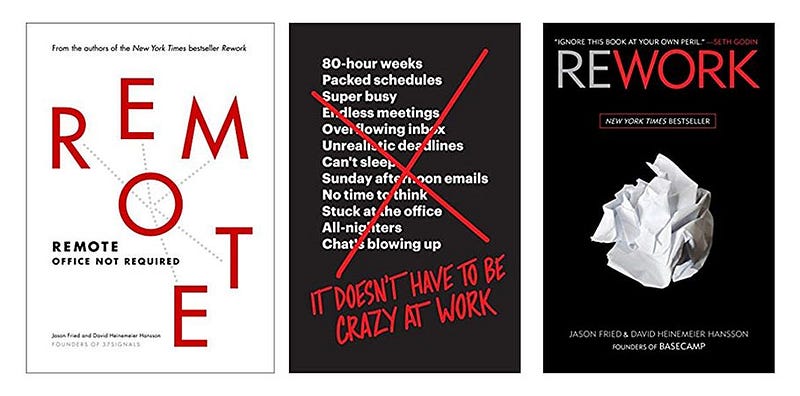
- Their best-selling book, Remote, destroys the Industrial Revolution’s “under one roof” model of conducting work.
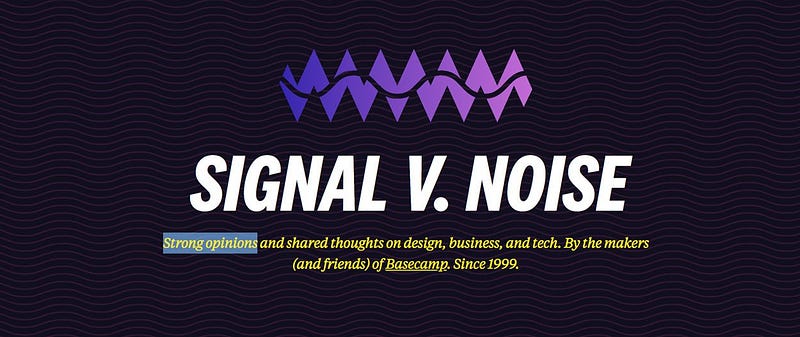
- Their widely popular blog, Signal v. Noise, dispels almost every myth you know about building and operating a business.
- From podcasts and tweets to books and blogs, no matter what platform they step on to raise their voice, the boys make sure to share strong opinions.
- Indeed, “strong opinions” even form the first two words of their blog’s tagline:
Don’t disrupt an industry, disrupt the thinking — that’s a valuable maxim Basecamp founders have proven to the world.
They show that, by owning an opinion, you can still create value in industries most write off as finished — and you don’t have to employ shady tactics to do that, nor do you need hefty marketing budgets.
But before we end up writing a novel about Basecamp, let’s make one thing crystal clear when it comes to using an opinionated style as a marketing strategy.
Opinionated ≠ Angry
“Being opinionated does not mean you have to be angry, contrarian or SHOUT AT PEOPLE all the time.
But it does mean you are not publishing saccharine content that is available 100 other places and which everyone in your industry agrees with.”
That’s John Collins, the editor of what some consider the most opinionated blog today — Intercom is one of today’s most respected startups, and John’s classy writing style has had a huge impact on the company’s unstoppable growth.
In fact, according to the founder Des Trainer, their blog has been their most effective growth channel since the early days.
Among their greatest hits are their most controversial, opinionated essays: The End of Apps as We Know Them, Growth Hacking Is Bullsh*t, and Why Cards Are the Future of the Web are some of their most successful posts, all of which express radical ideas that are well-argued and illustrated.
“There is one simple strategy which, provided you stick to it, will help you rise above the noise: have an opinion,” John adds.
Intercom encourages their entire team to share strong opinions on their blog. And each of those micro-opinions serves their overarching narrative: “make business personal again” (which perfectly complements their messaging products that enable visitors to have human interactions with websites).
When sharing thoughts, John advises his colleagues not to be arrogant or patronize readers, but instead have an opinion — preferably a strong, undiluted one. Keep a classy style that illustrates your point and backs up your arguments. And always keep in mind that a flat tone won’t get you too far:
“Articles that are provably factually correct but flat in tone never perform as well as those that nail their colours to the mast. Some of our best performing articles don’t pull any punches.
Not everyone in Intercom necessarily agrees with every point made. But that’s why they have been so widely shared and discussed, and continue to be, long after they were written.
Everything you publish should be opinionated — even if you just think of it as sharing information or knowledge.”
Wait a second. Everything you publish should be opinionated?
Instead of trying to build a business silently in your comfortable corner, why on earth should you step out there and publish opinions that make you risk losing some of your potential audience?
If you don’t have something to say, you don’t have something worth paying attention to.
Every time we onboard a new client at our storytelling studio Growth Supply, I have a welcome call with the founders.
Before getting our hands on crafting their narrative strategy, this is where I’ll try to understand what opinions they (and their product) hold about the world.
Those founder calls taught me that opinionated marketing is definitely not for everyone and it’s a decision you have to evaluate, especially if you are too sensitive to grow a thick skin in the game.
You can also probably survive without one if your product is, say, a simple file upload or image compressor tool; the same applies if you are lucky enough to find yourself in an uncrowded market — a market where people already know they need your solution.
But, as I explained in “How We Got 11.3 Million Pageviews without the Growth Hacking BS,” executing a narrative-driven strategy can become your strongest weapon, especially in markets where:
- there are too many identical competitors (which is becoming the new normal in a growing number of industries),
- or where people don’t even know they need your solution. A healthy dose of opinion can lift any messaging from being just one of the crowd to something that effortlessly stands out.
On one end of today’s spectrum are the customers who see increasingly less difference between you and your competition; on the other is the “peak competition” that keeps slapping most businesses in the face, where companies almost sell a commodity as the copycats take over the market.
Anyone today can copy your features overnight, yes. But they can never copy the YOU in your product. In Naval Ravikant’s beautiful words, you can escape competition through authenticity, when you realize that no one can compete with you on being you.
And there are only a few things in life that empower YOU to express your authentic self. Your opinion is one of them.
As Basecamp’s founders highlight, injecting what’s unique about the way you think into your product is a powerful way to stand out in today’s most cluttered marketplace in history:
“If you’re successful, people will try to copy what you do. But there’s a great way to protect yourself from copycats:
Make you part of your product or service.
Inject what’s unique about the way you think into what you sell. Pour yourself into your product and everything around your product too: how you sell it, how you support it, how you explain it, and how you deliver it.
Competitors can never copy the you in your product.”
After all, your opinion is what got you in business in the first place. What started as a humble belief about how you thought the world should work led to your solution:
- The Basecamp boys think email today is broken so they are building a new email service, HEY.
- Louis Grenier thought in-your-face marketing tactics no longer worked so he launched one of today’s most popular marketing podcasts, Everyone Hates Marketers.
- Intercom founders thought the trouble with websites was that their owners couldn’t build personal relationships with their online visitors like physical shop owners did, so they built tools that make business personal again in the online world.
Careful, though: Any business can start with an opinion about what’s broken. But what makes the above examples widely successful is that their opinions are ingrained not only in the early idea stage but in everything they do that follows after, from their culture and values to sales, product development, and marketing.
It becomes a 360-degree opinion-led strategy that informs their overarching narrative across whatever they do.
If you don’t have an opinion, you don’t have a conversation.
An opinion, by definition, is a thought or belief about something or someone that others can disagree with.
And it turns out that whatever others disagree with is also what spreads across the internet since people are much more inclined to share opinionated content on social media, with their personal networks via email and messaging apps, or post it on their work Slack.
Opinions start conversations.
And a conversation that is widely shared gives you the invaluable chance to maximize your reach and attract people who think like you, people who can turn into true fans over time.
When you target everyone, you end up targeting no one.
Starting with your opinions about how you think the world should work helps you to attract people who hold the same beliefs — it enables you to build your own tribe instead of shooting in the dark and trying to reach all kinds of people in an overcrowded market.
Next time you decide to write yet another “My top 5 favourite productivity apps” mediocre article, remember what got you in business in the first place.
Consider what opinions you and your product hold about the world.
And before hitting that publish button, apply a quick acid test:
Ask yourself if anyone would disagree with what you are about to share. If the answer is no, it’s not going to start a conversation either.
Because every time you publish something, you have yet another opportunity to disrupt the thinking
The words you put out in the wild have the power to move the masses.
Try treating each piece of content you put out there as a micro-idea, an opportunity to disrupt how your audience thinks not only about their product, but about themselves, the industry, and the world.
And over time, let your micro-ideas bring together the missing pieces of your overarching narrative that sells a whole new way of thinking, not a product.
To build a business empire, you need an opinion, not a hefty marketing budget.
Because the goal in business today is not to sell to everybody who needs what you have.
The goal is to sell to people who share your opinion — the ones who believe what you believe.


