
Tips & Tricks
Title and Subtitle Mistakes Most Writers Make on Medium
16 tips for writing error-free titles and subtitles
Whether you’re a newbie or a good writer with exceptional writing skills, your titles and subtitles might speak volumes about you. They say, “Don’t judge a book by its cover,” but your story can be judged pretty well by its title and subtitle. You might have seen writers who’ve had over a million views, but some of their titles/subtitles are neither based on the standard guidelines nor the ideal cases.
Medium guidelines suggest that a story’s title could be in ‘the title case’ and the subtitle in ‘the sentence case.’ Although this format is neither a must nor ideal, there are certain things that writers, especially those on Medium, have to keep in mind while writing titles and subtitles.
There are many benefits:
First, it might help you meet curation guidelines. Second, readers might begin reading your stories, and third, you’ll gain external views through search engines — not to mention the various other benefits of writing better titles and subtitles.
Here are 16 tips for writing better titles and subtitles on Medium:
1. Do not capitalize prepositions, articles, and coordinating conjunctions.
Short prepositions (up, out, in, etc.), articles (the, a, and an), and coordinating conjunctions are supposed to be written in small letters, only if they do not function as an adverb, adjective, or a noun. See the below examples:
“in: The Catcher in the Rye, but Give In to Me (adverb)
out: Fresh out the Oven, but School’s Out Forever (adjective)
up: Crawling up a Hill, but Picking Up the Pieces (adverb)
but: Nothing but the Truth, but Life Is But a Dream (adverb)
a: Let’s Make a Deal, but The A to Z of TV Gardening (noun)
by: Stand by Me, but Stand By for Action (adverb)”
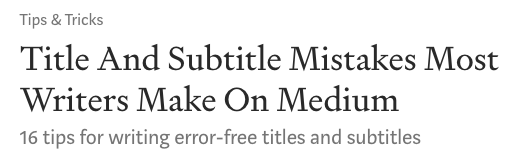
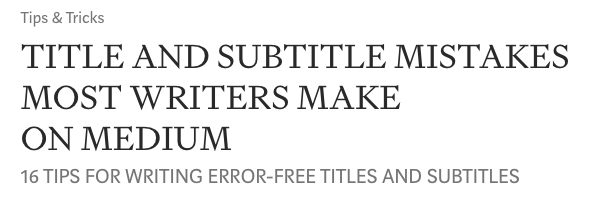
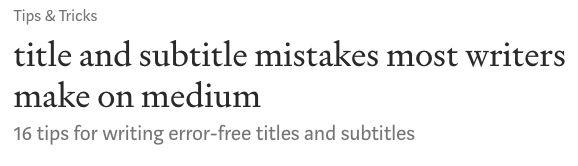
2. Avoid writing it small OR ALL CAPS.
Although, as per the curation guidelines, there is no ideal title format, writing ALL CAPS is one reason your story might get disqualified — as it is explicitly noted. Writing it, not in the title, but the small case is equally disturbing but not penalized by Medium.
3. Typos in titles and subtitles?
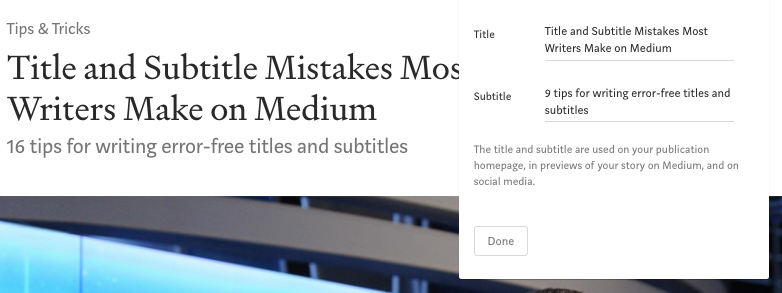
There are two types of typos in titles and subtitles. One is that you don’t care and don’t proofread your work. The other is that your display title and the actual title do not match. This means that the link shared on social media shows the title and subtitle of the ‘Display title and subtitle,’ but your story on your Medium profile, a different one. You can find this before publishing the story or when you edit your story, by clicking on the three dots (…) adjacent to the ‘publish’ button.
Suppose your title is: “5 Proofreading Techniques That Every Writer Must Use.” In the story, you have written: “Proofreading Techniques That Every Writer Must Use.” Why didn’t you use those techniques to proofread your own writing?
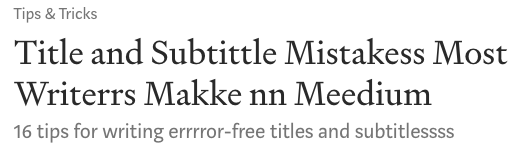
First, don’t make any typos in the title or subtitle. If you do, no one will read your story. They’re going to judge your story by its title and subtitle.
Or, in this case, when an author claims, “But I have a subtitle, and it shows on my computer.” Oh boy, it doesn’t appear to others. Click on the ‘Change display title and subtitle’ button and see if they match or if there’s a subtitle as a display text.
4. No Headlines?
Headline and sub-headline are other words for title and subtitle, respectively.
Who would read a book that doesn’t have a cover? That’s only possible if they have a previous clue about the content. Since your stories might get circulated to tens of thousands of premium and free members across Medium, writing a title or headline is required. Medium obliges writers to include titles in their stories.
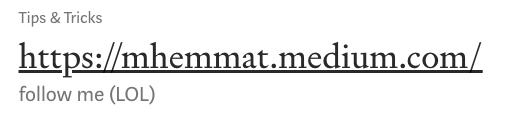
5. Do not use links in titles or subtitles.
By default, you cannot link your title or headline to any external link. You might paste it fully in the title, but that goes against Medium curation guidelines. Don’t paste a link in the title at all.
6. No Profanity (exceptions for demonstrable necessity).
Cambridge dictionary defines ‘profanity’ as “words that are offensive because of not respecting religion, or offensive because of being rude.” Based on the curation Guidelines, you’re not allowed to use those swear and curse words in the title or subtitle. Search engines might also block your content.
7. Avoid punctuation mistakes in the title and subtitle
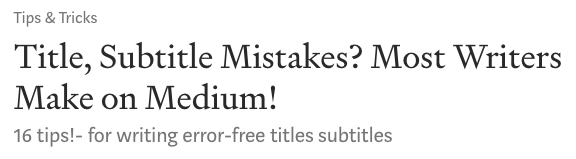
And these three:
“Do You Write A Title As I Did Now Without Putting a Question Mark”
“What Surprises You Is Giving a Question Mark when It Is Not Required?”
Do You Know Why They Robbed Our House?!!!!!!
Or any other punctuation mistakes, including the correct use of the comma. To use the oxford comma or not to use the oxford comma, that’s not the question. Put a comma only when you have to put a comma.
And who puts a dot at the end of a title? — except those who want to block the minds of the readers at the beginning.
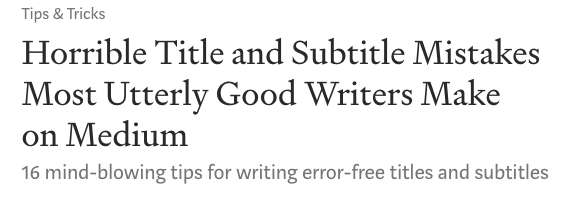
8. Do not use clickbait and sentimental titles and subtitles.
I have seen great writers with (100 million views) making this mistake, mainly when they use sentimental words and phrases to catch readers’ attention. Look at this:
“6 Astonishing Facts About World’s No. Soccer Player — Number 4 Might Shock You”
There are three issues with the above title:
First, why didn’t you name the player? Why are you hiding the facts? Second, what’s number 4? Only those with an information vacuum might click it. Well, after reading, even they might unfollow you.
Another thing that you need to beware of is the sentimentality of titles and subtitles. Social media giants are working to identify clickbait titles in articles people share— especially those that are emotionally manipulative. If you want to avoid having issues on social media and here on Medium, you have to be careful. Words such as ‘Horribly,’ ‘Astonishing,’ ‘Mind-blowing,’ and the like are sentimental. As a writer, you need to be impartial and unbiased as much as you can — especially in the title and subtitle.
9. Do not answer all the points in the title and subtitle.
Title: “Quit Smoking for 2 Reasons,” Subtitle: “You will die young. 2) You’ll have bad breath every day.”
Ok, thanks. Why would I read the story? — even if you have talked about lung cancer as a result of smoking.
10. Avoid writing weird titles or subtitles.
You can write the name of Elon Musk’s Son: “X Æ A-12,” but not these:
‘2’
‘JKMETTT and RTBYYwE deals’
‘My phone number: 0948483434’
‘Hi guys’
‘Please read my story below this title.’
‘What do you guys suggest for my title?’
‘7 rEaSoNs bLa bLa’
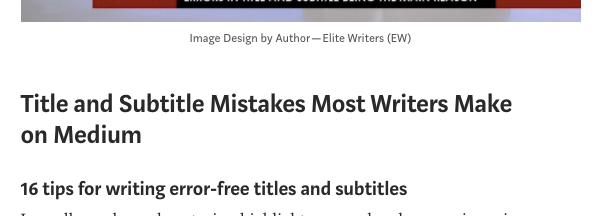
11. The title, subtitle, or both appearing below the featured photo.
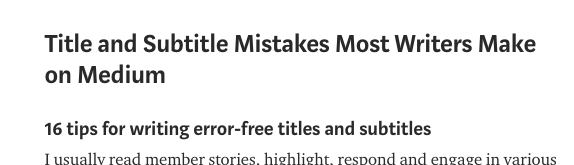
You’re not using the formatting Toolbar. Select your subtitle and click on the small T.
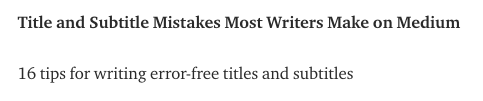
12. Your title is like a bold-faced text like this.
13. How to write in title case?
If you’re unsure whether your title looks good in terms of capitalization, make sure to use online tools. Title Case Converter converts your ‘aWkWarD tExtS’ to a title case in APA, MLA, Chicago, New York Times, and other prominent styles. The most commonly used ones are MLA and APA.
For “title case rules of eight common style guides,” such as MLA, APA, AP, NY Times, Wikipedia, AMA, Chicago, and the Bluebook, see this.
14. Ask these questions while drafting your titles or subtitles:
- Is it vague? Make it meaningful.
- Is it wordy and long? Make it short and concise.
- Is it dry and dull? Make it lively and appealing.
- Is it misleading? Don’t make false promises.
- Is it sentimental? Don’t attract the reader’s attention by using sentimental words.
- Is it irrelevant to the main idea of the story? Make it relevant, or write another story under this title. LOL
- Is it very broad? Make it somewhat specific and focused.
- Is it a question? Your audience care about your findings, not the research question. Use it only if there’s no other choice.
- Is it not keyword-search-friendly for search engines? Make it like that, so that you attract external organic traffic.
- Does it have something for the reader? Don’t write, “What’s Life?” — instead, write what’s in this “Life” that is important to the reader.
- Do you use big words? It would help if you cared for the readers’ ego.
- Do you use urgency? It has to create some urgency and importance in the mind of the reader (Don’t mix it with clickbait, sentimental and misleading titles).
- Is it a duplicate title? Use search engines to search for the title that you’re drafting — and of course, Medium.
- Is it a generic title? “Windows 8,” What about it, boy? Your story will be placed on page 1,233,458 of Google — even though it might be relevant to the users’ queries. And on Medium? Same story.
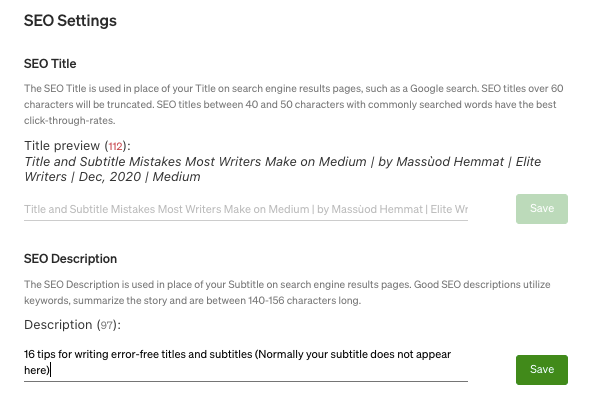
15. Do you edit the ‘snippet view’ or the SEO Description?
When someone finds a copy of your story on a search engine, they see the title along with some snippet text. That snippet text serves as a subtitle or an intro of your story on Search Engine Results Pages (SERPs). Make sure to take care of it by clicking on ‘SEO Description’ under ‘More Settings.’
16. Did you ever use ‘Kickers’ above your titles?
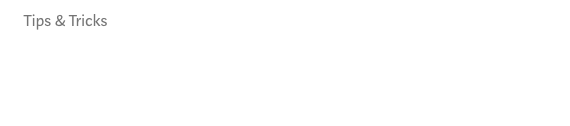
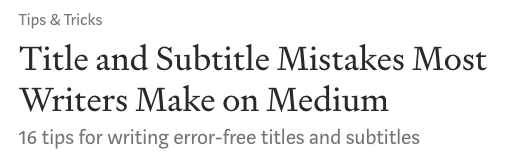
After writing your story, click on the title and move the cursor towards the very left (or the beginning of the title). Then press ‘Enter.’ Above the title, you can see white space. Click on the that space, and write a word. Select it, and then click on the small T on the toolbar menu. You’ll see a gray word named, “Kickers.” Have a look at the “Tips & Tricks” below:
Check out this link from Medium Creators for more details:
Note: You might consider applying some of these tips anywhere outside Medium when writing titles and subtitles.
If you’re interested in writing error-free stories, kindly have a look at my below story on some tips from Stephen King’s bestselling book, ‘On Writing’:


