
Titi
A titi could climb a titi… and still be rejected by the Spelling Bee
Today’s New York Times Spelling Bee letters:
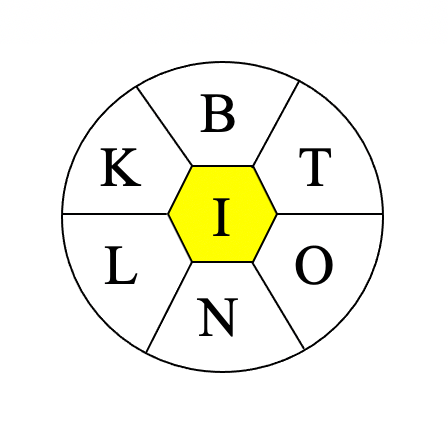
B, K, L, N, O, T, and center I (all words must include I)
Merriam-Webster says…
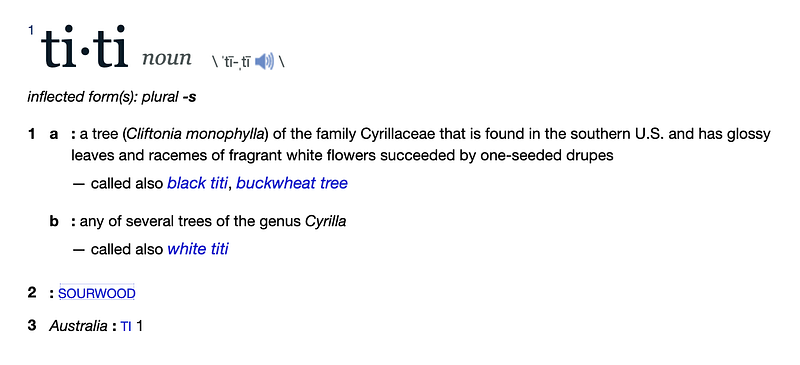
…and…
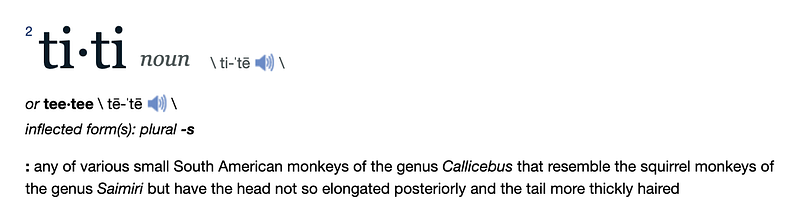
Silly little dictionary! Don’t you know titi can’t possibly be a word if the New York Times says it ain’t?
For further fascinating facts, check out the Spelling Bee Master.
What’s your favorite dord* from today’s puzzle?
My Two Cents
I regularly use Medium’s association with Unsplash to find the photos I place at the top of my daily column. I search for pictures using key words — usually one, but sometimes two or more. I’m not sure exactly how their algorithm works, but it seems that placing phrases in quotes or using the + between two words (as opposed to simply typing two words) does not make a difference when it comes to search results.
When I entered titi a few minutes ago, I was hoping to get at least a few photos of a monkey, perhaps maybe even one of the sooty shearwater (more about that later).
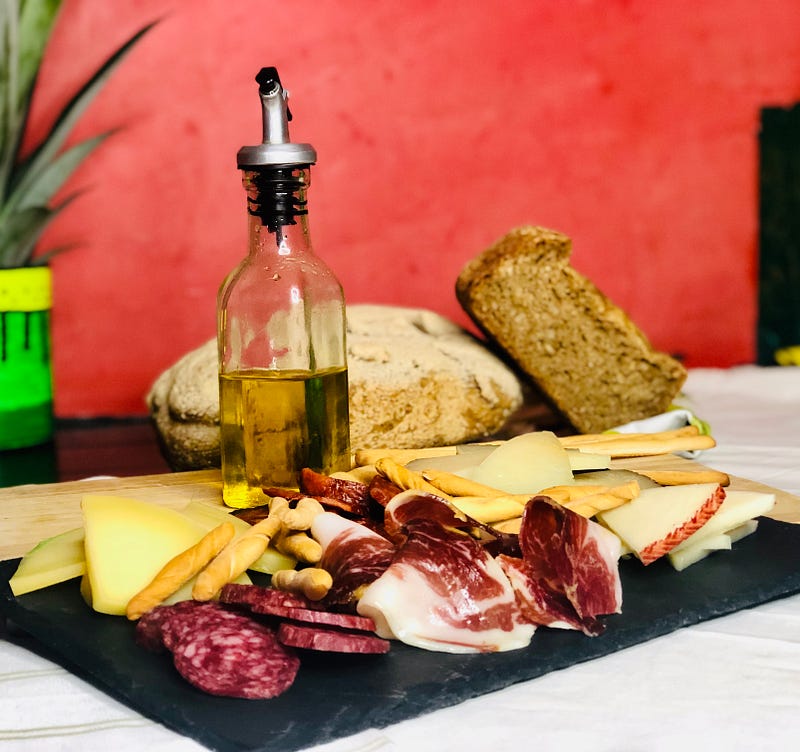
I was not expecting the above photo of cold cuts, cheese, bread, and olive oil.
In case you’re wondering why I didn’t do a search for “titi monkey”… I did:
I’m not an expert. but I don’t think any of the above qualifies as a titi monkey. Especially the one in the middle row on the right.
The fact that you’re reading this article means the article has been published… which means I opted for leaving the photo of food for my article on the word titi. The only drawback was having to take a break to go nibble on some bread and Manchego cheese. Talk about your not-so-subliminal advertising!
Curious, I decided to contact the photographer, Antonio Molín. Which was much easier than I thought, since on his Unsplash page he provided his website, which in turn provided a contact email and phone number. Turns out he has an address in Madrid, Spain, where I happen to live.
So I wrote to him via whatsapp, and he replied lightning fast and explained that the photo I chose was one of several he took for a bar called La Titi Taberna. A name that in English sounds much dirtier: The Titi Tavern. Although the bar’s website still exists (you can even check out their menu), TripAdvisor says the place is closed temporarily, while other online comments indicate it shut down for good.
This morning while I was playing the Spelling Bee I started off thinking about a tropical monkey called titi, and now I’ve ended up writing about a local designer and photographer named Antonio.
And that’s one of the main reasons I love writing this column: every day I discover new and interesting things!
Thank you again, Antonio Molín.
http://antoniomolin.com/projects
Monkey see, monkey do
Although the dictionary’s first definition of titi refers to trees, my mind always pictures the monkey first. That’s because I grew up speaking Spanish, and in Spanish tití is also a monkey, but not the same one as the English titi. The Spanish tití, also known as the “real tití”, is the common marmoset, whose distinguishing features include white tufts of hair at the sides of the head (much like George Washington) and long, banded tails (not at all like George Washington).
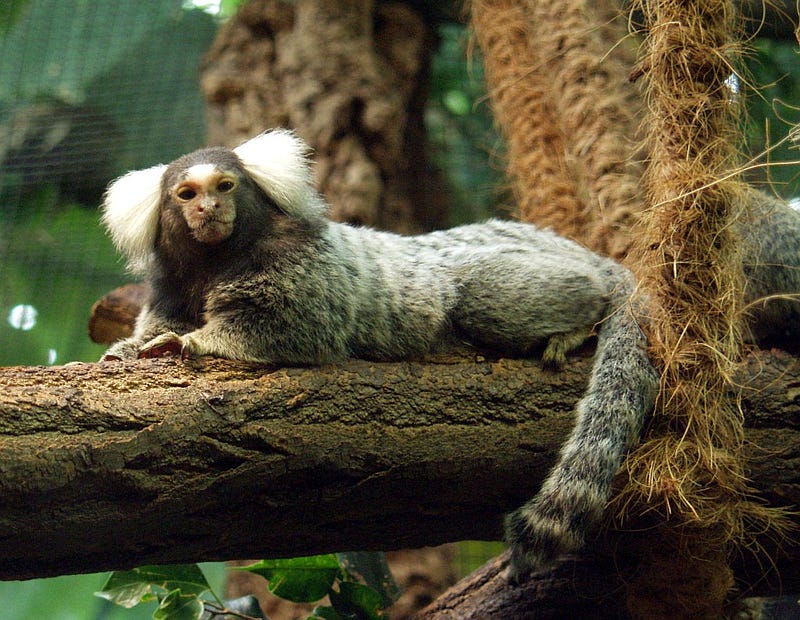
This cute little New World primate was just chilling in the northeastern coast of Brazil most of its life, until some schmuck decided it would be a good idea to capture specimens and sell them as pets. They spread around, reaching southeastern Brazil and even Argentina, where today they roam cities such as Rio de Janeiro and Buenos Aires as invasive species.
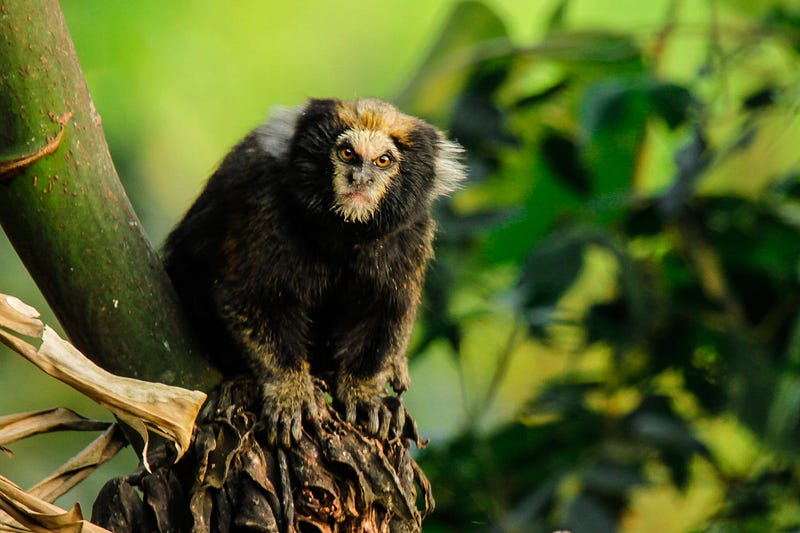
Yeah, this one got its “invasive species” game face on. If I were you, I wouldn’t mention that 7–1 thrashing Germany gave Brazil in the 2014 World Cup…
Now, in English titi typically refers to three genera of monkeys that were once considered only one: Callicebus. This split was proposed several years ago, which is quite recent for a taxonomic overhaul. So right now it seems titi could be used to name any of the monkeys in the Callicebus, Plecturocebus, or Cheracebus genera. Here is a sample species of each genus.
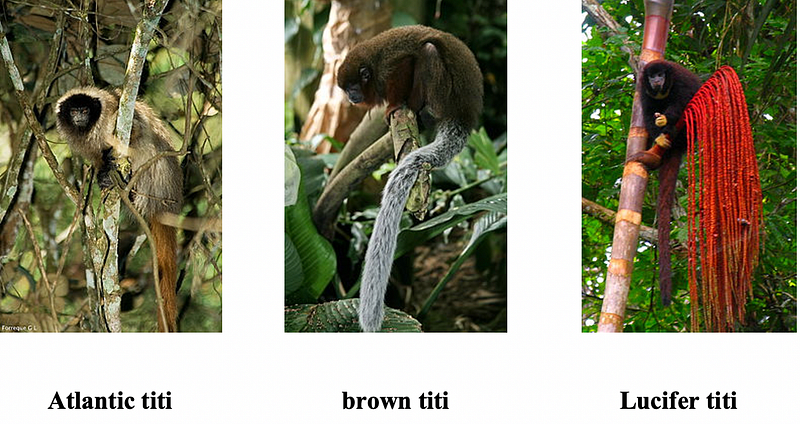
If you mistook those long red tendrils as belonging to the monkey… well, so did I. “That’s one hell of a titi,” I thought. “No wonder it’s called Lucifer!”
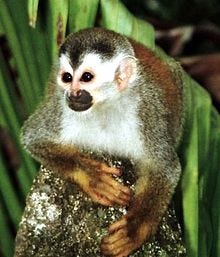
There are also “fake titis” in the monkey world. These include the Central American squirrel monkey…
…and Geoffroy’s tamarin…
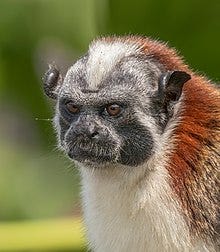
…which, after becoming emancipated, no longer belongs to Geoffroy.
The birds and the trees
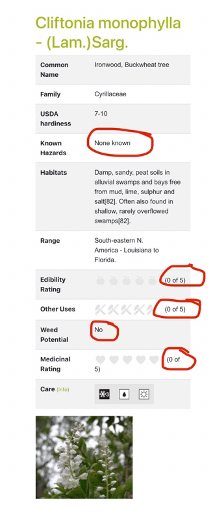
The very first definition the dictionary provided for titi included Cliftonia monophylla, also known as the buckwheat tree or black titi, a tree native to the southeastern U.S. that does not score well in its usefulness:
The other plant named titi (swamp titi, red titi, black titi, white titi— take your pick) is the Cyrilla racemiflora, a flowering plant that grows in the southeastern U.S., too, but also through Central America and parts of South America, including Brazil and Colombia, where titi monkeys live.
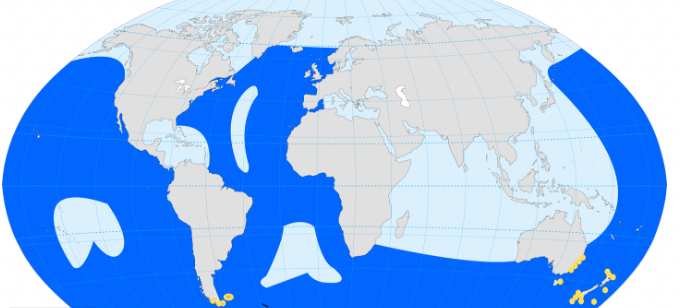
As for the bird called titi, that’s what the Maoris call the sooty shearwater, a seabird that truly gives new meaning to the term “globetrotter” — or, in this case, globe-flyer. The dark blue indicates the areas where it hangs out:
Normally, this bird likes to swim calmly around, posing for pictures that will eventually make it into Wikipedia:
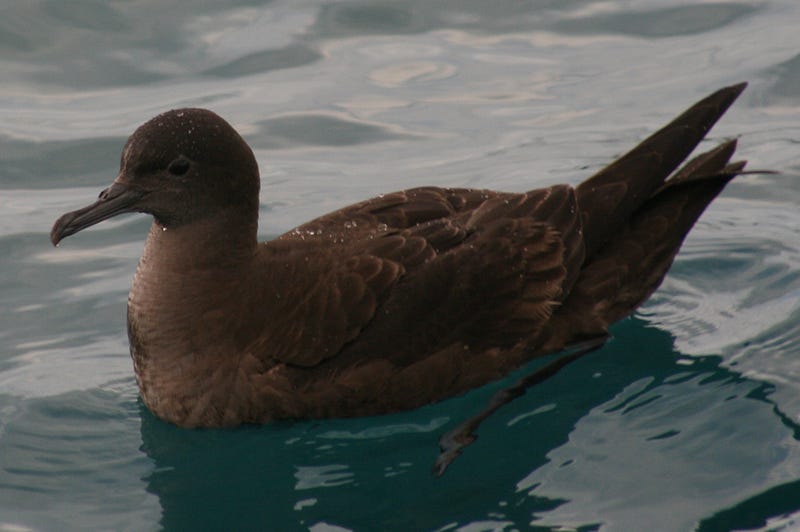
But in 1961, the Santa Cruz Sentinel reported that thousands of sooty shearwaters went nuts in California. They were seen throwing up their anchovies (not a euphemism), crashing into objects while flying, and dying on the streets.
Legend has it that this newspaper article, plus a short story by Daphne du Maurier sparked a random local resident to come up with an idea for a movie. You may have heard of it…
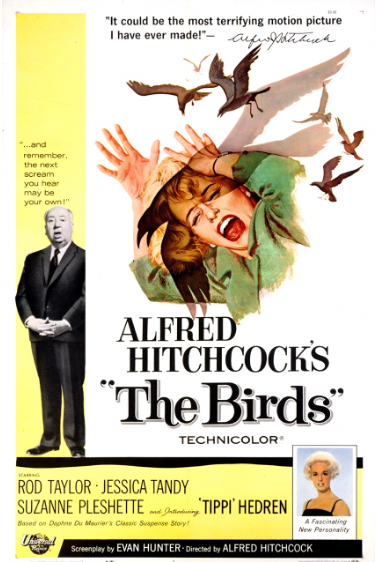
So now you know… Alfred Hitchcock was inspired by titis. Say that exact sentence next time someone mentions the movie and watch their reaction.
By the way, if you get a chance, I highly recommend reading the short story by Daphne du Maurier. It’s very different from the film.
Since we’ve clearly established that a titi is both a monkey and a plant that grows where the monkey lives, here is a deep and important philosophical question: if a titi climbs a titi, can the editors of the Spelling Bee still pretend that the word titi is a dord*?
You can check out my previous entry on another dord* here:
*What the heck is a dord, you ask? Here’s the answer:


