
Costa Rica Adventures XIV
Tico Tales: Night of the Flies
Food for thought?
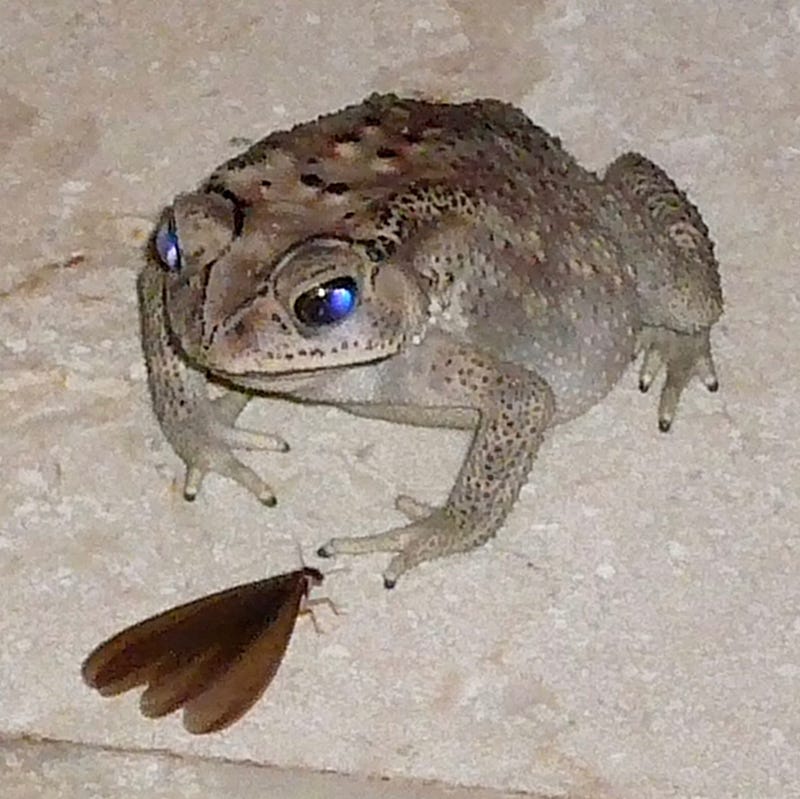
Some years ago, on a visit to the beautiful island of Bali, Indonesia, I witnessed a “night of the flies” from the relative protection of my cliffside terrace in the town of Ubud. Suddenly the sky darkened with millions of tiny creatures madly flapping about in a sex-crazed aerial frenzy.
The next morning, the terrace was covered with cast-off bronze-colored wings and a few staggering stragglers about to become supper for my amphibian friends.
At the time I had no idea what I was witnessing, other than what I thought was a large, simultaneous hatching and mating flight of some kind of insect.
Years later — this time on a visit to the southern zone of Costa Rica during the rainy season — while enjoying a touch of rum on the veranda, the very same thing happened! It had been raining rather heavily much of the afternoon, but now the sun was out and just about to settle behind the western slopes.
Then, the sky erupted! Clouds of flapping insects surrounded us, oblivious to our presence. My late friend Jan Hart, who’d lived in Costa Rica for a dozen years, shrugged, saying, “Keep your mouth closed unless you want to swallow some flying termites.”
Flying termites? Yikes! If you’ve ever had these critters eat part of your house, you’d recognize that creepy-crawly sensation up the spine I was feeling. But, since then, I’d visited Costa Rica many times — including one tour where a guide took us deep into the jungle to show us where baby hummingbirds hatch, where snakes hide, and how termites live.
He made us each actually eat a couple of arboreal termites, breaking open their tree-trunk tunnels and catching them bare-handed as they stampeded out. Yes, they do taste just like peanuts (except for the tickle on the way down). I’m now reassured in knowing that if I’m ever lost in the jungle, there will be something abundant and delicious to survive on.
Termites: What’s not to like?
Termites are highly social insects. They live and work together in cooperative colonies, with physically different members performing different specific functions.
- Soldiers are brawny wingless guys with strong jaws that defend the colony against invading insects (and tour guides).
- Workers — the most numerous — are also wingless and perform most of the work of the colony. With specialized microbes in their guts, able to break down tough cellulose and cell walls, they feed the rest of the colony. (You can think of these “workers” as the colony’s taxpayers.)
- The reproductives are dark brown to black — each with two pairs of wings more than twice the length of their bodies. When colonies reach critical mass, reproductive males and females swarm from the nest — often after heavy rain — to mate in the air, shed their wings, and start new colonies. One female will become the queen of the colony, continually laying eggs to produce workers and soldiers.
The workers are the “destroyers,” in terms of human property. But that’s a human judgment, made without considering their important role in the global ecology. In addition to their other contributions to forest clean-up and maintenance, their primary job is to feed the growing colony, which they do tirelessly and without complaint.
We may not appreciate termites chewing up our housing infrastructure, but they aren’t all bad! It turns out they’re quite valuable to scientists who have found — in studies funded by the US Department of Energy — that the digestive systems of Costa Rican termites provide the formula to eventually create bio-fuels.
While you try to wrap your mind around the quantity of termite gut output it would take to gas up your car, consider the other good news for the economy — termites also create construction and remodeling jobs!
And, they’re quite delicious as a healthful snack. 😉

And do not miss my former friend’s response to all that “mad flapping around in a sex-crazed aerial frenzy.” You’ll laugh out loud, whether at him or with him only you can say: