
Through 8 Years of Minimalism, I Created a Meaningful Life
I synthesized insights from simplicity experts and personal experience.
I distinctly remember the moment I sat with “The 80/20 Principle” book by Richard Koch at a cafe, and it dawned on me just how many areas of my life could be redesigned, simplified. I don’t have to make space for the people or things I “sort of like.” I get to be really picky and purposeful about everything.
Eight years ago, I discovered minimalism. Bit by bit, being intentional has shifted my closet, fitness, living space, finances, hobbies, relationships, career choices, and spirituality for the better.
Creating a meaningful life means I’ve chosen and taken control of all the things I can. Rather than let consumer messaging drive my decision-making, I slowed down. I’ve been thoughtful about the items, experiences, and emotions I desire and shifted my lifestyle to empower me.
Like most people, I started with my closet and slowly moved outwards. Along the way, I discovered new layers of awareness. Mostly, I’ve learned that I will always be growing and needing to let go of things that no longer serve me.
Starting with clothes or other physical possessions gives you the framework to declutter anything. Minimalism is the ongoing process of removing the unimportant to make more space for what is important.
This past year has been especially eventful for me in my inner world. I explored inner pain, processed deep trauma, and unraveled layers of conditioning. My simple lifestyle gave me the freedom to make significant shifts, like taking an extended sabbatical or finding ways to work for myself.
“The best way to enjoy your favorite things is to only have your favorite things,” — Courtney Carver.
I believe minimalism is one powerful cure for our capitalist and productivity-centric American culture. We can spend less time overworking ourselves to impress people we don’t actually like and more embracing the most meaningful parts of our lives.
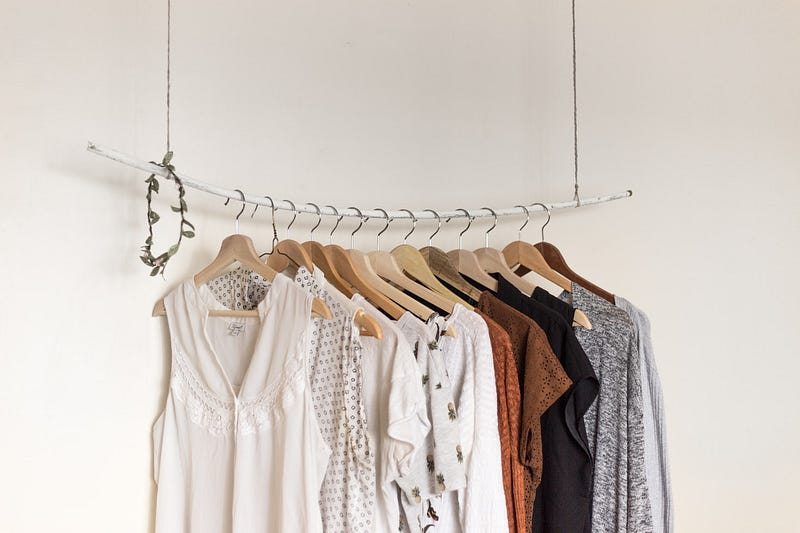
Closet Simplicity: A Gateway Into Minimalism
As a woman who enjoys fashion, fitting my things into a dorm room caused some issues. I remember sitting on my knees as I unpacked, feeling overwhelmed and completely embarrassed. Surrounded by bins and boxes of clothes, my claustrophobia kicked in. I cried a lot, and it sucked.
Soon after this memorable breakdown, I discovered minimalism. I quickly became passionate about simplicity and downsized nearly 75% of my possessions. I felt so good! I grew addicted to the sense of relief and freedom that came with letting go.
I’ve been following Courtney Carver, creator of “Be More with Less,” from the beginning, and it seems like closets are most people’s starting point.
It makes sense. Our clothes often represent how we feel about ourselves and how we want to be seen. With social media and ongoing comparison, it’s easy to feel pressured to please others.
Plus, finding your personal style is tough, just like figuring out who you are and how you want to show up. Sometimes it’s easier to start with the things you know you don’t like, like chiseling a new sculpture.
Leading up to my decluttered closet, I’d been really excited about owning a different dress for every day of the year. At one point, I stuffed my closet with nearly 50 dresses. But as I spent time sorting, I realized how many I only sort of liked or only wore on “skinny days.” Maybe you can relate.
We really don’t need that many things, and the excess usually causes more harm than good.
“People were created to be loved. Things were created to be used. The reason why the world is in chaos is because things are being loved and people are being used,” said Dalai Lama XIV.
How I Redesigned My Entire Lifestyle
After decluttering my closet, I immediately began simplifying the rest of my physical possessions — doing this in college was a blessing since I didn’t own too much.
Over the years, I’ve had countless wins letting go of what isn’t working to create more space for things I love. But here are a few big decisions and milestones that I’m proud of along my minimalism journey.
- Post-College Gap Year: I lived in four different homes: with my parents, a flat in Spain, then two shared homes in downtown Nashville. Since I’d minimized my possessions, I made these transitions pretty smoothly.
- A 20-Hour Work Week: After the gap year, I got into entrepreneurial books and automation tools and got clear about the type of work I wanted. That’s when I met more entrepreneurs and designed my then-dream job. I worked remotely from beautiful locations while enjoying all the perks of a full-time job.
- Move to California: In 2017, I was ready to make big shifts in my lifestyle, relationships, and work. So I made a bold decision to take out loans, sign up for a UX Bootcamp, and move to San Francisco with two suitcases. Given my previous lifestyle successes, I knew I would make this UX career work, and I did — Also, I love this city!
- One-Year Sabbatical: Throughout my work in technology, I paid off the loans quickly since I didn’t spend much and began building a “freedom fund.” I learned to optimize my spending based on what brought me the most joy, like relationships and self-improvement. When I needed to take a break, I was ready.
- Recreating Myself Again: Around the same time in early 2020, I was ready for more significant changes. I discovered shadow work and began peeling layers of conditioning. Having so much clarity in my life already enabled me to focus on intense inner work.
With all my experimentation and transitions, it’s never been about owning as few things as possible — although I’ve experimented with pushing my limits. Minimalism is about clearing out the resistance, anything holding you back from your most expansive life.
The process of letting go, saying “no,” and knowing when to say “yes,” gave me the foundation to take on bigger, meaningful challenges.
My Favorite Insights From Experts and Experience
When it’s time to take action, here are a few tips and approaches that have stuck with me over the years:
Get started:
- Focus on one category at a time: Marie Kondo recommends this, and it’s worked well for me. One day I might focus on art supplies or wardrobe. Another day I may sort through journals or important documents. Always find ways to break large tasks into smaller ones.
- Start with needs and favorites: When decluttering a category, Joshua Becker suggests starting with the question, “What do I absolutely need?” You pull those things out, then identify your favorites. With this approach, you’re more likely to let go of more items at a time.
- Take baby steps: Letting go of things that aren’t working for you can be a surprisingly emotional process. It’s okay to put things in a “pending” box and set a time to revisit. Let change happen slowly, at your own pace.
- Look for big wins: Getting rid of my car has saved me so much money and given me numerous opportunities for exercise, creativity, and simplicity. Anything taking up that much space, time, or energy should be worth it.
- Clear out floorspace: I try to keep only large furniture on the floor as a rule of thumb. This approach makes spaces feel less cluttered.
- Use the “20 x 20” rule: The Minimalists suggest letting go of things you aren’t using when you can replace them for less than $20 in under 20 minutes. This rule has helped me feel more confident about letting go of a few items already.
- “Just in case” usually means never: If I hear myself saying “Just in case,” I usually put the items in a “pending” category or donation box.
Keep going:
- Give everything a home: If it takes more than 30 seconds to find something, it’s probably in the wrong spot.
- Seek ongoing simplicity inspiration: You can easily find empowering YouTube channels, blogs, podcasts, or Instagram accounts to follow. My recent favorite has been the “Soul and Wit” podcast Courtney Carver does with her daughter Bailey Carver.
- Prioritize your favorite things: Whether it’s a hobby you love, a favorite outfit, cooking supplies, or a special place, create more space for these things. I’ve also noticed that the fewer things I own or commit to, the easier it is to care for items and spaces or enjoy experiences more fully.
- Celebrate wins along the way: Like many good habits, simplicity is about creating a more fulfilling lifestyle. Slowing down, being indulgent sometimes, and embracing self-compassion throughout make the process that much more enjoyable.
- Find your simplicity style: Every piece of advice is a suggestion or an invitation. Everyone’s journey will be incredibly personal and unique. Rather than comparing yourself to others, let people inspire you to create your version of minimalism. You know what’s best for you.
Whenever you’re ready to jump into your simplicity journey, you’ll have numerous experts to choose from for inspiration. People like Marie Kondo, Courtney Carver, Joshua Becker, Matt D’Avella, Leo Babauta, and The Minimalists guys provide so much fun, accessible insight.
This minimalism movement has been immensely impactful in countless ways, and I wholeheartedly recommend these practices for everyone.
Whether you’re decluttering your kitchen cabinets, social commitments, finances, or outdated beliefs, being intentional about how you spend your time and energy will help you create more meaning in your life.
When you clear away the noise, it’s much easier to discover your sense of purpose.
Early 2020 I had an emotional rock bottom. But I had cultivated so much space and clarity in my life that I was able to get through hell. In the fires of suffering, I learned to get curious. I channeled every ounce of pain into my higher purpose.
By dealing with my demons, I gained access to new, astounding parts of myself. I use my voice to empower others and my energy to create a lifestyle that lights me up.
Though minimalism and simplicity might start with decluttering your closet, this lifestyle approach has the power to reframe and bring joy to every corner of your daily experience.
What are you waiting for? You could start now. I dare you.
I write inspiring, uplifting, and empowering content on transformative topics. Join the Weekly Love News on my website to receive free newsletters each Tuesday in your inbox.