
Three Is A Magic Number
February at the Book Club — ’The Three Body Problem’ (Cixin Liu)

One of the main things I look for in a novel is that it challenges my mind to think, encourages me to learn something and motivates me to learn more by finding and reading further material along the same lines— both fiction and nonfiction.
I do read some ‘light and fluffy’ stuff because I have issues with chronic pain and fatigue and sometimes I literally can’t cope with anything that needs too much thought or concentration. (I do mean literally too. Unlike a number of people who say literally in literally every other sentence, whilst having literally no idea what literally means…because it’s literally just a fashionable, ‘in’ word that literally everyone is using, like constantly.)
I have literally ended up in tears because, on top of the pain I’m dealing with and my mental health being on the slide, between high levels of fatigue with accompanying brain fog and the extra drowsiness/woolly headedness afforded by my pain medications and anxiety/depression ones my brain cells are snoozing in a padded cell while I’m trying to read a Booker Prize shortlisted novel ….and failing miserably to retain or follow a single paragraph.
However, I digress…
I love novels that give me something to get my teeth into. Something to really think about for a long time afterward. A subject that pricks my curiosity and makes me want to go and do background reading. A piece of writing that makes me want to go and put the author’s other books on my wish list (if they’re not there already!) — or if it’s the first in a series, buy the second before I even get past halfway through.

Cixin Liu’s ‘The Three Body Problem’ is such a book. Not my usual choice — I don’t read science fiction all that often — I saw the title on the Counter Arts book club list as the book for the month of February, looked up a synopsis and was immediately intrigued.
“Cixin Liu is a Chinese science fiction writer. He is a nine-time winner of the Galaxy Award (China’s most prestigious literary science fiction award), winner of the highly esteemed Hugo Award in 2015 (for The Three-Body Problem) and the 2017 Locus Award (for Death’s End) as well as a nominee for the Nebula Award. Although properly known as Liu Cixin (刘慈欣 | 劉慈欣), in English translations of his works his name is given in the form Cixin Liu.” — Cixin Liu — Author
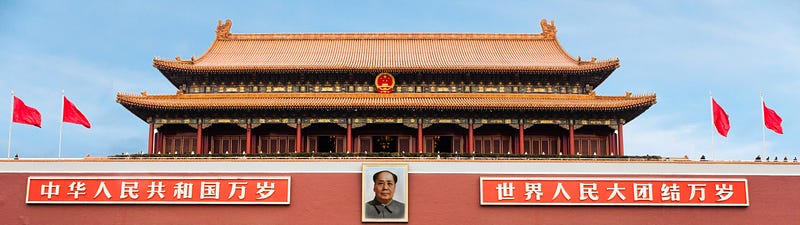
‘The Three Body Problem’ is the first of the ‘Remembrance of Earth’s Past’ trilogy and this first novel begins in the past, during the years of Communist Party Leader Mao Zedong’s Cultural Revolution in China.
In 1967 we meet Ye Wenjie, an astrophysics graduate, and learn about the brutal methods used by the Red Guard to convert her mother and younger sister, while her father was murdered during a “struggle session” (a public questioning, a mass rally, where the ‘enemies of the revolution’ - often academics and intellectuals - were abused and humiliated until they were broken enough to ‘confess’, or were beaten to death by overzealous young revolutionaries).
Ye Wenjie herself is branded a traitor and sent off to join a labour brigade felling trees in Outer Mongolia. There she again finds herself in hot water when she befriends a government journalist; who lends her a copy of Rachel Carson’s ‘Silent Spring’; persuades her to translate and transcribe a letter detailing suggestions for ecologically focused policy changes; is betrayed by the journalist and ends up in a prison cell, believed to be the writer of the letter which (predictably) had not been taken well by the new regime.
This time Ye Wenjie is sure she will die, frozen and alone in her cell, but is rescued by Yang and Lei two military physicists who it turns out are in need of her specific knowledge and skills for a highly secretive project they are working on. The Red Coast Project is housed in the base with the radar dishes atop the very mountain where she had been felling trees (the coincidence!) and Ye is initially told that her work will contribute towards an initiative utilising high power radio waves to damage spy satellites.
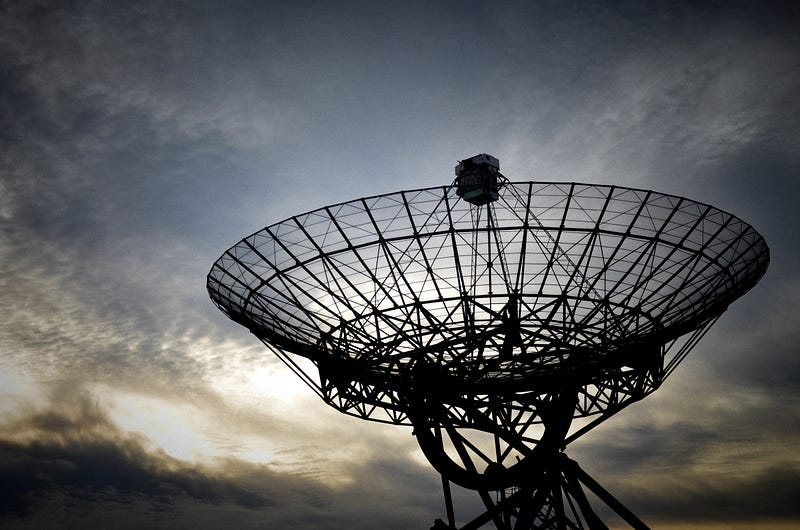
Following this introductory section, the novel moves backward and forwards in time, filling in detail as we learn more and more about the people, the science and the real work being undertaken by the Red Coast Project.
Fittingly ‘The Three Body Problem’ involves the weaving together of three strands of narrative. As detailed above, the first of the three involves the background of the Chinese Cultural Revolution and the work done at The Red Coast Project. Aside from this, as the book develops, we move forward in time to the early years of the 21st century and play out centuries in a virtual world, set on an extra-terrestrial planet that suffers through devastating effects of extreme climate brought about by having a three sun system.
Here lies the titular ‘Three Body Problem’ — and we follow through various attempts from historical figures and ‘real life’ scientists (who are playing the ‘game’) to solve the problem of predicting a pattern within the chaotic and thus far entirely unpredictable movement of these three solar bodies. As it transpires, this is no mere theoretical problem these scientists have been working on — the planet is real; the problem is real; and they are trying to solve it so as to have something with which to bargain for the lives of all humankind when the alien Trisolarans arrive at Earth.
Not content with the number of complications and plot twists he has already introduced, Cixin Liu further compounds his motif with yet another way in which his plot utilises a three-way split. We find that among the scientists (and governmental officials from varying countries) who are aware of the existence of the Trisolarans and the threat they pose — there are factions within that group who have different ideas about what they can and should do about that. Three factions in fact.
Three sub-sections within the secret group comprised of those with knowledge of the alien race, the existence of whom is the substance of the third thread of the novel ‘The Three Body Problem’.
The Earth/Trisolaris Alliance or ETO had gathered on a ship owned by Mike Evans, an antispecist, environmentalist, son of a billionaire oil giant who had become disenchanted with humanity, like Ye Wenjie. The ship is named the Judgement Day and became a colony and listening post, with its own armoury which includes small-scale nuclear weaponry. However, Evans became secretive and that is where the cracks begin to appear (between East and West?) and splinter factions formed.
Three sub-groups: - The Redemptionists who are involved in the running of the ‘3 Body’ game/simulation, people who aim to negotiate, bargain, barter with the Trisolarans for a positive outcome for the fate of both races and both planets;
- the second, the Adventists are the other extreme, led by those who feel that the sins of the human race are unforgivable, who think that it would be best if humans were to just be wiped out entirely;
- and the third, Survivalists, somewhat self-serving and concerned with only their own families, their own continued existence, who would like to see if they can strike a partial deal (to live themselves and to hell with everyone else), which much as we might be loathed to admit it, probably lies as a balance, somewhere between the two.

Returning to the first theme we encounter, historical and cultural setting, translator Ken Liu writes in his postscript:
“The best translations into English do not, in fact, read as if they were originally written in English. The English words are arranged in such a way that the reader sees a glimpse of another culture’s pattern of thinking, hears an echo of another language’s rhythm and cadences, and feels a tremor of another people’s gestures and movements.”
…..and indeed the Western reader is left with a sensation of having being immersed in Chinese history, culture and scientific thinking.
However, for a piece of literature written in Chinese, set in China and using Chinese history as one of its three major themes, there seems to be a great deal of Western references and a determined intention towards making this story accessible and engaging for a Western audience.
For a few examples: the sections set inside the ‘3 Body’ VR game include a variety of scientists from both East and West; also Mayan and Egyptian pyramids; the great fictional detective Sherlock Holmes is referenced; and we really can’t ignore the fact that the very first section of this book, ostensibly dealing with the time of China’s Cultural Revolution, not only contains mention of, but is actually titled for Rachel Carson’s ‘Silent Spring’.
The book was mentioned earlier, passing through Ye Wenjie’s hands. How did the young journalist who gave it to her even get hold of a copy?
‘Silent Spring’, an environmental science book written by an American marine biologist (published in 1962, though she began to work on it four years earlier in 1958) was first serialised in three parts in ‘The New Yorker’. The book is a marvelous piece of writing (I have read it, though many years ago now) and became of huge significance to the beginning of the ‘Green’ movement the whole world over, dealing as it does with the adverse effects the use of the since banned pesticide DDT had upon the water supply and food chain, (including, ultimately, human physiology).
Still, it comes as a surprise to find this book taking such a prominent part in the Chinese science fiction prize winner ‘The Three Body Problem’. Until we begin to consider again the root message being shared within Carson’s ‘Silent Spring’. It is, plain and simple, a general, wide-reaching warning:
“Miss Carson’s cry of warning is timely. If our species cannot police itself against overpopulation, nuclear weapons and pollution, it may become extinct.” — The New York Times (1962)
Rachel Carson’s dedication page simply read:
To Albert Schweitzer who said: “Man has lost the capacity to foresee and to forestall. He will end by destroying the earth.”
Silent_Spring-Rachel_Carson-1962.pdf (uniteddiversity.coop)

A child himself during the time of the Chinese Cultural Revolution, Cixin Liu remembers watching China’s first venture into the world ‘space race’ from a rural village in Hunan where he had been sent to live with his extended family …
“It was the first artificial satellite China had ever launched: Dongfanghong I (“The East is Red I”). The date was April 25, 1970, and I was seven. It had been thirteen years since Sputnik had been launched into space, and nine years since the first cosmonaut had left the Earth. Just a week earlier, Apollo 13 had safely returned from a perilous journey to the moon. But I didn’t know any of that. As I gazed at that tiny, gliding star, my heart was filled with indescribable curiosity and yearning. And etched in my memory just as deeply as these feelings was the sensation of hunger. At that time, the region around my village was extremely poor. Hunger was the constant companion of every child. I was relatively fortunate because I had shoes on my feet. Most of the friends standing by my side were barefoot, and some of the tiny feet still had unhealed frostbite from the previous winter. Behind me, faint light from kerosene lamps shone out of cracks in the walls of dilapidated thatched huts — the village wasn’t wired for electricity until the eighties.” Author’s Postscript, Liu, Cixin. The Three-Body Problem (p. 391). Head of Zeus. Kindle Edition.
His own background certainly goes some way toward explaining the novel’s overreaching concern with the human questions within ‘The Three Body Problem’. For a science fiction novel, with so much written detail given about mathematical and scientific concepts, we are also led to ponder questions such as:
- Do humans deserve to keep living on a planet they are destroying?
and:
- What would it take for any one person to betray the whole of the human race?
Had Cixin Liu perhaps read ‘Silent Spring’ himself before beginning on his ‘Remembrance of Earth’s Past’ trilogy? By the time the novel being written in the first years of the twenty-first century, the environmental movement was well established, with the horrors of climate change beginning to be more widely recognised too. Cixin Liu had himself worked as a computer engineer at a power plant; studied water conservancy and hydropower. Under these circumstances, it would certainly seem understandable to want to include ‘Silent Spring’, though realistically portraying the Maoist regime’s reception of that book as staunch denial and branding it as ‘capitalist propaganda’.
A graduate of North China University of Water Conservancy and Electric Power, in his post-script Liu says:
“Scales and existences that far exceeded the bounds of human sensory perception — both macro and micro — and that seemed to be only abstract numbers to others, could take on concrete forms in my mind. I could touch them and feel them, much like others could touch and feel trees and rocks. Even today, when references to the 15-billion-light-year radius of the universe and “strings” many orders of magnitude smaller than quarks have numbed most people, the concepts of a light-year or a nanometer can still produce lively, grand pictures in my mind and arouse in me an ineffable, religious feeling of awe and shock. Compared to most of the population who do not experience such sensations, I don’t know if I’m lucky or unlucky. But it is certain that such feelings made me first into a science fiction fan, and later a science fiction author.” Liu, Cixin. The Three-Body Problem (p. 393). Head of Zeus. Kindle Edition.
This visualisation of complex concepts, which Liu writes is his own particular skill or gift, makes its way into ‘The Three Body Problem’ when we move onto the next part of the book and Wang Miao takes up the position of the central character.
Wang is studying nanotechnology, but he is drawn into an investigation around the mysterious deaths/suicides of a number of other scientists — including Yang Dong, who Wang had personally known and had romantic feelings for. He meets and is recruited by Police Captain Shi Qiang (otherwise known as Da Shi, ‘Big Shi’) after being shuttled to and swiftly dismissed from a high power meeting involving, to Wang’s amazement:
“a United States Air Force colonel and a British Army colonel, both NATO liaisons, as well as two CIA officers, apparently acting as observers.” Liu, Cixin. The Three-Body Problem (p. 54). Head of Zeus. Kindle Edition.
Wang goes to the home of the scientist who was dating Yang Dong. Ding Yi is drinking heavily and his mental health rapidly deteriorating, but when pushed he tells Wang about a scientific discovery that has negated the whole of the field of physics as it was previously known.
This explained the mysterious deaths and suicides, these scientists had devoted their lives to their work and as this new truth was revealed to them they were sent into an existential crisis. None of it was real. None of their scientific work meant anything. Therefore their lives were meaningless and pointless.

Ding Ye also suggests that Wang go to visit Yang Dong’s mother, who is it turns out none other than Ye Wenjie. These visits afford us the opportunity for learning more of her story, how she married Yang and had a child with him, then, in the end, murdered both him and Lei to hide a pacifist Trisolaran’s warning and escape from the Red Coast base where she spent more than twenty years.
These revelations occur at a point in the story where Wang is seeing a countdown appearing — in his photographs and in the night sky which he watches flicker on the level of the cosmic microwave background (an area which is apparently Ye Wenjie’s specialty within her field of astrophysics!)
The countdown terrifies and confuses Wang. It seems nobody else sees it, understands what it might mean …or at least, nobody is willing to admit to Wang that they know what it means. The only indication he has that he isn’t actually hallucinating and losing his mind comes from Shen Yufei, a member of the Frontiers of Science (a group, we are told, devoted to the discussion of fundamental scientific theory). When approached about the countdown, what it means and how he might go about stopping it, Shen is her usual frosty, tight-lipped self and merely instructs Wang to stop his nanotech research:-
“Just stop. Try it.”
— Shen Yufei, p. 83, ‘The Three Body Problem’ (Cixin Liu)
As he is preparing to drive away from Shen’s, Wang also witnesses the arrival of another man. Pan Han is a biologist, another prominent member of The Frontiers of Science. He appears in a panic, demanding entrance, wanting to see someone (Shen’s husband?), but being sent away with as much success as Wang had achieved.
This is a truly short appearance, of seemingly little to no significance — only, in that case, why did the author bother himself to give us so much background information about this man?
Pan, we are told, has previously predicted the linking of issues such as birth defects and ecological disasters to genetically modified (GM) foods. He has also created China’s first (fictional) experimental community, ‘Pastoral China’, which is surprisingly to be found in the midst of one of the country’s largest cities. Members of this community own no property and reuse urban waste for all of their daily needs. His community is thriving, his opinions influential:
“He believed that technological progress was a disease in human society. The explosive development was analogous to the growth of cancerous cells, and the results would be identical: the exhaustion of all sources of nourishment, the destruction of the organs, and the final death of the host body. He advocated abolishing crude technologies such as fossil fuels and nuclear energy, and keeping gentler technologies such as solar power and small scale hydro-electric power. He believed in the gradual de-urbanisation of modern metropolises by distributing the population more evenly in self-sufficient small towns and villages.” — p.84 ‘The Three Body Problem’ (Cixin Liu)

This was the significant visit to Shen’s when Wang happens upon her kitted out in a full virtual reality (VR) suit, which enables her to experience a full range of sensation whilst in the world of www.3body.net (which Wang later begins to experience directly after borrowing a VR suit from work and logging in himself). Wang has realised that Shen is really not the usual kind of person who might play video games, so the reader knows immediately that there is something more significant to be discovered about this VR simulation.
Early in the novel, when Ye Wenjie reads ‘Silent Spring’ she concludes:
“it was impossible to expect a moral awakening from humankind itself”
…and that to achieve such a thing would:
“require a force outside the human race”.
Perhaps this belief is the reason why Cixin Liu wrote an alien race into his story. When we look at the world represented within 3Body, we find a planet ravaged by the extremes of temperature. Tying this in with the introduction early on of the beginnings of the environmentalist movement, it’s not too great a leap to suggest that Liu was merely using an alien planet as proxy for the potential future ravages of climate change upon the Earth.
We might consider also that had he merely written a scientific or political intrigue involving different groups of Chinese citizens - or had he even introduced another nationality to serve as the ‘alien’ race (with or without the suggestion of building a wall…) — he would not have been able to produce the impact he felt was warranted. In fact, as noted in the quotation above, other nations are in fact included in the secret societies, given a common cause against which to band together.
Perhaps then there would have been no critical acclaim, no awards, no chance of the wide-scale distribution needed to get a message out worldwide had Cixin Liu not written science fiction involving alien worlds.
In the end, I can’t help but agree with yesnodunno who wrote in the book club editors’ notes about being left rather wanting and therefore keen to continue on into the trilogy with the next book ‘The Dark Forest’, to see how things develop.
As it stands, the novel ‘The Three Body Problem’ is a fairly short but complex weaving of historical, scientific, futuristic/alien sci-fi fantasy , with ecological end of the world commentary and well-written characters with enough depth and fleshing out to make them believable and relatable.
It mixes a number of genres skilfully, is complex in sci/tech detail, but only enough to make me concentrate harder and be more intrigued, not put off. This novel serves to give the average Western reader the crash course they need in Chinese history, culture and people. An undeniable gem, which is entirely deserving of its award-winning status.


