
Book review — Counter Arts Book Club
Three problems with Cixin Liu’s The Three Body Problem
Kind of
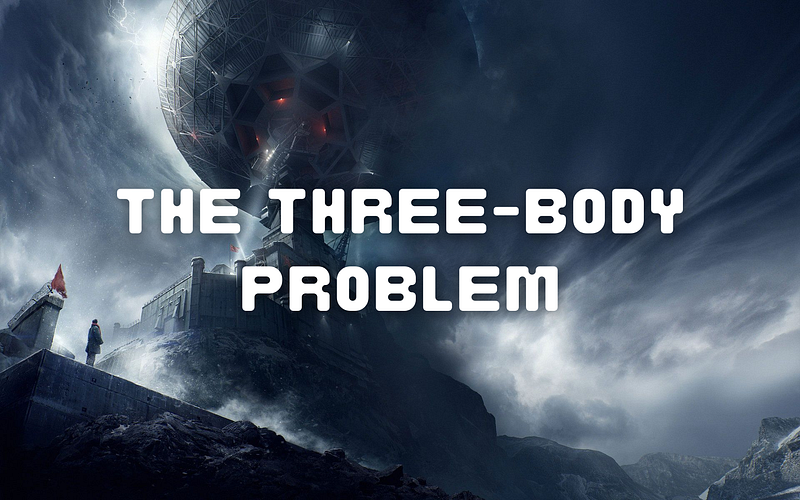
Science-d Fiction
Whilst categorised as science-fiction, The Three Body Problem is heavy on the science with only a sprinkling of fiction. This comes at no surprise, considering Ci Xin Liu’s professional and academic background; graduating from the North China University of Water Conservancy and Electric Power, and having worked as a computer engineer at a power plant in Shanxi province.
The boundaries, or lack thereof , between science and religion in Cixin Liu’s The Three Body Problem, is not to be taken lightly.
To effectively contain a civilization’s development and disarm it across such a long span of time, there is only one way: kill its science. (355)
Tendencies towards escapism in the characters are evident in The Three Body Problem, manifested in their
Behold the revolution
While centred around Chinese culture, community, characters, history, it is done so with a Western sensibility, while a rather ingenious approach, is troubling.
Why science fiction has not evolved sooner to mirror Cixin Liu’s The Three Body Problem is baffling.
The desperation to present a less-prominent topic and cultural influence in a heavily Western-laden genre is clear.
Perhaps the three body problem lies in the connundrum plaguing writers who seek to undo centuries’ old customs and traditions for something more modern and forgiving, without losing the traditional perceptibilities of history. What better way to revolutionise science fiction with the fictionalising of a cultural revolution.
Put simply, bringing forwards into discussion, cultural, social, and political issues in China, with the presentation of humanity’s disintegration during and after the revolution, through a Westernised modality or form.
Not to mention the overtly science-d out approach that could detract from social commentary, although recognisably an narrative stylistic employed with intent.
And as fate would have it, Carlos Garbiras agrees with me, to some extent:
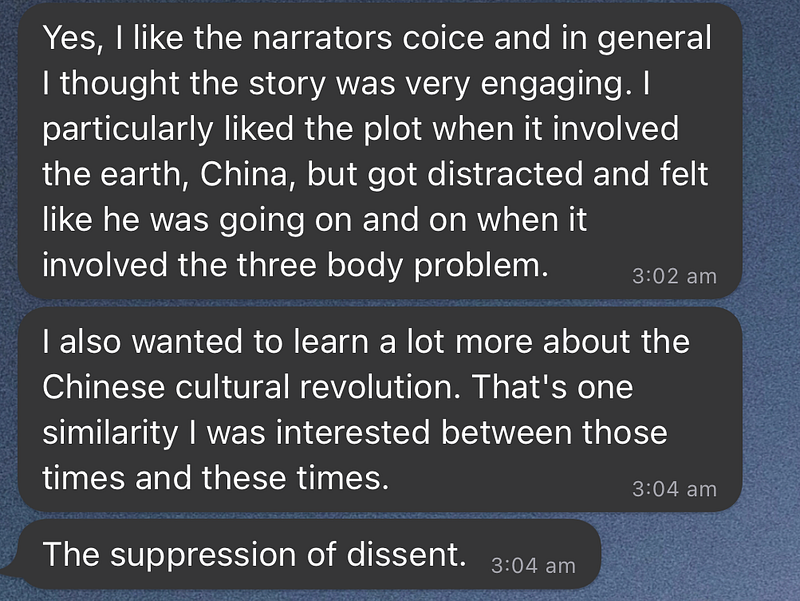
Nonetheless, despite being a work of fiction, The Three-Body Problem holds a mirror to human society, a reflection of humanity’s own shortcomings, philosophies, and attitudes.
I see myself in it, I need more
Do we pseudo-intellectuals at Counter Arts recommend Cixin Liu’s The Three Body Problem?
Yes, yes we do. Even for the disparaging science fiction is for nerds or eww I hate maths and science they’re not creative enough for me audience out there, The Three Body Problem is articulate and poignant in its cultural and literary statements.
I’ll be honest, I absolutely abhorred reading on an e-reader. @ me. The utter lack of that literary sensibility that comes with rubbing finger to dead tree, soaking in the wafting paper trails when reading on a smooth, cold glass seemed…wrong.
Yet despite the deterrence, I found myself completely oblivious to the slick finger flicking as I consumed word after word, syllable after syllable of The Three Body Problem.
Unbeknownst to me, I put down my e-reader after finishing the last page of the book, expectantly swiping to continue the read a day later, only to be faced with the author’s postscript, translator’s postscript, footnotes.
Like (I assume) every other disgruntled reader, I simply had to be certain that the rather — in hindsight — poetic but abrupt ending was all that was left of The Three Body Problem; that my expectancy and desire for more would not be fulfilled.
That is, until I inevitably pick up The Dark Forest and Death’s End in succession to the series.
Thoughts?
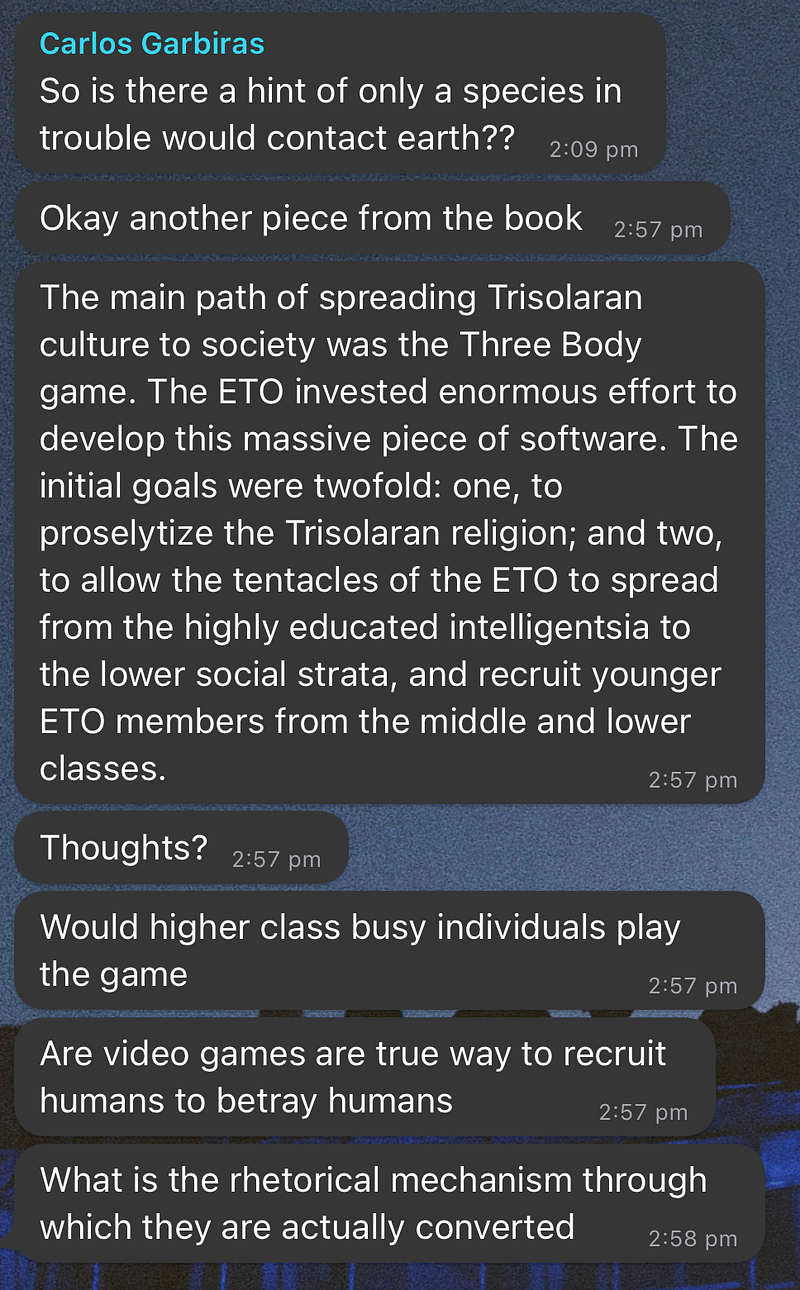
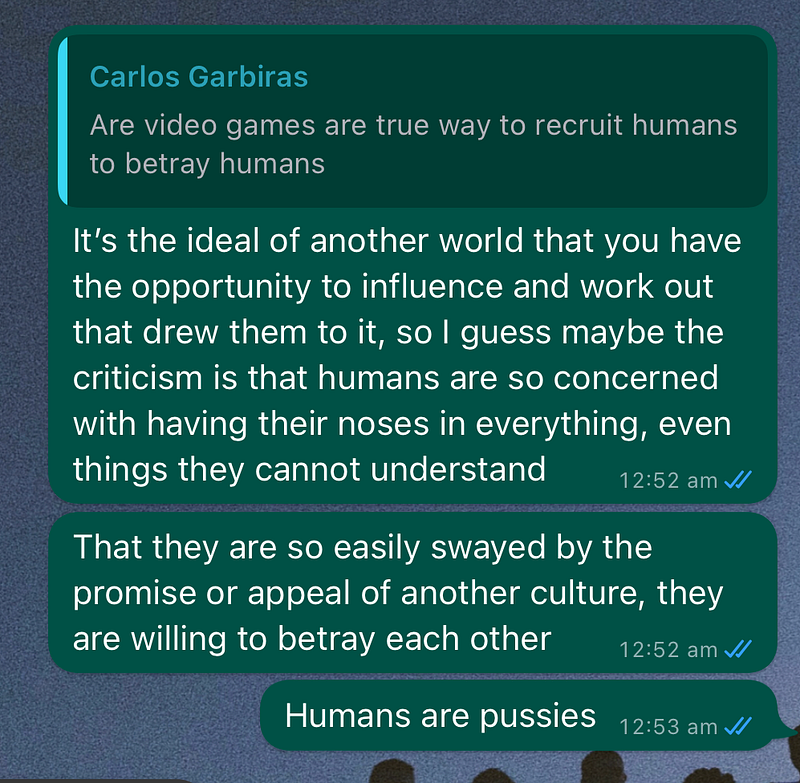
Keep up to date with Counter Art’s book club, where we bitch about books that we are forced to read by our friends, family, and foes.
Remember, all proceedings from articles about the book club will be donated. To find out more, visit:
Referenceshttps://www.newyorker.com/magazine/2019/06/24/liu-cixins-war-of-the-worldshttp://file770.com/liu-cixin-the-3-body-problem-and-the-growth-of-sf-in-china/


