
Three Everyday Habits That Are Damaging Your Brain
They’re rewiring your mind and entrenching negative behaviors.
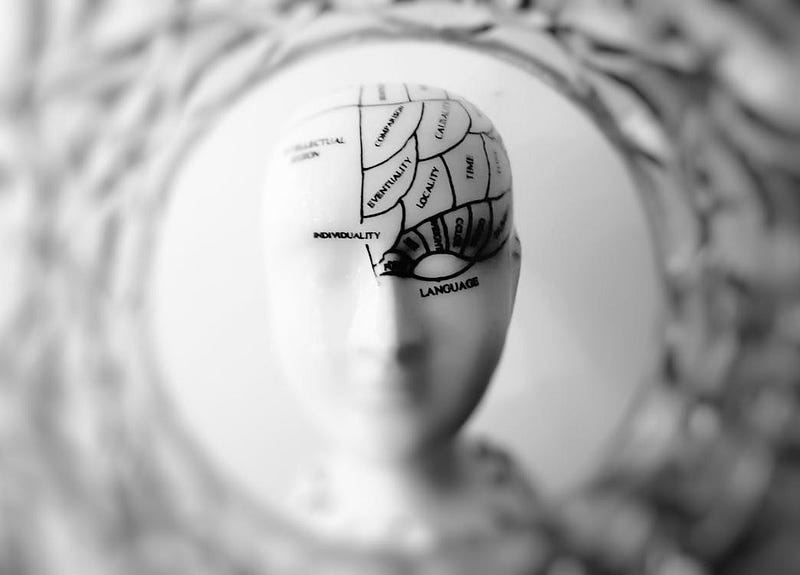
Our brains are one of our most flexible features.
Thanks to neuroplasticity, our neural network can continue to change and adapt for most of our lives. Neural pathways can make new connections, and systematic changes can occur.
These changes impact the way we are, including our emotions, feelings, and behaviors.
Neuroplasticity is influenced by our behavior and circumstances. Persistent stress, for example, can drastically alter our brain's structure. Compared to most animals, psychologist Richard Davidson claims our vertebrate brains are especially sensitive to the outside world. In his words:
“The brain is constantly being shaped, wittingly and unwittingly, by environmental forces that impinge upon organisms.”
The changes in our structure can even influence our abilities. Elsewhere, Kuhn et al (2014,) discovered regularly playing Super Mario causes structural plasticity and an increase of grey matter in the brain. These people are much better at the game than those who rarely play it.
The Entrenchment of Habits
According to Charles Dugg, our behaviors form over time. Our brains get accustomed to the action, which entrenches the habit and makes it almost impossible to break.
They unfold through a psychological “habit loop”:
- A cue or trigger associated with the behavior tells your brain to become automatic.
- Our habit quickly unfolds. From there, we experience a reward (like a quick dopamine hit,) that encourages our brain to repeat the action in the future.
Neuroscientists trace our habit-forming behavior to the basal ganglia (a part of the brain that helps emotional development, memory recall, and pattern recognition). Conscious decisions, by comparison, are made in the brain's prefrontal cortex.
As soon as a habit becomes automatic, the decision-making part shuts down when presented with the behavioral cue. To paraphrase Dugg:
“The brain starts working less and less… you can do these complex behaviors without being mentally aware of it at all.”
This brings a whole host of benefits. We can do cognitively complex tasks — like parking a car or brushing our teeth — without even thinking. That allows us to get more done; we can completely focus on something else. Like holding a conversation or listening to the radio.
But it can also be extremely damaging. It encourages us to act on our negative habits without thinking. When presented with a cue, we could end up smoking and eating junk food.
Because they unfold unconsciously, you might not realize you have these bad habits. But, thanks to the malleability of neuroplasticity, your brain isn’t stuck with them forever. If you can actively change your behavior, your brain will adapt and embed new habits.
You need to break the habits that are damaging your brain. The first step is recognizing which they are.
1. Being Too Sedentary
Most of us know that, over time, physical inactivity will take its toll on us. Through heart disease, obesity, and depression. But beyond the physical consequences, it can alter and damage the structure of our brains.
A study by Nicholas A Mischel (et al) has revealed being too sedentary can cause changes to the brain. It changes the shape of certain neurons. These structural changes:
- Increase our brain's sensitivity to excitatory stimuli, which puts us at greater risk of shock and cardiovascular disease.
- Researcher J. Aging Res, argues they correlate with mental decline, especially in older adults. Inactive people experience a decrease in cognitive ability and working memory.
- Increases the likelihood of dementia and Alzheimers.
Physical activity benefits us cognitively. It increases the brain chemicals that promote better memory and learning. Being too sedentary causes damaging changes to our brain structure.
So be sure to get that daily dose of exercise. If you’re sat in the office for 8 hours, don’t come home and watch TV. Take a walk, go for a run, or hit the gym.
2. Socially Isolating Yourself
We are hardwired for social interaction. The problem is that most of us think being socially popular refers to how many online friends we have. But there’s more to genuine friendship than just hitting that “accept friend request.” It requires a connection in the real world.
A study by the University of Michigan found just 10 minutes of face-to-face conversation per day could improve your brain structure. It serves as a cognitive exercise that improves our memory and cognition. As Psychologist Oscar Ybarra states:
“We found that short-term social interaction lasting for just 10 minutes boosted participants’ intellectual performance as much as engaging in so-called ‘intellectual’ activities for the same amount of time”
So visiting a friend is be just as helpful for training our brain as doing a daily crossword puzzle.
Elsewhere, Jennifer Robinson (WebMD) has argued it can boost our mood. Having a few friends can make us happier and more productive. By comparison, those who feel alone (or spend too much time isolated,) are much more likely to experience “brain decline and Alzheimer's.”
Studies have shown that seeing other people — be that someone we love, our friends, or a complete stranger — causes an increase in positive brain activity.
Diana Alkire claims that the same part of the brain is activated as when we mentalize or imagine things in our head. So alongside the other benefits, social people have a more vivid and creative imagination.
The findings of these studies are undeniable. Being alone for too long will damage our brain, whereas social interaction brings a number of benefits. So surround yourself with others more.
3. Blasting Out Music
When my favorite song comes on, I can’t help but crank up the volume. But what if having my music on full volume is damaging my brain?
Research suggests listening to loud music could cause permanent damage within 30 minutes. It will primarily influence your hearing abilities, but could have a knock-on effect and irreversibly influence your cognitions:
- Loud music correlates with damaged brain tissue.
- As your hearing depletes, your mind has to work harder to understand what you’re told. It also has difficulty storing information when you’re not certain sure you heard correctly. Your brain will quickly tire as it’s working at full capacity, leading to Alzheimer's and memory loss.
It’s not just the music you listen to. It’s also the sounds around the area you live. According to the Environmental Protection Agency, the average noise level in a residential area is 51.1 to 78.2 dB(A). But:
“Each 10 dB(A) increase in residential noise level is associated with a 36% increase in the risk for mild cognitive impairment (MCI) and a 29% increase in the risk for Alzheimer’s disease.”
To protect your mind and brain, keep the volume to a minimum. With 1.1 billion young adults at risk of permanent hearing loss, the World Health Organization suggests limiting your music intake to an hour a day.
Just as importantly, stay away from busy residential areas. Avoid loud construction sites, motorways and other loud built-up areas. If you must visit them, wear hearing protection.
Final Thoughts
Our brains are one of our most flexible features. As we change our environment or expose them to new stimuli, our brains adapt — with new neural pathways and structures being formed.
As our behavior impacts our brain, it’s vital that we avoid those that could damage it. But — to save on cognitive capacity — our mind encourages us to act out our habits subconsciously. If that’s the case, we might not even realize our daily actions are damaging our minds.
It’s vital we’re aware of these, so we can avoid them where we can. Three examples include:
- Being too sedentary. Research shows physical inactivity will change the shape of certain brain neurons. This increases the likelihood of cardiovascular disease, dementia, and Alzheimer's. It also causes a decrease in cognitive ability and working memory.
- Socially isolating yourself. Chatting face-to-face is a good mental exercise that brings a whole host of benefits. Those who spend their time alone neglect certain parts of their brain and are at much greater risk of brain decline.
- Blasting out music. It correlates with damaged brain tissue and a loss of hearing. Impaired hearing forces your brain to work harder to process and understand information. Which will make your mind tire and causes memory loss.
Your brain is malleable. You shape it through your decisions and actions. To protect it, avoid these daily habits wherever you can.
“The mind is like tofu. It tastes like whatever you marinate it in.” — Sylvia Boorstein
I write about Self-Improvement, Life Lessons, Philosophy, Psychology & Business — to help you reach your full potential. To stay in touch, and to receive free and exclusive content, sign up to my mailing list.


