
This Man Owns Multiple Houses and What He Teaches Can Fix Your Life Once and For All
Simplicity is the mother of all happiness.
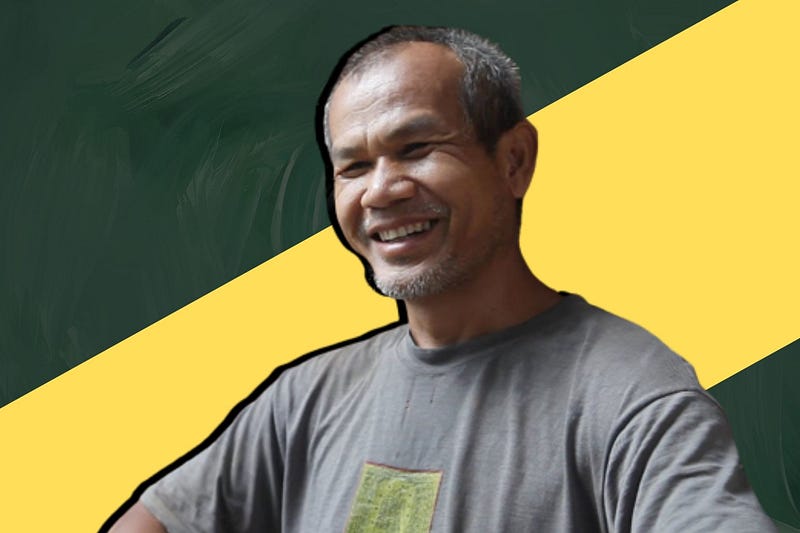
“Now, I keep building at least one house every year… I have many houses. My problem is in which house I’m going to sleep tonight.”
Jon Jandai grew up in a village in Yasothorn Province of Thailand.
He spent a wonderful childhood there as the society was run on a barter system. People used to make a variety of things and exchange the surplus among themselves. Money was never a necessity.
They used to work around two hours a day, only for two months. The rest was free time. They would go to one another’s house, gossip, laugh, talk about a million things, and take care of each other.
Nobody considered themselves poor. In fact, they never used the word ‘poor’ as they didn’t know its meaning. If someone fell into a bad situation and got nothing to eat, they would call it “suffering.”
But when Jandai was around 11 years old, everything changed.
“We never used to use the word “poor,” but the arrival of TV was the first thing that taught us to use the word poor,” Jandai explained in an interview.
“If we wanted anything, we just went to get it from the forest, from the river, from anywhere. But when the TV came, they told us that we were poor because we didn’t have money. So to solve this problem, we had to work to make money.”
TV greatly impacted the villagers’ minds with the message that there is no success in life without having more money. It convinced them that only money could buy them things like a TV, a motorcycle, or a refrigerator. Moreover, the outside people visiting the village told them to go to Bangkok and work hard for a better future.
Eventually, the village people felt bad about their current situation. And they were determined to work hard to earn money. The same happened to Jandai as well.
“When they told us that we were poor, I thought it was true because we didn’t have money,” he said. “Most people at that time felt bad too because they felt poor — they needed to work harder and harder to make money.”
At that time, Bangkok was the center for everything; education, job, and money. So, like many other villagers, he decided to go to Bangkok to earn money and be successful.
Jandai came to Bangkok at the age of 18.
Finding no good job with his limited knowledge and skills, he worked as a security guard, factory worker, and construction worker. But none of those jobs paid him well.
“Despite working hard, I get very little pay at that time. Just enough for food and rent,” Jandai explained. “I worked more than 10 hours per day, but I didn’t have enough to eat.”
The city made him realize that a good education is a must to have a good job. So, he started living in a temple and eating free meals only to save enough money for education.
Swimming the high tides of life, he managed to enroll himself in Ramkhamhaeng University, only to find the university education extremely boring and destructive.
“If you learn to be an architect or engineer, you’ll ruin more. The more these people work, the mountain will be destroyed more,” he said, “If we go to learn agriculture, that means we learn how to poison, intoxicate the land, the water, and learn to destroy everything.”
Jandai spent seven tough years in Bangkok in pursuit of a better life. But in the end, he found the city life unnecessarily hard.
He concluded that city life is not for humans and then, decided to quit everything and return to his village.
“How I’m going to feed myself?” — was the first question that appeared in Jandai’s mind when he came back home. He decided to be a farmer with a simplistic lifestyle. But the village he left seven years ago changed a lot.
He found most villagers working long hours (just like city people) in the rice field only to make others rich.
“Farmers don’t get to eat good food as they have to save money to invest in rice farming. While rice millers eat chicken meat, these farmers can only afford chicken feet. What kind of life is that?” he thought to himself.
So, unlike others, Jandai started an experiment. Instead of rice, he decided to grow vegetables.
Taking a small plot of land (less than half-acre) from his mother, he planted more than 50 varieties of vegetables. He spent only fifteen minutes per day taking care of the plants.
After three months, the miracle happened. The vegetables he got from that land were more than enough for what he needed for his family. So, he sold the surplus in the market to make some income.
For the first time in life, he realized that life is easy. And it has to be easy for everyone.
“Life has to be easy. But we make life hard because we are not ourselves,” he said in an interview. “We become like robots. We work for somebody else, we do not work for ourselves.”
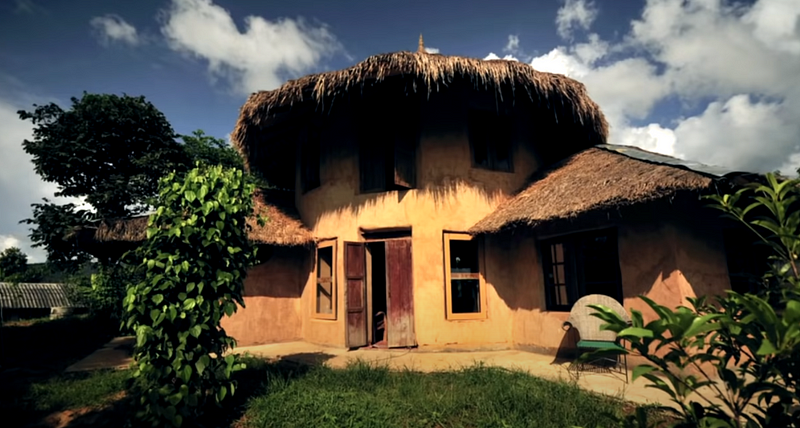
Jandai learned how to be self-sufficient.
From growing his own food to inventing different tools for farming, Jandai learned everything on his own. As his farming was going well, he started saving money to build a house.
In 1997, he went to New Mexico in the United States on an invitation from a friend. While staying there, Jandai visited a few simple earthen houses and got very inspired. He learned the building technique from the house owners and decided to make his own adobe house.
Later, Jandai bought a little land in the Mae Taeng district of Chiang Mai and moved there with his family. That place was surrounded by jungle and a hill — a perfect place to build an earthen house. So, he started to build one.
He worked two hours per day (5–7 O’clock in the morning) for three months to complete the house (using simple things like clay, sticks, straws, etc). He was so enthusiastic about it that he started making at least one earthen house a year.
Now, Jandai is the owner of multiple houses.
“I have many houses. My problem is in which house I’m going to sleep tonight,” he said proudly.
He also questions the way we think about houses, “Why do we need to spend 30 years working to afford a house when you can work only two hours per day for three months and build a good, stable house?”
Jandai doesn’t depend on money.
And he buys things when it’s absolutely necessary. You’ll be surprised to know that he doesn’t even buy new clothes or follow fashion as he believes, the most expensive clothes cannot change our life.
“When I buy something I think about I buy it because I like it, or I buy it because I need it,” he explained.
Many of you might be thinking, — What does Jandai do when he gets sick as he doesn’t rely on money that much?
“Normally, sickness is a normal thing, it isn’t a bad thing. It reminds us that we did something wrong in our lives that’s why we get sick,” he said.
He learned basic knowledge of how to use water, plants, and earth to heal himself.
With time, people got attracted to the simple and sustainable lifestyle of Jan Jandai and gathered around him for guidance.
So, in 2003, he founded a community named ‘Pun Pun’ as a learning and seed-saving center. Why seed saving? Jandai thinks — seed is food, and food is life. If there is no seed, there is no life.
He believes that even in economic collapse, we don’t need to ask for help from anybody if we have enough food and natural resources to share with other people. He thinks it’s more secure than money.
“We save many varieties of plants, animals, and things like that. That’s our security. Under the soil, we have a lot of roots and taro. Above the ground, we have grass, we have vegetables, we have trees, we have fruits, we have everything. We save water underground. We have everything. So whatever happens, we know that we will be okay,” he explained.
In 2008, Jandai founded ‘Pun Pun Isaan’ in Yasothorn province of northeastern Thailand to teach people about sustainable farming.
He also educates people through his talks and interviews — and helps them find meaning, purpose, peace, and happiness in life. His TED Talk titled “Life is easy. Why do we make it so hard?” has been viewed by millions of people from different corners of the world.
But the interesting fact is — unlike others, he doesn’t take money for the talks. He spreads the art of living a simple and happy life to the world for free.
Now people from all over the world come to Thailand to meet this poor farmer and learn about simplicity and happiness. Many even live with him for days and months to have hands-on experience.
Jon Jandai’s story teaches us a crucial lesson —
Simplicity is the key to happiness.
It took Jandai seven tough years in Bangkok to learn this lesson. But you are very lucky as you can learn this just by looking at his life.
Remember, life is easy when you stop making it hard.
Sources: Bangkok Post, Green Dreamer, Jon Jandai, TEDx Talks.
New to Medium?? Unlock thousands of AWESOME stories only for $5/mo. and OUTSHINE others — Click Me.
If you want to read more of my writings, do check out the following articles.
- Mia Khalifa: My Biggest Insecurity Was My Breasts
- Why This Man Killed Himself Within Just 2 Years of Winning $31 Million
- Why Elon Musk Fired His Long-Term Assistant Who Asked for A Raise
- Why This Australian Woman Stays Nude in the Jungle and Eats Mostly Fruits
- Why This Guy Uploads Unsexy Math Lectures on Pornhub (Instead of Adult Content)