
This is Why People Refuse to Practice Social Distancing
We’re all guilty of these 5 common errors in logical thinking.
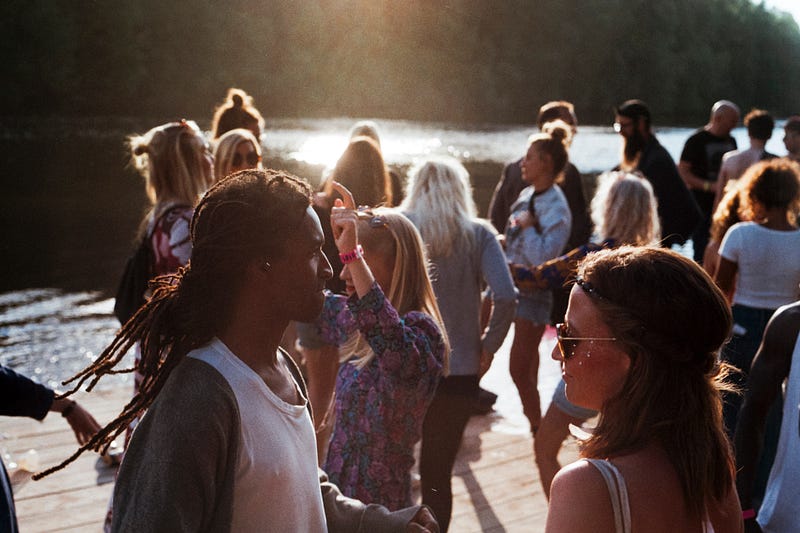
Like many of you, I’m spending more of my days scrolling through IG stories of cooked meals, workouts, and insane memes. Thus, a picture of a crowded park in New York City in late March stopped me in my tracks.
Rebecca, an acquaintance of mine, ventured out from her Brooklyn studio for a socially distanced walk around her neighborhood. As she passed a popular waterfront park, she saw something like this:
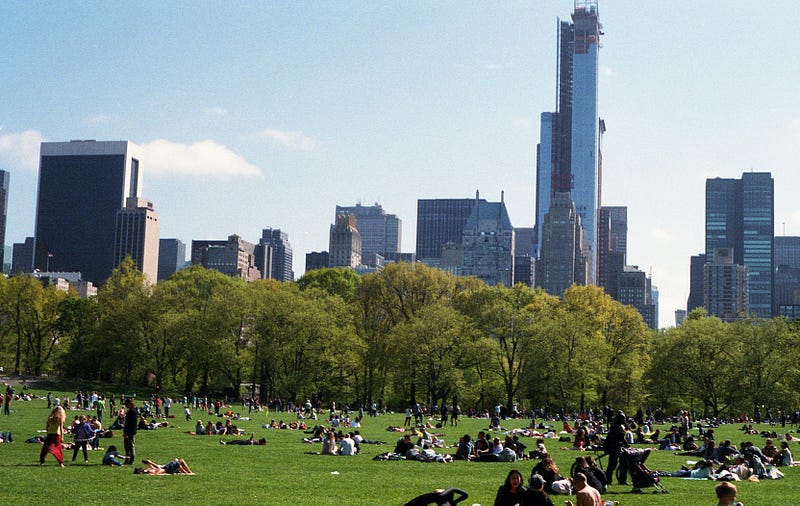
Who are these monsters? They probably aren’t any of the following:
- Essential workers. No essential work happening in the park on a sunny Sunday afternoon.
- Homeless. Although it’s sometimes difficult to determine who is and isn’t.
- Folks without consistent electricity or running water.
- The hungry walking to or from the grocery store.
- Crazy, insane, nor any other angry label you’ve used.
But why won’t they stay away from each other?
Disgusted, Rebecca retreated to the safety of her apartment. She then posted a graphic showing that this park’s neighborhood is in the highest tier for patients testing positive for COVID-19 at 61–77% as of April 8th in NYC.
This lack of social distancing isn’t unique to NYC. Around the world, friends are meeting up to exercise. Churches insist on holding services for large congregations.
It’s not as simple as a lack of information. Most people understand that COVID-19 is causing a worldwide, deadly illness and everyone should stay home to stop its spread.
Yet the message doesn’t connect with everyone.
Those park-goers probably care about their fellow human. But they’re falling victim to a few common errors in thinking most of us commit in our everyday lives.
Understanding these 5 thinking errors (also called cognitive biases) might might make your persuasion tactics more effective. At least it’ll make you less angry.
Availability Bias
The availability bias is a mental shortcut we use to make judgments about the chance of events occurring based on the ease of examples that come to mind. Essentially, those people in the park can’t recall a similar event, so they conclude it’s not likely to occur.
Car accidents are much more common then plane crashes but your daily evening news doesn’t report the graphic, gruesome details of every car accident in the world.
But the media loves reporting plane crashes so you recall these more easily. Since more people have flight anxiety than driving anxiety, it’s reasonable to conclude they believe their plane is more likely to crash, even though the data says otherwise.
If you ask the average park-goer when the last major pandemic was, they would more likely recall recent epidemics like the Ebola virus instead of the Spanish flu of 1918–1920.
People who choose to congregate have no recent examples of a major pandemic to draw from when rationalizing their choices.
They think,
“There’s never been a time when being outside with others meant that I’ll get sick or die or cause someone else’s death. Thus, it’s not likely to be happening now.”
Instead of doing more research, they commit the next error in thinking or they make a snap decision to go to the park.
Normalcy Bias
The refusal to plan for, or react to, a disaster which has never happened before is the normalcy bias. People who fall under the normalcy bias often ask themselves, “If life will continue as it always has. Why change the status quo?”
This is also called the ostrich effect.
We’re seeing how several governments have fallen victim to this cognitive error resulting in many unnecessary deaths.
But how do we as individuals fall prey to the normalcy bias in our everyday lives?
A few years ago I started my first freelancing job. It was a fulfilling gig that allowed me to pay for the nomadic lifestyle I love.
However, I committed the rookie freelancer mistake of not diversifying my income. When that company decided they didn’t need my services anymore, I was stuck.
I expected the gig to continue because, for the prior 10 months, it was a normal part of my life. I didn’t prepare for such an unexpected event.
It was a hard lesson that made me grateful for my emergency fund. Unfortunately, many who live paycheck to paycheck are learning that same lesson now.
Those park congregators are numbing the sting of disruption to their normal life by gathering in public.
When you yell at them for not socially distancing, they get angry because you’re disrupting their short-sighted attempts to feel normal.
And it encourages them to make the next psychological error.
Confirmation Bias
Those who refuse to socially distance are subject to confirmation bias, which means they search for and believe data that supports their beliefs while rejecting information that doesn’t support their opinion.
Let’s say you haven’t heard from your friend Mark in over 2 weeks, but you notice he’s still posting on social media.
You conclude that Mark is angry with you for not returning his bread maker 4 months ago. You minimize the relevance of his most recent Facebook post about a big conference presentation he’s nervous to give.
The people in the park, most of whom appeared to be in the 20–50 age range, assume they’re safe because they heard COVID-19 is killing mostly 60+ people.
They‘re dismissing reports of young people who are moderately sick, hospitalized, and on ventilators.
And they’re disregarding the likelihood of being an asymptomatic spreader which brings us to the next error in logic.
Optimism Bias
The optimism bias is the belief that you’re less likely to suffer from misfortune and more likely to attain success than reality would suggest.
If you think of optimism bias as the illusion of invulnerability, you‘ll realize most of us have committed this error in thinking in our youth.
My friend Sam never used to wear sunscreen. He preferred roasting and peeling every summer. I’d nag him with stories of twentysomething melanoma patients at the dermatologist’s office where I worked.
Although Sam knew the risk of intense, frequent UV exposure, he still tanned. At some level of consciousness, he didn’t believe cancer could happen to someone young and healthy like him.
People who refuse to socially distance are optimists. They believe their chances of becoming an asymptomatic spreader are less than the average person.
But none of us are special. All of us are susceptible to this virus.
It’s wishful thinking, but it’s difficult to combat optimism bias especially when the next error in logic is so damn tempting.
Hyperbolic Discounting Bias
Also called the present or current moment bias, the hyperbolic discounting bias is the desire for an immediate reward over a delayed but more valuable reward.
If you’ve ever used a credit card to buy that sexy new couch instead of saving up enough cash first, you’ve engaged in hyperbolic discounting bias.
A small house party with 10 people from your building is an immediate, tangible reward. It’s fun!
Yet saving a 60-year-old grandma’s life because her grandson would have also been leaning on the park railing 5 feet away is of much higher value.
But saving Grandma requires overcoming 4 issues of the hyperbolic discounting effect:
- Low-value reward = tangible. Socializing outside provides a little hit of dopamine from gabbing while basking in the sunlight. The park-goers release pent up energy from weeks of boredom and claustrophobia.
- Low-value reward = immediate. Humans love good stuff now! The park goers get to pretend that the world is normal and hanging out in the street with their friends is business as usual.
- High-value reward = Vague, abstract. Grandma can’t thank them for saving her life by staying in because she’ll never know who socially distanced to save her. Let’s face it; socially distancing to save a life is not as sexy and dramatic as rescuing someone from a burning building.
- High-value reward = Delayed. If they spare her grandson by staying inside, Grandma’s continued health and lack of spreading of the virus to others is also a delayed (and invisible) effect, since average virus incubation is 5 days or up to 2 weeks.
If there was a way to put a face to each person saved by every social distancer (something Instagrammable ideally), it would transform social distancing from a low-value, abstract reward to a high-value, immediate one.
Everyone would be on board.
In normal life, these 5 mental shortcuts serve a purpose. Such shortcuts likely evolved to enable early humans to make quick decisions that avoided threat.
In a pandemic, faulty mental shortcuts cause stressed out, isolated humans to make poor decisions with catastrophic consequences.
Remember these errors in logic next time you trying to persuade someone to stay inside.
For 5 easy ways to create deep connection in your everyday conversations, sign up here.


