
“This Is What Wealthy People Do”: When Greed and Ignorance Collide
How to get rich and stay rich
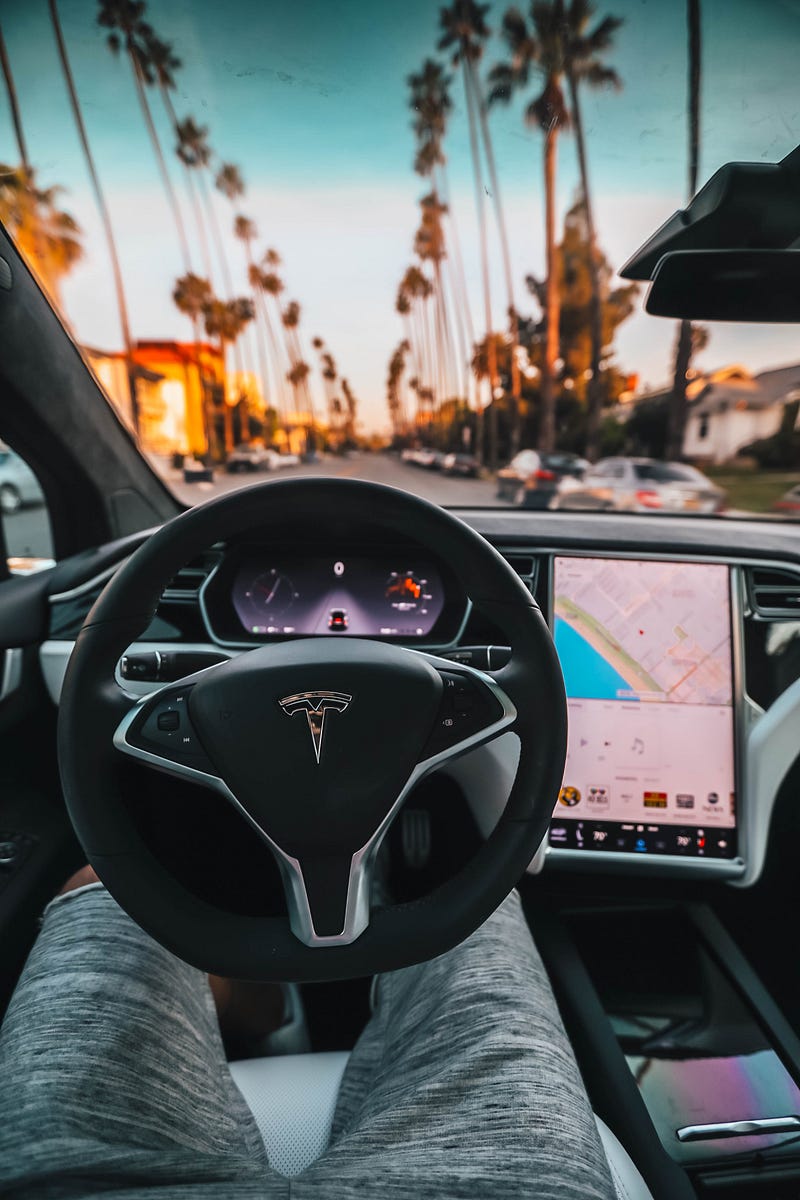
This article in the Wall Street Journal terrified me.
Reading it is like watching a psychological thriller. All the elements — the music, the camera angle, the sense that somebody’s watching the main character — point to something bad happening.
You know something bad’s about to happen. You just don’t know exactly when:
Between her investments and her spouse’s, their combined portfolio is now worth seven figures, with two-thirds of that consisting of Tesla stock, Ms. Roberts said.
She says she doesn’t think she will see another year of gains quite like 2020 soon. But she has no plans to sell any of her Tesla stock either and is open to the idea of borrowing more against her portfolio.
“This is what wealthy people do,” Ms. Roberts said.
If this doesn’t scare the crap out of you as a fellow human and follower of personal finance content, I’m not sure what will.
Maybe this:
Mr. Burnworth, a civil engineer in Incline Village, Nev., who is nearing retirement age, is using all of those strategies after turning a roughly $23,000 options gamble on Tesla last year into a nearly $2 million windfall. His growing Tesla stake had enabled him to borrow against his position to convert Tesla options into shares that have soared sevenfold this year. He says he also helped his daughter buy a home and purchased a Tesla sport-utility vehicle for another family member.
“Before, I wasn’t doing particularly well financially, Now, I’m well beyond where I wanted to be for retirement,” said Mr. Burnworth, who added that he also sold his own home and used some of the proceeds to buy more Tesla options.
Let’s sort through the red flags from those excerpts then attempt to make sense of them.
- No plans to sell any Tesla stock even though it makes up two-thirds of a seven-figure portfolio.
- “This is what wealthy people do” — um, no.
- Turned $23,000 into $2 million with Tesla options / plans to continue risky strategies.
- Helped someone buy a home / bought a car / sold his own home and bought more Tesla with some of the proceeds.
As I note in my Medium profile, “I’m anti-guru, pro-empowerment.” I write from the perspective that personal finance is personal. You don’t move the conversation forward by judging. You move it forward by considering the way others manage their money, then taking or leaving various aspects of all the myriad strategies people employ. Some will work for you; others won’t. It doesn’t make them right or wrong, just for you or not for you.
This said, there’s also something called common sense. It won’t take long to explain what I mean.
The two people in this Wall Street Journal piece rode Tesla, by and large, to seven-figure portfolios. We know one of the people in the write-up has around two million bucks. The other sits somewhere in seven figures.
This is fucking awesome.
They took on risk. It paid off.
It could have not worked out quite so well. And it probably hasn’t for people who got spooked and bailed on Tesla during one of its more volatile periods OR tried to go all-in on a stock that hasn’t crushed it the way Tesla has.
We’ll set going on all-in aside and focus on your choices after going all-in and winning big.
If you’re sitting on a million or more (or even a little less) in profit primarily from one stock, feel free to help your kid buy a house, buy a car, and even buy more of the stock that brought you to the proverbial wealthy person dance. But, for goodness sake, make sure before you do any of this, you set yourself up for the rest of your life — with minimal risk.
Don’t let a seven-figure windfall make you act like you’re blackout drunk. Don’t effectively fall into wealth then naively think you know what wealthy people do. You don’t.
Take enough of that nest egg and put it in something close to cash. Something that’ll generate a few percent in interest that you can live on, all or in part. This is what smart, wealthy people do.
Then take the rest and spend it on others, spend it on yourself, and make new investments, even if it’s in the same stock. But don’t let it all ride. Don’t let too much of it ride. Doing so ignores history and brings far too much potentially damaging emotion into the equation.
Remember the dot-com boom and bust. Remember Enron. Remember 2008. Remember when things ended up not working out after they worked out so well and act accordingly.
Maybe the folks in the Wall Street Journal article did this or some variation of it. If they did and the paper didn’t report it, shame on the paper. If Ms. Roberts and Mr. Burnworth didn’t do this or some variation of it, don’t shame them. However, we’re well within our observational right to question their sanity.
You’re not set for life until you take profits. You’re not wealthy until there’s very little risk; you’re going to lose everything you have in one or two fell swoops.
To make matters worse, you might wreck your life if you’re using leverage because you have become too confident, greedy, or both. This is pure ignorance. And that’s not a judgment. It’s simply a statement of fact using the objective definition of ignorant.
This is where emotion hurts investors.
You almost feel as if you owe the stock that did so well for you something. After you crush it with the stock, you not only spend some of the proceeds, let the rest ride and double down using leverage, but you buy the product the company you invested in sells. The bookends of this list wouldn’t be quite so bad if you didn’t go so hard on letting it ride and using leverage.
You don’t owe Tesla stock (or any other stock for that matter) anything. You don’t own Tesla, the company a damn thing. You don’t owe Elon Musk anything. You owe it to yourself to put so much money in the bank you’re likely to outlive it. After that, do whatever you want. Just don’t get emotionally attached to an investment.
It’s a recipe for turning a once-in-a-lifetime dream into a horrific nightmare.
This article is for informational purposes only. It should not be considered Financial or Legal Advice. Not all information will be accurate. Consult a financial professional before making any major financial decisions.