
This Author Raised More Than 15 Million Dollars in 24 Hours
A tale of two paradigms
In 2007, Google had launched an initiative called ‘Knol’ that was dubbed as Wikipedia killer. It was focused on authors and they could add Google Ads to make some money. Writers, old and new, on Medium are well versed with this phenomenon. The phenomenon I am referring to is — where a lot of similar content gets generated because of the inordinate pressure on quantity.
It’s a flawed system with the potential of content being ‘rat-holed’ into specific categories. In 2012, Google pulled the plug on this idea. The collaborative model of Wikipedia lives on where the emphasis is on the merit of the content rather than on view and authorship. It remains a voluntary effort consistent with the ‘Why’ of the organization. The joy of creating a work of art prevailed. Because that joy created something useful for everyone. Utility beats quantity.
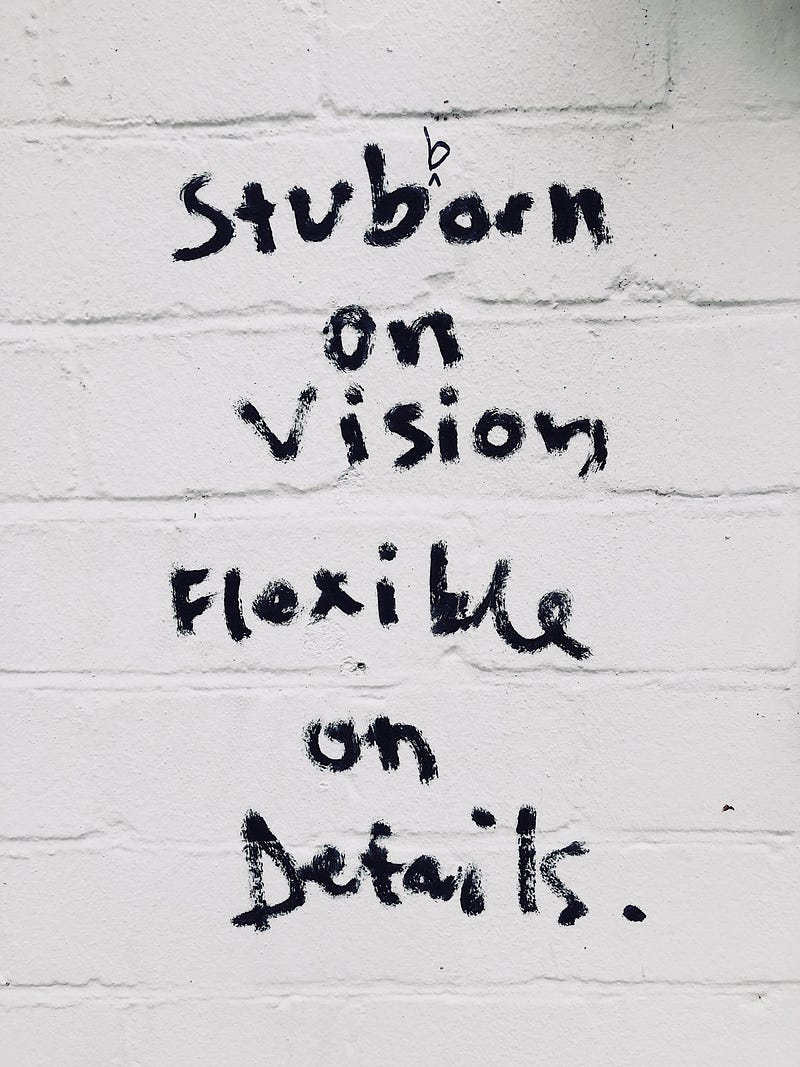
The two paradigms — writing for the joy of contributing vs. everything else have been playing out time and again. The quality of content that comes from one method vs. the other is quite different. Google noticed that in their project. There is another manifestation of the ‘writing for the joy’ paradigm that brilliantly emerged just two days ago.
The AI angle
Working on AI is a no brainer — author
Imagine a world where AI gets so good that it can tweet original content. Would you be interested in reading any of those tweets? I couldn’t care less about what a machine thinks because it’s not an actual thought. Our thoughts are not just words stringed together in a way that makes grammatical sense. They channel our emotions, experiences, and a host of other ‘human’ features. Once you know that the words you are seeing have none of those qualities, will it still matter?
A counter-argument to that would be that we are heavily influenced and inspired by words from fictional characters. Quoting Gandalf’s famous line from Lord of the Rings,
All we have to decide is what to do with the time that is given us.
How can that be? Gandalf isn’t real but we still value this line. Is it because he is channeling Tolkien (most definitely) but there might be a slightly different effect. It is not just the speaker who instills meaning and emotion in the words, it is also us — the readers. Maybe, then, it doesn’t matter if a machine writes it, we might still be moved.
Every year, AI keeps getting better at natural language generation. The GPT-3 by OpenAI is an excellent example of this. Google translate is another. Jarvis.AI is already powerful enough to write entire blog posts and book chapters with basic prompts from the user. There have been instances of AI entries into writing competitions that beat out human counterparts.
My own personal experience is in this article that I wrote sometime back. I had set up a game inside this article challenging the readers to find which paragraph was written by AI and which one was by me. It has been a few months since I wrote the article and when I went back to read it — I don’t remember which one was written by AI!!
So, when it comes to content generation quantity, AI is infinitely (not an exaggeration) more powerful than us. AI will pump out articles while we sleep. It will connect topics, ideas, research, and reference. It will make us laugh and cry. But, would you be interested in reading that? You might say AI can never match the intuition and creativity that humans have. It lacks the touch. And, to that, I say — March 2016.
Google’s AlphaGo from its Deep Mind initiative was set to clash against Lee Sedol in the infinitely complex game ‘Go’. There are more combinations in the game of ‘Go’ than the number of atoms in the universe (or was it the galaxy, either way — it is a staggering size). Players need to use intuition and creativity to strategize the game. AlphaGo did engineer creativity in its utter dismantling of Lee Sedol to mark a major milestone in AI history.
So, it seems inevitable to me that AI would proliferate the writing landscape that would seem incredibly human. But, when that happens writing would be the least of our worries.
The road back
We will return to the conversation about the two paradigms — writing for its own sake vs. writing as a content generation exercise. First, a plug.
Last year, I wrote my first children's book and published it on Amazon KDP. It was a fun, learning experience. It also gave me a first-hand look into the struggles that first-time authors face. I witnessed a world deluged in a sea of posts in Facebook groups where the authors try to showcase their work.
I witnessed many connected worlds like the world of reviewers, editors, marketers, and self-publishers. I found gems like posting in social media groups for authors are the wrong thing (because they are not the target audience). I understood the power of Amazon marketing over Facebook.
Amazon has a strong marketing platform that is actually quite powerful in generating sales. You have to use the right keywords to generate impressions but they are much better than Facebook marketing.
In my journey, I came across a lot of authors who generate quite a bit of very interesting content for marketing and promotion. From cute little animations of their books to Kickstarter campaigns, there is a lot of furious work that the authors put in over their work.
Writers are Entrepreneurs
And, that brings me to Brandon Sanderson. I will readily admit that I had no idea of who the author is. He writes mostly young adult fantasy fiction. He has been writing consistently for several years now.
Brandon’s Kickstarter campaign raised close to 20 million dollars in a day and night but he did not arrive at this point overnight. His first twelve novels were never picked up for publishing. Twelve novels. For years, he just kept on writing.
And, that is heartening to see. Not the 15 million dollars he generated but his tenacity and joy of writing persevering through years. In this age of self-publishing through Amazon, Medium, the writers are more like Entrepreneurs. Building brand value, finding their voice and audience, putting on more hats that can fit their heads.
Learning important skills like marketing, persuasion, digital design, social media presence, research, and writing capability are all bonuses in this pursuit. As long as the joy of writing thrives in your heart, the world will find its way to your words. Have faith, listen, revise and re-write.


