avatarJanet Chui

Free AI web copilot to create summaries, insights and extended knowledge, download it at here

6373

Abstract

umiliate me. Their destructive effects were not my imagination; in my 40s, I found long overdue validation in the literature on patriarchal cultures, narcissistic abuse, and the chauvinism and bigotry commonly presented in people with <a href="https://www.psychologytoday.com/us/basics/cluster-b">Cluster B personality disorders</a>.</p><p id="8d36">As a child, I’d been punished for my early suspicion and pushback against bullies, and then I’d carried that punishment inside. I became a person who twisted and distorted herself to avoid what the most judgmental and critical Asian seniors around me could say (and have said) about my choices — of career, clothing, how I carried myself, and of who and how I loved.</p><div id="718d" class="link-block"> <a href="https://readmedium.com/if-you-had-a-hypercritical-parent-you-struggle-with-these-6dcfc8059785"> <div> <div> <h2>If You Had A Hypercritical Parent, You Struggle With These</h2> <div><h3>Hiding from people and negative self-talk are just two of the maladaptive coping responses.</h3></div> <div><p>medium.com</p></div> </div> <div> <div style="background-image: url(https://miro.readmedium.com/v2/resize:fit:320/0*xmz62fBF-bN9XlT1)"></div> </div> </div> </a> </div><p id="6da4">In that therapist’s office, I was <i>sick</i> of how long I had lived in fear of criticism from Chinese elders.</p><p id="99f1">Thankfully, I was no longer a child at their mercy.</p><h1 id="1b4f">Harming vs Protecting the Vulnerable</h1><p id="fa10">I didn’t learn self-acceptance or gentleness from my own culture. Call me a <a href="https://en.wikipedia.org/wiki/Banana,_coconut,_and_Twinkie#:~:text=Banana%20and%20Twinkie%20refer%20to,those%20from%20South%20Asia%20or">banana</a> or <a href="https://www.urbandictionary.com/define.php?term=Pick%20me">pick-me</a> (or “self-hating”, which was certainly true), but I genuinely didn’t suspect or could guess that one’s teachers and authority figures could be sympathetic or merciful until I got out of the Singaporean education system and went to college in the US in the late 1990s.</p><p id="543a">When I had questions about any class material, I was shocked to be treated with kindness instead of admonishment for not listening or understanding. Lecturers cracked jokes that weren’t humiliating or sarcastic barbs. When I approached them, sometimes shaking with nerves, the soft, comforting tone in their voices had me tearing up for no reason I could have explained.</p><p id="f3e7">Looking back, I now know that the kindness and goodwill I got from the authority figures in the US was a <i>shock</i> to my system. I received <i>less</i> judgment and racism from the people in a distant land than I got from Chinese seniors mad at me for speaking a white man’s language mandated by an education system I didn’t choose.</p><figure id="4e37"><img src="https://cdn-images-1.readmedium.com/v2/resize:fit:800/1*e_uylhaBcI3pzpfPPO4gWw.jpeg"><figcaption>Photo by <a href="https://www.pexels.com/photo/vintage-wooden-desks-and-vintage-childrens-books-in-a-class-9258381/">Erik Mclean</a></figcaption></figure><p id="c471">In a Western country, I was suddenly no longer the default emotional punching bag — a young Asian female — for older Asian assholes.</p><p id="8afa">You could argue that I couldn’t have been treated all that well as a minority in a “white country,” but the USA couldn’t toss me any worse emotional abuse than what I had handled since birth from “my own kind.” If I experienced racism, I could easily brush it off, blaming racism on the racist.</p><p id="521f">When I experienced abuse from other (always older) Asians, the implied or overt shaming of me as an ungrateful, white-loving race traitor was the knife-twist in the wound of my perpetual inadequacy as an Asian daughter.</p><p id="6858">There’s no comparison.</p><figure id="e8c4"><img src="https://cdn-images-1.readmedium.com/v2/resize:fit:800/1*LHK2iEzVU0VdqKocVSCzpA.jpeg"><figcaption>Photo by <a href="https://www.pexels.com/photo/a-woman-lying-on-the-bed-with-blanket-wide-awake-6753369/">cottonbro studio</a></figcaption></figure><p id="9b37">Of course untreated trauma from cultural misogyny colored my experiences. And yet, the contrasts between conservative Asian authority figures and liberal non-Asian counterparts remain stark to my view due to headlines and circumstances that persist, especially now that I’m living in Asia again.</p><p id="58f7">In Singapore, it is not unheard of for young interracial couples to find themselves <a href="https://www.todayonline.com/singapore/ngee-ann-poly-suspends-teaching-staff-member-seen-racist-video-confronting-inter-ethnic">accosted and lectured</a> by racist “uncles” (older Chinese men). Or to hear of counseling cases of interracial, intercultural couples dealing with <a href="https://www.reddit.com/r/askSingapore/comments/147g176/how_to_break_the_news_about_my_interracial/">racist parents</a>. There’s an entire YouTube and Tiktok comedic genre dedicated to the tone-deafness, social illiteracy, impossible demands, and emotional abuse of Asian boomer parents. (Kudos to those who are healed enough to laugh about it.)</p><figure id="80f9"><img src="https://cdn-images-1.readmedium.com/v2/resize:fit:800/1*IqCGiclIVAJBBW4iCHSsGw.gif"><figcaption>Steven He’s succinct summary of Asian culture</figcaption></figure><p id="ecac">Asian seniors are not shy about “correcting” strangers in the street or glaring at them for some perceived transgression or other. As a woman on a public train, I’ve even been jabbed at by an old Chinese man with his walking cane because I had fallen asleep (it had been a long working day and a long ride) and he wanted my seat.</p><p id="d906">I was jabbed. With his cane. <i>Like a fucking dog.</i> And this old man never said a word to me. No “please” or “thank you.” I was just another object to pushed around by his wooden extension.</p><p id="6355">I’d never gotten that dehumanizing treatment anywhere else in the world but<i> in my native country</i>, and I’m<i> still </i>angry at that fact.</p><p id="b78f">These ancient coots accuse <i>young</i> people of rudeness. And don’t start me on how often I’ve heard walking Asians fossils

Options

rant on about other races and foreigners being “barbaric.”</p><p id="34ec">If the measure of a society is how it treats its weakest members, I have got many bones to pick with how traditional and hierarchical Chinese culture treats women and children and “inferiors” of other races. And I’m not sorry, but “generational trauma” doesn’t absolve anyone from perpetuating racism, misogyny, bigotry, and various forms of abuse.</p><figure id="7cd1"><img src="https://cdn-images-1.readmedium.com/v2/resize:fit:800/1*bRfe0Se9pU2_DzDT83lCXA.jpeg"><figcaption>The Cultural Iceberg demands we look deeper at culture than just food and festivals. <a href="https://www.reddit.com/r/AskEurope/comments/a3gq9l/whats_on_your_cultures_cultural_iceberg/">Source</a></figcaption></figure><p id="7b78">I’ve grown a thicker skin — my armor — dealing with condescending and boundary-violating Asian seniors as I’ve grown a stronger sense of self and self-worth. This has set me apart from other people who see me as “disrespectful” because I do not people-please, nor agree to asinine opinions (even if held by a male senior). I trust my instincts around people and first impressions, especially those who show me who they are. It saves me time, angst, and energy.</p><p id="2159">For what it’s worth, this is the <i>kung fu </i>I’ve learned: To channel my anger into my work.</p><p id="3e77">Much of my counseling work seems to be around containing the damage conservative older parents (Asian and non) have wrought on Gen X, millennials, and Gen Z — especially daughters.</p><div id="c2b7" class="link-block"> <a href="https://readmedium.com/lessons-from-a-former-pick-me-girl-b6a66141ddcd"> <div> <div> <h2>Lessons from a Former “Pick Me Girl”</h2> <div><h3>What internalized misogyny is and how to lose it</h3></div> <div><p>medium.com</p></div> </div> <div> <div style="background-image: url(https://miro.readmedium.com/v2/resize:fit:320/0*_5tF73vMO5WSWO45)"></div> </div> </div> </a> </div><p id="f72a">For the younger generations, I cannot put on rose-colored lenses and ignore the attachment wounds and damaged emotional development that come from surviving cultures that still normalize different abuses based on social hierarchy — the same cultures that persist in demanding we respect elders while the oldest chest beaters can’t even show women, minorities, and young people the same.</p><p id="1451">If we are truly to uphold the idea that there is no excuse for abuse or harmful behavior towards <i>any</i> subgroup—then “culture” must be included and examined among the unacceptable excuses.</p><figure id="f7af"><img src="https://cdn-images-1.readmedium.com/v2/resize:fit:800/1*9BluBVZ_EdOMZ0jdzQs_Ow.jpeg"><figcaption></figcaption></figure><p id="f3c3">I often handle clients who struggle to see past a trauma lens of having to appease their elders over their own needs. As a therapist, I empathize with the child parts of such clients, but usually the best collaborative goal is to bring forth a more-healed, self-efficacious adult who is “boundaried” and less affected by threat, coercion, or emotional damage and manipulation while making major life decisions.</p><p id="1e6f">I’d like to think I’ve moved past the adult bullies of my childhood (and adulthood) by supporting and educating other survivors.</p><figure id="9b48"><img src="https://cdn-images-1.readmedium.com/v2/resize:fit:800/1*SB_8bXNmqZEtac6ChQFWVA.jpeg"><figcaption>“Grey World” image and watercolor painting by Author © Janet Chui. All rights reserved. FWIW, guess which demographic gave me the most grief for “wasting time” with “useless” art? Yeeeeup. Asian baby boomers!</figcaption></figure><h1 id="8942">EMDR Therapy and the Healing Journey</h1><p id="c590">While writing this, I found (by coincidence) that I was not the only counseling client who has used EMDR (Eye Movement Desensitization and Reprocessing) therapy to work on the complex trauma of dealing specifically with Asian elders.</p><p id="921c">EMDR therapy uses bilateral stimulation of the brain to reduce the vividness and emotional intensity of traumatic events, including repeated events over long periods of time — which is basically Complex PTSD.</p><p id="0278">At the time of my own EMDR treatment, I heard the caveat that success could be difficult because the treatment was happening against a backdrop where I could not escape being re-triggered by abuse — I was still in an environment where it could happen.</p><p id="75d8">I asked for treatment anyway because it was my last resort — I didn’t want to lose control over my reactions to abuse and disrespect. Even when I had control over my actions, my history and sensitivity was such that I could lose hours or days ruminating over how to be treated better by people I ultimately didn’t and couldn’t control.</p><figure id="d179"><img src="https://cdn-images-1.readmedium.com/v2/resize:fit:800/1*rGxF9tvEtkOpyJ3zySwgsA.jpeg"><figcaption>Photo by <a href="https://www.pexels.com/photo/a-woman-bending-her-body-on-the-bed-6754026/">cottonbro studio</a></figcaption></figure><p id="8b2e">EMDR therapy did help me to let go and finally live life without worrying what this group thought of me. It worked so well, it wasn’t until my partner brought it to my attention that I realized how I’d pretty much developed a blindness to the faces of judging Chinese elders.</p><p id="1416">They’d become, finally, the harmless backdrop to my life after taking centerstage in my CPTSD for decades.</p><p id="3b1f">Moreover, while pursuing my Master’s in Counseling, I’ve met many Asian mentors in the mental health field around whom I feel safe and respected.</p><p id="ecdd">As I age, I hope to seen as someone who supports the self-actualisation and happiness of those around me — no matter what their identity. And I will continue to protect their rights against toxic and expired cultural ideas.</p><p id="7740"><i>For more of the good stuff, follow <a href="https://medium.com/fourth-wave">Fourth Wave</a>. Have you got a story, essay, or poem that focuses on women or other disempowered groups? <a href="https://readmedium.com/submit-to-the-wave-7c92f095e86f">Submit to the Wave!</a></i></p></article></body>

This armor? I paid dearly for it

I’m done apologizing for protecting myself from toxic attitudes towards younger Asian women from “my own kind”
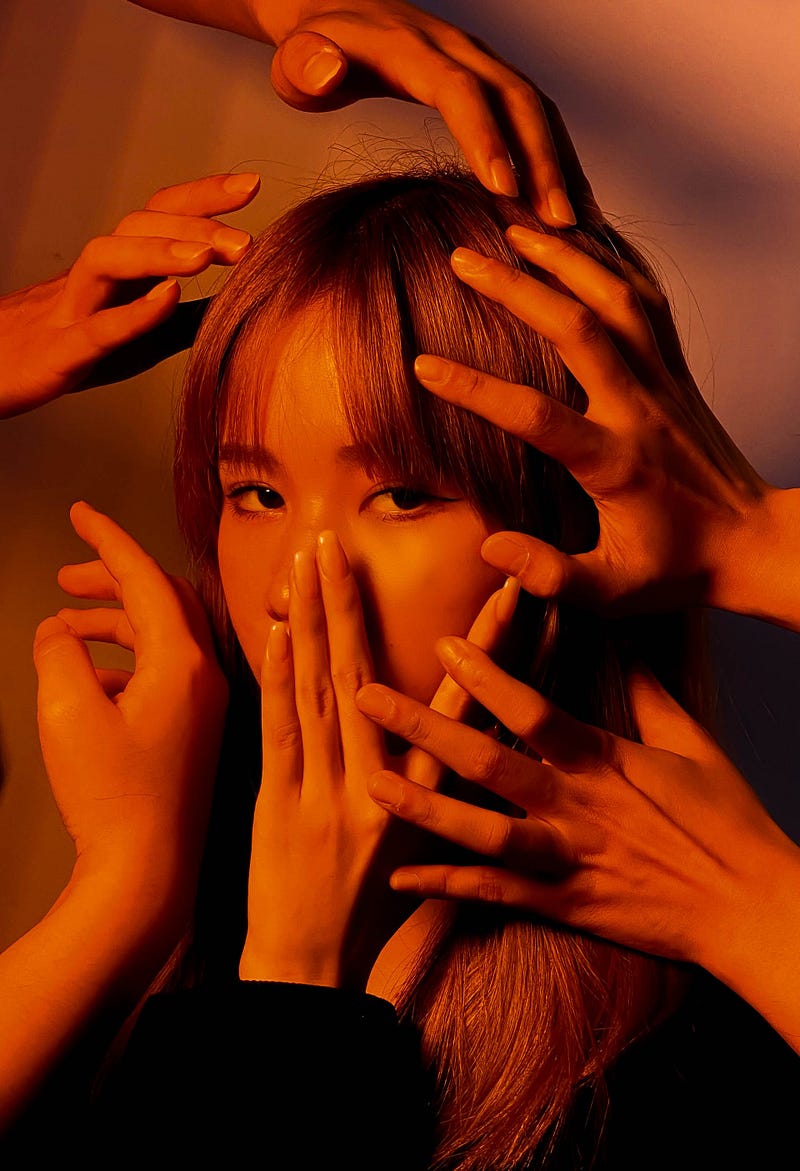
Photo by Alycia Fung

“Did you notice?” My partner and I were steps away from home after a short jaunt around our old-ish neighborhood, which has a relatively high percentage of retirees. At the block before ours, we walked a gauntlet of old Chinese men, some with beers, who passed the time rheumatically sitting and gazing at passing traffic.

“Notice what?” I asked.

“Was I imagining that those old guys were glaring at me? And not just this time. Pretty often.” Our fingers were interlocked as we walked beside each other.

No, I hadn’t noticed. But I felt a slow smile growing on my face. “I don’t look,” I replied. “What do you think they were glaring for?”

“Me. Not being Chinese. And being paired with you.”

“You could be right.” And then I laughed, suddenly delighted that we — or anyone — could offend strange old Chinese men without even making an effort. The younger version of me had used to fear such grumpy old seniors — feared being screamed at or hit by them, or shamed and stonewalled.

I’m going to talk about Complex PTSD, EMDR therapy, and the healing we sometimes do not know we’ve done.

Normalized neglect & emotional abuse

I grew up hearing stories about my maternal grandfather’s physical abuse of my mother. These story times were, in retrospect, probably inappropriate for my young ears. They were meant to make me appreciate how “easy” my life was in comparison; I only realized much later in life that these early experiences probably made my mum’s marriage “tolerable” in comparison too.

Softness was not an element of my childhood. It was for babies, I was told. I don’t remember being carried by my mum, but I could always recall the times she said I was too big and heavy. And I saw the times other children — my cousins — sat in her lap, but could not recall when I had.

Growing up Southeast Asian of Chinese descent, I figured that verbal and physical affection were a thing of myth — to be seen only on the screen if seen at all. Somewhere along the way, I concluded all affection was probably fake. It was as performative as my mother’s acts of being nurturing — which only happened in front of other people.

Putting aside the general lack of affection I witnessed from Chinese adults towards children, it took me decades to realize I rarely saw it between adults too, and even when I did, it was mostly on screen in imported “Western” media. Affection just wasn’t shown among real people.

When there was a happily married and affectionate (ie. hand holding) couple my family knew, my father loudly attributed it to the wife’s physical attractiveness.
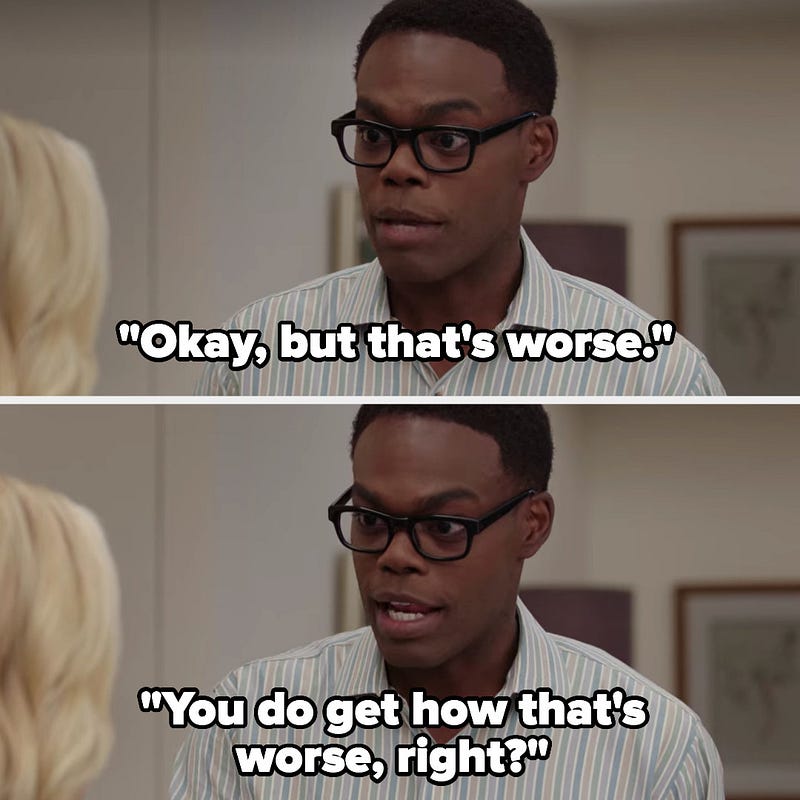
Yes, Chidi. I unconsciously learned that love and affection were only for the physically attractive. And that such things were “OK” to say in front of a spouse one had sworn to love and to cherish. Screencap from NBC’s “The Good Place”.

In fact, many Asian adults around me — many of them righteous and conservative — decried onscreen kissing as the way that our society of “Asian values” would be undone. The 80s and 90s (I’m Gen X) seemed to be a time of moral grandstanding and pearl-clutching — baby boomers opined in the local news that Public Displays of Affection and Andrew Lloyd Weber musicals were “loosening morals” and accelerating the degeneracy of the younger generation. “R-21” movies were only allowed into Singapore in the 90s after a long public debate.

I write this now to describe the social controversies of the 80s and 90s as witnessed by someone in cosmopolitan Singapore. Conservative “Eastern values” were continually pitted against liberal “Western values” (they still are), with the West conveniently serving as bogeyman and scapegoat for all the perceived social ills —feminism, bare midriffs, premarital sex, PDAs — plaguing a rapidly modernizing former British colony in Southeast Asia.

Over two decades later, in the same former colony, I was 42 when I was sitting in the office of my EMDR therapist. I was both raw and numb after sharing yet another story of emotional abuse and bullying from my “superiors,” and the psychologist asked what emotion I wanted to be less intense.

I realized, suddenly, that my seething hatred of all older Asian men (and women) was something I could potentially drop.

Blearily, I said: “I’d like to be less triggered by Asian baby boomers.”

My therapist hid his surprise well; I think he (also an older Asian man) had expected me to name my father. But it was in that moment that I realised that I truly loathed all people from my parents’ generation and culture. Their rigidity, hypocrisy, willful ignorance, lack of self-awareness, and entitlement to bully, assault, and criticise those they deemed “lesser” were a large part of why I had found myself seeking different counseling providers at different points in my 40s.
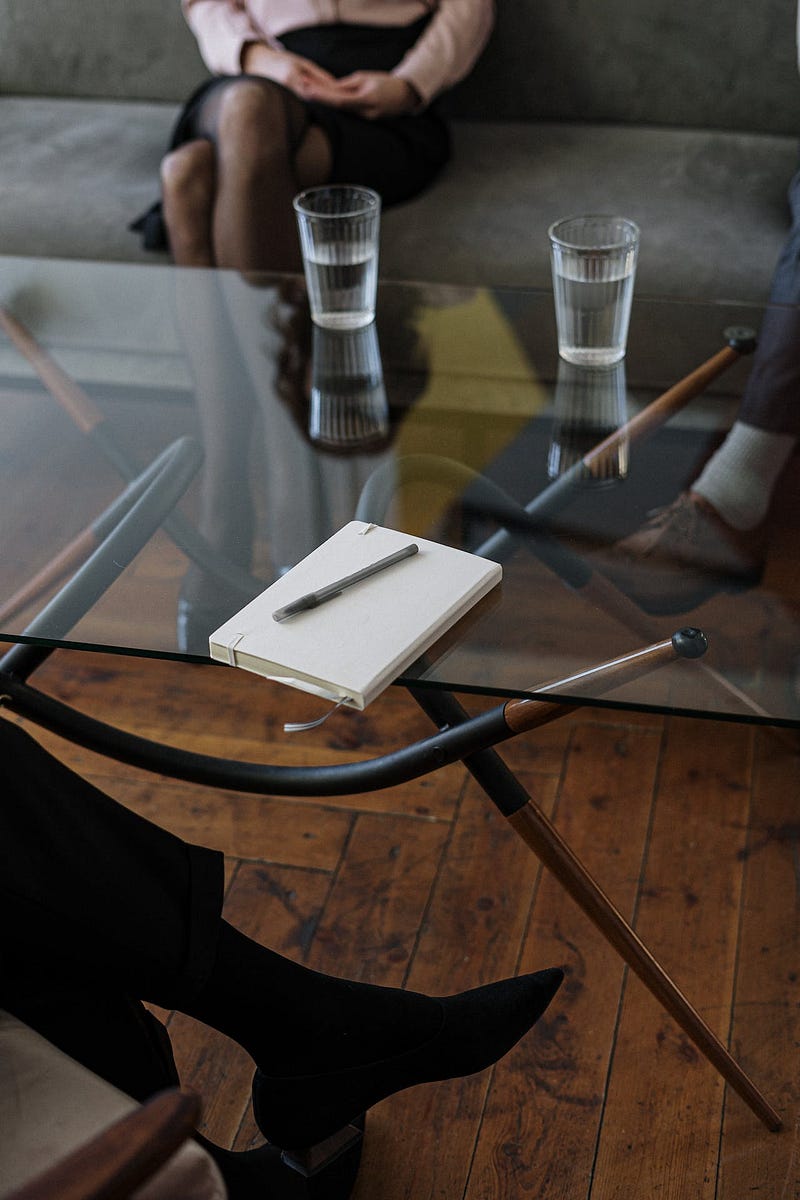
Photo by cottonbro studio

In psychotherapy, we would say I had internalized my abusers from my childhood so well that I no longer needed the real ones to keep me in emotional torment.

At the same time, my complex trauma was such that I could not help but see all Asian seniors as people determined to shame, hurt, and humiliate me. Their destructive effects were not my imagination; in my 40s, I found long overdue validation in the literature on patriarchal cultures, narcissistic abuse, and the chauvinism and bigotry commonly presented in people with Cluster B personality disorders.

As a child, I’d been punished for my early suspicion and pushback against bullies, and then I’d carried that punishment inside. I became a person who twisted and distorted herself to avoid what the most judgmental and critical Asian seniors around me could say (and have said) about my choices — of career, clothing, how I carried myself, and of who and how I loved.

In that therapist’s office, I was sick of how long I had lived in fear of criticism from Chinese elders.

Thankfully, I was no longer a child at their mercy.

Harming vs Protecting the Vulnerable

I didn’t learn self-acceptance or gentleness from my own culture. Call me a banana or pick-me (or “self-hating”, which was certainly true), but I genuinely didn’t suspect or could guess that one’s teachers and authority figures could be sympathetic or merciful until I got out of the Singaporean education system and went to college in the US in the late 1990s.

When I had questions about any class material, I was shocked to be treated with kindness instead of admonishment for not listening or understanding. Lecturers cracked jokes that weren’t humiliating or sarcastic barbs. When I approached them, sometimes shaking with nerves, the soft, comforting tone in their voices had me tearing up for no reason I could have explained.

Looking back, I now know that the kindness and goodwill I got from the authority figures in the US was a shock to my system. I received less judgment and racism from the people in a distant land than I got from Chinese seniors mad at me for speaking a white man’s language mandated by an education system I didn’t choose.

Photo by Erik Mclean

In a Western country, I was suddenly no longer the default emotional punching bag — a young Asian female — for older Asian assholes.

You could argue that I couldn’t have been treated all that well as a minority in a “white country,” but the USA couldn’t toss me any worse emotional abuse than what I had handled since birth from “my own kind.” If I experienced racism, I could easily brush it off, blaming racism on the racist.

When I experienced abuse from other (always older) Asians, the implied or overt shaming of me as an ungrateful, white-loving race traitor was the knife-twist in the wound of my perpetual inadequacy as an Asian daughter.

There’s no comparison.
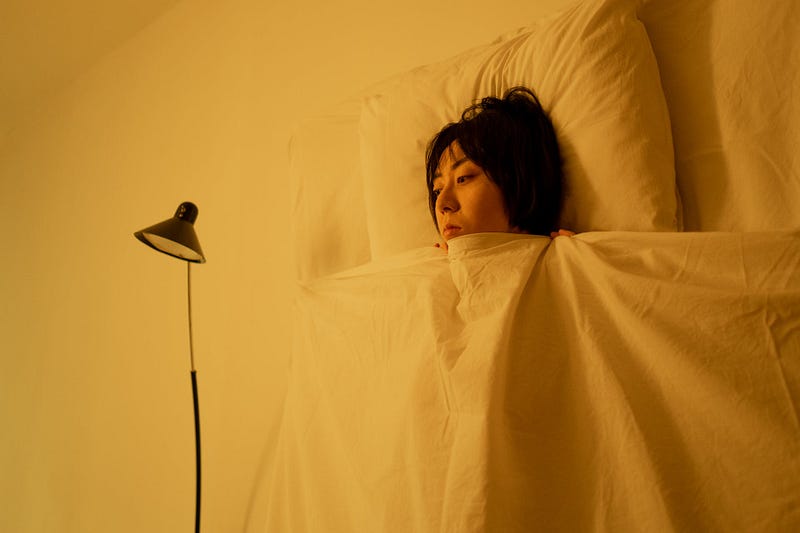
Photo by cottonbro studio

Of course untreated trauma from cultural misogyny colored my experiences. And yet, the contrasts between conservative Asian authority figures and liberal non-Asian counterparts remain stark to my view due to headlines and circumstances that persist, especially now that I’m living in Asia again.

In Singapore, it is not unheard of for young interracial couples to find themselves accosted and lectured by racist “uncles” (older Chinese men). Or to hear of counseling cases of interracial, intercultural couples dealing with racist parents. There’s an entire YouTube and Tiktok comedic genre dedicated to the tone-deafness, social illiteracy, impossible demands, and emotional abuse of Asian boomer parents. (Kudos to those who are healed enough to laugh about it.)
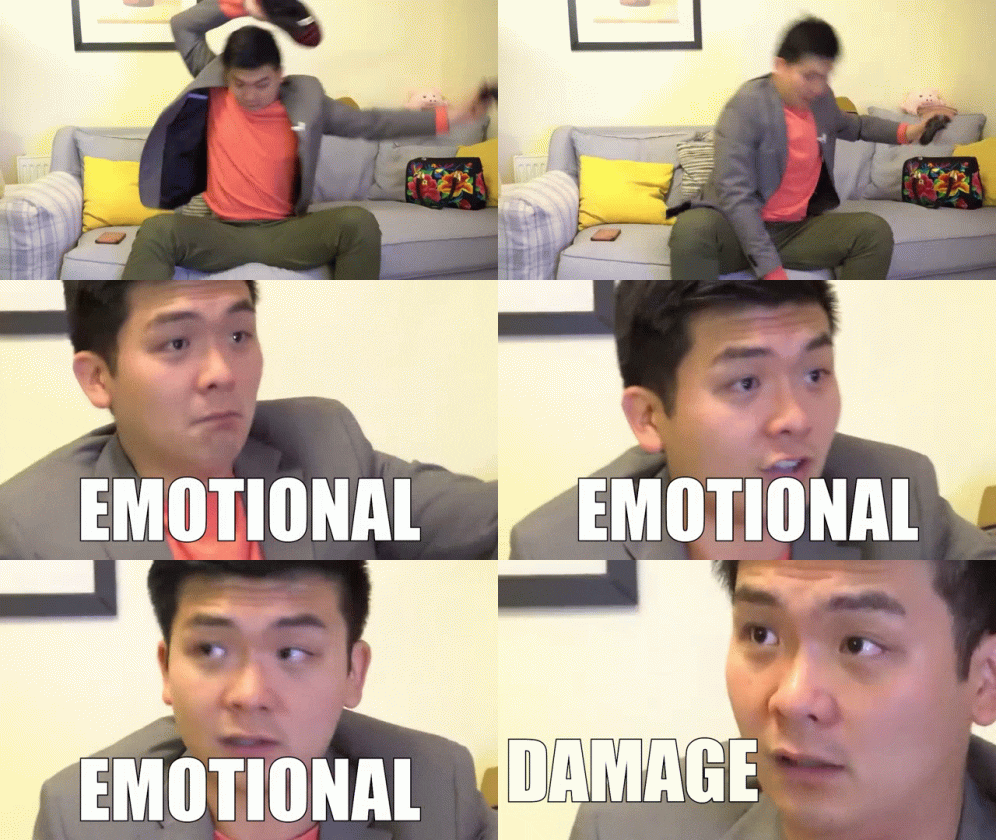
Steven He’s succinct summary of Asian culture

Asian seniors are not shy about “correcting” strangers in the street or glaring at them for some perceived transgression or other. As a woman on a public train, I’ve even been jabbed at by an old Chinese man with his walking cane because I had fallen asleep (it had been a long working day and a long ride) and he wanted my seat.

I was jabbed. With his cane. Like a fucking dog. And this old man never said a word to me. No “please” or “thank you.” I was just another object to pushed around by his wooden extension.

I’d never gotten that dehumanizing treatment anywhere else in the world but in my native country, and I’m still angry at that fact.

These ancient coots accuse young people of rudeness. And don’t start me on how often I’ve heard walking Asians fossils rant on about other races and foreigners being “barbaric.”

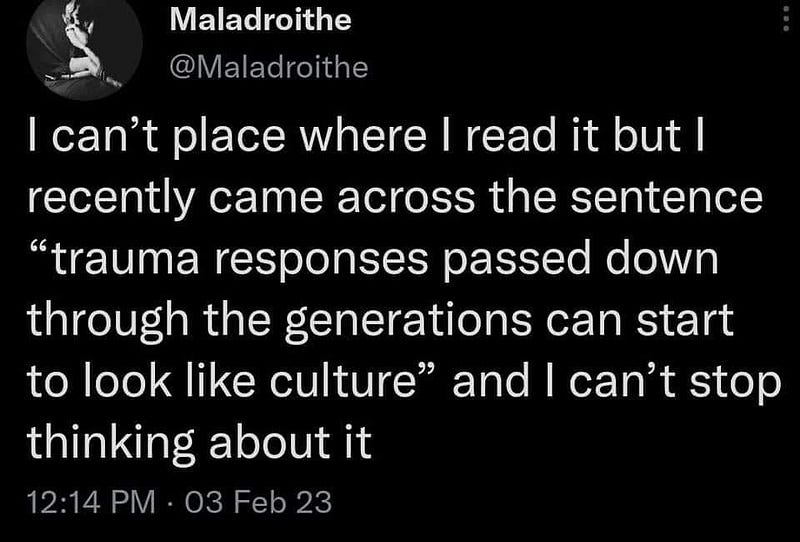
If the measure of a society is how it treats its weakest members, I have got many bones to pick with how traditional and hierarchical Chinese culture treats women and children and “inferiors” of other races. And I’m not sorry, but “generational trauma” doesn’t absolve anyone from perpetuating racism, misogyny, bigotry, and various forms of abuse.
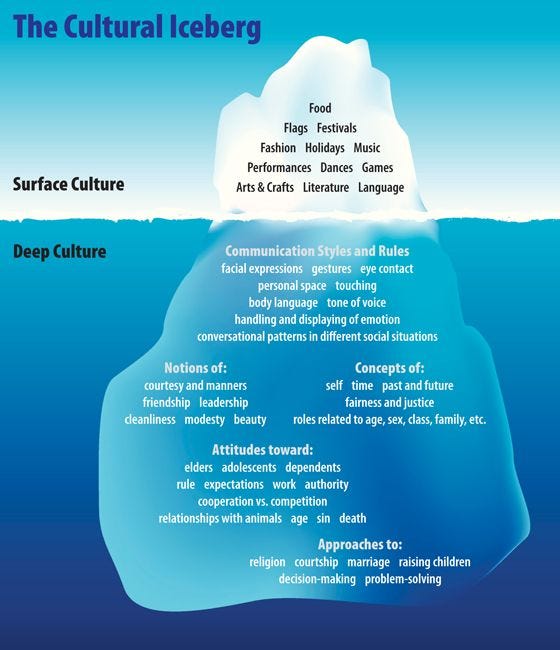
The Cultural Iceberg demands we look deeper at culture than just food and festivals. Source

I’ve grown a thicker skin — my armor — dealing with condescending and boundary-violating Asian seniors as I’ve grown a stronger sense of self and self-worth. This has set me apart from other people who see me as “disrespectful” because I do not people-please, nor agree to asinine opinions (even if held by a male senior). I trust my instincts around people and first impressions, especially those who show me who they are. It saves me time, angst, and energy.

For what it’s worth, this is the kung fu I’ve learned: To channel my anger into my work.

Much of my counseling work seems to be around containing the damage conservative older parents (Asian and non) have wrought on Gen X, millennials, and Gen Z — especially daughters.

For the younger generations, I cannot put on rose-colored lenses and ignore the attachment wounds and damaged emotional development that come from surviving cultures that still normalize different abuses based on social hierarchy — the same cultures that persist in demanding we respect elders while the oldest chest beaters can’t even show women, minorities, and young people the same.

If we are truly to uphold the idea that there is no excuse for abuse or harmful behavior towards any subgroup—then “culture” must be included and examined among the unacceptable excuses.
I often handle clients who struggle to see past a trauma lens of having to appease their elders over their own needs. As a therapist, I empathize with the child parts of such clients, but usually the best collaborative goal is to bring forth a more-healed, self-efficacious adult who is “boundaried” and less affected by threat, coercion, or emotional damage and manipulation while making major life decisions.

I’d like to think I’ve moved past the adult bullies of my childhood (and adulthood) by supporting and educating other survivors.
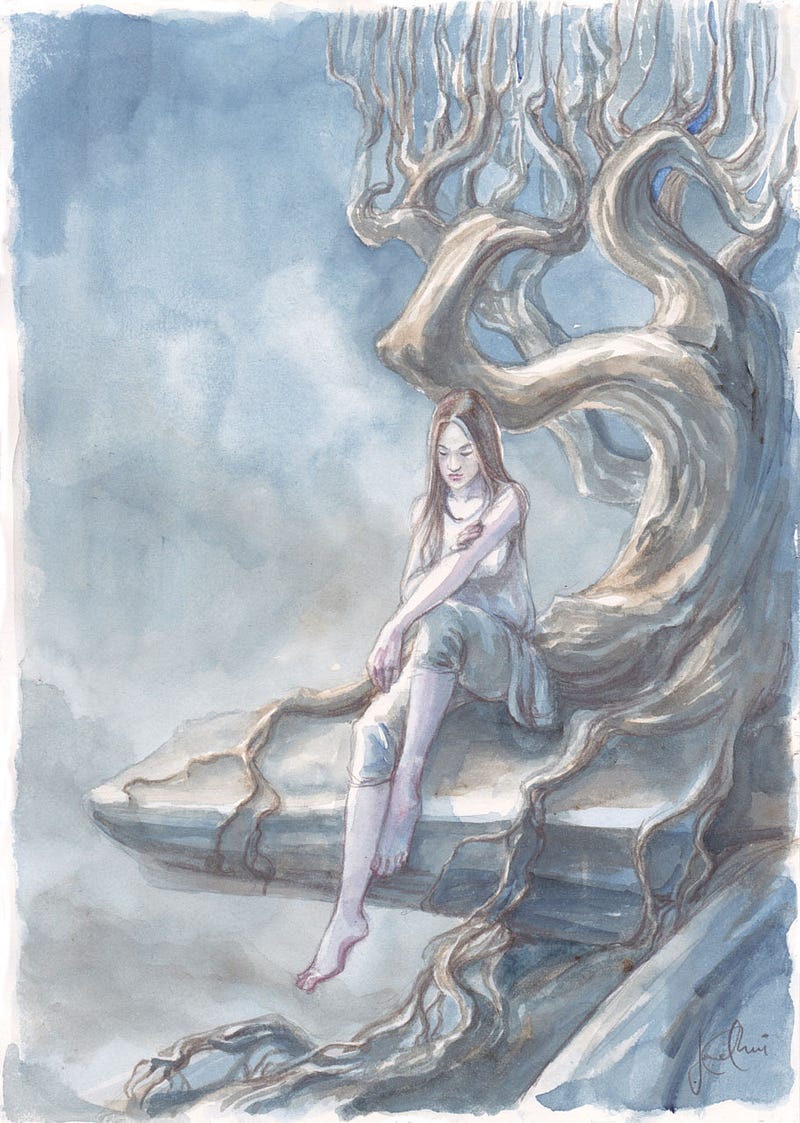
“Grey World” image and watercolor painting by Author © Janet Chui. All rights reserved. FWIW, guess which demographic gave me the most grief for “wasting time” with “useless” art? Yeeeeup. Asian baby boomers!

EMDR Therapy and the Healing Journey

While writing this, I found (by coincidence) that I was not the only counseling client who has used EMDR (Eye Movement Desensitization and Reprocessing) therapy to work on the complex trauma of dealing specifically with Asian elders.

EMDR therapy uses bilateral stimulation of the brain to reduce the vividness and emotional intensity of traumatic events, including repeated events over long periods of time — which is basically Complex PTSD.

At the time of my own EMDR treatment, I heard the caveat that success could be difficult because the treatment was happening against a backdrop where I could not escape being re-triggered by abuse — I was still in an environment where it could happen.

I asked for treatment anyway because it was my last resort — I didn’t want to lose control over my reactions to abuse and disrespect. Even when I had control over my actions, my history and sensitivity was such that I could lose hours or days ruminating over how to be treated better by people I ultimately didn’t and couldn’t control.
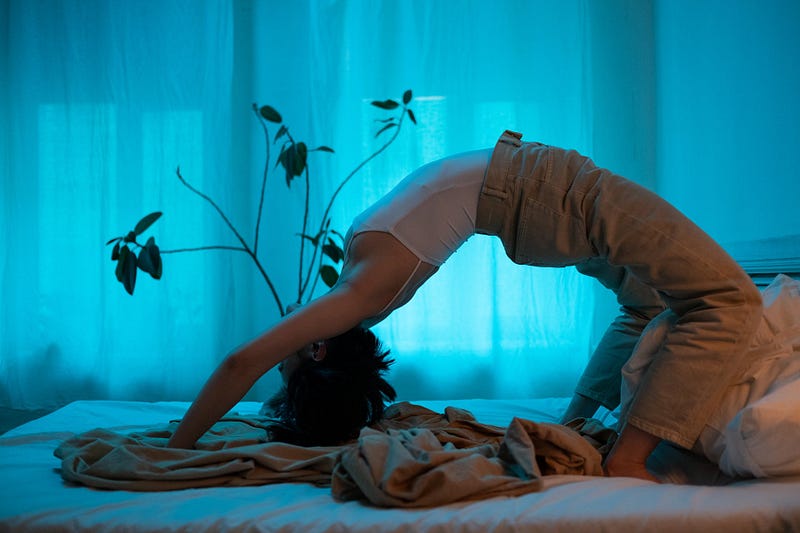
Photo by cottonbro studio

EMDR therapy did help me to let go and finally live life without worrying what this group thought of me. It worked so well, it wasn’t until my partner brought it to my attention that I realized how I’d pretty much developed a blindness to the faces of judging Chinese elders.

They’d become, finally, the harmless backdrop to my life after taking centerstage in my CPTSD for decades.

Moreover, while pursuing my Master’s in Counseling, I’ve met many Asian mentors in the mental health field around whom I feel safe and respected.

As I age, I hope to seen as someone who supports the self-actualisation and happiness of those around me — no matter what their identity. And I will continue to protect their rights against toxic and expired cultural ideas.

For more of the good stuff, follow Fourth Wave. Have you got a story, essay, or poem that focuses on women or other disempowered groups? Submit to the Wave!

Asian Mental Health
Emdr Therapy
Counseling
Asian Culture
Mental Health
Recommended from ReadMedium