
This Ain’t No Connie Francis V-A-C-A-T-I-O-N
Into The Desert With 70 Thousand Other Souls, Again
- Co-written by AleXander Hirka with Remington Write. •
We are currently preparing for what used to be our annual cross-country trek to attend the weeklong event that is loving referred to as That Thing In The Desert. AleXander for his 14th time, Tammy her 8th.
T T I T D = Burning Man = Black Rock City In years past, by February, we were already considering our artwork, our gear, and even our clothes. Preparing to attend this event is not done as a seat-of-the-pants, hey-let’s-do-something-wild-and-crazy adventure. Read on to see why. But things are different these days. In fact, so different, that this year we only committed to going. . . about three weeks ago!
Now it’s life in fast forward!
But let's take a step back first.
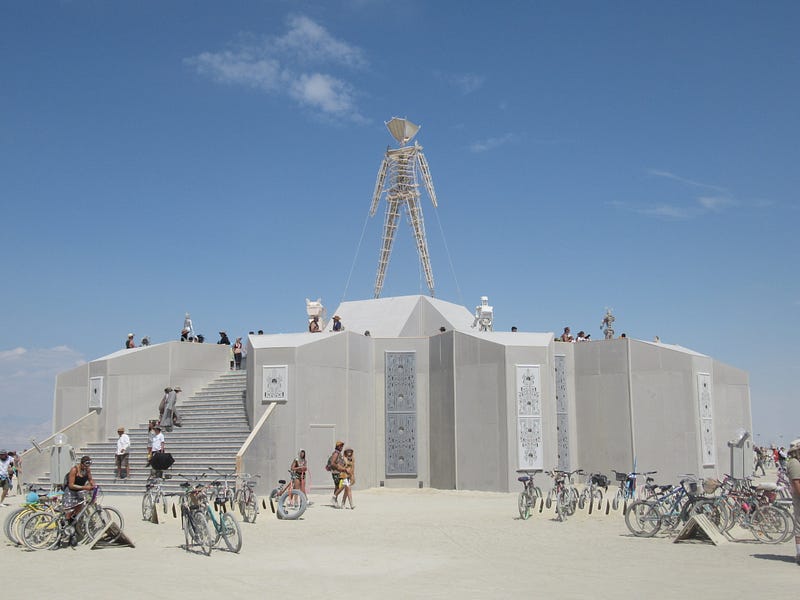
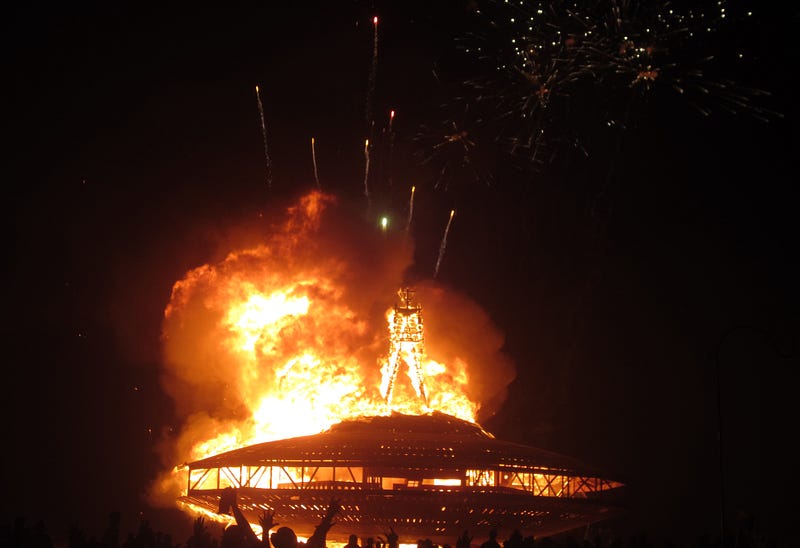
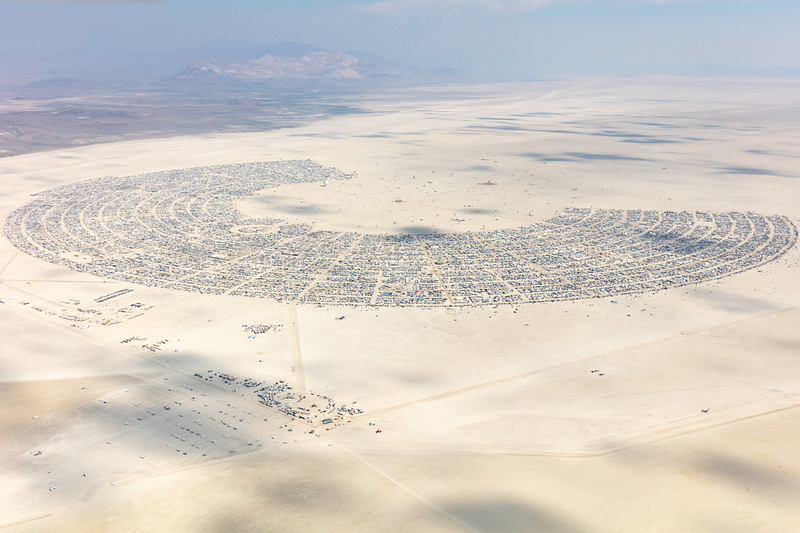
For those who know nothing about this event allow us to lift your rock for a moment and share what Wikipedia has to say: “An event focused on community, art, self-expression, and self-reliance held annually in the western United States. The name of the event comes from its culminating ceremony: the symbolic burning of a large wooden effigy, referred to as the Man, that occurs on the penultimate night of Burning Man, which is the Saturday evening before Labor Day. The event has been located since 1991 at Black Rock City in northwestern Nevada, a temporary city erected in the Black Rock Desert about 100 miles (160 km) north-northeast of Reno. As outlined by Burning Man co-founder Larry Harvey in 2004, the event is guided by ten principles: radical inclusion, gifting, decommodification, radical self-reliance, radical self-expression, communal effort, civic responsibility, leaving no trace, participation, and immediacy. The event originated on June 22, 1986, on Baker Beach in San Francisco as a small function organized by Larry Harvey and Jerry James, the builders of the first Man. It has since been held annually, spanning the nine days leading up to and including Labor Day. Over the event’s history, attendance has generally increased. In 2019, 78,850 people participated in the event. In 2021, the unofficial event had an estimated 20,000 attendees.”
Way back in 2019 — back when we were both working “real” jobs — we pulled off two major trips: Spain and Portugal in early June and then Burning Man at the end of the summer. We were excited and ready to roll into 2020 with some more international travel. Oh, we had big plans all right.
We already knew we’d be heading back out to the Black Rock Desert for Burning Man in late August 2020—but here’s the other ambitious trip we were planning: Thessaloniki, Kyiv, and Cairo. Clearly, we did not hear the hysterical laughter of the gods. At least not until our friend, The Virus, arrived to shut down any and all travel.
No Burning Man 2020. The event was canceled.
No Burning Man 2021. The official event was canceled again.
And by the time 2021, and the Delta variant, rolled around our financial situation had gone off the deep end. It was heartening to read about the 20,000 or so hardy lunatics who went out to the desert and had a renegade Burn in 2021 — but such an undertaking was still too risky for these two senior citizens.
Almost no 2022.
This current journey was supposed to happen at the end of 2020.
This brief summary of how we do this “vacation” more fully illustrates why it took us until the beginning of July to decide to throw caution and good sense to the winds and go back to Burning Man.
Please note that ours is merely one of many thousands of ways of doing it. But everyone who does pull it together to go out there has to deal with all of these realities.
Money.
This is not a cheap “vacation”.
Tickets are $475 each. This part is actually very reasonable because it does give you access — very much 24/7, all day and all night — to a most magical place in the desert. Less than three dollars an hour.
Black Rock City is a city that appears for one week out of the year and then a month later you’ll find no trace of it ever having been there.
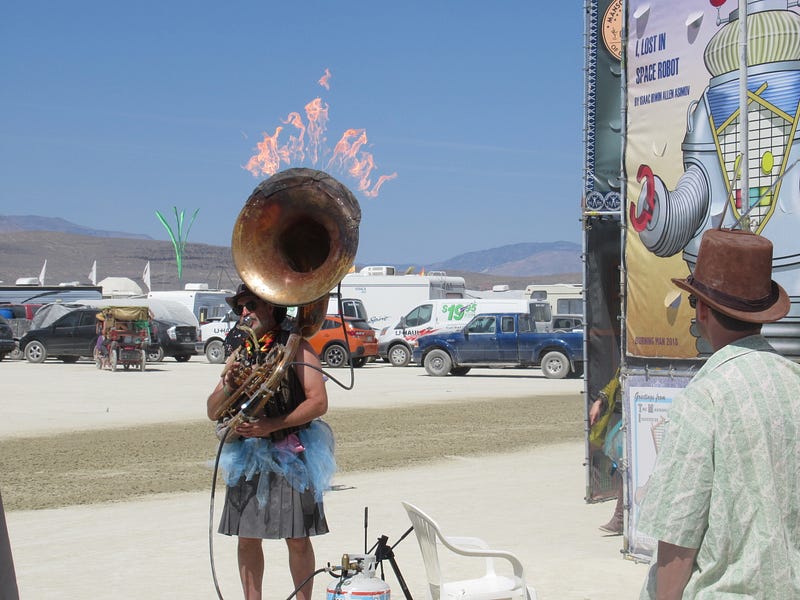
At night it is a city of a million different events and parties, pulsing with energy and music, where passing mutant-vehicles/art-cars breath fire.
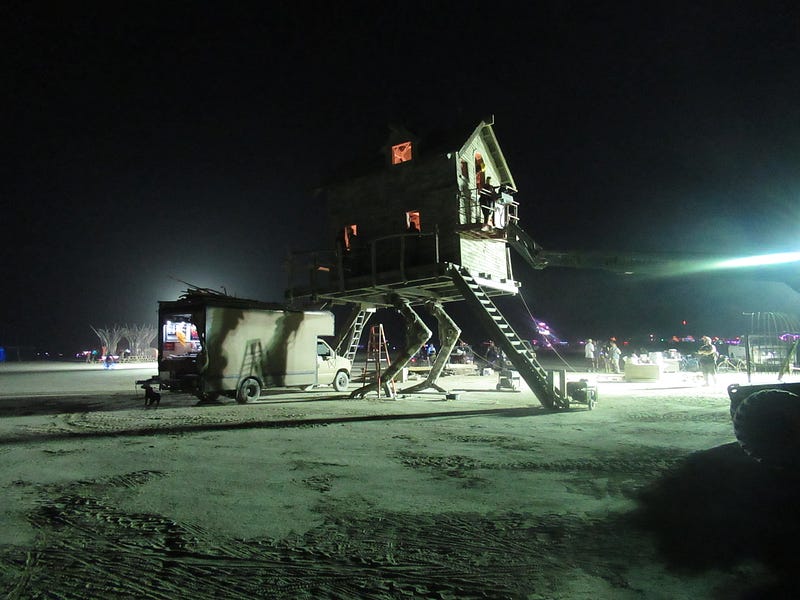
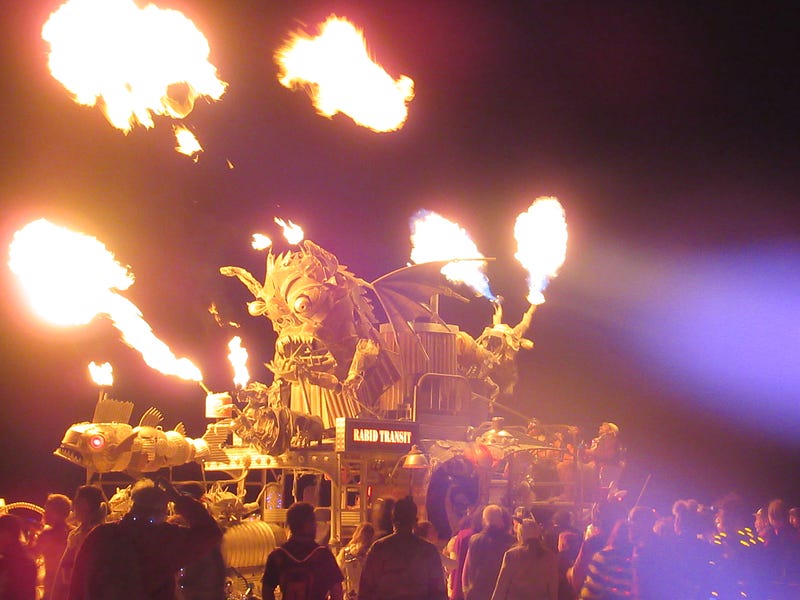
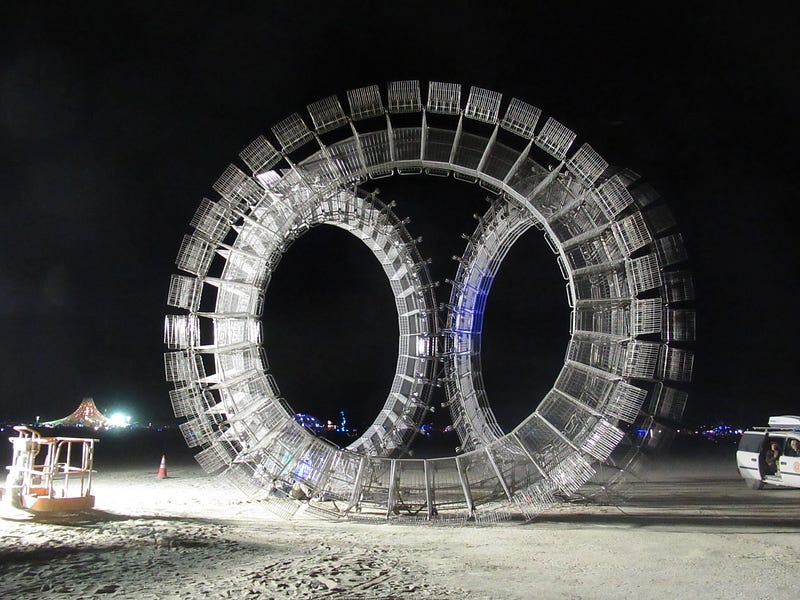
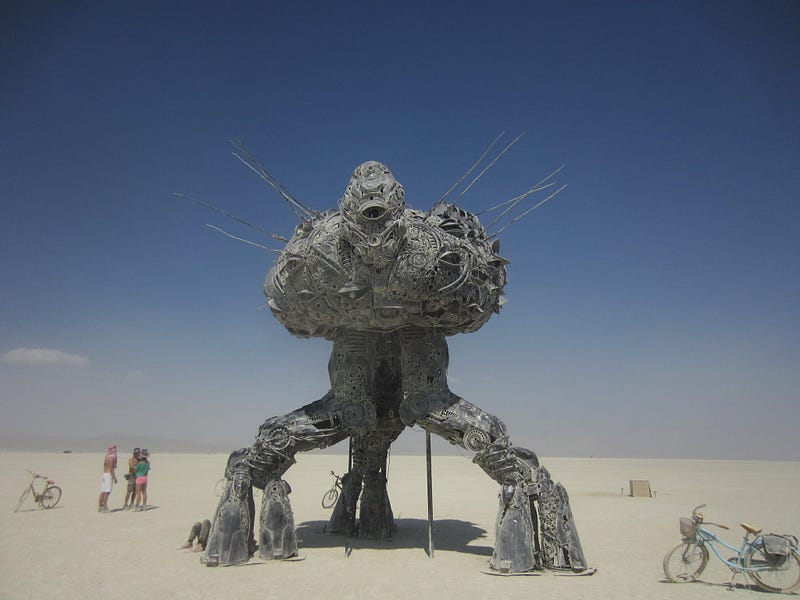
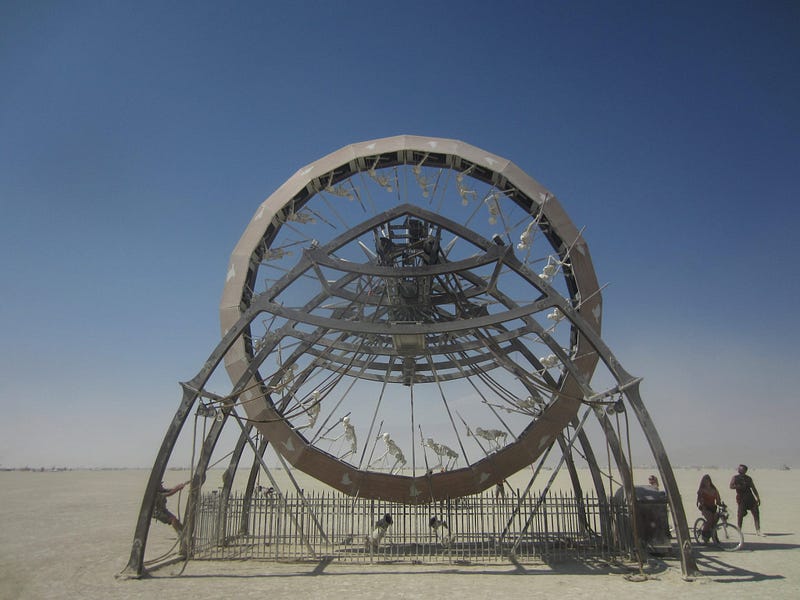
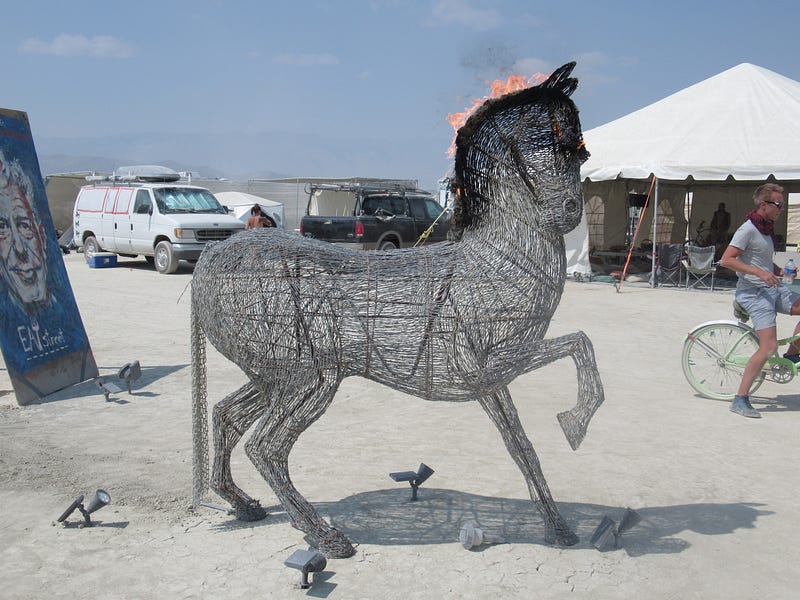
And all day long you are enveloped in an astonishingly concentrated profusion of human creativity.
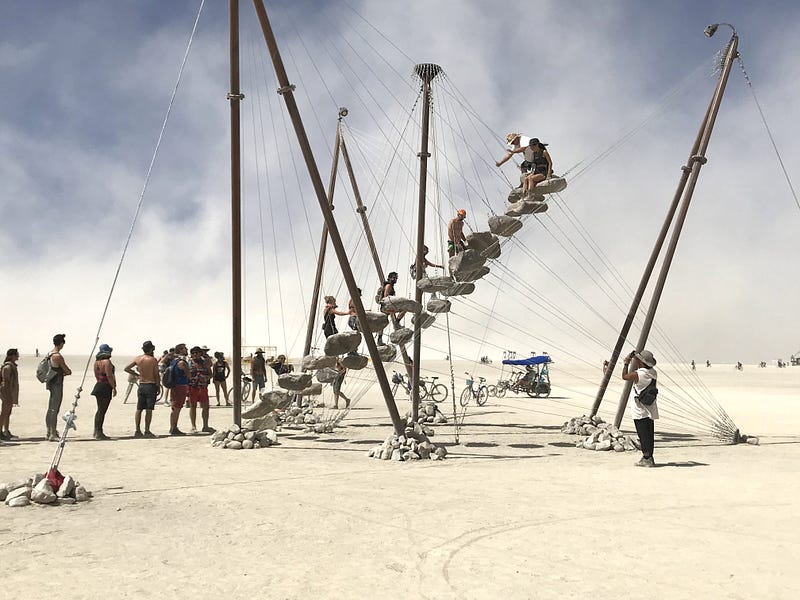
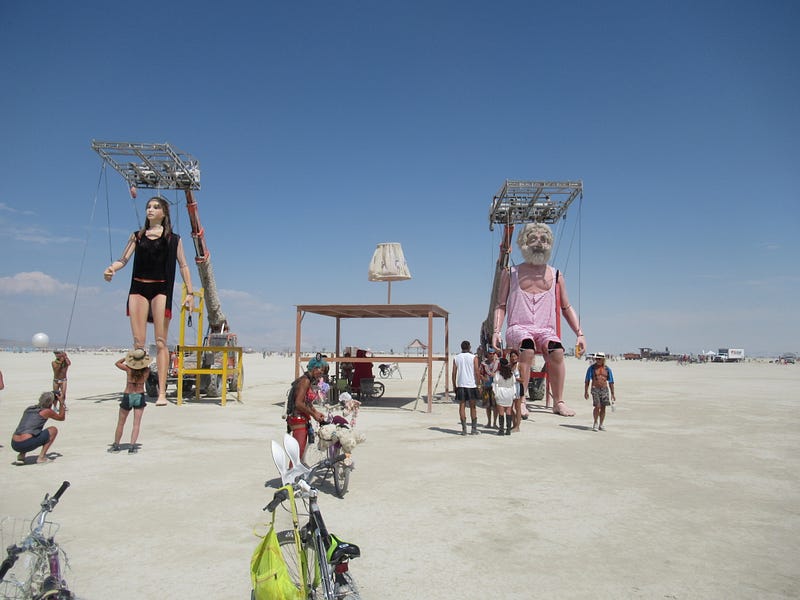
Buying the ticket — oh, and did we mention the $140 vehicle pass to get your wheels onto the playa? — is just the beginning. Unless you live in Gerlach, Nevada (population 114) which is spitting distance from the Black Rock Desert, you will need to bring you and your gear and everything you’ll need to eat, drink, and otherwise survive for a week in what can charitably be called a hostile environment. (This is where the deepest element of sharing arises among the inhabitants.)
How are two elderly weirdos with only one part-time job and one Social Insecurity check between them going to pull this off? Remember those grand plans of ours? Well, we were serious enough to do some heavy-duty saving. The funds for the international trip are long gone into the everyday of food, shelter, and doctor bills. When the pandemic hit, we had enough socked away for this trip and we did not touch that money.
Until now.
Okay, enough about money. All “vacations” cost money.
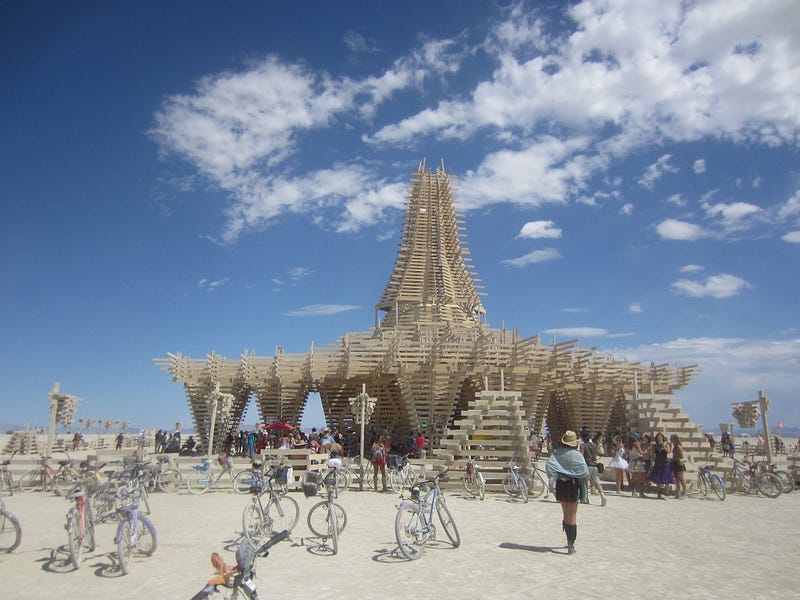
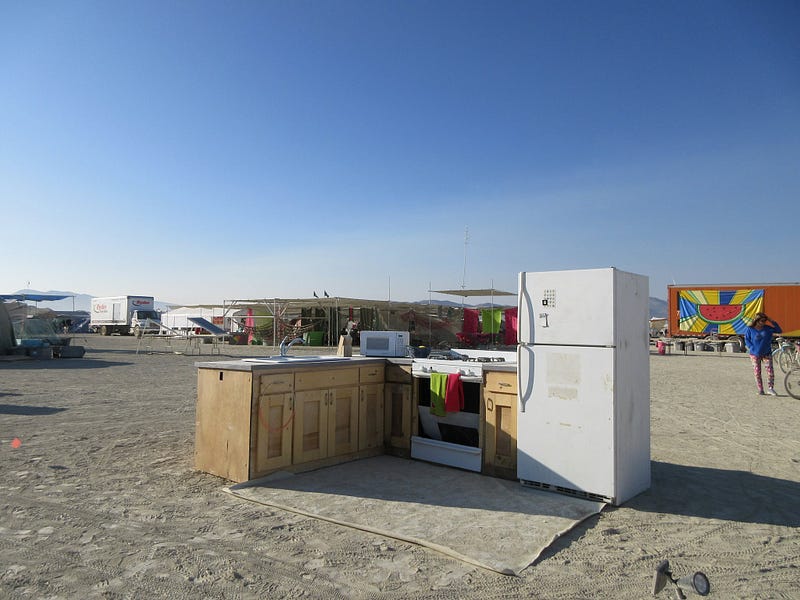
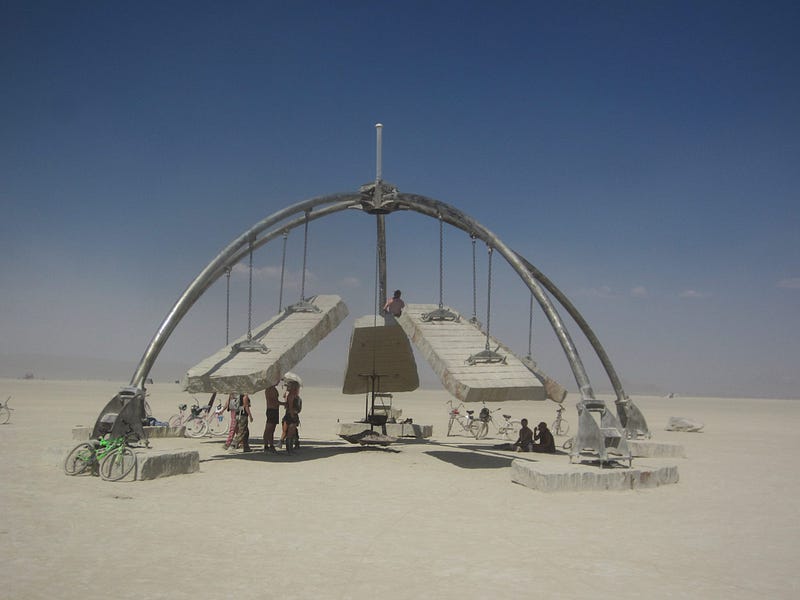
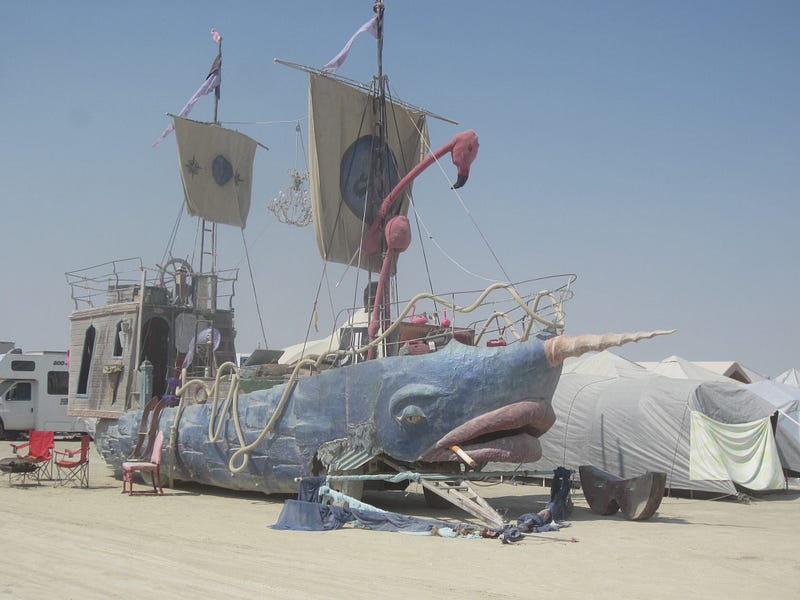
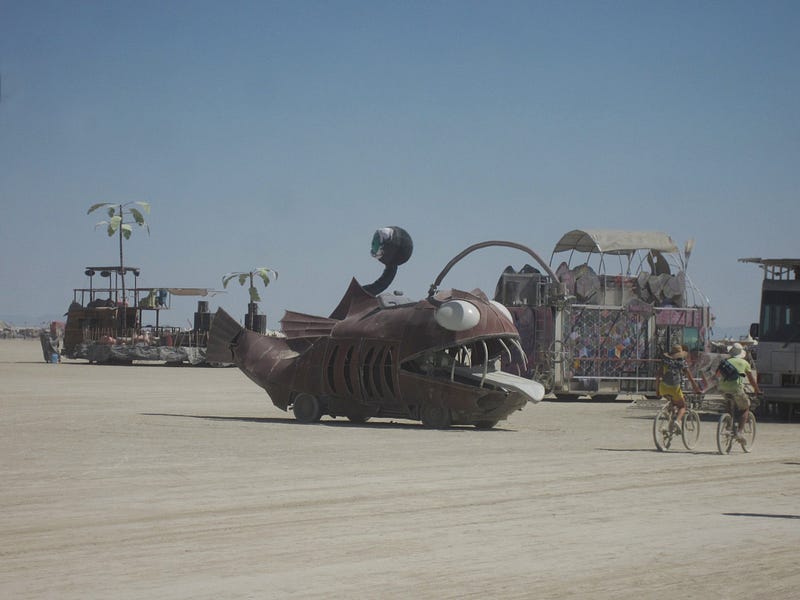
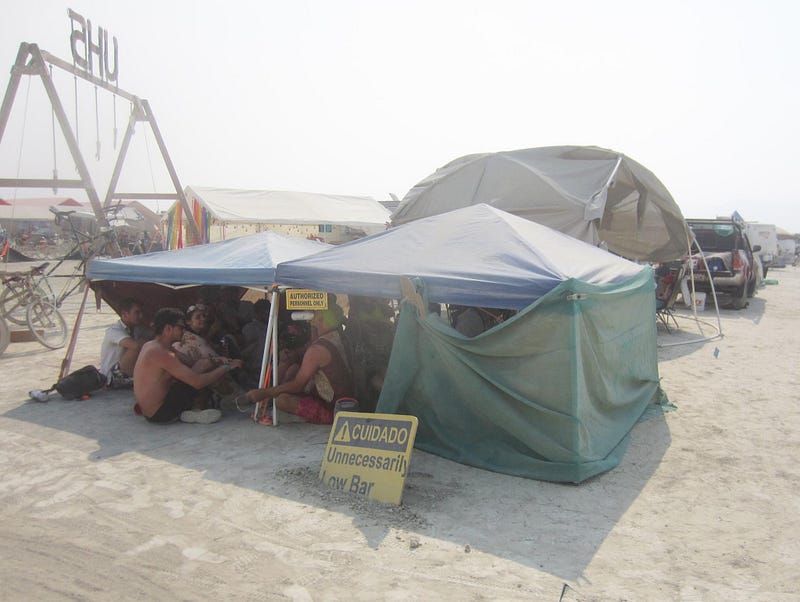
Let’s talk about principles. You heard me. Specifically, there are Ten Principles (see Wikipedia entry above) that are generally considered to be foundational to the experience of Burning Man. We’ll touch on a couple.
Decommodification.
Other than one camp that sells bags of ice, nothing else can be bought or sold at the event.
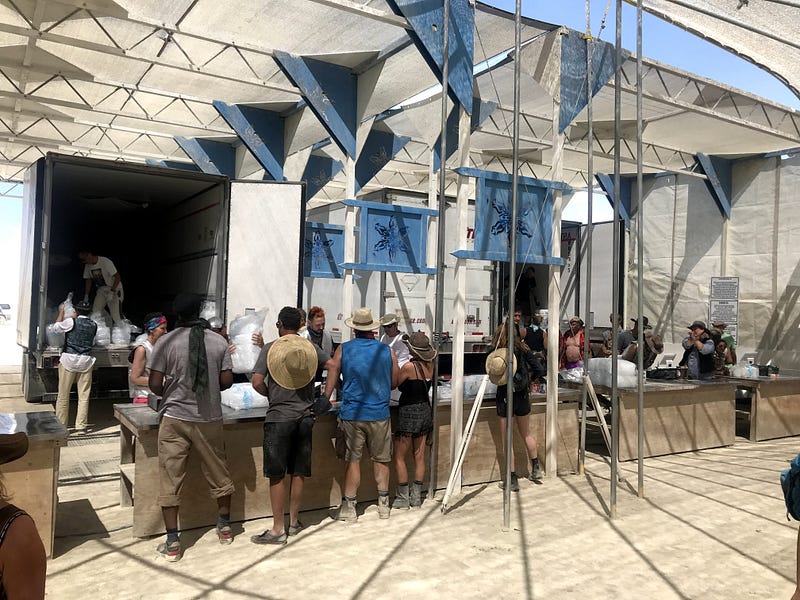
Radical Self-reliance.
Coming from New York City (hard to imagine the hoops people coming from Australia have to jump through) it all starts with the miracle of a cross-continental flight. We leave Manhattan and land in Sacramento, California. There we share a storage space with friends.
Why a storage space?
Remember that stuff about bringing everything you need to survive for a week in the desert? Yeah, that.
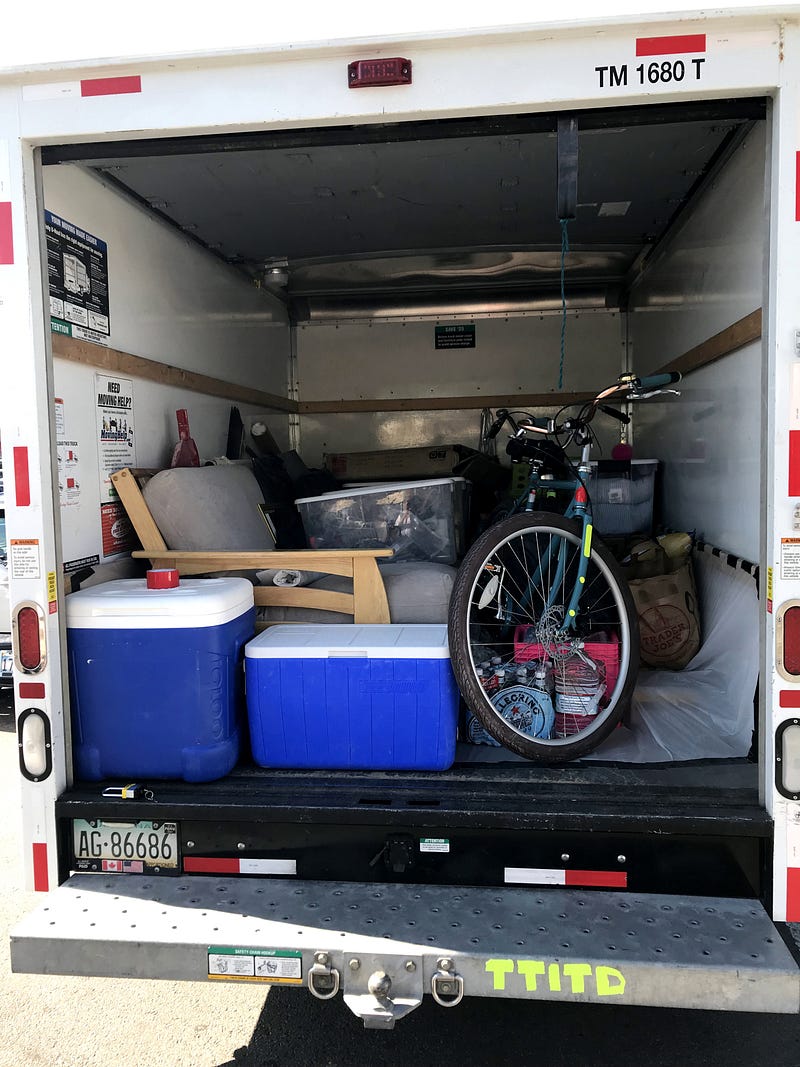
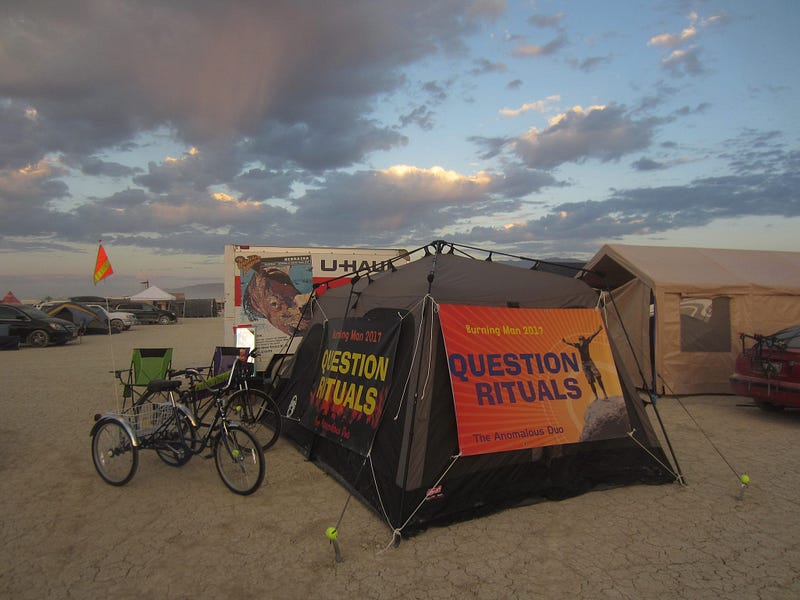
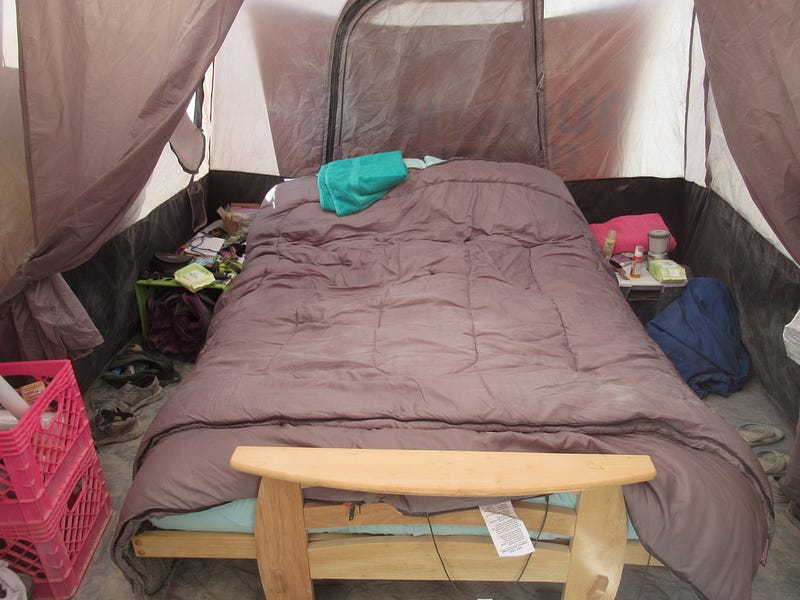
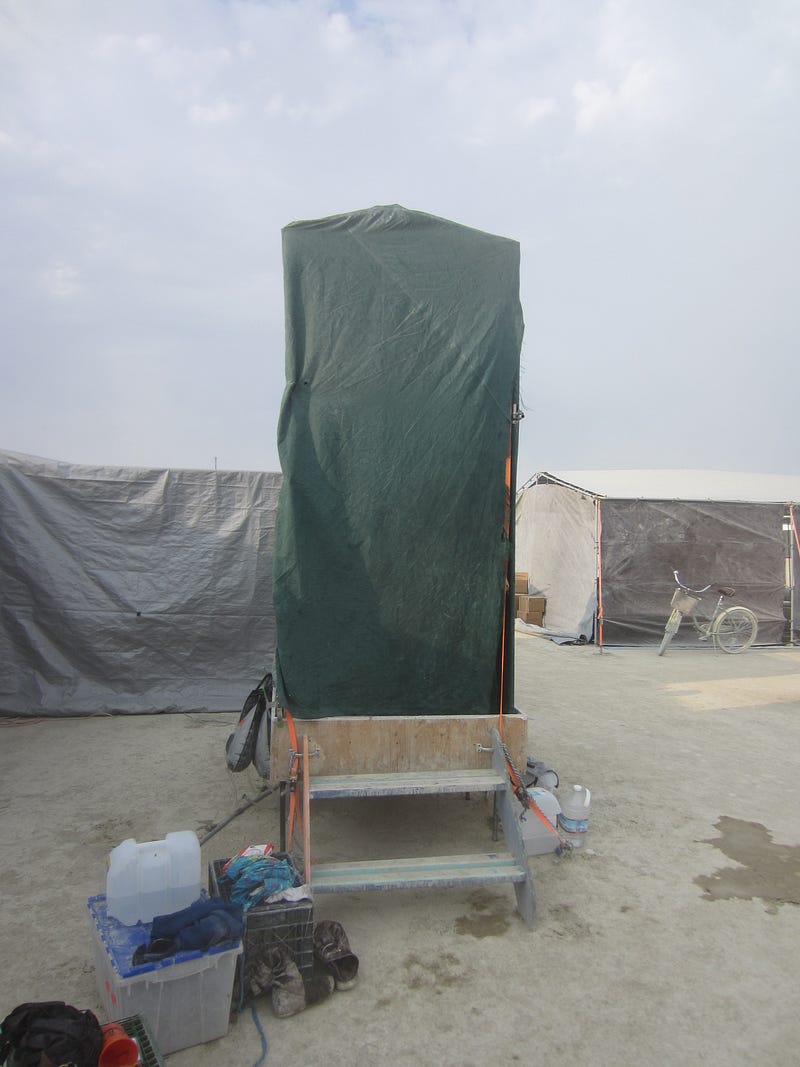
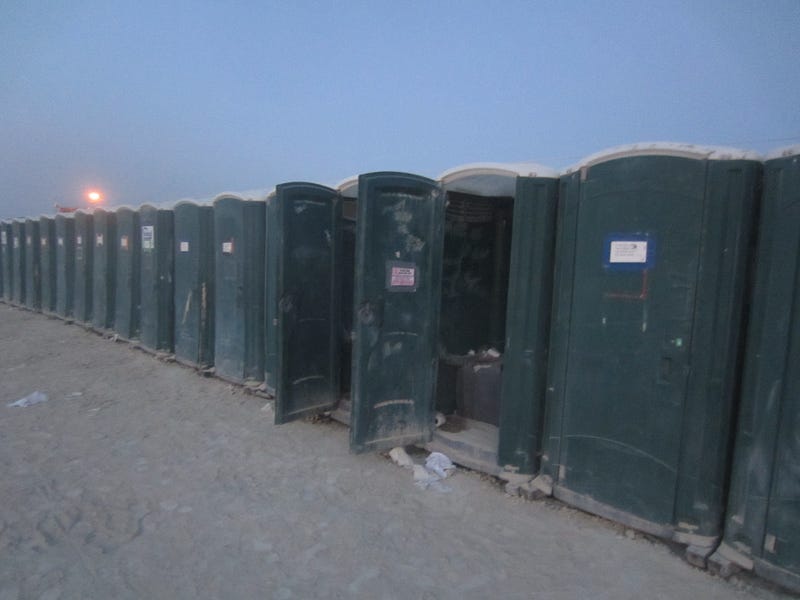
Let’s see what a cursory glance at our list of must-haves looks like.
Tent (other choices include domes, pods, and the sadly ever-increasing RVs with their generators, etc) / stakes / sleeping bags /pillows / blanket (the temperatures range from over 100 during the day to the 40s at night)/ inflatable mattress (we’ve opted for buying a used futon and frame in Reno and the last couple years our “sleep”, —as it is, with the ever-present untz-untz music—has much improved) / bikes — the primary form of transportation around the city (we’ve got a long wonderful story with a bike shop in Sacramento and its owner John, who we ended up luring out to TTITD) / food and water for a week / blinkies (to decorate your bike so your steed looks groovy and you are visible at night) / headlamps / goggles / batteries / hydration backpacks (piss clear) / zip lock bags (put everything into them beforehand) / baby wipes / tissues / flashlight / all your toiletries (plus necessary lip balm and skin lotion)/ bandanas or other face mask covers / clothes: t-shirts — underwear/socks (a dozen+ pair) — shorts, skirts, leggings, cold weather items, footwear: boots, sandals.
Much of the gear is necessary to live with the ever-present presence of dust.
Dust.
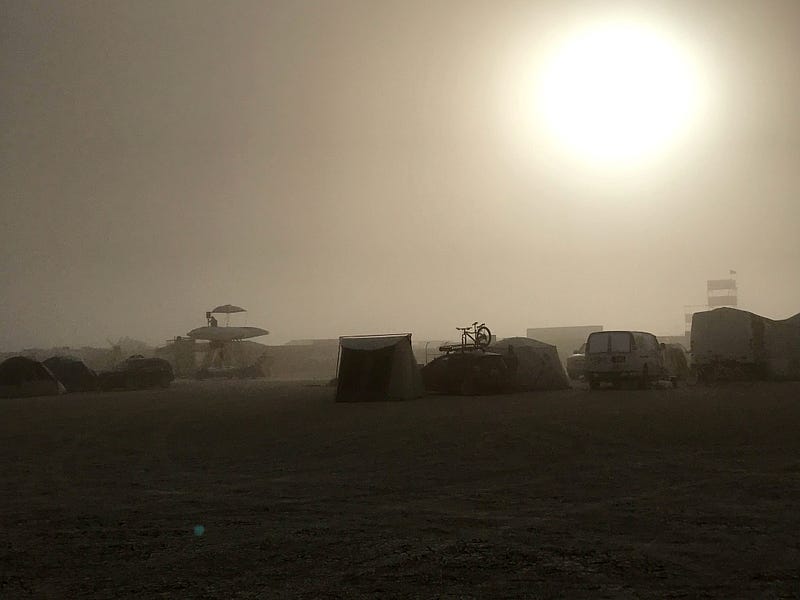
Black Rock City is built each year on a prehistoric alkaline lakebed that actually gets a couple of inches of rain and/or ice during the winter. In the summer, however, the surface turns into a powdery dust that gets into everything. The dust storms (see goggles, masks) can be epic.
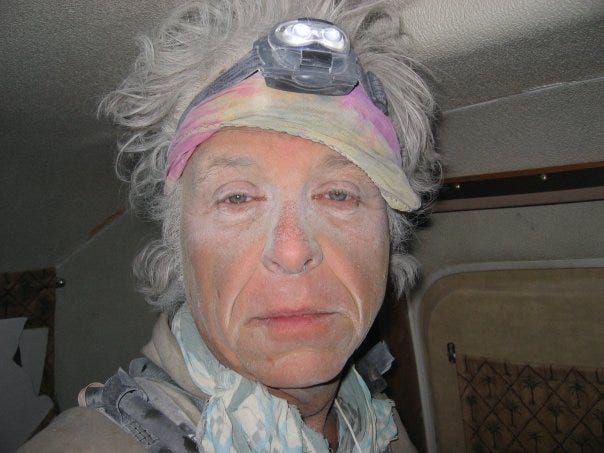
Nomenclature. The cracked surface of the desert is the playa.
Speaking of epic. There are theme camps and some are truly epic.
Theme Camps.
Theme camps are communities based on common interests and activities. Burning Man has a “No Spectators” philosophy, inviting everyone to contribute towards the whole in some way. There is an official calendar of events— but not everything on it happens, and many things not in it do.
A handful of theme camp names: Game of Cones (they serve snow cones), 404:Village Not Found, Greeters (greeting new arrivals to the city — a wonderful participatory experience), Scarbutts Cafe (yep, coffee), Settle This Like Men (Brazilian Jiu-Jitsu), Roller Disco, Shine Town (has dildo tossing) . .
To get a really good sense of the endless diversity of creativity and wonder at Burning Man simply browse the list of theme camps. Click HERE — pick a letter of the alphabet, and jump into the dazzling variety of human delight and ingenuity. And yes, just a smidge of perversity.
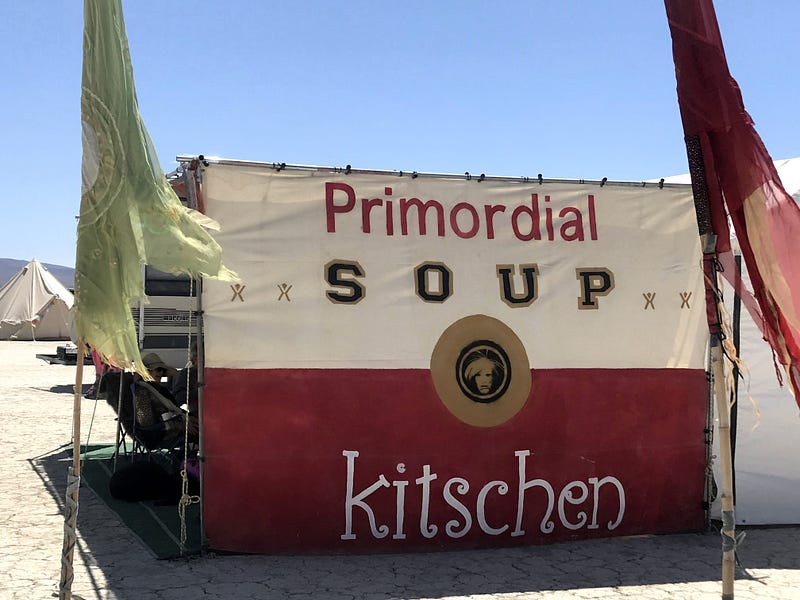
We have been members for years of a most amazing theme camp/village of 300+ individuals, called PolyParadise. Our camp fees provide a roomy and comfortable shade structure (shade is a treasure under that blazing sun), breakfast/lunch/dinner prepared by our campmates (we each buy, bring and contribute to one meal), and a place to hang our shower bag (pre-heated in the sun all day for an early evening shower), which comes with a setup for grey water disposal.
Gray water, like all waste materials, cannot be left to simply evaporate on the desert floor. Nope.
That’s the administrative stuff.
Now for the fun.
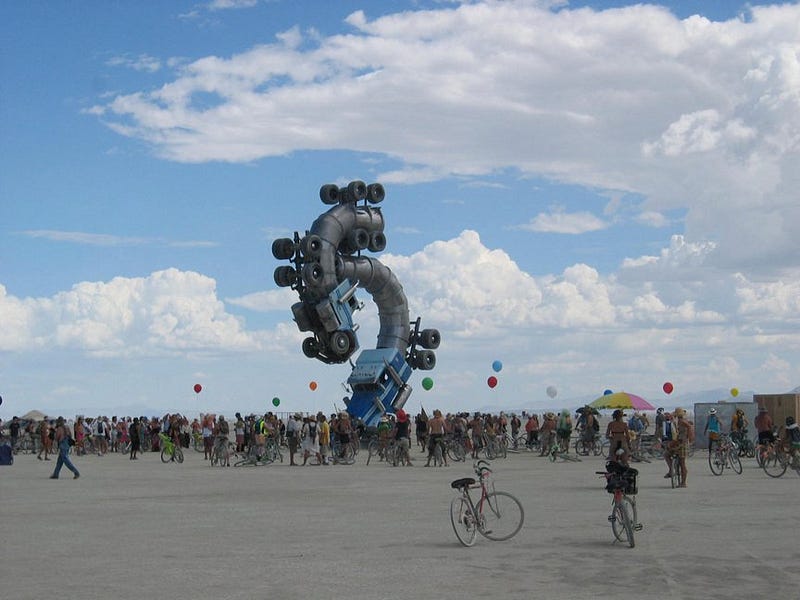
Art.
Burning Man has a theme every year. This year it is Waking Dreams.
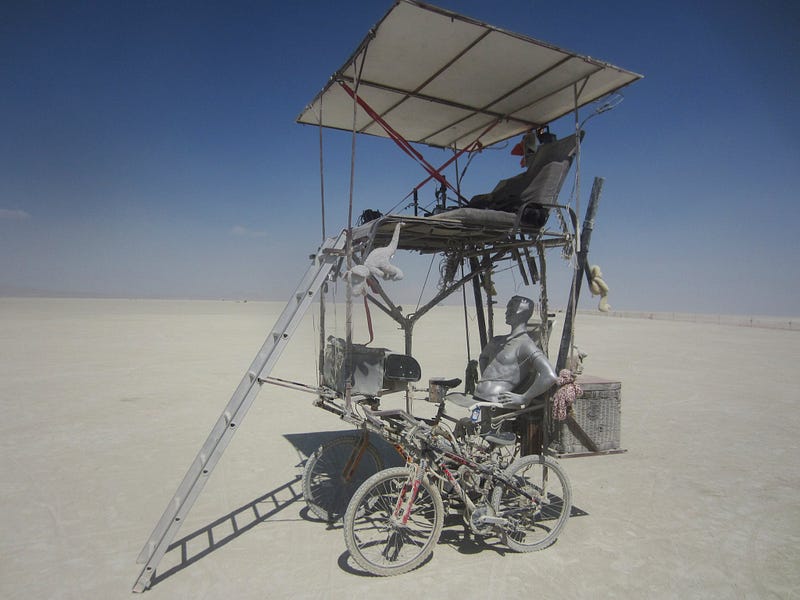
Every year the range of art at the event scrapes against the very edges of imagination itself. It is very much a participatory event and everyone strives to bring forth whatever marvels they can conjure—from the grand to the delicate.
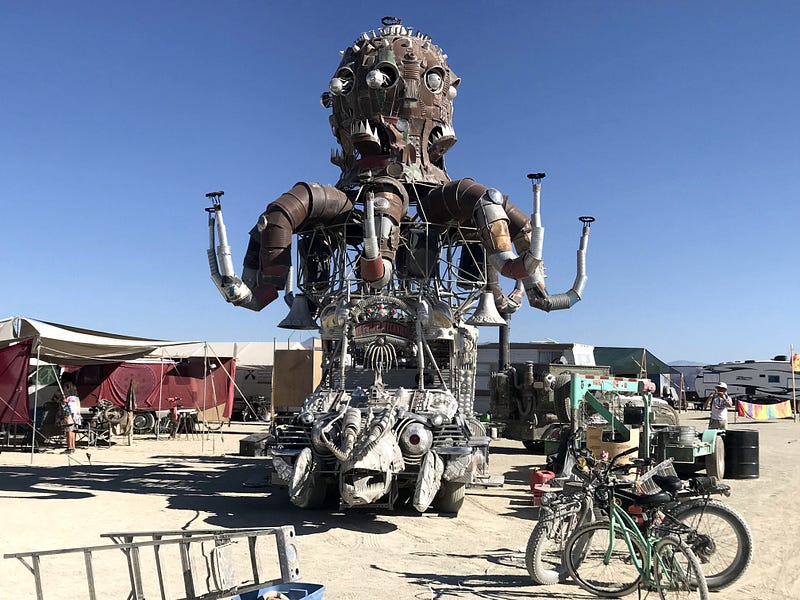
In 2018 the Smithsonian Institution no less held an exhibition titled: “No Spectators: The Art of Burning Man” which touched on the vast scope of the work that emerges at the event.
Small works of wonder and art can be found around every corner. One that immediately comes to mind is the ATM machine near one camp where you inserted the attached card and received a handful of hazelnuts.
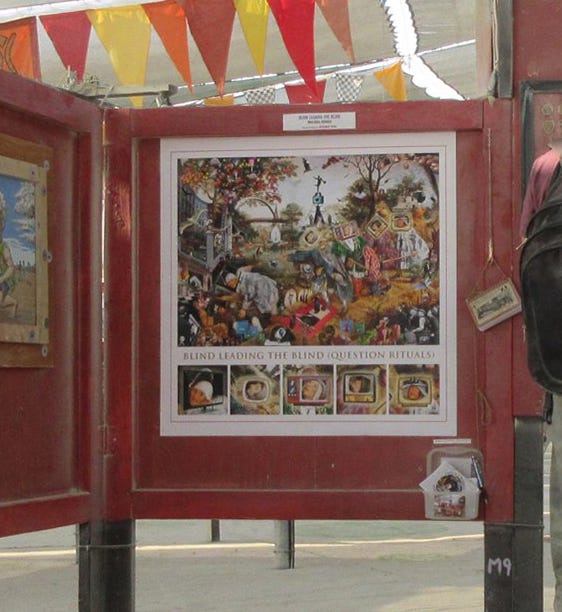
While the open playa is a natural open stage for every possible type of art, large and small, Center Camp has a gallery for two-dimensional printed art. AleXander has been bringing his digital collage art since 2010 (much of which decorates our apartment now). In 2018 — on the theme of Rituals — he presented his work “Blind Leading The Blind (Question Rituals)”
Since 2013, Remington Write has written companion pieces which have been printed and 500 free copies given out. In fact, there are probably some random copies still to be found in corners of the apartment. Tug one of our coats if you’d like a copy.
Fun is fun, but most Burners are dead serious about leaving the desert as we found it.
Leave No Trace.
Another of the principles.
Burning Man is a leave-no-trace event. Pack it in, pack it out. The site of the event is amazingly clean afterwards thanks to hundreds of volunteers who stay afterwards combing the playa surface for any MOOP (Matter Out Of Place).
The grownups of the Bureau of Land Management come out after the fun to make sure not one feather or bit of glitter is left to sully the pristine beauty of the Black Rock Desert.
The Burning Man Organization could lose its (extremely expensive) permit to hold the event if we don’t pass that inspection.
When we talk about the Gift Economy of Burning Man, picking up after your own damned self is definitely one of the most important gifts.
Gifts.
We are so thoroughly pickled in Capitalism in this country that people often assume the gifting of Burning Man is some form of barter. It’s not. Camps bring gifts to the community and people bring gifts for each other. And to a surprising extent, there is no expectation of anything other than a nice, platonic hug given in exchange for that delicious cup of iced Vietnamese coffee (for real: Vietnamese Iced Coffee Camp has lines snaking down the street every day as camp members serve up thousands of cups of their signature beverage.)
Nature.
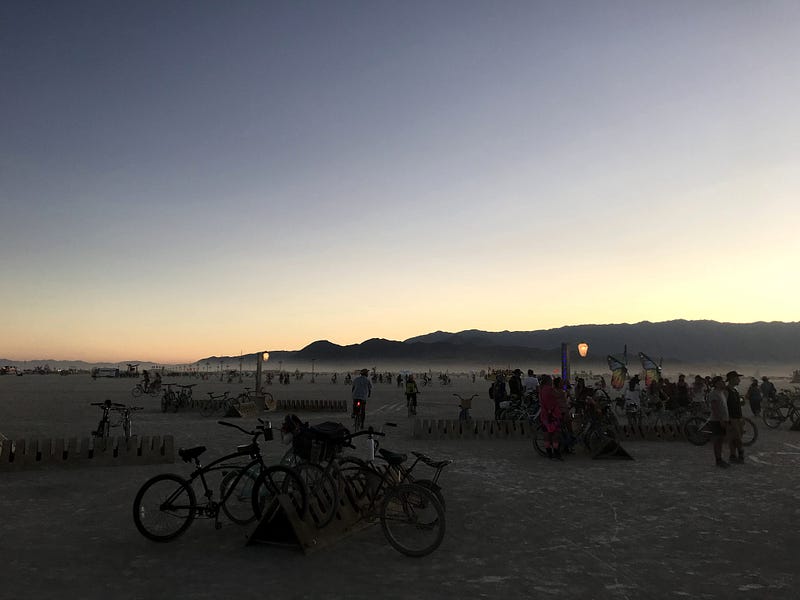
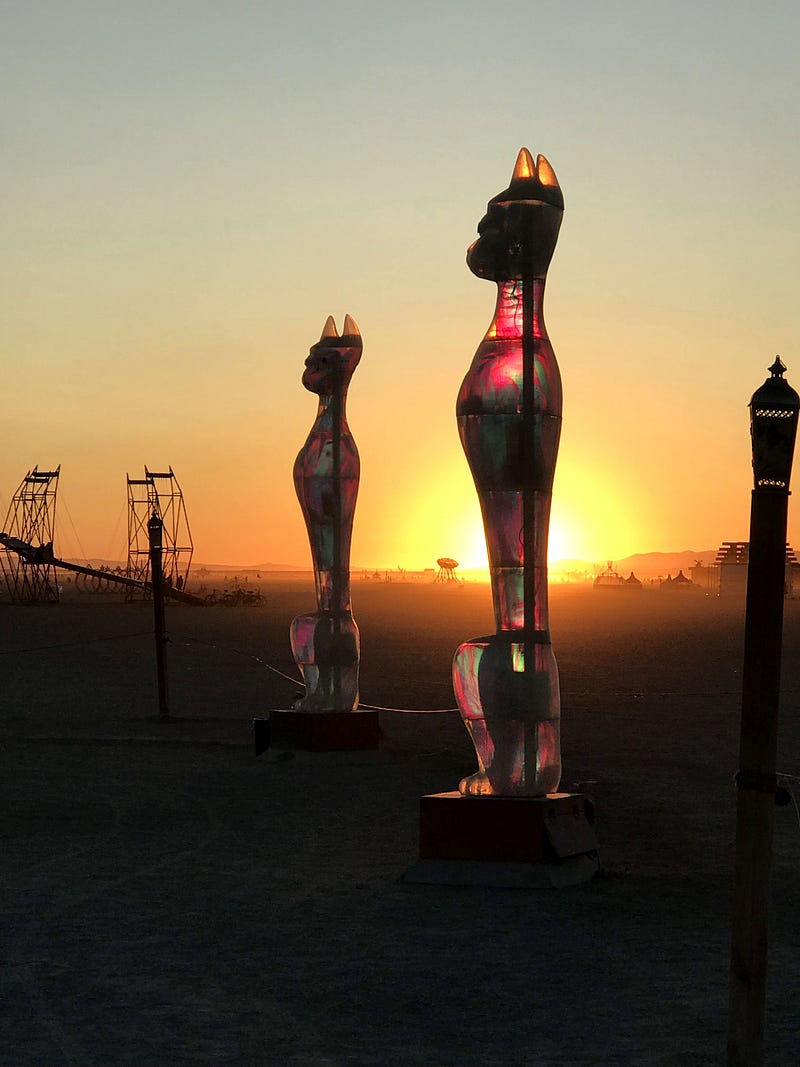
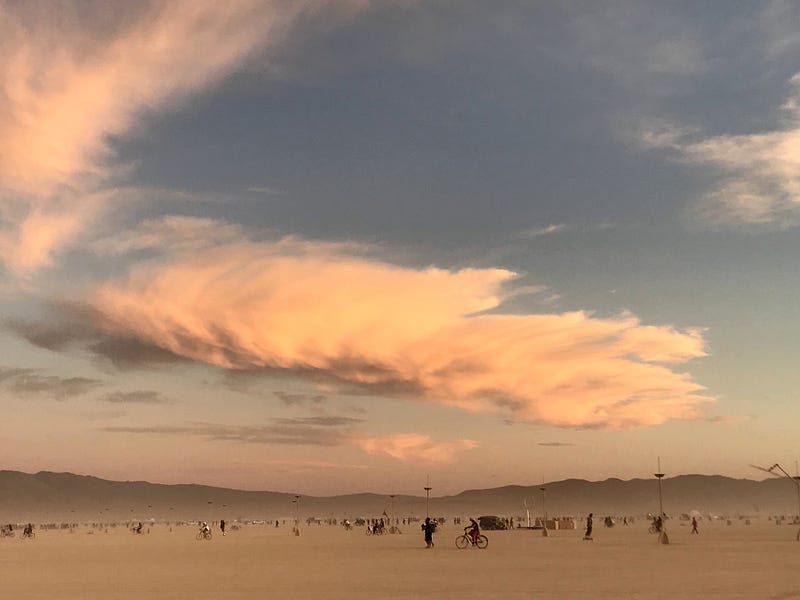
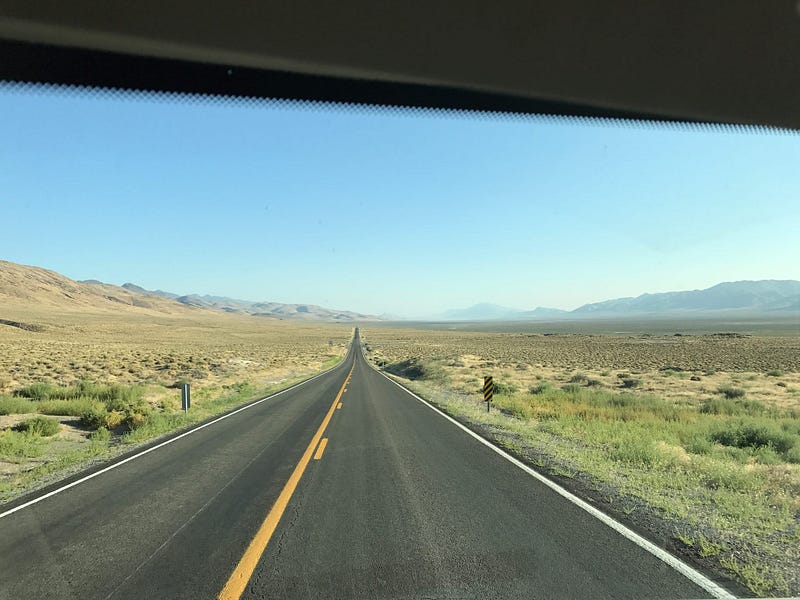
Set in the Black Rock Desert of Nevada the vast expanses, with mountains all around, make for magnificent panoramas—especially at sunrise and sunset, or during dust storms.
The Temple.
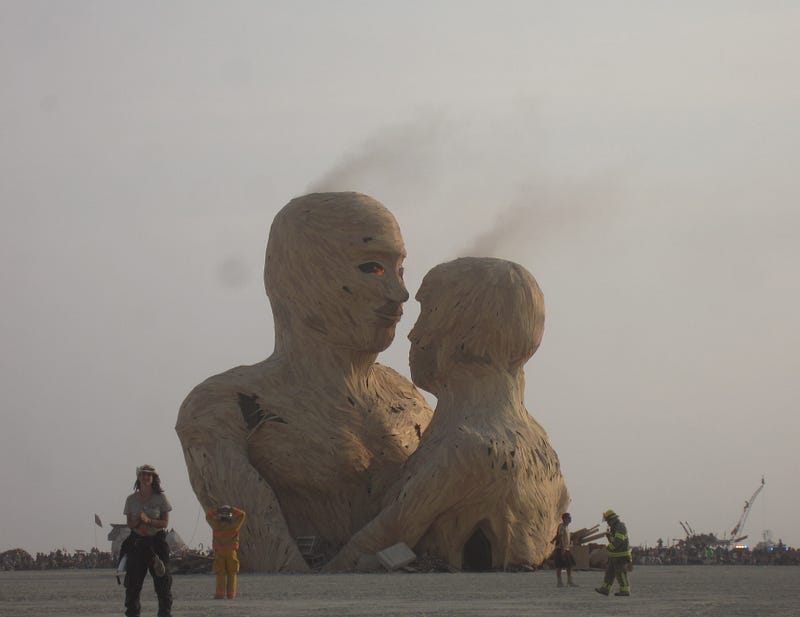
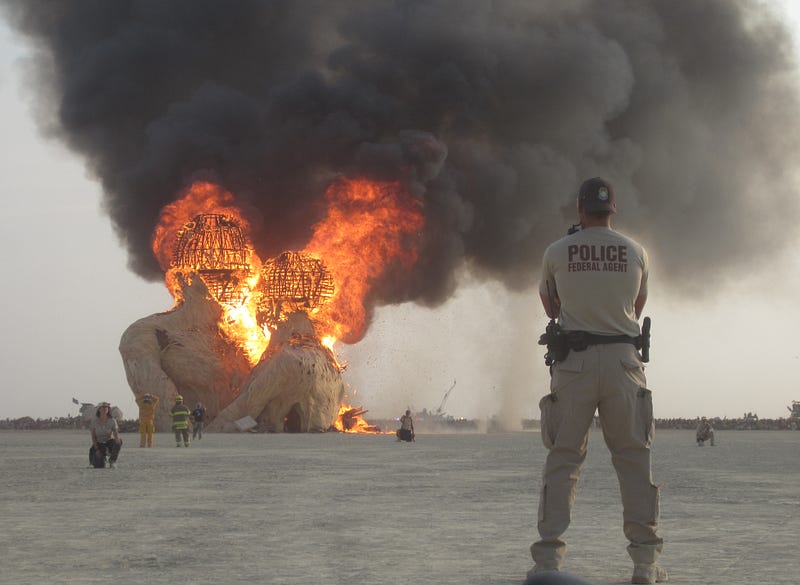
There’s The Man but then there’s also The Temple and in some ways the Temple is a more powerful part of the event culture.
The whiz kids at The Burning Man Project describe it thus: “The Temple is a community shared space that is an important part of Black Rock City. It is not a temple in recognition of any religion; it’s a neutral, non-denominational spiritual space where everyone can gather to share in the experience of remembering the past, honoring or cursing the present, and pondering the future to come.”
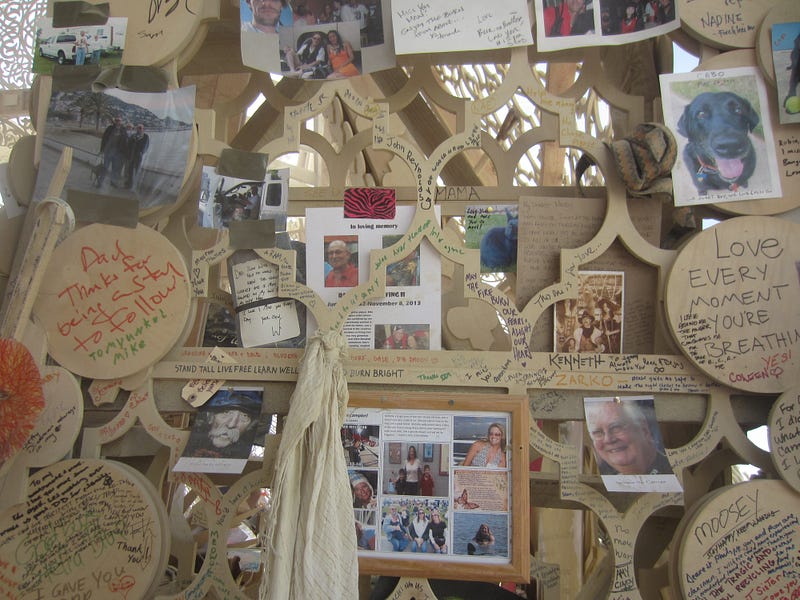
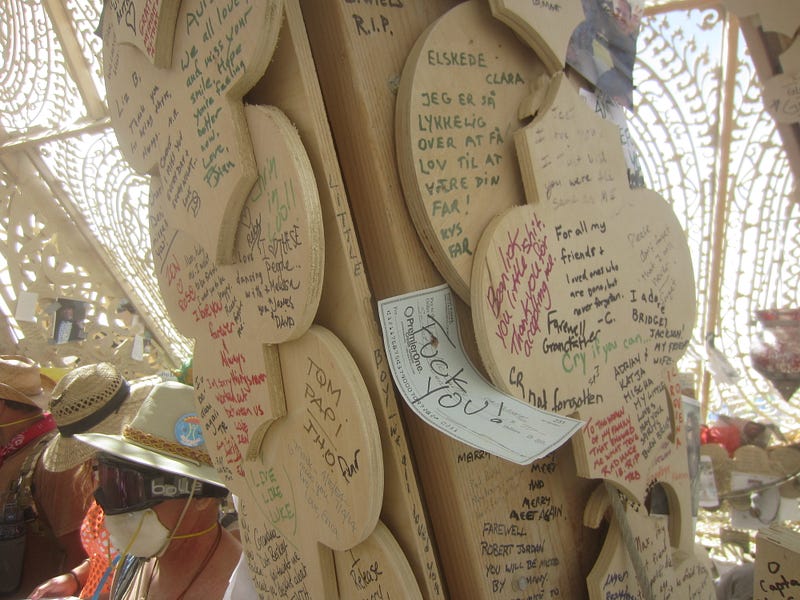
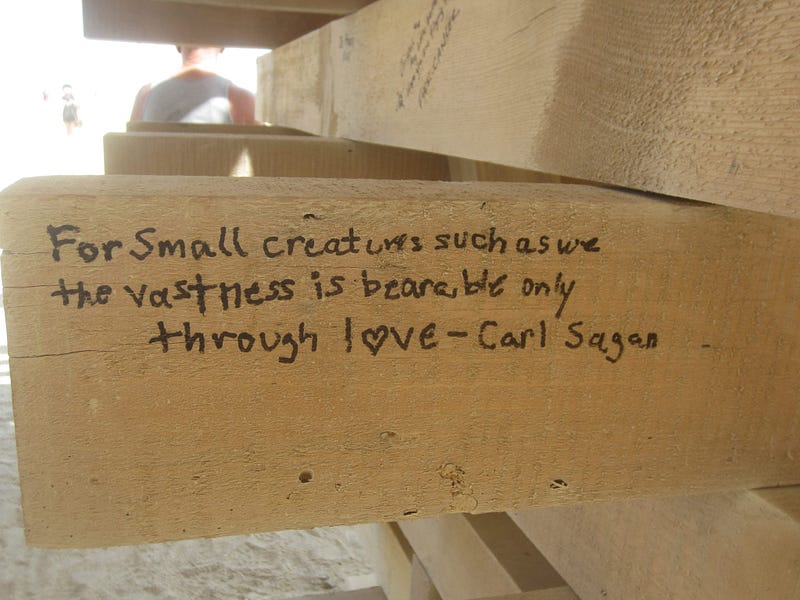
Simply put, The Temple becomes the canvas onto which people paint their losses and hopes. By the time the Temple burns on the last night of the event it is covered with the words and images of Black Rock city’s residents. During the week leading up to the night of the Temple Burn it serves as many things to many people. It’s alternately a place of contemplation, a place to rest, a place of reflection, of rituals, of weddings, as well as reunions.
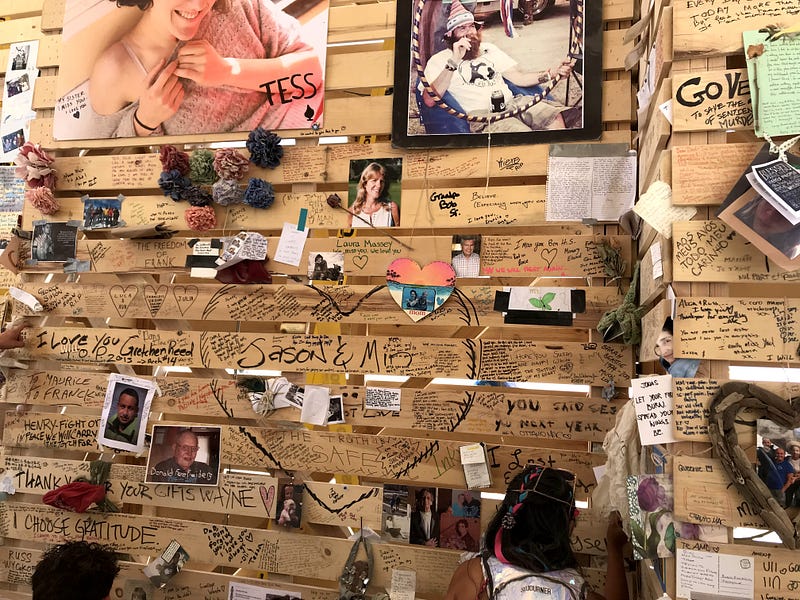
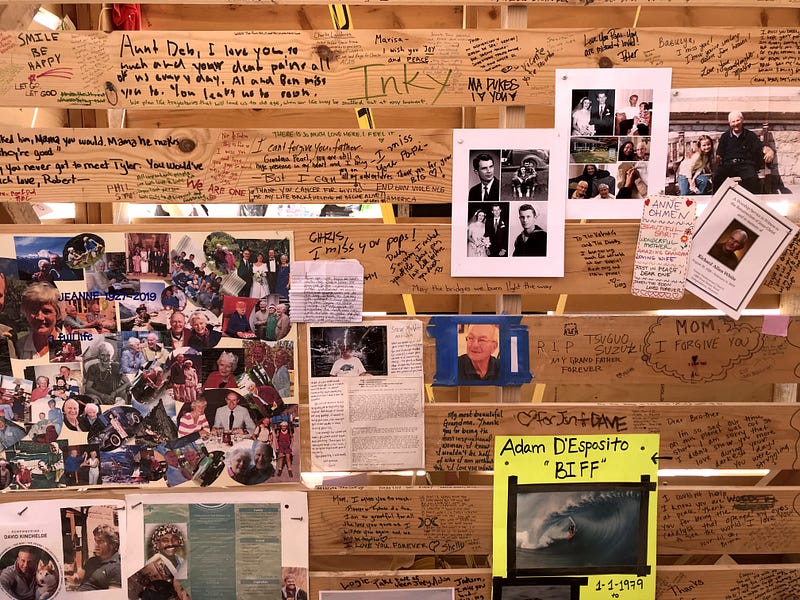
400 Temple Guardian volunteers monitor the Temple 24/7 during the week.
When the Man burns, it’s loud, chaotic, and jubilant, and there are explosions and fireworks. When the Temple burns the silence is such that you can clearly hear the crackling and popping of the wood. It is as sacred a ritual as anything practiced by any of the religions of the world and is treated with the same reverence.
Health.
We’ll skip the gory details but suffice to say that health issues have been a real bear for us this year. We’ve both got some tests coming up the results of which could still conceivably put the kibosh on this trip (all the doctors, however, have assured us that even in worst case outcomes all necessary treatment can wait until we’re back from this “vacation”).
With some diagnoses in hand, and other tests on the horizon, we talked it over and decided that not going wouldn’t magically result in clean bills of health for either of us. So, what the hell. You only live once as far as we know.
Realistically, this could be our last opportunity to make it out there.
But ya never know!
And if we go again, maybe we’ll meet you out there.
A video travelogue from our 2018 trip to Burning Man.
Some previous writings from The Anomalous Duo (AleXander Hirka and Remington Write)—those bon vivant influencers—on their past Burning Man experiences.
_____________________________________________________________
© AleXander Hirka 2022. All Rights Reserved.
Like the words/art? Please consider subscribing to my free newsletter.


