
This 1 super effective app was my secret quit alcohol weapon
As anyone who has tried to quit alcohol can tell you, the first few days are by far the hardest part.
That’s when the withdrawals smack you like a ton of bricks. If it’s not the physical ones (I never really had any physical alcohol withdrawal symptoms), it’s the psychological ones.
Depression. Moodiness. CRUSHING anxiety.
Although these symptoms taper off over the following two weeks, there’s still an underlying … uneasiness … that can haunt you throughout the day.
All of these difficult feelings are trying to push you toward the easiest yet most detrimental solution: have a drink.
As such, surviving these cravings without caving in is the toughest part of quitting.
Some people just flood their brains with quit lit and audiobooks during this period and hang on for dear life.
Some people go to therapy or check into rehab.
Some people white knuckle it through the cold turkey method.
I tried the cold turkey method and the quit lit method, and both worked … for a while.
But it wasn’t until I tried a simple, underrated mindfulness method that I finally felt truly in control of my drinking.

Attacking your subconscious
I’ve always been interested in finding ways to short-circuit my brain.
Ways to get past the active, thinking mind, and access the subconscious processes that ACTUALLY control everything we do.
Back in my first week of university, one of the frosh week events featured a master hypnotherapist called Mike Mandel.
The performance was geared toward a student crowd, so there was some show hypnosis and comedy, but at the end, he mentioned that he had some tapes (yes, tapes, this was the late 1990s … you can get digital versions now) to address specific issues.
I tried two of them.
With the “stress relief” one, I floated away almost instantly and “woke up” 40 minutes later feeling 10x better.
I would sometimes use the “peak performance” one when I was a sports journalist working on insanely tight deadlines on the road and it made my job that much easier. I felt like a machine (in a good way).
Ever since then, I’ve been fascinated with ways to access the subconscious and bend it to your will.

Hacking your brain
In a way, this is what simple meditation does.
It’s a form of trance, just like zoning out while you’re driving the car.
If you’ve read any of my work before, you’re probably aware that my favorite quit alcohol audiobook is called The Quit Drinking Complete Collection (affiliate link).
In it, author Craig Beck goes through a bunch of steps and methods to cut back, but at one point he mentions dealing with cravings using a “tapping” method called Thought Field Therapy (TFT).
Basically, you tap your fingers on certain acupuncture points on the hands and face to reduce anxiety.
I did try this when I was initially trying to quit, and I found it somewhat effective.
Although the practice died off, I never forgot it.
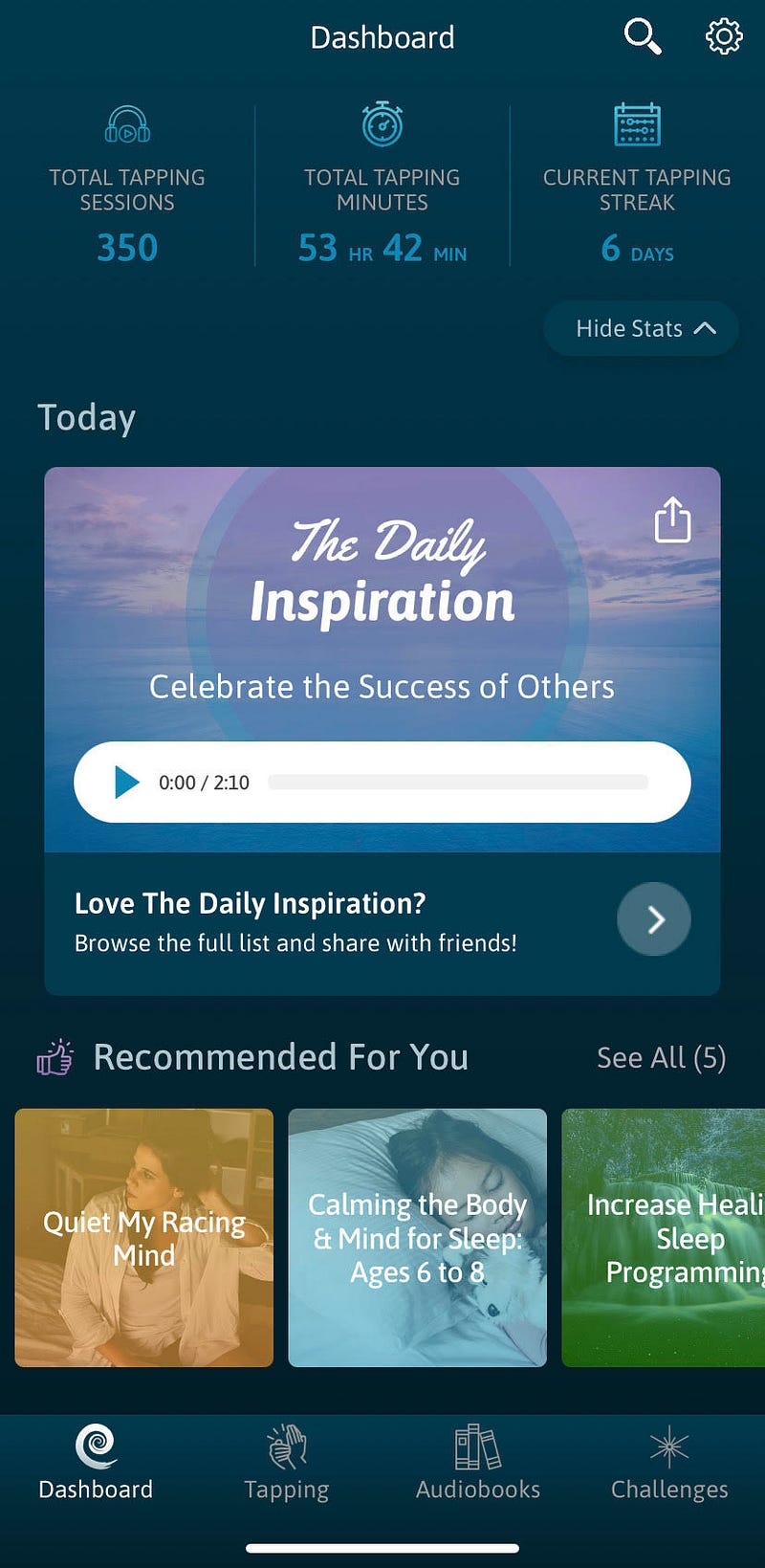
Last summer, when I was rooting around for apps to help me try to quit for good, I happened upon one called The Tapping Solution.
I downloaded and tried the free trial, and what I discovered was it took the calming power of guided meditation, supercharged it, and directed it toward specific issues I was having.
If you decide to try tapping meditation, it may feel silly at first.
But if you stick with it, I’m fairly confident you’ll be able to change your life in all kinds of positive ways.
What is tapping?
Here’s how the makers of The Tapping Solution describe it on their website:
“Tapping is also known as EFT (Emotional Freedom Technique). It is a powerful holistic healing technique that resolves a range of issues. It’s based on the combined principles of ancient Chinese acupressure and modern psychology.
“The basic Tapping technique requires you to focus on a negative emotion at hand. This can be a fear, a worry, a bad memory, or any unresolved problem. You do this while maintaining your mental focus on this issue. Then you use your fingertips to tap 5–7 times on 9 specific meridian points of the body.
“Tapping on these meridian endpoints, while addressing the root cause of distress, sends a calming signal to the brain. This allows you to feel relaxed and in control.”
Effectively, this is what TFT is, but the Tapping Solution App adds a guided meditation element aimed at specific issues.
How it works
So for example, they have a specific tapping meditation for alcohol cravings.
Here’s what it looks like in the app:
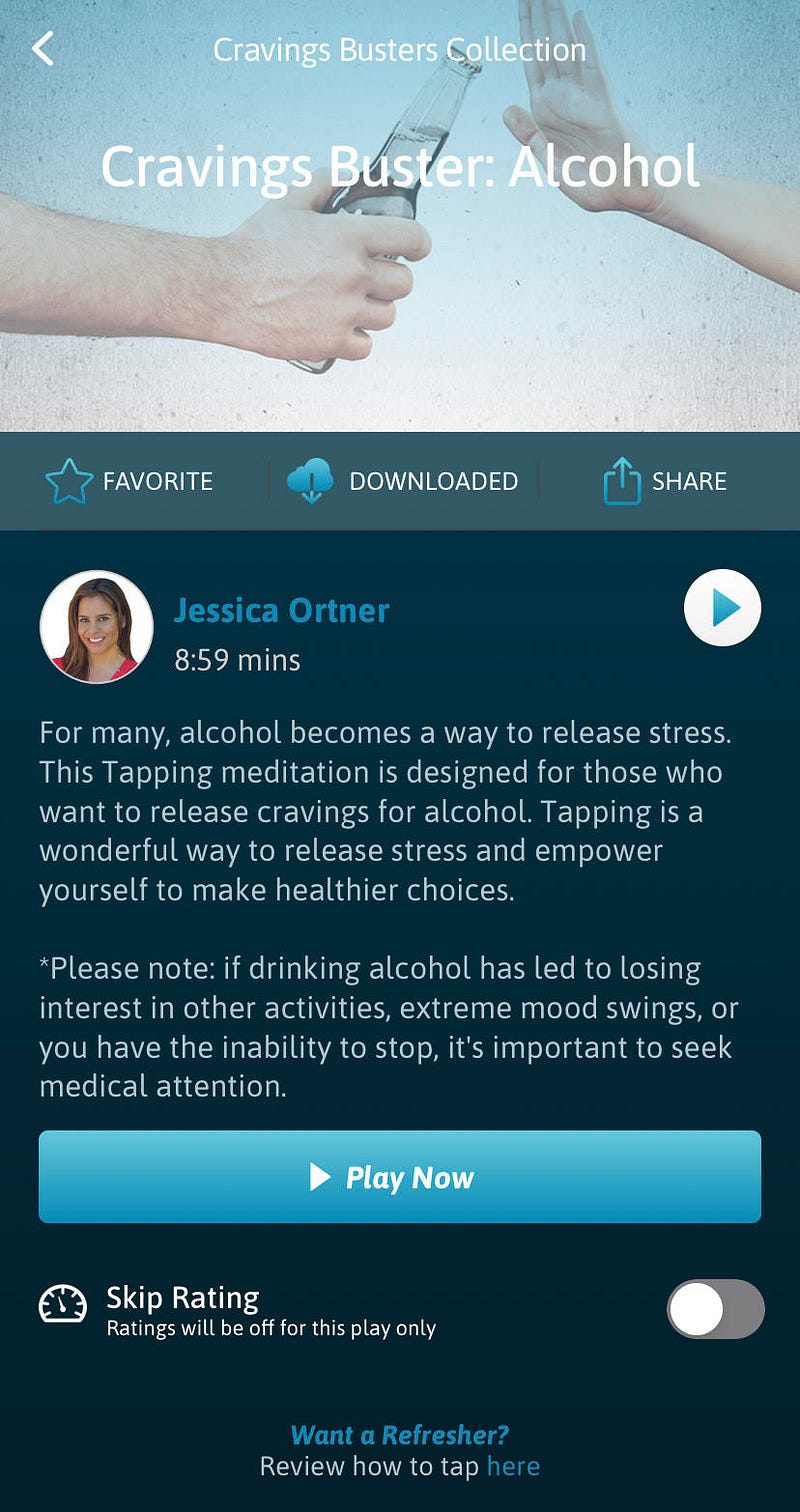
I kid you not, I fully credit this meditation for getting me through the first two weeks of quitting.
Every time I would get an alcohol craving, I would “tap on it” and it would fade.
In the early days, I’d be doing this 2–3 times per day.
It’s a tough, grinding process getting through those initial withdrawals, but the app helped me manage them far better than I could have on my own.
One interesting step the app has is that, at the start of your meditation, it asks you to rate your negative feelings, whether they be stress, anxiety, cravings, or whatever, on a scale of 1–10, with 10 being the most stressed.
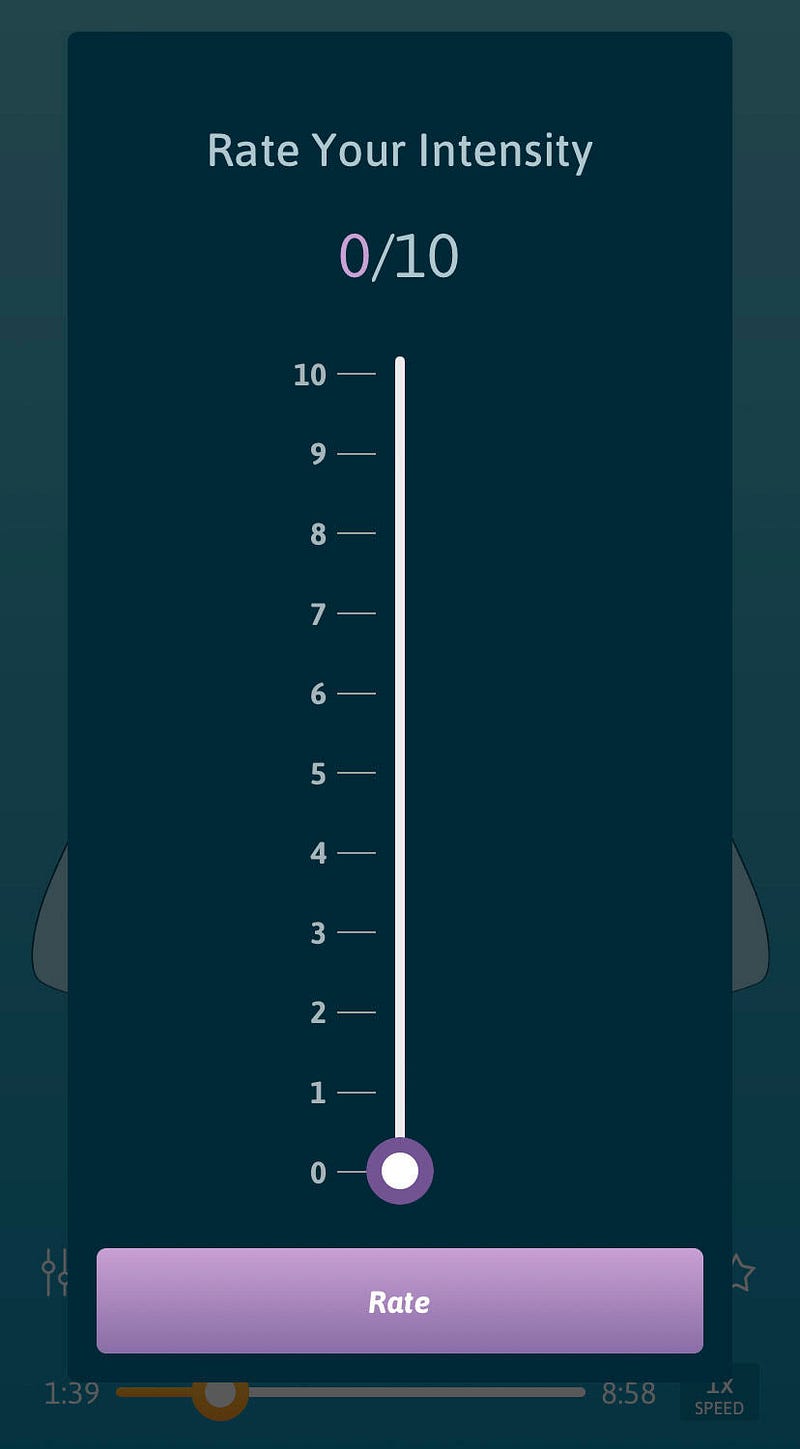
Then, at the end, it asks you to rate those feelings again.
I have never done a tapping meditation where my second number wasn’t significantly lower, thus indicating a lower level of stress or discomfort.
This is a really powerful thing, like analytics for your brain.
You can not only perceive how much better you feel after the meditation but by how much.
As someone who’s very numbers-focused and obsessed with trying to quantify everything, I super appreciate it.
The app also provides a history on the dashboard detailing what meditations you did every day and how many points you lowered your stress level by.
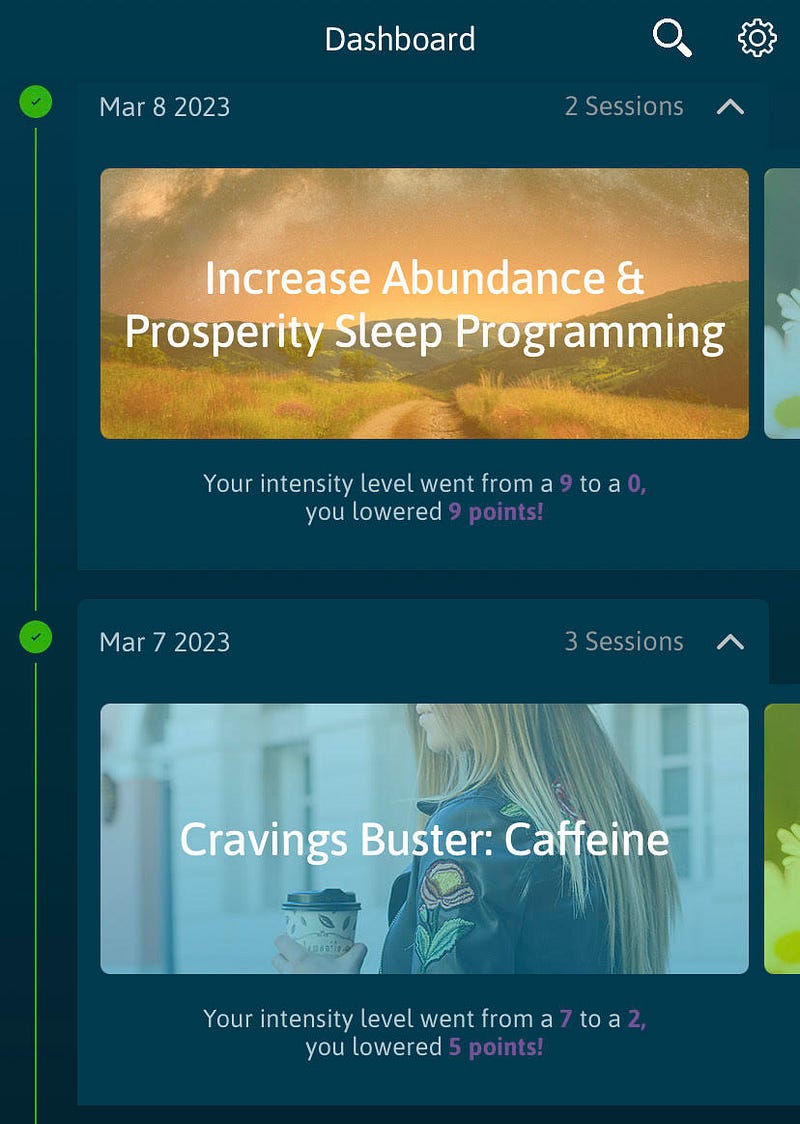
The great thing about it is it can be applied to anything. I’ve used specific tapping meditations for:
- Reducing stress and anxiety
- Gaining energy and focus
- Pain reduction
- Motivating me to work
- Motivating me to write
- Calming my mind before sleep
- Setting specific intentions for my brain while I sleep
And many more.
Like I said, the app is free to try for seven days.
If you’ve tried everything else to try and quit alcohol or caffeine, or are still searching for ways to manage your stress and anxiety or get a better night’s sleep, what do you have to lose?
Hey, thank you for reading this post all the way to the end! If you enjoyed it, please give it a clap or two so others can find it. I’d love to hear about some of your unique quit alcohol tools in the comments, too!
Is this your last free Medium article? Subscribe today using my link ($5 a month, cancel any time) — I’ll get a lil’ kickback, and you’ll get all the awesome content Medium has to offer, risk-free!
The latest from me
- Why parents avoid the easiest way to fix their kids’ crappy behaviour
- Quit alcohol culture is surging thanks to country music pioneers
- Get inspired by this former pop star’s shocking quit alcohol transformation
- Try this powerful David Goggins mindset shift to help you quit alcohol
- Why daily routines are super important for quitting alcohol (Macklemore knows)
My most-read posts
- I quit alcohol for one month and my side hustle income exploded
- Do these 4 exercises and you’ll be in the best shape of your life
- The one priceless book that kicked off my quit alcohol journey
- Gary Oldman explains why it’s never too late to quit alcohol
- When alcohol trapped Gwyneth Paltrow
Get an email every time I publish so you don’t miss a story!


