
Think Like a Trader: Stop Losing Money with Moving Averages
5 common mistakes keeping you from making money.
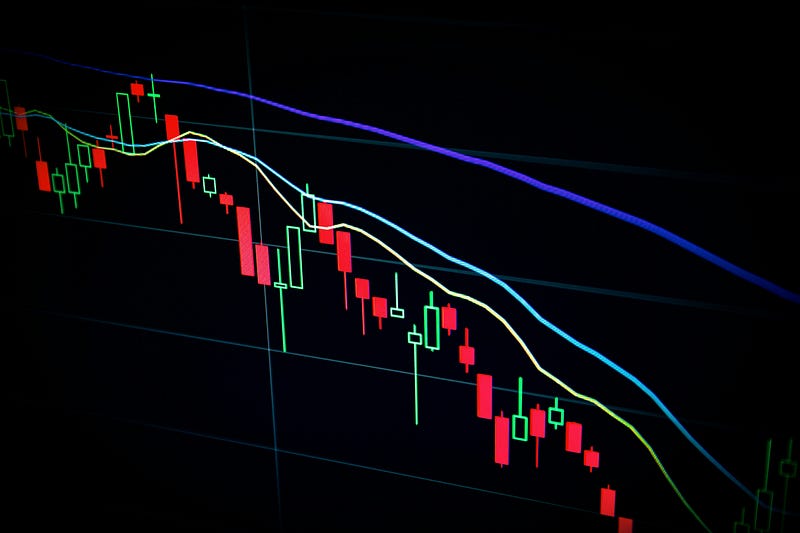
You’ve probably heard of moving averages. They’re those fancy lines that some traders use to make their charts look more sophisticated. You know, the ones that supposedly tell you when to buy and sell stocks, or when a trend is about to change.
You’ve probably also tried to use them yourself. Maybe you followed some “guru” or “furu” who claimed to have a “proven strategy” based on moving averages. Maybe you read some article or watched some video that promised to teach you the “secret” of moving averages. Maybe you even bought some software or indicator that claimed to do all the work for you.
And what happened? You lost money. A lot of money.
Don’t worry, you’re not alone. Millions of traders have fallen victim to the moving average trap. They think that moving averages are some kind of magic tool that can predict the future and make them rich. They don’t understand what moving averages are, how they work, or how to use them properly.
That’s what this article is all about. I want to help you avoid the common mistakes that most traders make with moving averages. I want to help you understand the logic and psychology behind moving averages. I want to help you apply moving averages in a way that actually works and makes you money.
But enough about me. Let’s talk about you. You’re here because you want to learn how to trade with moving averages and stop being a loser. But first, if this idea is something that interests you, you need to follow this account. Why? Because I have a lot more to share with you. I have a lot of insights and tips on trading, investing, and personal finance that you won’t find anywhere else. What’s more? Holistic Investing isn’t just about financial investing, but investing in all aspects of your life. If you want to make money and be better, you’re in the right corner of the internet. So go ahead and hit that follow button. I’ll wait.
Done? Great. Now let’s get started.
What Are Moving Averages?
Moving averages are one of the most popular and widely used technical analysis tools. They are simple to calculate and easy to understand. They are also very versatile and can be used for different purposes.
A moving average is simply the average of a previous set of values. For example, a 10-day simple moving average (SMA) is the average of the closing prices of the last 10 days. A 50-day exponential moving average (EMA) is the average of the closing prices of the last 50 days, but with more weight given to the recent prices.
The idea behind moving averages is to smooth out the price fluctuations and show the underlying trend. By using a moving average, you can filter out the noise and focus on the signal. Moving averages can also help you identify support and resistance levels, and where the price tends to bounce or break.
However, moving averages are not perfect. They have some limitations and drawbacks that you need to be aware of. One of the main drawbacks is that moving averages are inherently lagging, not necessarily predictive. They are based on past data, not future data. They can only tell you what has happened, not what will happen. They can also give you false signals, such as when the price crosses the moving average but then reverses.
Another thing to keep in mind is that there are different ways to calculate and weigh moving averages, such as SMA, SMMA, EMA, WMA, etc. Each type of moving average has its own advantages and disadvantages, and there is no definitive answer to which one is better or worse. It depends on your preference, style, and objective.
How Do Moving Averages Work?
Moving averages work by creating a psychological effect on the market participants. Price doesn’t move because of a moving average interaction, but because of the expectations of the interactions. In other words, moving averages work because people believe they work.
The more people use and watch a certain moving average, the more likely it is to influence the price action. The more eyes on a moving average, the bigger the reactions. That’s why some moving average intervals get more attention than others, and some types of moving averages get more attention than others.
For example, the 50-day and 200-day SMAs are considered to be the most important and widely followed moving averages by traders and investors. They are often used to define the long-term trend and signal major reversals. When the price crosses above or below these moving averages, it can indicate a change in the market sentiment and direction.
Another example is the 9-day and 21-day EMAs, which are popular among day traders and swing traders. They are often used to define the short-term trend and signal entry and exit points. When the price crosses above or below these moving averages, it can indicate a momentum shift and a trading opportunity.
As a rule-of-thumb, the most common intervals are 9, 10, 20, 21, 50, 55, 100, 200 and the most used moving averages are the SMA and EMA. Again, there are no objectively superior moving averages, especially for automated trading strategies. However, if you’re banking on a psychological effect, start by sticking with these.
How to use moving averages?
There are many ways to use moving averages in your trading, but here are three of the most common and effective applications:
Crossovers
A crossover occurs when the price or another moving average crosses above or below a moving average. A crossover can signal a trend change, a trend continuation, or a trading opportunity. For example, when the price crosses above a rising moving average, it can indicate a bullish trend or a buy signal. When the price crosses below a falling moving average, it can indicate a bearish trend or a sell signal. When a shorter moving average crosses above a longer moving average, it can indicate a bullish crossover or a golden cross. When a shorter moving average crosses below a longer moving average, it can indicate a bearish crossover or a death cross.
Support and Resistance (Potential “Bounces”)
A support level is a price level where the price tends to bounce or reverse from a downtrend. A resistance level is a price level where the price tends to bounce or reverse from an uptrend. Moving averages can act as dynamic support and resistance levels, where the price tends to bounce or break. For example, when the price is above a rising moving average, the moving average can act as a support level. When the price is below a falling moving average, the moving average can act as a resistance level.
Stacked Moving Averages to Confirm Trend Direction
Stacked moving averages are multiple moving averages of different intervals that are aligned in a certain order. Stacked moving averages can help you confirm the trend direction and strength. For example, when the moving averages are stacked in ascending order, such as the 10-day above the 20-day above the 50-day above the 200-day, it can indicate a strong uptrend. When the moving averages are stacked in descending order, such as the 10-day below the 20-day below the 50-day below the 200-day, it can indicate a strong downtrend.
Five Common Mistakes and How to Correct Them
Now that you know what moving averages are, how they work, and how to use them, let’s talk about the common mistakes that most traders make with moving averages and how to correct them.
DON’T rely exclusively on moving averages for algorithmic trading: Moving averages are great tools for manual trading, but not so much for algorithmic trading. Why? Because moving averages are lagging indicators, and they can give you late or false signals. If you rely solely on moving averages for your trading system, you will likely miss the optimal entry and exit points, and you will also be vulnerable to whipsaws and fakeouts.
DO use moving averages in conjunction with other strategies or indicators: Combine moving averages with price action, volume, trend lines, chart patterns, etc. This way, you can increase your accuracy and profitability, and reduce your risk and drawdown.
DON’T use a single moving average for both entry and exit: Another common mistake that traders make is using a single moving average for both entry and exit. For example, some traders buy when the price crosses above a moving average, and sell when the price crosses below the same moving average. This is a bad idea, because it can lead to overtrading, premature exits, and missed profits.
DO use a single moving average for each purpose: You can use one moving average for either entry or exit, or use two different moving averages of different intervals for entry and exit. For example, you can use a slow moving average for entry and a fast moving average for exit. This way, you can capture the trend and ride it until it ends. Alternatively, you can use a fast moving average for entry and a slow moving average for exit. This way, you can catch the reversals and profit from the mean reversion.
DON’T treat one rule or strategy as gospel for every ticker: Another common mistake that traders make is treating one rule or strategy as something that should translate to every ticker. For example, some traders use the same moving average intervals and types for every stock they trade, regardless of the stock’s characteristics, volatility, or liquidity. This is a bad idea, because different stocks behave differently, and they may not respond well to the same moving average settings.
DO backtest and look for consistent reactions: You should backtest and optimize your moving average settings for each stock you trade, and look for consistent and reliable reactions. This way, you can tailor your moving average strategy to the stock’s personality and performance.
DON’T act as soon as an interaction takes place: Yet another common mistake that traders make is acting as soon as an anticipated interaction occurs. For example, some traders buy or sell as soon as the price or another moving average crosses a moving average. This is a bad idea, because it can lead to false signals, choppy trading, and slippage.
DO wait for price and volume confirmation: Instead of throwing your money to the moving average gods, you should wait for confirmation before acting on a moving average signal. For example, you can wait for the price to close above or below the moving average, or for the moving average to change its slope or direction. You can also use other indicators or criteria to confirm the signal, such as volume, candlestick patterns, trend lines, etc. This way, you can filter out the noise and trade with more confidence and accuracy.
DON’T continuously change your moving average: Testing weights and intervals in your moving averages can be tempting. It’s especially easy to change what you’re looking at after losing a trade. In reality, the only person you’re helping is the guy on the other side of the trade. Trading is all about finding consistencies, so you want to reduce changing what you can control whenever possible.
DO stick with one set of moving averages: Pick something tried and true and stick with it. Don’t flip flop your chart every five minutes or you’ll only end up with disaster. Your moving averages aren’t fortune tellers, they’re tools. A tool is only as good as the handyman using it. Get a feel for your tools and your trades will thank you.
Putting it All Together
Moving averages are powerful tools that can help you trade better and smarter. They can help you identify the trend, spot trading opportunities, and manage your risk. However, moving averages are not magic bullets that can guarantee success. They have their limitations and drawbacks, and they require proper understanding and application.
If you want to trade with moving averages and stop being a loser, you need to avoid the common mistakes that most traders make with moving averages. You need to use moving averages in conjunction with other strategies or indicators, use different moving averages for entry and exit, optimize your moving average settings for each stock, and wait for confirmation before acting on a moving average signal.
If you follow these tips, you will be able to use moving averages effectively and profitably. You will be able to trade with the trend, catch the reversals, and ride the waves. You will be able to beat the market and the competition.
But don’t take my word for it. Try it yourself. Experiment with different moving averages and see what works best for you. Backtest and optimize your moving average strategy and see how it performs. And most importantly, practice and improve your moving average trading skills and see how they affect your results.
And if you liked this article, please do me a favor. Follow this account, give me a clap, and leave a comment. Tell me what you think of moving averages, what moving averages you use, and how they help you trade better. Share your feedback, questions, and suggestions. I would love to hear what you have to say.
What to Read Next
If you want to go forward trading, the first thing you’ll need to know is what stocks to trade. If that sounds like you, this article will help you find great tickers every time:
If you want something less abstract and more concrete, I have an article showing you what a real trade looks like and what should be going through your head when you’re really in the thick of it:
Happy trading!
Peace ✌


