
Things You Should Know Before Moving to Portugal.
This is no “El-dourado”.
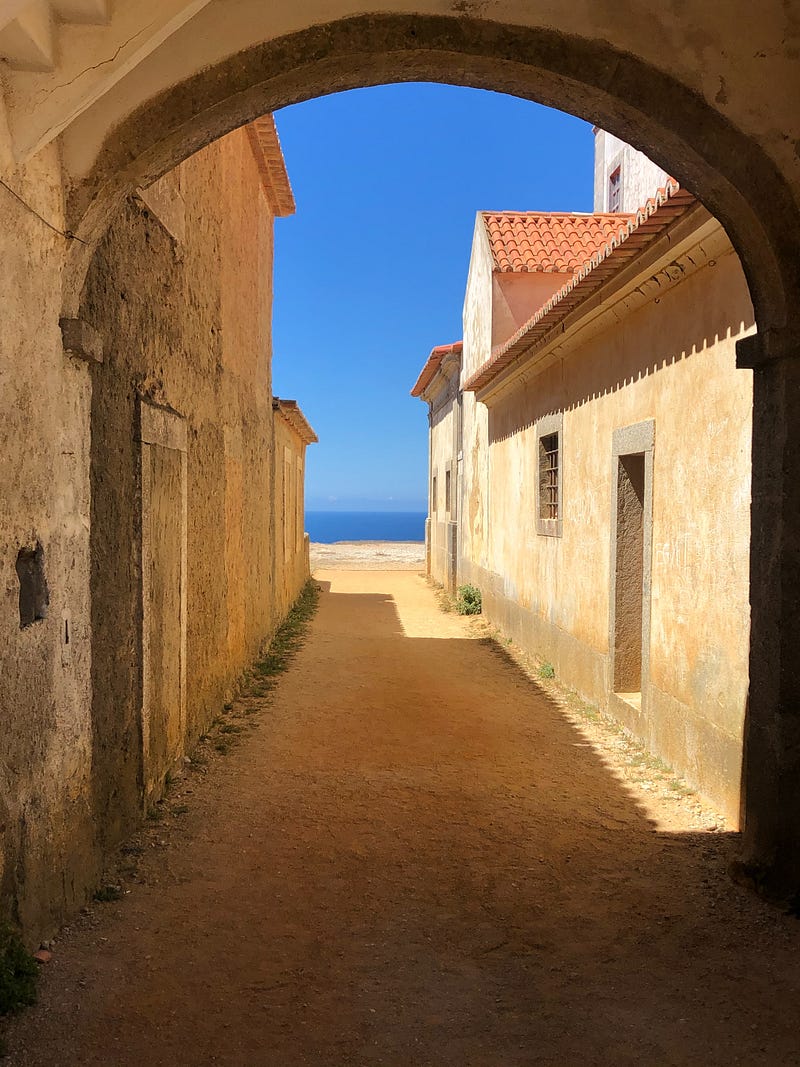
Is Portugal a safe country? Yes it is. They say it is the third safest in the planet. Does it have nice weather? Well, if sun and little rain is good weather, yes we have good weather.
If droughts and water shortages are increasingly common? Well, of course, you either have one thing or you have another.
Is Portugal a cheap country? Of course it is, if you have a salary outside Portugal.
But now, here are some tips from a Portuguese woman, for foreigners who want to move here and don’t want to look like tourists.
1- Learn about the culture
As a Portuguese, I can tell you that one thing that frustrates us the most is that someone chooses to live in Portugal because of our beautiful sun, sandy beaches, and warm climate. Or at least that’s what they think, but they don’t have a single clue about the history or a bit of the culture. It’s almost a bit of a shame, sorry “expats” — what a word, if you’re poor you’re an immigrant, if you’re rich you’re an “expat”.
If you’re coming to live here, do yourselves a favor and inform yourself minimally about the place where you’re going.
I lived abroad and always wanted to know the history, politics, and what was going on in the country where I was living in, out of respect, curiosity, and involvement.
I say this because I believe that after having been a tour guide for three years, and a teacher of Portuguese for foreigners for almost six years, I have the right to say some things that I have seen happen over time to people who chose Portugal to move to, but who live here but their minds are still somewhere else.
2- Let’s talk about money
Many people move here because they have read that Portugal is cheap safe and decided that maybe it would be better to live here than where they already live.
They come sold on a dream that is only partially true.
However, humans live here, just like anywhere else on earth, and paradise is far from it.
So know this fact. It’s hard to live in Portugal, and it’s hard to be Portuguese. Money is not enough for anything, and our minimum wage is 700 Euros, in a country where the rent for a room in Lisbon and Porto can cost that much.
More difficult is to be a Portuguese who tries not to be, who tries to row against the tide of corruption, bureaucracy, paperwork that never ends, taxes that are imaginable, and that immediately discourage us from opening any business.
Just to give you an idea. I had a tutoring center. Before I opened it, I had to pay a license at the city hall, pay rent (300 euros) for the place, and pay 23% of any income I made. Imagine, if I earned a thousand euros after giving classes, I had to give 230 euros in taxes to the State. That would leave me with 770 Euros. I had to pay rent. That would leave me with 470 Euros.
I had to pay for electricity, which cost about 100 euros a month. I was left with 370 Euros. I had to pay for water, about 15 euros. I had to pay for the internet, about 40 euros. I was left with 315 euros! Let’s not forget that I had a car that needed diesel fuel, and, I had to pay rent for my apartment , the electricity, and well, I also had to buy food.
I didn’t have any money left. It didn’t matter how many hours I worked — the more I worked, the more taxes I paid. But enough of this pessimism, the ignorant of these situations tell me. Of course, if I lived in Portugal, I would keep my positivity and joy with an American or English salary.
3- Learn the basics of History
To understand a little bit of the present surrounding you, it would be good to know the basics. Here are a few.
1 — Portugal was born in 1143. We had one of the oldest monarchies in Europe, and we have the oldest borders in Europe
2 — We claim to have “discovered” half the world around 1500, but we were stupid to exploit people, steal gold from Brazil and fill our churches with it.
3 — The Portuguese population is mainly catholic. I’m not kidding. We also had the Inquisition — it wasn’t only Spain — and in the XVI century, we expelled Jews, or they were forced to convert to catholicism. Religion was very important for a long time, and still is, although not with the strength of the past.
4 — On November 1, 1755, we had a giant tsunami and earthquake in Europe so far recorded. Lisbon disappeared, split in half by an earthquake, devastated by a massive fire — November 1 is a religious holiday dedicated to the dead — how ironic. The candles were scattered that day all over the city, tumbling and making the fire take everything in its path. People in fear ran towards the river when a giant tsunami took everything. The city was unrecognizable.
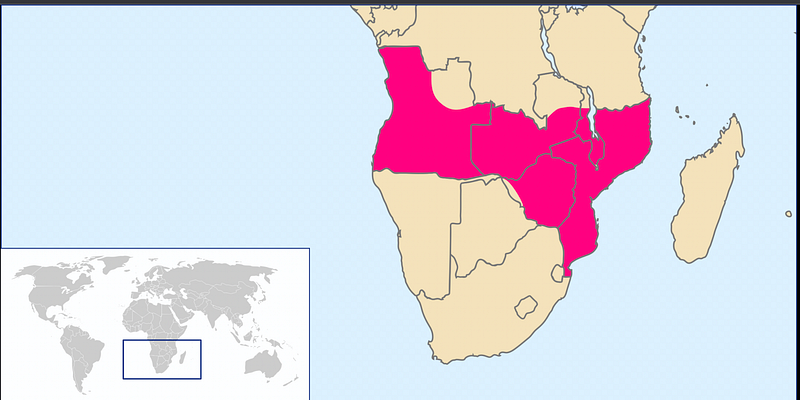
5- In the early 20th century, Portugal still had a monarchy and was an old country soon to be defeated by the British Empire, especially in Africa. The British, who wanted to unite the lands between Angola and Mozambique in the infamous “Pink Map,” wanted Portugal to concede those lands. Our benevolent King D. Carlos ceded them to the general discontent of the Portuguese population who felt belittled, and rightly so, by the British.
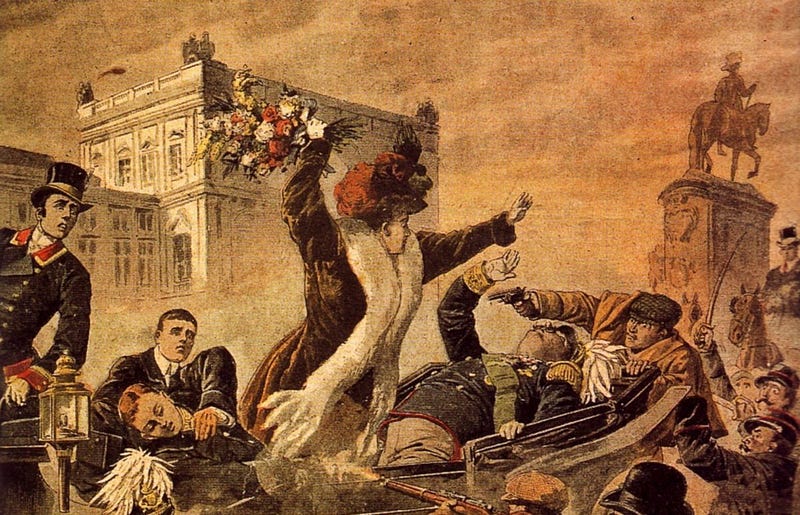
6 — In 1908, the Republicans killed the King, angered by this event. His wife, D. Amélia, and his son D. Manuel II, Portugal’s last King, ended up flying to England — how ironic — when the Republic began on October 5, 1910.
7- Obviously, the first world war broke out only four years later. Portugal being an old ally of the UK since 1373, sent Portuguese soldiers to war to fight alongside the English against the Germans. ( Cursed be the day we became allies of the English, we always lost out on that).
8 — Overall, the 1920s was a terrible period marked by inflation — My oh My, if it isn’t that this is happening again — and extreme right increased all over Europe, and Portugal was no exception.
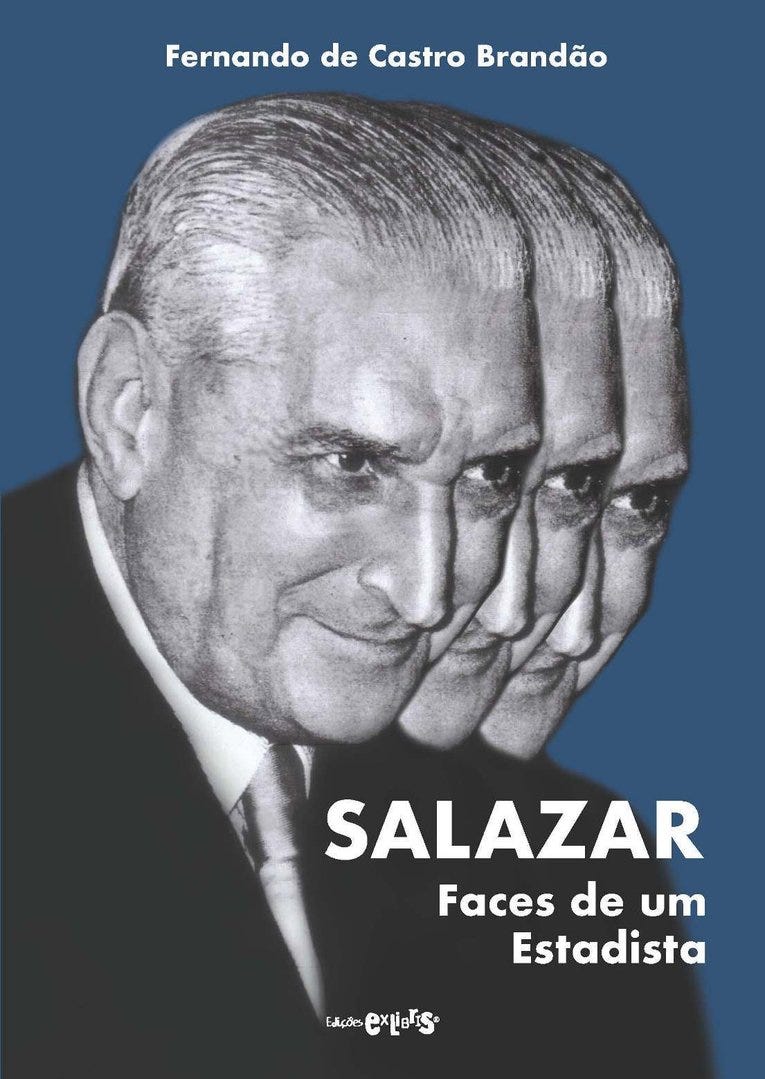
9 — In 1926, the military took control of the republican chaos, and unfortunately, in the 1930s, they called in a man from the University of Coimbra, a professor of economics, to take control of the country’s finances. The man, António Oliveira Salazar, our dictator, took over all the powers and would install the longest authoritarian regime in Western Europe.
10 — Portugal lost its freedom of speech.
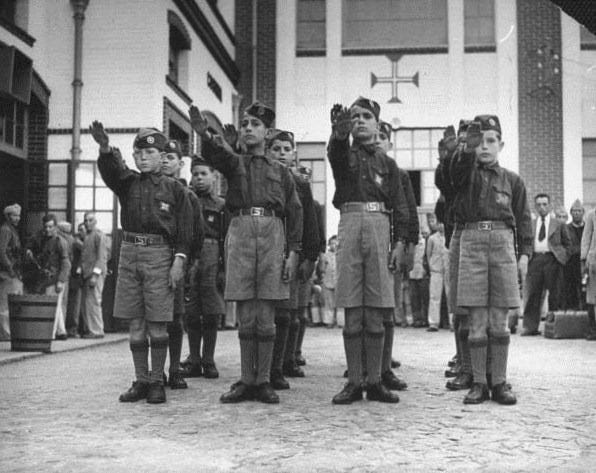
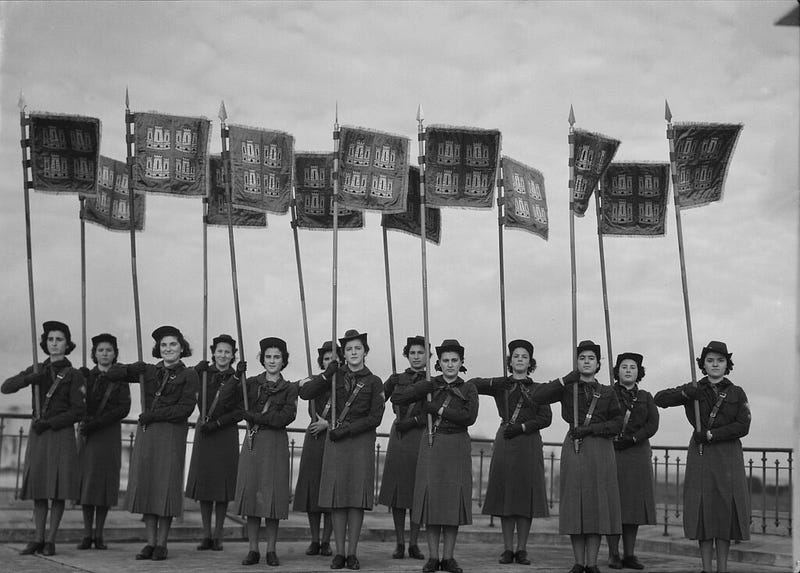
11- Portugal also had “Portuguese youth,” where the fascist mentality indoctrinated young people. Their slogan “God, Family, and Nation” was ingrained in people’s minds, in books, everywhere.
and:
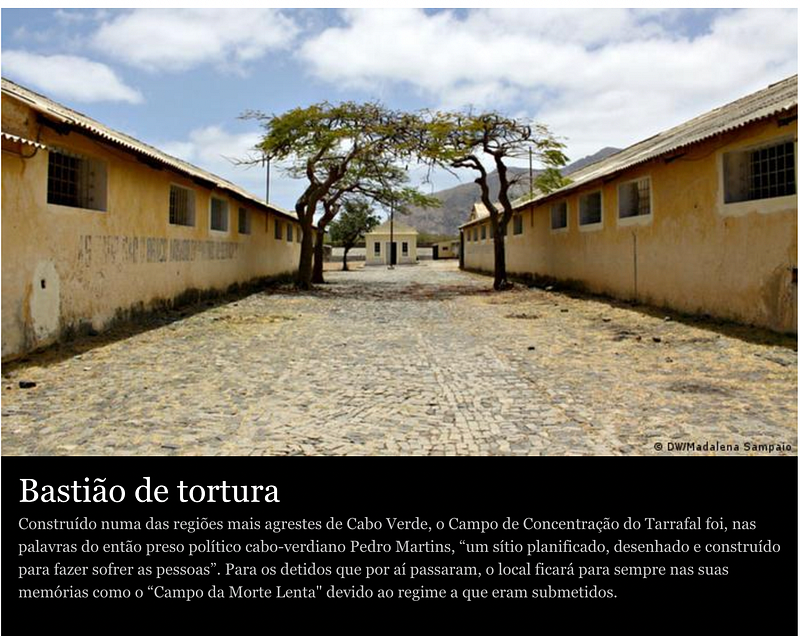
12- We also had a concentration camp, in Cape Verde, on the island of Tarrafal, where political prisoners were sent to a slow death.
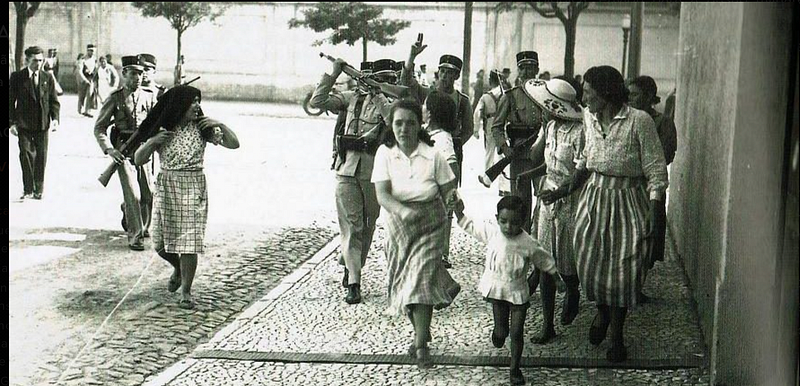
13 — We also had malevolent police, called “PIDE.”
International and State Defense Police. They tortured people using medieval methods; sleep deprivation was one of them.
14- War.
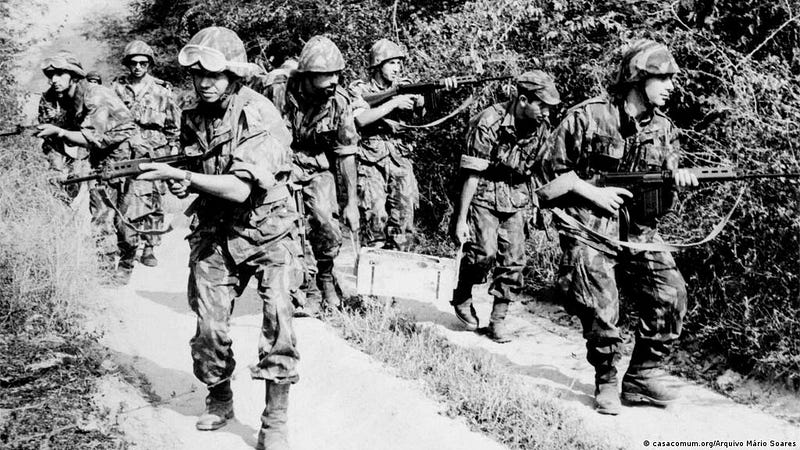
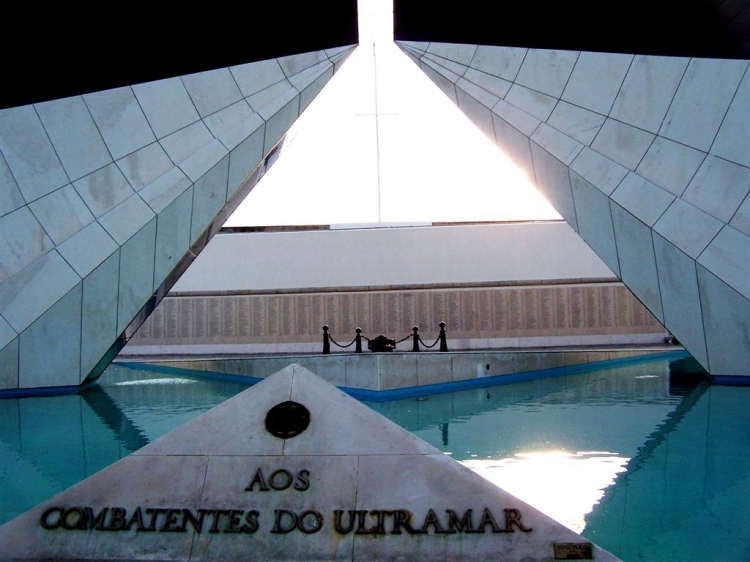
Salazar, refusing to give the colonies their just independence, started a war with Angola, Mozambique, Guiné Bissau to fight for something that would lead nowhere. From 1961 to 1974, young men were sent to Africa either to die, kill, or return with a war trauma that was never healed. Many put their feet on the road and fled, walking, trying to cross the Spanish border, and then illegally continuing their trek to France.
No wonder we have 2 million Portuguese living in Paris. I have been to Paris twice, and I have always heard Portuguese spoken in the streets of Paris.
Unfortunately, an uncle of mine lost his older brother in Angola on April 26, 1974, the day after we were liberated. He stepped on a mine and his body, in pieces, only came to Portugal almost a year after that. Can you imagine the pain of that family? He was 22 years old. Every Portuguese has someone who lost someone in that horrible war. My village last year put up a monument to the dead from the colonial war. Only in 2021!!!!
15- Civilization setback
From 1926 until April 25, 1974, Portugal lived in poverty, faced a terrible colonial war, had perhaps the lowest education levels in Europe. Portugal was an old country that could have been so much more, but fascism took us back hundreds of years. A sort of medieval age mixed with samples of the 20th century. Many photographers used a theme park to document these rare species that used to inhabit these lands.
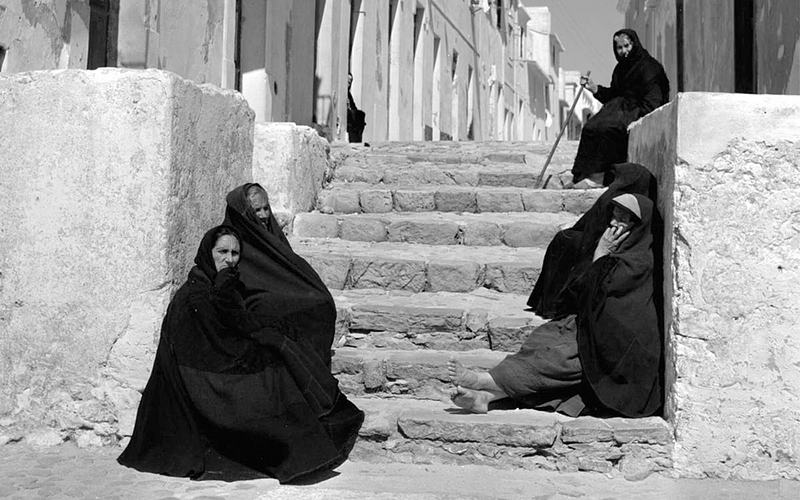
Fascism had a tremendous and negative impact on education. The majority of the population did not go to school. My father, who is 61 years old, spent four years in school, my younger mother, 56 years old, went to school until she was 12 years old. She started working when she was 13, collecting pine resin. My father was sent to a priests’ school where he was usually beaten and where he escaped in the middle of the night through a cracked window. He walked day and night and moved to Lisbon when he was 11 when he started working in construction, which he did all his life.
My parents were the fruit of all the average Portuguese, poor, uneducated, especially in rural areas. I am very proud that they both managed to put their two children, my brother and me, through school, and we both got a college degree. Our lives could not have been more different from theirs.
16- Freedom !
Anyway, going back. After the darkness, there was light, and the most beautiful day in our history happened.
On April 25, 1974, a noble soldier named Salgueiro Maia rallied the troops and marched to Lisbon to end the regime. The Carnation Revolution, as it is remembered, is indeed one of the most beautiful days ever for us. Not only did we put an end to the regime, to that terrible war, to the lack of freedom, but everything was done without killing, the then minister Marcelo Caetano, godfather by the way, of our current Catholic president of the Republic Marcelo Rebelo de Sousa, was kindly sent to Brazil. That day in Lisbon, florists were selling red carnations, and they gave the flowers to everyone, including the soldiers. It was a day of joy and happiness.
Portugal had a long way to go in trying to organize democracy, but we did it — (come on, I know it wasn’t all like that, but I’m trying to keep this as short as possible)
17- Europe opens its doors.
In 1986 we entered the European Union, and what followed was a very strange period: the 1990s. A decade when money started pouring in from the Union, trying to make Portugal a European country and close the door on fascism and poverty for good.
People don’t realize this, but I was six years old when I remember going into the first supermarket in my town. This was in 1996 or 1997. Before, there were no yogurts, cookies, chocolates, whatever. You could find them in the big cities, Lisbon or Porto. However, Portugal is much more than those two centers.
Unfortunately,for years and years, the countryside was neglected by everyone.
18- The 2 thousands.
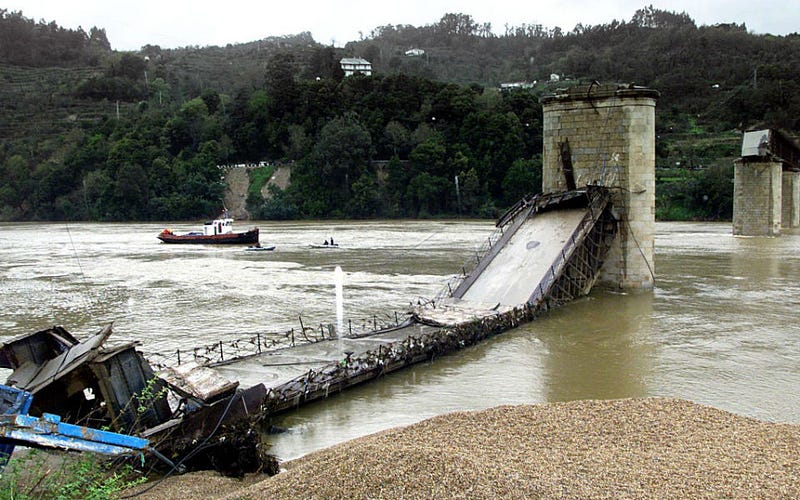
2001 was a bad year in the history of humanity. In March of the same year, a bridge collapsed when a bus with children, grandparents, families were coming from a trip through the Douro Valley. Fifty-four people died. The tragedy only came to prove how the countryside was being forgotten.
The present
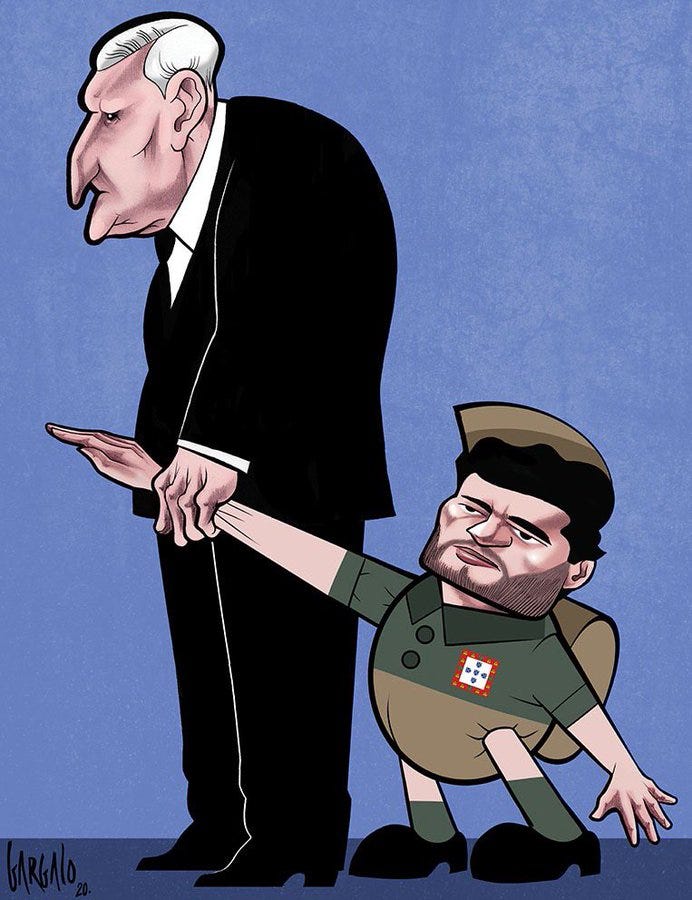
The present is frightening. With deep pain in my heart, I say that the third-largest political force in Portugal is a fascist party called “Chega”. We have to name things as they are, and these jackasses are straightforward fascists.
They want the death penalty back again. They want the most absurd things ever.
So, after all I have said. We carry a big weight with us, a lot of a mess, a lot of confusion, a lot of lack of organization. We are an old new country. We are not as nice as people think we are. And now, apparently we want fascism to destroy us once more.
If there are positive things here? Absolutely. But usually, people only know the positive stuff already.
Now, if you have enjoyed this article. Perhaps you will also enjoy the next one:
Hello, I’m Araci, a female writer from Portugal navigating her thirties. If you have enjoyed this article, maybe you would like to buy me a coffee here https://ko-fi.com/joanaaraci
I write on Medium about politics, culture, pop culture, society, feminism, and womanhood. I hope you’ve enjoyed this article and that it helped you out!
You can also find more about me here:
Are you considering joining Medium for only 5$ a month? If so, consider doing it through my referral link:
Your membership fee directly supports me, Araci Almeida, and other writers you read. This way, you are helping me out while you’ll also get full access to every story on Medium.
Thank you for reading me.


