
These 2 Contradicting Concepts Are The Foundation of Our Spiritual Nature
More importantly, they become gateways to our souls.
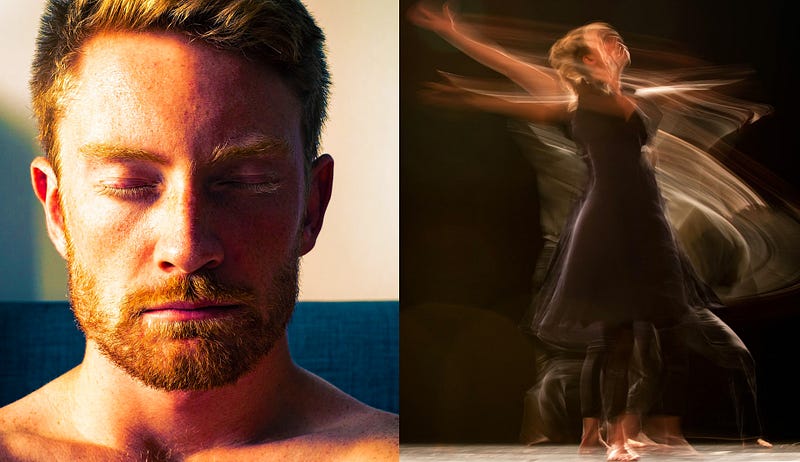
Stillness and movement: two contradicting concepts, yet both are vital components of spirituality.
We can’t know what it means to be still without moving. And we can’t understand movement without being still.
For centuries sages, mystics, and even scientists have been telling us that we human beings need to become still to connect with our higher, more intuitive selves. It’s been shouted from the mountain tops and bandied about in thousands of books that the kingdom of heaven can be found by simply sitting quietly alone in introspection.
This is true. Stillness is a cornerstone to accessing our spiritual nature.
Paradoxically, the same yogis and scientists have also been telling us that the sheer movements of our bodies can take us to higher realms of consciousness. We hear about the powerful effects of ancient Chinese practices like tai chi and qi gong and the ability to access flow-states for peak performance by harnessing the movements in our bodies.
This is also true. Like stillness, the movement of our physical bodies can be a conduit for our spirit to express itself through.
While stillness can be defined as spirituality witnessed, movement is spirituality in motion.
This duality is at the heart of this fundamental truth: we are spiritual beings having a physical experience and vice versa.
Let’s explore these two sides of the same coin.
Stillness as Spirituality Witnessed
If you read any great spiritual work, the path towards enlightenment is always mentioned as being found through stillness. Really what else could be said about the vital role stillness plays in accessing our spirit?
One of my favorite snippets comes from Eckhart Tolle who is the wordsmith of all wordsmiths when it comes to describing stillness:
“Your innermost sense of self, of who you are, is inseparable from stillness. This is the I am that is deeper than name and form…
True intelligence operates silently. Stillness is where creativity and solutions to problems are found.”
Stillness is anything that takes your mind out of the external, physical world. It can be something formal like a meditation or mindfulness practice but it can also be just closing your eyes and feeling the sensations in your body.
Any ritual of relaxing and becoming silent in a dedicated space to witness your thoughts and emotions is invaluable. It gives us a clear insight into what is going on inside of us so we can observe it without judgment.
It’s as simple as taking 5-minute daily mental check-ins to ask yourself how you’re feeling. What hurts? What feels good? Or simply to say thank you for this precious gift of life you are witnessing flowing through you.
Other formal practices for stillness can be focusing on your breath, feeling your heartbeat, paying close attention to any one of your senses, or staring at a singular object in the room.
Through stillness, we:
- Journey to the unseen and formless parts of ourselves, slowly getting a glimpse of our very soul and thus experience our truth in the present moment: that we are divine entities having a physical experience.
- Shift our attention away from the rational part of our brain which is usually caught up in fear, blame, and worry and begin to hear our intuitive voice louder and clearer.
- Enter presence which allows us to discover that our happiness isn’t a destination we need to arrive at but rather is found right here always within us.
The more we make this connection with our inner world by practicing stillness, the more these qualities start to accompany us outside of our practice into our everyday lives.
Action Plan: Bringing stillness to your life
Explore what stillness means to you. Define your “dedicated space” to go within and connect with the part of you that is infinite.
Maybe it’s taking quiet walks in nature. Maybe it’s singing, chanting, listening to music, painting, or writing in your journal. Or maybe it’s starting a dedicated yoga, breathwork, or meditation practice. And If you already have a daily practice, how can you take it to the next level?

Movement as Spirituality in Motion
Our bodies are access points to our souls. Let this idea sink in.
For many of us, we are conditioned to reject our bodies whether due to pain or insecurities or we are spending way too much time in our heads to even notice what is going on inside of it.
Habitually being absent from our bodies robs us of one of its many tremendous gifts: to connect with our higher selves and express what it yearns to share with the world. We often forget that the full human experience is multi-dimensional and the way we use, nurture, and connect with our bodies is a big part of that. In contrast to stillness, movement reminds us that we exist also as physical beings having a spiritual experience.
Through the movement of our bodies, we express the energy inside of us. Through this expression of energy, we can express our spirit.
Think of a time when you witnessed someone engaged in an activity that truly mesmerized you. Maybe it was a powerful musical performance such as watching a passionate singer commanding the stage with their voice or a brilliant guitarist completely shredding a solo. Or you might see this in a basketball or soccer game when one of the players is “in the zone” and goes on a streak of scoring that seems unreal.
In all of these instances, you can sense that something otherworldly is moving through them. It’s as if something magical has taken over.
That is spirituality in motion. When that happens, our bodies become infused with the nature of spirituality whether it’s our own spirit or the energy of the universe itself. Either way, something greater and divine is using our body to express itself.
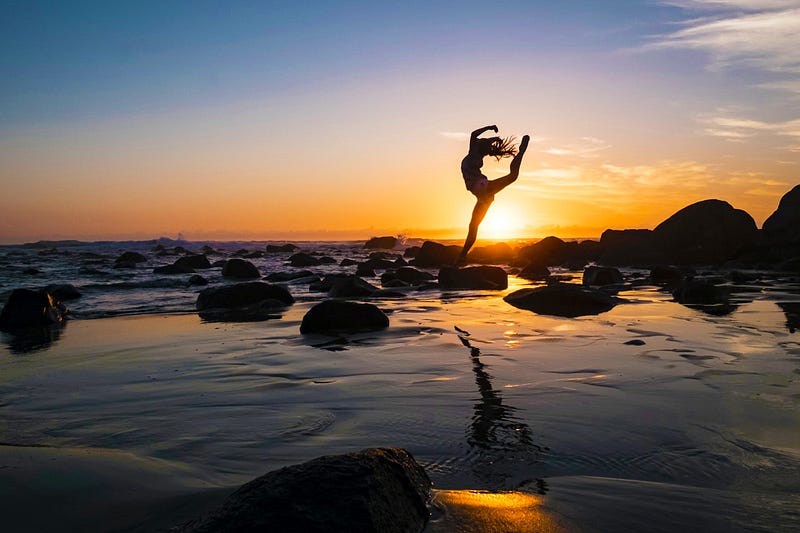
Why is movement vital?
- The human body was designed to move. It craves movement. The latest science actually defines long periods of sitting as the new smoking. Besides the obvious physiological benefits, we are made of energy, and the very means by which we express and release that energy is by moving and grooving.
- Sometimes the only way to become truly aware of any unpleasant emotions we are holding onto is by fully experiencing these feelings in our body. All the sitting still and meditation in the world at times can’t compare to good old-fashioned getting off your ass and connecting with your body mindfully.
- Movement can be a catalyst for insight. The simple repetitive motions of activities such as stretching, walking, jogging, or riding a bike offer us the opportunity to perhaps experience something new and then notice how it feels.
Action Plan: Bringing movement to your life
Create daily movement breaks. Whether it’s going for a walk or just stretching your body. Studies have shown that engaging in short, intense bursts of exercise for as little as 30-seconds numerous times a day has tremendous health benefits across the board.
Use the time during your dedicated exercise habit to get mindful. Notice your breathing and the sensations. When you’re in the middle of a workout pull back your mind when it starts to wander. Lean into the burn and acknowledge where in your body you feel it.
Stillness or movement? Or both?
In Sanskrit, the word Sadhana means daily spiritual practice which serves as an individual’s unique daily habit of connecting with their higher self. This practice can literally be anything. Find your Sadhana through stillness or movement (or both), and let it become the vehicle for connecting with yourself in new ways.
How do you use these two concepts in your spiritual practice?
How have you been able to connect with your soul through stillness and movement?
Please feel free to share your experiences and insights.