
There’s Really Only One Big Thing Wrong With Our Tipping Culture
Being a terrible server or bartender might get you a bigger tip from me
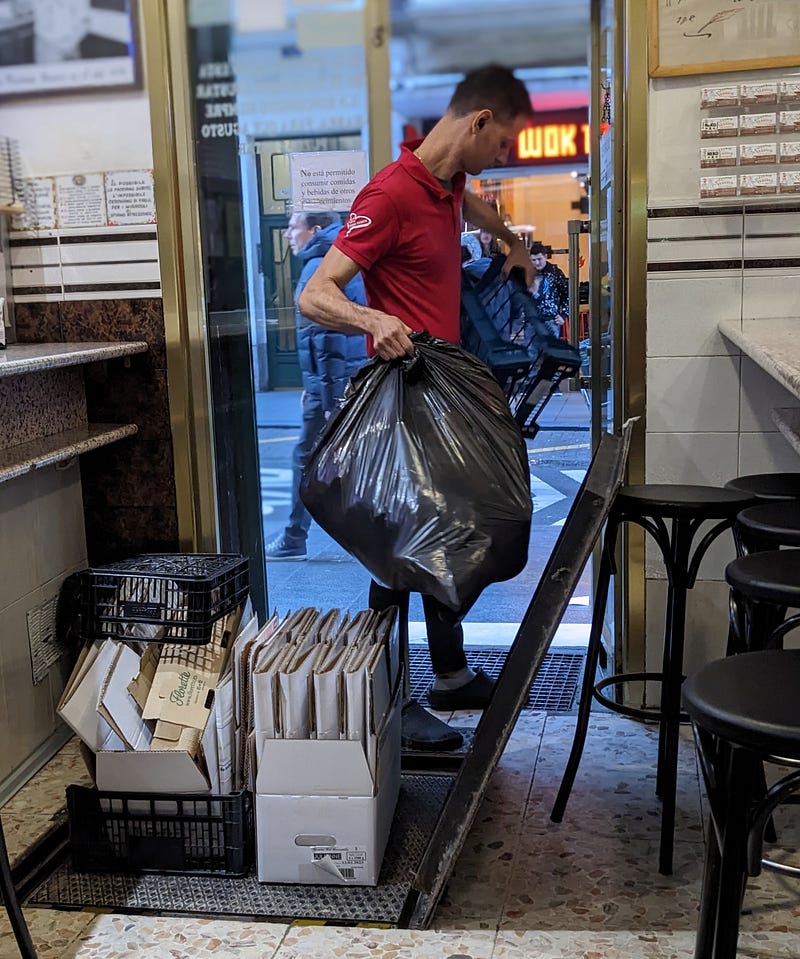
It has become common — and popular — to say the tipping culture in America has gotten out of control.
Like so many things the media (popular and social) amplifies in our society, this claim has taken on a life of its own.
The people who say tipping has gotten of control act as if there has been some massive cultural change in the way we tip. Or the way establishments — particularly restaurants, bars and cafes — expect us to tip.
There has been no such shift.
If anything, we experienced technological change that makes tipping easier, but certainly not an expectation or obligation (except in a few, still relatively rare cases).
The way it is now is the way it has always been. At least in my experience, as somebody who worked in hospitality prior to the pandemic.
- A tip of 15% to 20% is customary in America for good service.
- A tip of 20% or higher for service that goes above and beyond (if you so choose).
- $1 per drink in a bar (which, oftentimes, is a terrible tip).
- $1 per drink (or transaction), if you’re so inclined, in a coffee shop or cafe.
- Some food and drink places push the envelope by suggesting higher tip amounts (again a function of, or at least, made easier by technology).
- Some establishments include a service charge on your bill. Usually 18% to 20%. In a vast majority of the cases, this is the tip. Of course, you don’t have to leave more. You don’t even always have to pay the service charge. You can ask for the business to remove it. Though I’m honestly confused by and uncertain of the law around this.
- Separate from a tip, some restaurants include a small charge (like a couple to a few percent) they say covers employee health insurance or some other benefit. A few use this to tip out kitchen staff, who are not usually included in traditional “front of house” tip pools. I’m pretty sure restaurants have to remove this charge if you ask.
- You hand the delivery driver something.
I think I pretty much covered everything that matters.
I also think that all of these things have been part of tipping culture in America for a long, long time. We’re just extra mad — and posting — about it because of inflation.
Everything costs more these days and they want us to leave a tip!
The only thing that’s different, but not really new, is those tip screens we sometimes interact with at the point of sale. I have used and programmed them. Before the pandemic. So they’ve been around a while.
I recall seeing them in Canada — brought to your table by the server at the end of your meal — long before they became commonplace in the United States. Like around 10 years ago. Maybe longer.
Anyway, establishments use this tech undoubtedly because it urges you to do one or more of these interrelated things:
- Tip.
- Maybe tip more than you would without the screen.
- Sometimes put you on the spot — with the service worker standing behind the screen — and guilt or shame you into tipping.
- Tip a worker you might not otherwise tip.
To that last point. It’s common amid this amplified outrage over tipping to not want to tip someone because all they did was … (fill in the blank).
I don’t look at it this way.
Most service industry jobs consist of more than handing you something from behind the counter, even if that’s all you see. Most service industry jobs also pay minimum wage. Barely enough to live, let alone live well.
If you can spare a dollar (or whatever), don’t view it as rewarding someone for doing effectively nothing in that moment. View it as contributing to the tip pool to account for performing that one task a zillion times a day, not to mention all of the other work that gets done before, during and after business hours.
I’m not sure how any of this — anything I said so far — indicates a tipping culture spiraled out of control.
At least we see fewer of those tip jars on counters with handwritten signs saying things like tipping is not a city in China or if you fear change, leave it here or just put the tip in, see how it feels.
The real problem with tipping culture is people not knowing or appreciating the difference between service and hospitality.
Here again, this is nothing new, however it does appear to have gotten worse recently as inflation has helped drive up the cost of eating and drinking out. We’re getting terrible value for our money. And nobody, particularly service staff, seems to give a damn.
Take all of this together and you have the reason why people express frustration over tipping. Higher menu prices, poor service and a dearth of hospitality.
While I can see where the anti-tippers come from, I don’t agree with them.
As for the prevailing attitude among service industry staff, I can’t say I blame them. Especially when they’re under assault thanks, in part, to poor wages (also nothing new), crappy work environments (same) and this whole tipping has gotten out of control narrative. It has almost come to the point where we just virtue signal this popular opinion on tipping.
Which seems odd to me because I don’t understand why people are proud of either not tipping, tipping poorly or complaining about tipping whether they do it or not.
Isn’t it nonsensically peculiar to demonstrate how incredibly 2023 you are by not giving a little extra — if you can — to people are often among those making the least?
It takes a lot for me to not tip at least 15%.
But it doesn’t take much for me to give the 20% I think service workers are due and, sometimes, a bit or considerably more.
Even if you suck as a server, bartender, barista or cashier, I like to tip well. As long as the person behind the counter, on the other side of the bar or traversing the floor shows that they care. That, yeah, they messed up or whatever, but they’re trying with the best of intentions. Or just intentions — period.
True story — when I managed a bar before the pandemic, I spilled an entire bottle of red wine on a woman’s cashmere coat. Some of the wine landed on the table, a couple of the guests and, along with the subsequently broken bottle, more wine on the floor.
I was beyond terrified. Literally petrified.
However, I acted quickly. More importantly, the people around me acted with even more urgency. For the few seconds I was all deer in the headlights, I could see two of the people I was working with immediately jump into action.
Without saying anything to each other, one came to the table and made sure everybody was fine as she apologized. Another went to retrieve bar towels and soda water. When I snapped out of it, I apologized genuinely, but not profusely.
I excused myself and returned with more bar towels and a bottle of sparkling rosé. I carefully popped the cork and poured out the wine. I even had some with these people. So did the two co-workers who saved the day.
In the literally three minutes it took for all of this to happen, you could see these eight guests go from ready to fucking explode to calm and understanding. “Don’t worry, shit happens,” they said, as we waited — futilely — for Topo Chico to do the Lord’s work on this girl’s drenched coat.
When it was all said and done, these people left us a generous tip. I forget the exact amount, but I remember remarking that it was meaningfully more than 20%.
Why would they do this when others might say — you twit, you ruined our evening?
Because we gave them good hospitality.
They saw how we all were with them and other guests around them before the wine incident.
They realized I made a mistake because I was (overly)-excited. I had a tendency to regularly break glasses and such behind the bar and on the floor because I was always focused more on controlled speed (like a swan, gliding gracefully on the surface but paddling furiously beneath the water!) and engaging with guests.
But, more than anything, they saw that we truly cared. Not about getting yelled at or fired and losing a tip. They saw that the mishap impacted us. Not merely because we screwed up. But because we feared we ruined their night … their experience.
We were in the business of making peoples’ nights.
That’s the difference between service (sorry, I spilled wine on your coat, here’s some soda water) and hospitality (acting immediately with genuine concern; going above and beyond). Or at least one difference.
On one hand, I understand why good hospitality is practically dead in America and mediocre service is the standard.
On the other, the only way you might stand a chance of making decent or better money in the service industry these days is by caring and treating your job like the craft it is. Or at least can be. Like hospitality.
No matter your role in a restaurant, bar or cafe, you’re always on stage. Look at this way and give the people spending money with you an experience. Show them a good time. Show them you give a damn. Just a little — or a lot of — effort like this can turn a shitty job into something more lucrative.
This, too, is the way it is and always has been.
To sign up for a Medium membership and receive access to every article I publish and all of Medium, go here.
To subscribe to my Never Retire: Living The Semi-Retired Life newsletter where I chronicle my big decisions on lifestyle, housing and cost of living, which includes moving to Spain sooner rather than later, go here.