
If Every Bartender Crushed Their Job Like This, Going Out Would Be More Fun
Bars — and bartenders — can make or break how welcoming and vibrant a city feels
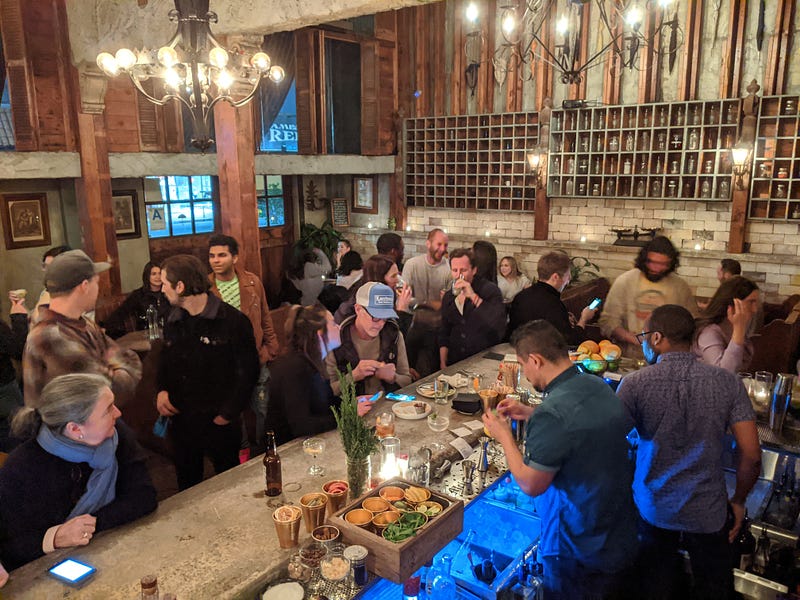
Prior to the pandemic, I was the general manager of a bar in Los Angeles called Melrose Umbrella Company. This came during a brief hiatus from my work as a writer.
In early 2020, I had plans to formulate a session on bartender hospitality for the annual Tales Of The Cocktail conference in New Orleans. Of course, this never happened, so my writing on the subject barely saw the light of day.
After a few sub-par bar experiences in recent weeks, I thought about what I wrote.
I also thought about two other things —
- The thought and intensity a now 73–year old Bruce Springsteen puts into his live performances.
- The important role bars play as third places in the function and vitality of cities.
So I decided it makes sense to include what I had written so far in my City Life publication.
Lightly edited and incomplete, I hope you get as much out of this as I did, particularly if you love cities and the social life that can help make them great.
Please note, I wrote this for bar professionals.
While it’s generally applicable to most bar goers and lovers, I use language and enthusiasm designed to motivate and relate to a specific crowd.
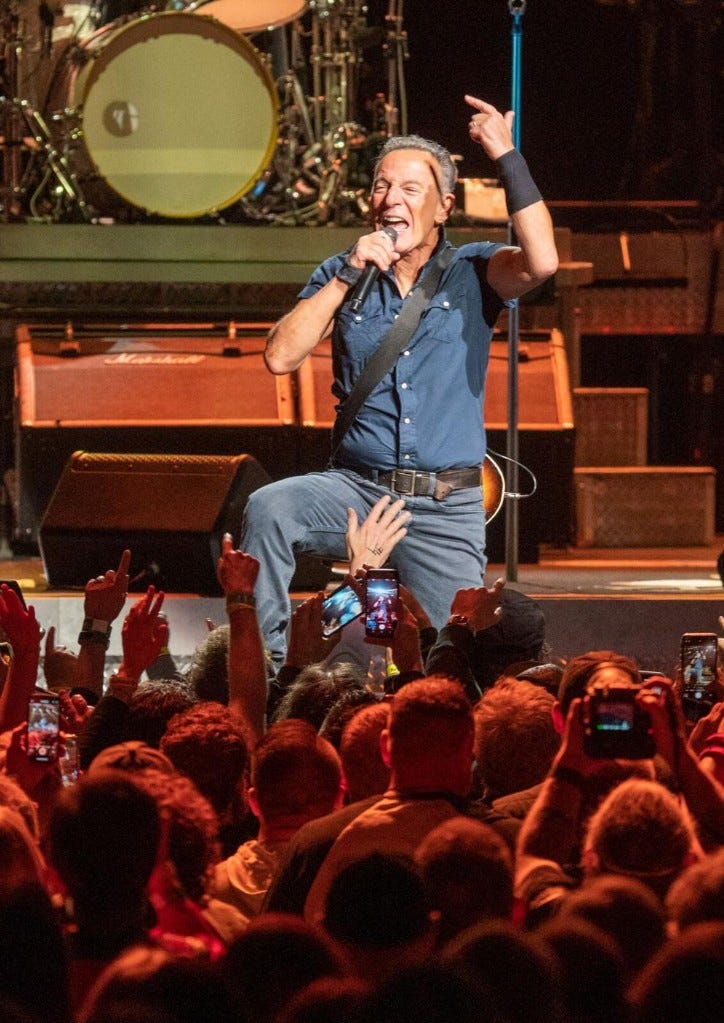
The Bruce Springsteen Approach to Bartender Hospitality
In 2016, just before his 67th birthday, Bruce Springsteen played a four hour and four minute rock and roll show in Philadelphia, fronting The E Street Band. Impressive, but that’s not even The Boss’s longest show. A 2012 gig in Finland lasted four hours and six minutes.
It’s legend. Springsteen shows almost always clock in well past three hours, typically approaching that epic and unprecedented four-hour mark. That’s just how Bruce rolls:
I come out believing there’s no tomorrow night, there wasn’t last night, there’s just tonight. And I have built up the skills to be able to provide, under the right conditions, a certain transcendent evening, hopefully an evening you’ll remember when you go home. Not that you’ll just remember it was a good concert, but you’ll remember the possibilities the evening laid out in front of you…
That’s Bruce Springsteen effectively defining the difference between service and hospitality. He could go on stage every night and casually play a bunch of songs. He has certainly built up the catalog to do that. Or he can make the night something more:
The audience wants you to do two things. They want you to surprise them and make them feel at home, simultaneously.
And as a Washington Post columnist put it in How Bruce Springsteen Concerts Cure Loneliness:
We live in a fragmented society. People feel isolated. Many feel invisible. Springsteen is aware of this, and he explicitly tries to combat it with his concerts. For a few hours, any trace of loneliness vanishes.
As bartenders, we can treat each shift as nothing more than the task of making a bunch of drinks. We have large enough menus and compendiums to draw from. Or we can treat each shift the way Springsteen treats each show.
With a determined intensity and an unbridled enthusiasm to give his guests more than they came for, to deliver an experience they’ll remember and want to have again. To make them feel alive, connected, and socially valuable. To make them feel like they did something much more meaningful than merely walk into a bar.
‘Exciting People and Exciting Yourself Into Some Higher State’
There’s nothing I’d like to be able to do more than Bruce Springsteen’s job. The problem is I have literally zero musical talent or ability. But this ended up not mattering much. As I searched my soul to discover what I was missing, what I was craving, what I needed to do — let’s be honest — to feed my ego, I came to a conclusion. I discovered that, on a smaller scale, providing enthusiastic and gracious hospitality is my drug in much the same way Bruce hits highs and lows via the mainlining of sweaty three-plus hour rock and roll revivals.
I searched out something that I needed to do. It’s a job that’s filled with ego and vanity and narcissism, and you need all those things to do it well. But you can’t let those things completely swamp you… You need all those things but in relative check… But you need those things, because you are driven by your needs out there — the raw hunger and the raw need of exciting people and exciting yourself into some higher state. People have pursued that throughout the history of civilization. It’s a strange job, and for a lot of people it’s a dangerous job. But those things are at the root of it.
— from The New Yorker (2012)
As a bartender, I can do what Bruce does with a well-crafted playlist and guest after guest coming into my bar seeking transcendent social experiences, even if they’re not actively acknowledging that this is what they’re seeking. Bartending allows for the perfect marriage of a convivial and selfless form of community and the decidedly narcissistic nature of wanting everybody’s eyes on you.
When you’re behind the bar, you’re as close to being the center of attention Bruce is night after night in stadiums and arenas as you’re ever going to be. You’re on stage. You direct the theater of the bar. It’s exhilarating as fuck to do this dance amid the orderly chaos of guests staking their place at and around your bar.
I live to seamlessly seize these moments and make hospitality not something that happens in spurts, but as a narrative I weave throughout my entire shift — guest after guest.
Guests don’t come into bars explicitly telling you they want to be left alone or they want you to blow them up or get them hooked up or simply enhance their social life for a couple hours. It’s your job as a bartender to read your guests and decide to what extent you’re going to leave them alone or blow them up.
BLOW THEM UP!
That’s the term I now use at the bar where I work — Melrose Umbrella Company in Los Angeles.
During a shift one day, a well-regarded, exceptionally nice, but somewhat intimidating chef walked into Umbrella. We worked together (meaning we were in the same building) at The NoMad in Downtown Los Angeles. When I saw him come in, I greeted him, set him and his girlfriend up at a table and immediately texted one of my mentors from NoMad, letting him know that Chef was under the Umbrella. My mentor’s response:
Fuck yes. Blow him up.
I don’t think I blew him up quite the way I wanted to or hopefully would today. But his visit and the instruction to “blow him up” came at a time when I was pushing myself to not simply be a better host, but a more consistent host. To find a flow throughout an entire shift where I am not simply picking my spots to blow people up, but doing it seamlessly. Where I am creating a hospitable environment ripe for the enhanced social experiences so many people crave when they head out for a drink.
I aim to make every shift the barroom equivalent of a four-hour Bruce Springsteen show.
And I have discovered that I am getting better at this. In fact, it has almost become second nature. I don’t have to think about blowing people up as much as I used to. I just do it. Over and over again.
I have become better at being a host by observing bartenders throughout Los Angeles and other cities. By noting what they did “wrong” or “right” from a hospitality standpoint. By finding (really unknowingly stumbling upon) and connecting with people who love hospitality and like to talk about it the way PhD students theorize and intellectualize their passions.
So you can study hospitality.
You can learn how to be hospitable. You can certainly learn how to be more hospitable.
However I’m convinced you have to have an ample amount of Springsteen in you to begin with. If you don’t get something out of making other people feel good, if you don’t believe you can take guests to another place through the power and glory of hospitality, it’s probably not going to happen. Hide in the service well, and let the hosts host.
“Nothing great was ever achieved without enthusiasm.” — Ralph Waldo Emerson
Different Settings
Not every setting allows for the style of hospitality I advocate here. If you tend toward this style of bartender hospitality, you have a couple clear choices:
- You can find a setting that’s perfect for it.
- You can adapt your approach to your setting.
I left Melrose Umbrella Company briefly, and almost immediately regretted it. On a personal level, it has become an incredibly special place to me. However, I don’t have to work at the bar to experience the social connectedness I feel there. That said, I am convinced I couldn’t possibly execute and strive to get better at this Springsteen Approach to Bartender Hospitality to the extent I do at any other bar.
It’s difficult to explain what Umbrella is. If you’ve ever been there, you just know. When our owners (Zach Patterson and Austin Melrose) opened the bar, they said they wanted guests to feel like they were sitting in someone’s living room. We hear exactly that from quite a few guests.
I like to characterize Umbrella as “a dive bar meets craft cocktail bar.” So conditions are ripe for the theoretical and empirical consideration of what is, in the most positive sense of the word, an extreme expression of hospitality under the Umbrella. Guests simply don’t appear to think it’s weird when I rush their table with enthusiasm and interject myself into their day or night. There’s something about the Umbrella vibe that almost makes this — and many variations of it — not only welcome, but expected.
This wouldn’t fly at many other bars, including bars that provide sound service and even superior hospitality.
Seizing Every Opportunity (or as many opportunities as possible)
I have started playing a game when I work the day shift at Melrose Umbrella Company.
A few doors down from Umbrella, there’s a popular brunch restaurant called Blu Jam Cafe. During peak time, you typically wait an hour or longer for a table. Often, instead of waiting on the sidewalk, people put their name in at Blu Jam and come to Umbrella “for a drink.”
One day around Noon, a couple did just this. We hit it off. Two drinks and roughly an hour in, the couple took their name off of the Yelp waiting list for Blu Jam because they were “having so much fun.” A slight variation of this happened another time on the same day.
It dawned on me that whenever there’s a waiting Blu Jam guest at our bar, my goal is to keep them there. I would never do it overtly by asking them to stay. That would be lame. In fact, I don’t mention food as early in the proceedings as I normally do, hoping the guests will ask first. If they do, they’re clearly thinking about staying.
My overarching goal is to make them stay because they’re “having so much fun.” I want to accomplish this persuasively, but genuinely through hospitality, not traditional steps of service. I don’t want to guilt people into staying. I don’t want to tell them our food is better (even though it is). I want them to stay because they’re getting a better hospitality experience under the Umbrella than they anticipate at Blu Jam.
This leads to the how of it all:
- Exactly how can you practice hospitality?
- What are the specific things you can do to blow people up, make them stay, and make them come back?
- How do you do this seamlessly, creating an air of hospitality at your bar rather than hospitable spurts, fits, and starts?
I will spend basically zero time on steps of service. In most settings (with the exception of ultra fine dining), I don’t believe in steps of service. It’s not because I don’t think they’re important; rather, it’s because they should be second nature. And they need to become second nature if you expect to go beyond mere service to blowing people up via exceptional hospitality.
If you’re thinking too much about executing rigid steps of service, you risk losing the ability to read each unique situation and interact in a way that sets up extraordinary hospitality. You risk losing spontaneity and the leeway to start off each experience in a way that (a) best suits your initial read of the moment and (b) allows for an aura of seamless hospitality, not a one-off interaction that fails to add to your bar’s overall vibe.
In the world of a host who is striving to be consistently great, you greet every guest as soon as possible, make them feel welcome, give them the lay of the land, hit them with a menu, water them, look them in the eye and convey the reality that they have found a bartender who will not rest until they have the best experience possible.
You perform steps of service without even thinking about it, intertwined with your own style of hospitality… with your own personality.
Get Out From Behind the Bar
I fully realize a couple things.
One, you can’t possibly execute what I articulate here with every guest. It’s simply not logistically or humanly possible. That’s one reason why I focus on trying to create a seamless atmosphere of hospitality. Getting into a flow that feeds on and takes care of itself.
Two, sometimes you will be too busy making drinks. The core, practical nature of the job must always come first. Or, at the very least, right alongside your desire to be ultra-hospitable. If you’re not managing the service tickets, the bartop, the back bar, the sidework yourself or with the help of other bartenders and barbacks, you can’t leave the bar and talk to guests for a few minutes. That’s irresponsible. So you have to coordinate with others, pick your spots, and make your own breaks.
Therefore, we all have more than ample opportunity to interact with guests from the other side of the bar, particularly if we hustle and manage our time well. When you do this, a little goes a long way.
Opportunity #1
On a weekend afternoon under the Umbrella, I did something I have made a habit of. I decided to focus on the large community-style table that anchors our ten-table outdoor courtyard.
On this particular Saturday, a group of six ordered several Espresso Martinis from that table. I love making this drink. Guests love drinking them. When other guests see them, they want one as well. If this is a pet peeve of yours as a bartender, reassess why you do the job and your role as a host.
Anyhow, I let the server know I would run the round of drinks that included the Espresso Martinis after I completed it. I was working with another bartender at the time. We were managing our flow well. So I brought the round to the table, greeted them, thanked them for spending their afternoon with us and let them know that I am the bartender who made their drinks.
They responded enthusiastically so I expressed excitement over their order. I told them I had a quick story about the history of the Espresso Martini. This is a 15-second story that takes less than two minutes of your time to get to and sets you up to blow them (and others) up. You might know it.
A young supermodel approached a London barman asking for a drink that would “wake me up, then fuck me up.” So Dick Bradsell put his Espresso Martini in front of her. In the decades since, it has become one of the most popular cocktail calls in Los Angeles and, I presume, the world.
The group loved the story, clearly enjoyed the interaction and wanted more. So I wove it into my workflow to effectively take that table on and bring them most of their subsequent drinks. When I had a minute and knew they were going to be ready for another round, I brought them nips of Umbrella’s housemade Fireball, taking a small shot with them. They loved it. From there, I inquired about their second round, getting a couple more Espresso Martini orders and probing the others about their drink preferences.
We settled on egg white cocktails.
I ran back to the bar, knocked out a service ticket or two, made a round or two for the bar while surveying and interacting with guests sitting at the bar. I bought myself time to do this because my group on the courtyard was sufficiently invested in the experience that a 7–10 minute wait for their round felt like next to nothing.
For my courtyard table’s next round, I did two or three more Espresso Martinis, one or two simple menu drinks and two egg white cocktails — a Pisco Sour, using the recipe that won one of Umbrella’s owners, Zach Patterson, an international competition and an El Pepino, which is Justin Timberlake’s favorite drink.
When I delivered the round, I had two quick stories to tell about the egg white drinks. But first the table hit me with a question. Why do we get that beautiful froth on Espresso Martinis and egg white cocktails? It took me two minutes to explain why and what happens when we shake a cocktail and how ingredients such as Espresso and egg whites alter the look, taste, and mouthfeel of a cocktail.
Then I told them about Zach’s cocktail, as one of the couple’s sipped it together. From there, I explained that I was drinking at another great cocktail bar, The Normandie Club (I love promoting other bars), and asked one of my favorite bartenders to make me whatever he wanted. He made me an El Pepino, letting me know that it is Justin Timberlake’s favorite. Because of that experience and the fact that the drink is delicious, I have added it to my repertoire.
That’s the representative gist of our interaction. Here are the results, both from an objective standpoint and how I perceive them.
- First, that table spent roughly 3–4 hours with us. They ran a tab of about $250. I only comped two drinks and the Fireball nips. I am confident that had I not engaged them as I did, they would have left in under three hours, spending well under $200. The extra time with us not only meant they bought more drinks, but they also ordered food.
- Second, the server working that day informed me that a girl at a nearby table heard me talking about Timberlake’s favorite cocktail and wanted one. So I approached her with enthusiasm and told her an El Pepino was on the way. She became part of the larger hospitality experience and clearly felt special. Plus, she loved the drink and has a story (an experience) she can share with friends.
- Third, the server I worked with that day, Nicole, is one of the best I have ever worked with. She hustles and is an incredibly hospitable host. I love working with her and people like her. At some point toward the end of my shift, I told Nicole great job and that “we totally blew that table up.” Her response was “that was all you.” I couldn’t disagree more.
It was a busy Saturday on the courtyard and in the main room. By taking a large table and winning them over, I bought Nicole time to do her thing with other tables. As I moved between the bar and courtyard that day, I saw her spending quality time and exuding personality with guests throughout the courtyard. She also asked me to complete other small tasks for her on the floor. This is something I am more than happy to do. Together, we blew up tables and made for a seamless, efficient service flow.
Sidebar: You’ve Gotta Love Pulling Espresso Shots and Making Egg White Cocktails
I used to get annoyed by and scoff at Espresso Martini, egg white cocktail and, especially, Ramos Gin Fizz orders. However, as I became more and more passionate about (and obsessed with) hospitality and as I saw how happy these types of drinks make guests, I stopped scoffing. Now I embrace the challenge.
As bartenders, we’re desensitized to these drinks, so to speak. Maybe we think they’re basic (even though they’re not). To many — and probably most — guests, they’re far from basic. Instead, they’re intriguing. They add to the experience. They also show that you, the bartender, is willing to go the extra mile to create cocktails for guests that have stories behind them and take (a little) extra effort to execute.
From a very real, though seemingly symbolic standpoint, I equate a bartender’s reaction to making these types of cocktails to his or her desire and ability to be a great host. If you react negatively to these or similar cocktail requests, you’re acting in opposition to the notion of providing not merely great hospitality, but experiences guests will remember. The type of experiences that will make them remember you and your bar and make them want to come back.
From a practical standpoint, it’s really not all that difficult to execute these drinks, even when it’s busy.
First and foremost, tell the guest that their order will take a few minutes longer than normal because it’s more involved and takes extra care to get right. This disclaimer will make your guests feel good about the cocktails they’re going to receive and your commitment to creating them properly. It’s no different than a restaurant with exceptional food noting that some items will take longer due to special preparation.
Second, think about how long it actually takes to make these drinks.
At Umbrella, there’s generally someone else around to pull espresso shots, be it a barback or server, if you simply can’t do it yourself. But, even if there isn’t, it’s a roughly 30-second process. It takes far less than 30 seconds to crack an egg. Same for a dry shake (if you even believe in the dry shake to begin with). So there’s absolutely no reason why an Espresso Martini or egg white cocktail order should throw you for a loop. It’s one way you can elevate the guest experience.
To that end, it’s about managing your time. More than any other cocktail, a Ramos Gin Fizz comes together in distinct steps. You can literally complete other tasks between these steps. You can hand the tin to a fellow bartender, a server or, better yet, guests to shake. Once the Ramos goes in the lowboy, you should be able to survey and clean your entire bartop and make one or more rounds of drinks. If you’re putting on a (genuine) show during this time, your guests are sufficiently entertained. They don’t feel like they’re waiting. They’re enjoying the process you’re orchestrating. They might as well be at a Springsteen concert.
If you’d like to receive a notification each time I publish a Medium article, go here.


