
Are Bisexuality and Pansexuality as Different as People Say?
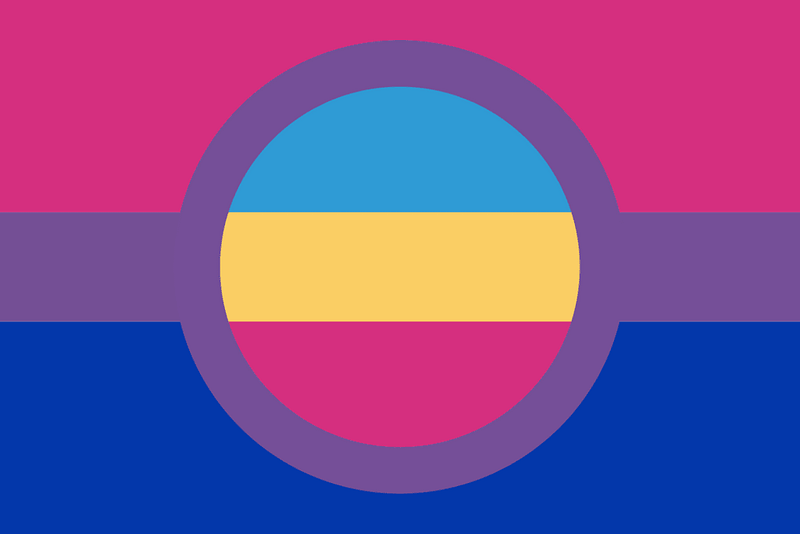
Ever since pansexuality entered the mainstream, people have worked tirelessly to separate it from bisexuality so that the two are completely different. However, virtually every way they try to do this proves false and erases swaths of bisexuals — and sometimes even pansexuals. As I’ll demonstrate, there is no legitimate way to contrast the two in terms of attraction. There may be perceived differences in how certain factors play into our desire, but these are differences among self-identified bisexuals and pansexuals — not between them, with all bisexuals feeling one way and all pansexuals feeling another.
Essentially, they describe the same sexuality. “Pansexual” is to “bisexual” as “lesbian” is to “gay woman” and “homosexual woman.”
Before We Begin
Disclaimers
All definitions of pansexuality I list here are ones that I’ve see pansexuals use to differentiate themselves from bisexuals. If you think I’m “cherry-picking,” let me know which definitions I missed instead of simply accusing me. Also, if it matters, I used to identify as pansexual.
Differences between individuals who identify with either label don’t demonstrate a fundamental difference between the orientations themselves. Again, differences between people do not define an entire category or experience. No identity is monolithic, and we should stop treating them as such.
This is not a demand that pansexuals drop their label, but rather a criticism of those who insist pansexuality is somehow not bisexuality. Many people feel they have the right to tell bisexuals to identify as pansexual instead, and it’s incredibly frustrating.
Who vs. How
Many people distinguish pansexuality from bisexuality not via which genders they find attractive, but how they experience that attraction. Such separations pose problems because:
- These experiences are individual, not universal. People who don’t identify with the new term still experience things defined by it, and people who do identify with it will not always share that specific experience. Thus they’ll disagree with your distinction as it alienates them. It’s unrealistic and offensive to assign a single experience to an entire identity. While one can confidently say that all self-identified gay men are predominantly (when not exclusively) attracted to men, one can’t say that all bisexuals have gender preferences.
- Sexual orientation is about who (i.e., which genders) you’re attracted to, not how. That is how it’s defined. It isn’t practical to create categories based on how someone experiences attraction because the “how” isn’t cohesive; everyone has different experiences. Not to mention, it simply isn’t significant compared to the “who” of it; others can’t detect the “how.” Bisexuals aren’t oppressed for finding gender insignificant or having a preference for men; we’re oppressed for liking men and women. Identifying oneself primarily based on the “how” creates an individualistic notion of sexuality that can’t be displayed or legally protected.
- Sexuality is complicated — and still political. Orientation is a vast taxonomic category, with vast themes and shared experiences. These experiences include privilege and oppression concerning not only the individual but how society perceives and responds to their existence. “Straight,” “gay,” and “bisexual” are not merely identities; they’re legal categories and positions in an oppressive power dynamic.
Now, some people do distinguish pansexuality from bisexuality based on the “who.” However, it isn’t possible to accurately do this, either, and it’s almost always bigoted in some way. We’ll look at both the “who” and the “how” distinctions and see how they manifest. But first, let’s remember some definitions of bisexuality, courtesy of the American Institute of Bisexuality.
What Is Bisexuality?
Quoted directly from the American Institue of Bisexuality (AIB):
Please also note that attraction to both same and different means attraction to all. Bisexuality is inherently inclusive of everyone, regardless of sex or gender.
In everyday language, depending on the speaker’s culture, background, and politics, that translates into a variety of everyday definitions such as:
Attraction to men and women Attraction to all sexes or genders Attraction to same and other genders Love beyond gender Attraction regardless of sex or gender
Some important points to note: A bi person may be attracted to different sexes or genders in different ways. A bi person may be attracted to different sexes or genders more than others. A bi person may be attracted to different sexes or genders at some times and not others.
Additionally, we’ve been describing ourselves as being attracted regardless of gender for decades.
The “Who”
Pansexuals claim they’re not bisexual because…
“They’re Attracted to Transgender People”
There are cisgender bisexuals in relationships with transgender people and transgender bisexuals (such as myself). Bisexual communities have often been safe spaces for transgender people, and our activists have advocated for transgender rights and inclusion for decades.
Of course, plenty of cisgender bisexuals are transgender-exclusionary, but this is true for straights, gays, and lesbians, too. Transphobes come in all sexualities. We should stop acting like transphobic bisexuals should be the dominant voice of the bisexual community. (If one needs a more in-depth explanation on why denying attraction to transgender people is transphobic, click here.)
Believing that other sexualities are only attracted to cisgender people is cisnormative and transphobic. By stating attraction “towards men, women, and transgender people,” one implies that transgender men and women aren’t men and women. However, cisgender gay men in relationships with transgender men are still gay, cisgender lesbians in relationships with transgender women are still lesbians, and cisgender bisexuals in relationships with transgender people are still bisexual. Transgender people have always been around, and people have been attracted to us no matter their sexuality.
Rather than dispel the myth that we’re undesirable, many have decided that willingness to date or sleep with us requires a whole new label. This supposed necessity for one implies that we’ve never existed before or that no one was ever attracted to us before now, which is clearly false.
The notion that attraction to a transgender person automatically makes someone pansexual is odd enough. Back when I was gay, I only dated other transgender men. Does my attraction to my transgender partners mean I was actually pansexual, despite my complete lack of interest in women at the time? No, it doesn’t. It’s frankly odd to assume that transgender people, if we aren’t pansexual, automatically exclude other transgender people from our dating pool. It’s a very ciscentric view of sexuality.
The “I date transgender people” description of pansexuality lets transphobes off the hook for their beliefs, whether they revolve around aversion or fetishism. There are also straights, lesbians, and gays who claim to not be attracted to us, but did we coin new terms for those who do acknowledge their attraction to us? No. Someone doesn’t need to outwardly say, “I’m open to dating transgender people,” to communicate that openness; we should treat that as a given. Attempting to appear different by announcing one’s attraction to us reinforces dehumanizing assumptions about us.
Even if claiming to not be attracted to transgender people wasn’t transphobic, it is still problematic to act like “people not attracted to transgender people” and “people attracted to transgender people” are two distinct sexualities. These two categories have nothing to do with which genders someone is attracted to. It would make just as much sense as having sexual orientations for “attraction to short people” and “attraction to tall people.”
“They’re Attracted to Nonbinary People”
One can essentially take what I said about attraction to transgender people and apply it here.
“Nonbinary” is not just one gender — it’s an umbrella term for numerous experiences with gender. Even if one defines bisexuality as “attraction to men and women,” nonbinary wo/men exist. Furthermore, unaligned nonbinary identities (e.g., “agender,” “neutrois”) are included in all sexualities, and it’s not actually possible to deny attraction to the “nonbinary” category as our identities are largely individualistic. (I explain this in much more depth here). Ergo, bisexuality, in the abstract, is attraction to the entire gender continuum.
The categories “men” and “women” include all body types, gender expressions, and most gender experiences. There is no appearance, behavior, or presentation that a nonbinary person can have that a man or woman can’t, even if we view men and women through a cisnormative lens. As attraction is subconscious, albeit also socialized, bisexuals who deny attraction to people who aren’t cisgender are more so declaring a lack of willingness to enter relationships with them, usually due to misconceptions about nonbinary identity.
It’s impossible to define sexualities around nonbinary folks, especially when some unaligned nonbinary people identify as straight or gay. It becomes more useful to navigate sexuality with a subtractive approach. As an example, lesbianism is attraction to genders that are not male-aligned. Since bisexuality is also defined as “an orientation for which sex and gender are not a boundary to attraction,” it does not inherently exclude any identities. It would remain attraction to all genders, no matter how many genders we recognize.
“What About Bisexuals Who Aren’t Interested in Dating Transgender/Nonbinary People?”
Some lesbians who date transgender/nonbinary women and others don’t; they’re both still lesbians. Being transmisogynistic doesn’t even stop someone from being attracted to transgender women.
We need to cease acting as though it’s possible or beneficial to define sexualities around transgender/nonbinary people, or that the difference between openness and rejection is enough for a new identity. If we don’t need two gay identities where one denotes “attraction only to cisgender men” and the other denotes “attraction to men regardless of assigned gender,” there’s similarly no need to act like bisexuals who date transgender/nonbinary people are a different sexuality from bisexuals who don’t.
Something else notable, as pointed out by activist Verity Ritchie:
I have seen a few bisexuals online say “I’m not attracted to nonbinary people”, but when pushed on it they a) got that definition from pansexuals, not bisexuals, and b) actually mean they don’t fancy androgyny, which isn’t at all synonymous with nonbinarism, and just serves to perpetuate the idea that nonbinary people, women, and men should be conforming to their three respective gender expressions which… no.
Since someone I spoke to believed that bisexual TERFs proved a measurable difference between two sexual orientations, keep in mind that including transgender women in one’s dating pool doesn’t necessarily include them in their feminism or their idea of womanhood. I see little reason why pansexual TERFs couldn’t exist; a number of them see “woman” and “transgender woman” as different categories. There are lesbian TERFs, straight female TERFs, and men of all orientations — even some transgender men — who ally with them. We have yet to create new labels solely based on the existence of TERFs. Political beliefs aren’t a defining trait for any orientation.
“Some Bisexuals Aren’t Attracted to Men or Women”
If someone isn’t attracted to men and women, they aren’t bisexual. If someone says they’re only attracted to nonbinary people, they would have to be attracted to wo/men as well because nonbinary wo/men exist. Attraction to “women and nonbinary people” isn’t exactly possible without holding misconceptions about nonbinary identity. Similarly, professing attraction to nonbinary men but not other men is nonsensical and tokenizing. The difference between me (a nonbinary man) and someone who exclusively identifies as male is negligible. We’re both men.
“They’re Attracted to Intersex People”
Some pansexuals imply that instead of attraction to the genders “men” and “women,” other sexualities are attracted to “biological males and/or females.” In contrast, pansexuals are “also” attracted to intersex people. This thinking excuses transphobic rhetoric as well as discrimination against — and ignorance about — intersex people.
Sexuality is primarily about gender. “Intersex” is not a gender; it describes bodily variations. While certain sex characteristics play a role in who people find physically attractive (since gender is intangible), “attraction to fe/males” definitions routinely devolve into, and come from, cissexist beliefs (e.g., women who claim to be lesbians while being attracted to transgender men).
Many intersex people, as well as some intersex organizations, don’t see physical variations as additional sex categories. Rather than their traits being one sectioned off group, they argue that sex is a spectrum of natural human variation, not a trinary. Insisting that intersex people are a wholly separate third sex (let alone gender) category divorced from the other two is dehumanizing. It mirrors shoving “nonbinary” into a unique gender box. Neither are coherent, clearly defined classes of people.
As with transgender and nonbinary people, it’s very often difficult to discern intersex folks from those who aren’t. Even intersex people may not realize they’re intersex until later in life. Take, for example, the man who didn’t know he had “a full set of female reproductive organs” until he was thirty-seven, or the one who didn’t find out he had a womb until he was seventy. Having a sexuality term to mean “attraction to intersex people” is as reasonable as having ones for “attracted to circumcised people” or “attraction to people with ovaries” that you’ll never actually see in the first place.
Even if some bisexuals define their sexuality in terms of perceived physical sex instead of gender (which they shouldn’t) — and at that point, they usually equate the two — attraction to “males and females” denotes attraction regardless of sex/gender. But more importantly, you don’t need any specific sexuality just to date intersex people.
“‘Bi’ Means ‘Two,’ ‘Pan’ Means ‘All’”
The “two genders” definition of bisexuality is largely fallacious, arguably less than fifteen years old, and virtually nowhere to be found among bisexual activists, literature, or organizations. We have been using “attraction regardless of gender” since the 1970s and “attraction to all genders” since at least the 90s. If you can understand why we don’t need to rename September because it’s the ninth month but “sept” means “seven,” you can understand why bisexuals don’t need to bow down to literal definitions of words.
The “How”
Pansexuals claim they’re not bisexual because…
“They Have No Preference”
Some pansexuals affirm that pansexuality is different from bisexuality because pansexuals have no preference for any gender, while bisexuals do. This ignores the fact that some self-identified pansexuals do have favorites. Would these people no longer be pansexual?
The “no preference” definition assumes all bisexuals have a specific experience of attraction dependent on gender. This is insulting and false (for a number of us, attraction has nothing to do with gender), erasing bisexuals who don’t have any gender preferences — which is almost half of us. A 2017 Pew Research Center study found that 43% of surveyed bisexuals said they were attracted to men and women equally.
Favoring one gender over another doesn’t change the fact that you like them all. Straight men who like tall girls are just as straight as those who would never date one. Having two different versions of male gayness where one is “attraction primarily to blond guys” while the other doesn’t care about hair color makes little sense. Not every nuance and preference (or lack thereof) needs a category. They’re just preferences.
Saying that “attraction to all genders with a preference” and “attraction to genders without a preference” should be entirely distinct identities is like saying masculine women and feminine women are different genders. Scrutinizing such a minute nuance could be compared to making separate identity terms for the amount of attraction one feels, the relevancy of which is similarly debatable. A bisexual with little interest in intimate relationships with any gender is just as bisexual as one overwhelmed with how much they adore people.
Some people who want to maintain the supposed contrast of preference between bisexuality and pansexuality claim that bisexuals don’t lack a preference, but just have “a preference for all genders,” but this makes no sense. A preference requires you like one thing more than the other options. To “prefer everything” would mean that you somehow like all options more than you like… all options. (To illustrate, this would be like saying cheesecake is sweeter than vanilla ice cream but also that vanilla ice cream is sweeter than cheesecake.) Thus there is no actual preference.
Not to mention, a major bisexual stereotype is that we don’t have a preference, that we’d sleep with “anything that moves,” that we’re equal parts gay and straight, and thus unable to be monogamous or faithful. Those of us with gender preferences are actively punished and erased for it. If we lean towards similar genders, we’re “really just gay” and too cowardly to fully come out of the closet. If we lean towards different ones, we’re “really just straight” and unwelcome in LGBTQ spaces. The people who don’t expect us to have equal attraction to all genders ask us which one we like “more” so they can erase the other component of our sexuality.
Differentiating bisexuality from pansexuality via the concept of gender preference is further problematic because preferences in sexuality don’t exist in a vacuum. Our society antagonizes same-gender relationships and reinforces gender roles — which enable abuse — in man/woman relationships. When this is the case, gender preferences are rarely just that. Many of these inclinations are shaped by internalized bigotry, experiences with oppression, dysphoria, or trauma.
Promoting two labels with the main difference between them being a “preference” ignores these realities and enforces the idea that bisexuals “pick a side,” another infamous myth. In any case, I find it fascinating that, for decades, people have avoided saying “sexual preference” instead of “sexual orientation” because they reject the idea that sexuality is a choice — this has been a major talking point for LGBTQ activism — but people are now creating and distinguishing orientation labels based on whether someone has gender preferences or not.
“They’re Genderblind”
Another common assertion is that pansexuals “don’t see gender” and are “genderblind,” unlike other sexualities. Still, many bisexuals share “genderblind” and “people not genders” sentiments as well. That said, the concept of “gender blindness” is irksome in general.
“I don’t see gender,” for starters, is functionally identical to the “colorblind” rhetoric white people use to seem open-minded, hide their fetishization of people of color, or excuse their racism. Many people (hopefully) realize that it’s impossible to “not see” race. We constructed racial categories around physical differences, which our world still uses against nonwhite people. Our society ingrained race into us all, and when we still live in it, categorizing people based on race is an uncontrollable subconscious action.
Likewise, being “genderblind” isn’t possible unless someone has never been taught concepts like “male” and “female” whatsoever. We all view individuals through the lens of gender and have presumptions about them based on it. We associate particular looks, body parts, fashion styles, personalities, and other attributes to genders. We assign genders to people in our minds based on their appearance, often behaving differently with people depending on their genders. It’s unrealistic to declare that we, as a civilization, are divorced from that yet.
There is no “pure” form of attraction free from gender biases. Even without the often-accompanied implication that only pansexuals can look past the gender of their partners, the notion that people only “see” gender for sexual or romantic reasons is outrageously oblivious. A misogynist can claim he “only sees people, not genders,” but there’s a reason he tells some “people” that their place is in the kitchen.
(You can find a more in-depth explanation here.)
“Gender Isn’t a Factor in Attraction”
Many bisexuals share this sentiment as well. Perhaps the notion that bisexuals must be attracted to different genders for different reasons comes from the notion that being attracted to men and women is impossible because they’re allegedly so different.
In any case, gender “being a factor” or not in terms of one’s attraction is irrelevant when someone is already attracted to all of them. How we would even measure this factor is debatable (and few people seem to be able to explain what they mean by having gender factor in without talking about outright preferences); we all inevitably treat “different genders in different ways” because our society constructed genders as polarized categories.
Everyone’s experience with discovering they’re attracted to multiple genders is incredibly varied and nuanced. Attraction to one gender feeling different from attraction to another is normal, nebulous, and personal. Like preferences, many of these “different feelings” come from experiences of misogyny, homo/bi/transphobia, trauma, dysphoria, what have you.
For instance, my attraction to men “feels different” from my attraction to women because I never really have to worry about the men I date being overtly homophobic. I had trouble realizing my bisexuality for months when I first questioned my gayness because thinking about being intimate with women made me acutely dysphoric, and it still often makes me feel unsafe due to my experiences with an abusive mother.
My attraction to women — even if expressed as innocently as stomach butterflies when a pretty girl walks by — also sometimes makes me feel dirty and predatory because I’m a man. For months I worried, possibly irrationally, that if I were to date a woman then I’d somehow inherently be in an abusive position. It doesn’t help that the mentally-scarring results of previous relationships have made me far more comfortable with hooking up than dating, which most women I encounter simply don’t do.
It’s always been much easier to feel even somewhat comfortable romantically being with women if I forcibly imagined myself as a woman, but that’s obviously unrealistic outside of fantasy. For all I know, the fact that the vast majority of relatives I have even occasional contact with are female — this has been true my entire life — might have something to do with my complicated feelings, too.
Point being, the idea of defining one’s identity around experiencing attraction differently depending on gender can be unhealthy due to the plethora of potential reasons behind it.
Disregarding the almost TMI explanations, I couldn’t tell you how my attraction to women “differs” from my attraction to men, nor could I explain the supposedly measurably “different” ways to be romantically attracted to people. Many bisexuals are confused by this supposed contrast between bisexuality and pansexuality.
It’s possible that when some bisexuals describe differences in attraction to men and women, they’re actually describing differences in how they engage in relations based on societal expectations and past relationships. When bisexuals are new to their bisexuality, it can feel like the attraction is different at first. As one settles into it, though, some find that their types and preferences aren’t necessarily different across gendered lines. Sometimes it still is, sometimes not.
Placing significance on attraction “feeling different” depending on the gender seems to ignore the fact that attraction feels different for virtually all other reasons, too. We shouldn’t expect people to always be attracted to others in the exact same way. Individuals are unique, and there will be different things we like about each one. My attraction to tall guys contrasts with my attraction to short guys; my attraction to shy people will differ from my attraction to outgoing people, regardless of gender. Trying to measure attraction will always be wonky because everyone naturally experiences it differently.
“They Value ‘Hearts, Not Parts’ or ’Personality Over Gender’”
Disclaimer: Regarding the first description, it’s been said that “hearts, not parts” was originally a bisexual slogan, in response to the stereotype that we’re sex-obsessed. Unfortunately, I have yet to find recorded evidence of this with that exact phrase. Regardless, it is currently far more associated with — and used by — pansexuals.There are two problems with this claim:
- This rhetoric harms everyone who doesn’t identify as pansexual, even talking over pansexuals who claim genital preferences, and
- even if “hearts, not parts” and its variants weren’t at all harmful, bisexuals have been describing their sexuality in almost identical ways for decades (take this quote from 1996: “‘gender indifferent’ bisexuals often annoy others by claiming to ‘love people, not genitals’…”), so it still couldn’t be a difference between bisexuality and pansexuality.
But let’s focus on reason number one.
The gist of the catchphrase, “hearts, not parts” (at least when used by pansexuals), is to emphasize that one cares about someone’s personality, not their body. In this case, “body” translates mainly to “genitals.” For instance, while a gay man would allegedly care about whether or not a prospective partner had a penis, pansexuals would not. This assumes cisnormative beliefs about “male” and “female” bodies.
By saying one doesn’t care about genitals to communicate that they don’t care about gender, they equate genders to genitals, which will always hurt transgender and intersex people. Coupled with the assertion that pansexuals are different chiefly because of their willingness to date us, the slogan “hearts, not parts” hones in on our genitals rather than dismissing them. It typically assumes we have genitals atypical for our gender. It once again lets transphobes off the hook for sexualizing or being repulsed by us.
Considering that many pansexuals who believe that pansexuality is the only transgender-inclusive sexuality also use “personality over body” to explain their sexuality, this reveals quite a bit about what they think about transgender and nonbinary people. They often imply that one must be able to “look past” appearances to be attracted to transgender people, reinforcing the idea that our bodies are repulsive. We should work towards normalizing our bodies, not ignoring them altogether.
When one claims to be a different orientation because they preach “hearts not parts,” they also suggest that other people don’t care about their partner’s personality, only gender (or genitals). This argument is strange enough on its own — everyone’s drawn to personality. One isn’t unique for that in the slightest. That’s just a part of human socialization. Few people would be with someone they loathe just because they’re a woman. Why would it be impossible to feel attraction towards someone’s personality and their gender? Really, what’s so bad (or different) about hearts and parts? Not to mention, what about people who consider their gender to be a part of their personality?
Nobody is only attracted to genitals (or gender, for that matter) and nothing else, not even people with genital preferences. (Arguably, quite a few people aren’t attracted to genitals at all.) Otherwise, I would’ve never dated anyone in my life. The vast majority of people still go on dates and fall in love before ever having sex. Someone doesn’t need to see their prospective crush nude to develop feelings for them. Orientation is not inherently or solely sexual.
Contending otherwise not only disregards reality but reflects the pervasive stereotypes that gays and bisexuals are shallow, only care about sex, fetishize their partners, and can’t experience meaningful connections. This narrative is also sometimes weaponized to implicitly cast all lesbians as TWERFs — or otherwise incapable of loving or being transgender women — by default, necessitating that they abandon their lesbianism to avoid association with violent transmisogynists.
To deem any sexuality genital-obsessed — let alone argue that pansexuals are the only ones capable of loving their partner beyond physical characteristics or sexual desire — is snobbish, inaccurate, dehumanizing, and dangerous. We shouldn’t cast physical attraction as shallow, either. LGBTQ people are constantly shamed and animalized for experiencing it; we don’t need to paint that shaming as progressive now.
“Bisexual” Is a Restrictive Label
Words like “gay,” “straight,” and “bisexual” are descriptive, not prescriptive. They’re simply a way of communicating the broad strokes of your attraction, i.e., which gender(s) you like. Beyond that, everyone’s experience with being gay, straight, or bi is different because we’re all individuals. We can always express those differences alongside our identity, e.g., “I’m a femme open to dating both butches and other femmes,” or “I’m a bisexual who prefers men.”
The only way a broad label that describes you (let alone one that often describes attraction without gender limits) would truly be “limiting” or inherently reductive is if you either refuse to see beyond its stereotypes or believe that one word should encapsulate every single part of you, which is just unrealistic. Nobody is “just” their labels. We should all try to stop thinking of them as rigid boxes; it not only insults people who value their identities and find them freeing but ignores their political importance.
As Emma Seely explains in “Bi Is Enough,” “bisexual” is a vast category. There is no single experience that we must fit into.
There is and always has been variation in our community, variation in levels of attraction, in fluidity of attraction, in dating experiences, and in self-conceptualization, and that is part of what makes the bisexual community so beautiful and so powerful. In the same way that lesbian, gay, and transgender people are not monolithic groups and are comprised of people with vastly different experiences and ways of understanding their experiences, bisexual people are united not due to our uniformity but because of our common position in a patriarchal society and our common struggle against it.
The only experience that no bisexual has is attraction to just one gender. Otherwise, there are nearly infinite ways to be bisexual, and we should celebrate the diversity in our community. We defy definition. Bisexuality is an inclusive term and a wonderful thing.
Even if the “bisexual” was limiting, how would putting yourself in a smaller box be any less so? If anything, a label that claims to describe increasingly specific phenomenon would be more restrictive than a broad one, because it requires fewer changes to that person’s experiences for that label to no longer fit. This decreases their mobility within that identity.
It can also be confusing or harmful for questioning LGBTQ people if they think they need a label that precisely fits every single aspect of their attraction. People shouldn’t feel like they would need to change their entire identity over minute changes in how they experience their sexuality. It’s typically unhealthy to hyper-analyze yourself to that point.
Alyson Escalante sums up my thoughts well when, in “Beyond Negativity,” they say:
[T]his demand for recognition via the recognition of each individual’s personal identity as ontologically distinct is a demand for recognition that subtly naturalizes the relationships of power and class which create that identity in the first place… The impulse to simply create more and more identity categories can only be understood as a liberating political project if we understand the project of placing people into identity categories on the basis of gender and sexuality to be a politically liberatory act in the first place.
“They’re Not [Biphobic Stereotype]”
Some more comparisons between bisexuality and pansexuality reveal that many pansexual definitions rely not only on misunderstanding bisexuality but going along with biphobic stereotypes to set themselves apart. Bisexuals are apolitical? Well, pansexuals built their label around including transgender and nonbinary people, so they’re progressive! Bisexuals are incapable of faithful monogamy because they need to be with multiple genders at once? Pansexuals don’t even see gender, so it doesn’t even matter! Bisexuals are sluts? Well, pansexuals care about personality, not genitals!
Speaking of that last thing, someone wrote a letter to the editor of USA Today regarding Janelle Monáe coming out as pansexual. The author quoted Audrey McConnell, who had this to say:
Pansexuality is the opposite of a “slut.” Pansexual people need to feel a close and personal relationship with someone before there is any sexual attraction. With that in mind, pansexual people are not inclined to have casual sex with anyone.
(Yes, I know people say this is “demisexuality.” I’m only pointing out that some self-identified pansexuals describe their sexuality as seen above. Also, considering that earlier uses of the word “pansexual” explicitly denote openness to many kinds of sexual behavior, this quote was rather amusing.)
McConnel’s statement is not only incredibly condescending towards other sexualities but outright false. Pansexuals can absolutely engage in casual sex, and some aren’t interested in romantic pursuits. Are they not true pansexuals? If so, I’m here to announce that even when I explicitly identified as pansexual, I wasn’t. Also, if pansexuals who enjoy casual sex aren’t real pansexuals, what sexuality would they be instead? (If you say “bisexual,” what does that say about how you see bisexuality?) And why are we assuming anyone is automatically “inclined” to have sex just because of who they like?
“Pansexuality is More Progressive”
This idea is dangerous and self-righteous. Sexual orientations are not and should not be signifiers of how “progressive” or “open-minded” someone is. Implying that anyone is regressive for which genders they find attractive is outrageously insulting, and we needn’t treat our feelings like a competition. An identity does not save you from bigotry.
“Some Bisexuals Say Bisexuality and Pansexuality Are Different”
Some lesbians say that being attracted to cisgender and transgender women is bisexuality because, supposedly, lesbianism only applies to cisgender women. Does that make it true?
Bisexuals who agree that pansexuality is a separate orientation usually agree with the inaccurate or bigoted definitions of bisexuality that supposedly necessitate the existence of the “pansexual” label. This is because they believe that just because their bisexual experience with bisexuality doesn’t fit pansexuality, none of them do.
One person’s experience with what they call bisexuality may indeed be different than another person’s experience with what they call pansexuality. However, one’s person’s experience with what they call bisexuality will also be different from other bisexuals’. It is not a fundamental contrast between two orientations, but rather between two individuals.
“Pansexuality Is Still Not Bisexuality!”
Even if we assume bisexuality is not attraction to all genders (which is false and biphobic) while pansexuality is, think about it this way.
Let’s say we have the categories “man” and “transgender man.” The former refers to all men, regardless of their race, class, sexuality, assigned gender, height, weight, hobbies, or anything else. The latter is a specific subset of men. “Transgender” and “man,” while combinable, describe different groups when examined individually. However, while not all men are transgender, we (hopefully) wouldn’t say that transgender men are an entirely different gender altogether. That’s transphobic.
We can apply this logic to bisexuality and pansexuality. Bisexuality, in the broadest sense, refers to the phenomenon of being attracted to more than one gender, regardless of one’s beliefs or how many they say they’re attracted to. Pansexuality would thus be a variation of bisexuality since it falls under the category of “attraction to more than one gender.” Why should we argue that, because of its alleged specificity, pansexuality is completely separate from bisexuality?
If they were so different, would pansexuals continue expressing dissatisfaction with people assuming they’re bisexual for being attracted to all genders? Would we even need to stress so heavily how the orientations are “different”? One would figure that if this were the case, the contrasts would be self-evident.
We don’t see straight men describing their exclusive attraction to women and then having people go, “oh, so you’re gay/bisexual.” On the other hand, bisexuals describe their attraction to all genders and many people say, “you’re actually pansexual,” while pansexuals will describe the same feeling and get asked, “isn’t that just bisexuality?” This happens for a reason: They describe the same thing. The AIB even vouches: “If [bisexuality, pansexuality, omnisexuality, multisexuality, and polysexuality] all seem to mean the same thing, that is because they basically do!” (Keep in mind that the AIB supports these labels.)
If pansexuals are bisexuals by definition (they are; “all” is “more than one”), and many bisexuals identify as pansexual, then the latter isn’t an independent term. It depends on bisexuality already existing. Pansexuality cannot be divorced from bisexuality unless we abandon every definition of bisexuality — aside from “attraction to only two genders,” which came from outside our community, misunderstands how nonbinary identity functions, and very often comes from a transphobic mindset.
Sure, not every self-identified bisexual sees themselves as attracted to all genders. Considering that most cisgender people don’t see themselves as attracted to transgender or nonbinary people, that’s to be expected. Regardless, saying that pansexuals are not bisexual ignores the fact that virtually all definitions of bisexuality either explicitly state or imply attraction to all genders.
As a disclaimer, this logic doesn’t apply to “gay” and “lesbian.” While “gay” merely describes being attracted to the same gender, “lesbian” typically denotes (from someone who isn’t a man) exclusive attraction to women (and nonbinary folks who aren’t solely male-aligned), which gay men inherently do not experience. Ergo, depending on the gender of the gay person in question, “gay” and “lesbian” can describe different attractions. They are only interchangeable in specific circumstances. Bi/pansexuality, on the other hand, does not depend on the person in question. People of all genders can be bi/pan, and bi/pan people are attracted to all genders.
“Seriously, They’re Just Different Things!”
Some people insist that “while bisexuality and pansexuality overlap, the distinction matters to some people.” But what distinctions actually exist? How do we know which alleged distinctions a person is using to choose between these labels?
Does a pansexual who prioritizes physical attraction or acquires a partiality for women stop being pansexual? Is a bisexual no longer bisexual if they stop caring about gender when dating? It’s nothing short of illogical to say that the difference between category 1 and category 2 is that category 1 has [X] when there are people in category 1 without [X] and people in category 2 with [X].
Even if there was an absolute clear-cut difference between how bisexuals and pansexuals experience attraction, we can think about them like apples. Honeycrisp apples are red and sweeter, while Granny Smiths are green and sour. They have different colors and tastes, which we can compare to attraction with and without a gender preference, respectively.
They’re still both apples. You couldn’t claim a Honeycrisp isn’t an apple. You wouldn’t say a Granny Smith was so different from a Honeycrisp that it must be a completely separate species, the way a mango or a grape is. There are various kinds of apples, but they’re all the same fruit. There are many ways to be bisexual, but they’re all just different manifestations of bisexuality.
Many who insist that pansexuality is inherently unique will often completely contradict themselves to try establishing such a claim. Take, for instance, these two sentences from the same article:
Semantically, bisexuality encompasses pansexuality, but there is a point where we can distinguish between the two, and this is important to much of our community. […] Is there a difference between bi and pan? Well, yes and no. At the end of the day, it doesn’t matter.
Besides the fact that the author doesn’t actually say what this “distinction” is (unless they believe bisexuality does not include all genders) or what they mean by “yes and no,” one must seriously wonder about the thought process behind treating mutually exclusive statements such as “the difference between bi- and pansexuality is important” and “the difference between bi- and pansexuality isn’t important” as coexistent.
Another example can be found in this article:
Now that we’ve established that bisexuality can also include identities outside of the gender binary, what is the difference between identifying as bisexual and identifying as pansexual? Put most simply, pansexuality and bisexuality are different but related identities. Both identities fall under the umbrella of “non-monosexuality,” meaning that they include attraction to more than one gender identity. Functionally, they can look very similar — even the same. While some people proudly identify with both terms, they are not inherently the same thing.
Still no clear answer as to the supposed difference between the two; in fact, the author only names a similarity here. Answering “what is the difference?” with “they’re different” provides no clarity at all, and frankly feels like dodging the question altogether.
Some people believe the difference between bisexuality and pansexuality is a lack of preference, while others think it’s that only the latter includes trans people. Not only are such claims false, but the lack of consensus is an issue. We should able to agree on how some words should be defined, especially sociological ones like sexuality terms.
As an example, if person 1 defines racism as “an institution that oppresses people of color,” while person 2 only sees it as “hating someone due to their race,” they will virtually never find a middle ground when talking about racism because they have fundamentally different understandings of the concept. They may also accuse the other of racism for reasons that the other person finds illogical or unfair.
Of course, sexualities are different than oppressive systems, and when it comes to attraction to more than one gender, there doesn’t need to be only One Definition to Rule Them All. However, it may be important to have at least some general agreement on what certain things can be described as and what they shouldn’t, since some descriptions are inaccurate. People are free to tailor their individual understandings of their sexuality, but statements such as “people can define both terms however they want” can be harmful.
Imagine someone who doesn’t identify as A going, “A to me, means [X definition], which is why I call myself B, because it means [Y definition],” even though some A people, and not all B people, use Y definition. This behavior should not be encouraged. The person in question does not get to decide what A means “to them,” as other people’s self-descriptions are not up for interpretation or debate. They are speaking over group A and risk spreading misinformation about them.
The closest thing to a “difference” between bisexuality and pansexuality is that the latter requires acknowledgment of one’s attraction to transgender and nonbinary people while the former does not, but as I’ve explained before, this is not criteria we should divide sexual identities by. It excuses transgender exclusion and normalizes the idea that “transgender,” “nonbinary,” and “cisgender” on their own are as different as we perceive “male” and “female” to be, which misunderstands and misgenders us.
If you wouldn’t say, “some gay people wouldn’t date transgender or nonbinary people of the same gender, so we should have a label just for gay people who would,” then you shouldn’t treat the “attraction to transgender and nonbinary people” definition of pansexuality as legitimate.
If one seems to find more “differences” that set pansexuality apart, there are definitely some — if not many — bisexuals with that trait in common, too. Differences between individuals who identify with either label don’t demonstrate a fundamental difference between the orientations themselves.
Slice It How You Want — It’s the Same Cake
Many pansexuals try forming their identity by erasing bisexual experiences, which is absurd and insulting. Creating a definition that simultaneously sets it apart from bisexuality and acknowledges all bisexual experiences is impossible. The basis of pansexuality is attraction to all genders, which is already bisexuality.
The fact that some pansexuals also identify as bisexual is yet another example of how these labels lack a clear-cut division. You likely wouldn’t see someone identify as straight and a lesbian, because these identities are mutually exclusive. Bisexuality and pansexuality, however, clearly aren’t.
There’s nothing inherently wrong with having synonyms for things, but notice how I never say that pansexuality isn’t attraction to all genders. I don’t redefine it to suit my whims. Why do pansexuals feel justified doing it to bisexuals?
Differences Between the Words (Not the Sexualities)
“Bisexual” and “pansexual,” as labels, obviously aren’t identical in every way. Activist Shiri Eisner lays out two differences:
Bisexuality comes from a type of political thought based on sexual identity, pansexuality comes from a type of political thought based on gender identity: Talk to a bi person about bisexuality, they’ll often talk about sexuality and desire, and focus on biphobia; talk to a pan person about pansexuality, they’ll often talk about transgender and genderqueer identities, and focus on transphobia.
The definition of pansexuality is often dependent on the definition of bisexuality (and, dare I say, the rejection thereof): If bisexuality is defined as desire towards people of more than one gender, pansexuality can be defined as desire towards people of more than two genders; if bisexuality is defined as desire towards people of many genders, pansexuality can be defined as desire towards people of all genders; if bisexuality is defined as desire towards people of genders similar + different than our own, pansexuality can be defined as desire regardless of gender. But: both bisexuality and pansexuality can — and have — been defined as any of these things.
And herein lies the problem: many pansexuals feel the need to define bisexuality as attraction to no more than two genders (a definition which most outspoken bisexuals here on [T]umblr vehemently dispute) in order to constitute the difference as related to desire rather than as related to politics. This is where all the erasure and biphobia comes into play and where it gets fucked up, violent, silencing and oppressive.
Another problem here is that this kind of dependency on meaning and comparison erases pansexuality as an identity in its own right… My advice to everyone on this issue is to stop this focus on the desire-related differences between bisexuality and pansexuality: none can be defined in any way that can be agreed by everyone.
(Note: In regards to the second paragraph, I’ve once had someone explain pansexuality to me as “attraction to three or more genders,” which was by far the oddest definition of it I’ve ever heard.)
People seldom present definitions of pansexuality without bisexuality next to it. It’s always a compare-and-contrast. Bisexuality doesn’t need to do that with “gay” and “straight” — the differences between those two and bisexuality are clear enough that they stand on their own. I can say “exclusive attraction to the same gender,” and people will immediately match that description with “gay.” If I say “attraction to all genders,” though, many will file that under “pansexual,” but it’s also bisexuality. There aren’t any infographics spelling out the differences between “gay women,” “homosexual women,” and “lesbians.” With pansexuality, however, it seems to require a disclaimer every time someone brings it up.
With regard to what Eisner noted earlier, the frantic distancing of pansexuality from bisexuality parallels the way some lesbians try defining lesbianism not through a love for women, but through a lack of love towards — and “rejection” of — men. But by doing this, their definition of lesbianism inadvertently depends on men. It also implies that straight and bisexual women can’t reject men; these women are often accused of “centering men” in their lives just by being attracted to them, which is a frankly misogynistic claim.
In any case, if being pansexuality is all about being “not bisexual,” then pansexuals don’t even have an independent reason to be pansexual that they don’t owe to bisexuals. Thus they indirectly base their identity around bisexuality.
Pansexual Erasure?
Some may find me hypocritical for saying that definitions of pansexuality (that aim to set it apart from bisexuality) erase bisexuality while I go on to say pansexuals are bisexual. After all, people erase bisexuals all the time by pretending we’re either gay or straight. How am I any better? Well, these scenarios present a false equivalency.
Such an argument slightly misunderstands what people mean by “bisexual erasure,” the societal refusal to acknowledge that people attracted to multiple genders exist at all, ignoring and falsifying evidence of bisexuality in history, academia, and other primary sources. It can also be seen in painting our attraction as a phase and pushing the notions that people can only be attracted to one gender (thus denying a defining factor of our sexuality) or that definitions of bisexuality aren’t actually definitions of bisexuality (thus denying our history and experiences). Keep in mind that I never claim that people can’t be attracted to all genders or that “attraction to all genders” isn’t a definition of pansexuality.
One facet of bisexual erasure applies to this discussion, however: the forced labeling of bisexuals as other identities, most commonly straight or gay. But we must realize that there’s a massive difference between saying a bisexual is gay/straight and saying a pansexual is bisexual.
“Gay,” “straight,” and “bisexual” are not interchangeable terms. By insisting I’m gay, one denies my attraction to women. By saying I’m straight, they ignore my attraction to men. Calling me gay or straight tangibly erases a significant part of my sexuality, as I don’t exclude any gender from my dating pool. We cannot define straightness and gayness as attraction to all genders or they’d lose meaning. Viewing me through a monosexual lens can only give you a false interpretation of who I am.
On the other hand, I do not deny a pansexual’s attraction to any gender by calling them bisexual. We can define bisexuality as attraction to all genders; thus the pansexual maintains their full experience. I don’t deny any facet of who they are. I’m not even necessarily saying that they’re not pansexual, just that they’re also bisexual. (One can’t say that I, a bisexual, am also straight; I either like men or I don’t.) The only reason a pansexual would feel confined by describing their attraction as bisexual is if they see “bisexual” as a limited term. It’s not. It’s broad, inclusive, and encompasses them in ways that “straight” and “gay” literally can’t.
When someone says I’m straight/gay, they’re saying, “you don’t like all genders. You actually only like (wo)men, so I will call you straight/gay.” This reasoning comes from falsehood. When I say a pansexual is bisexual, I’m saying, “you like all genders, and that makes you bisexual.” That is a true statement. There’s no way to say that pansexuals are not bisexual without erasing multiple definitions of bisexuality.
Addendum
A few people who still believe that my arguments are a form of invalidation have asked me, “you’re bisexual — don’t you know what it feels like to be invalidated?” Of course I do. But to invalidate is to negate, to deny the legitimacy of something.
Invalidating bisexual identity means rejecting the idea that someone can be attracted to people of both similar and different genders (e.g., saying bisexual men are just “gay men too cowardly to ‘fully’ come out of the closet”). Someone saying that bisexuality is more-or-less the same as pansexuality does not invalidate me; both labels describe attraction to people of any gender. Saying that pansexuality isn’t real (i.e., saying that attraction to people of any gender is impossible) is invalidation. My intention here has never been to say pansexuality isn’t real, just that it’s a synonym for bisexuality.
Conclusion
The only real differences between bisexuality and pansexuality are their prefixes, histories, and connotations. Otherwise, they’re the same orientation: attraction where gender is not an inherent deal-breaker.
The reason why many people are confused about the difference between bisexuality and pansexuality — and why the internet seems to fabricates new definitions every month trying to explain it (I’ve recently heard someone say “bisexuality is ‘active attraction’ and pansexuality is ‘passive attraction’ with no elaboration whatsoever), and why a number of people identify as both labels simultaneously — is because they’re ultimately the same thing. No matter how you attempt to divide them, the “differences” are nonexistent at best. Desperately insisting that we keep a boundary between the labels only restricts them.
“Pansexual” being synonymous with “bisexual” shouldn’t inherently invalidate the former label unless one believes that two labels must be clear-cut from one another in order for them to be real, and that sharing “too many” similarities with another label is a threat. Not every word needs to embody an entirely distinct experience, and you’d be hard-pressed to find a unanimous agreement as to what the distinction should be in the first place.
Attempting to justifying pansexuality as an entirely separate sexuality requires redefining bisexuality in ahistorical and illogical ways and often enforcing ignorant beliefs about transness. It’s plainly necessary to claim these sexualities are different for the labels to coexist, but it seems many pansexuals want to be as far away from bisexuality as possible, especially when they insist that someone pointing out how their identity is similar to another is denying pansexuality’s very existence.
This piece is not meant to be a demand that self-identified pansexuals drop their label immediately. I simply ask that they acknowledge the above information and stop using the aforementioned “contrasts” to distinguish themselves from bisexuals. We are one in the same. If one seems to find more “differences” that set pansexuality apart, there are definitely some bisexuals with that trait in common, too. Perhaps it’d be useful for pansexuals to consider why they don’t want to be seen as bisexual in any way.
I additionally recommend this video by Verity Ritchie and this article further comparing definitions of bisexuality and pansexuality.