
"There Would Be No Wars If Women Ruled" And Other Myths on Female Violence
From 1480 to 1913, queens were 27% more likely to wage war than kings. Why is female violence so misunderstood?
On Christmas morning, 1492, the residents of Forlì, Italy, awoke to an invading army of 15,000 strong led by the murderous Cesare Borgia. Months earlier, Cesare's dad Rodrigo Borgia (Pope Alexander VI), had decreed his family the rightful rulers of Romagna. The noble Italian families were ordered to turn all their titles and lands over to the Borgia upstart. In exchange for filling the papal coffers, they got to keep their heads.
The power grab would have gone over without a hitch except for one unforeseen disruption— Caterina Sforza, the Countess of Forlì.
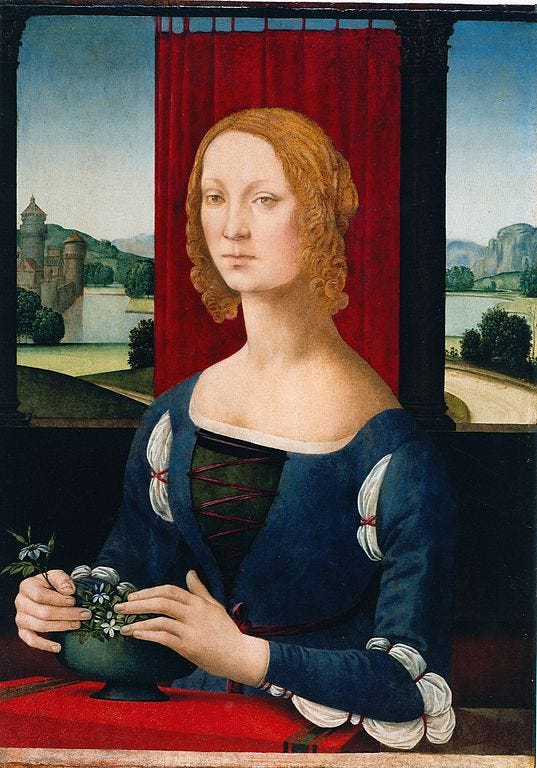
Years earlier, the rival Orsi family had assassinated Caterina's husband, Girolamo Riario, and now the Borgia had kidnapped her young children. Caterina was tired of playing nice. She would not bend her knee to this Borgia thug. Instead, she sealed herself behind the castle walls of Rocca di Ravaldino with a ragtag army of 900 loyal men.
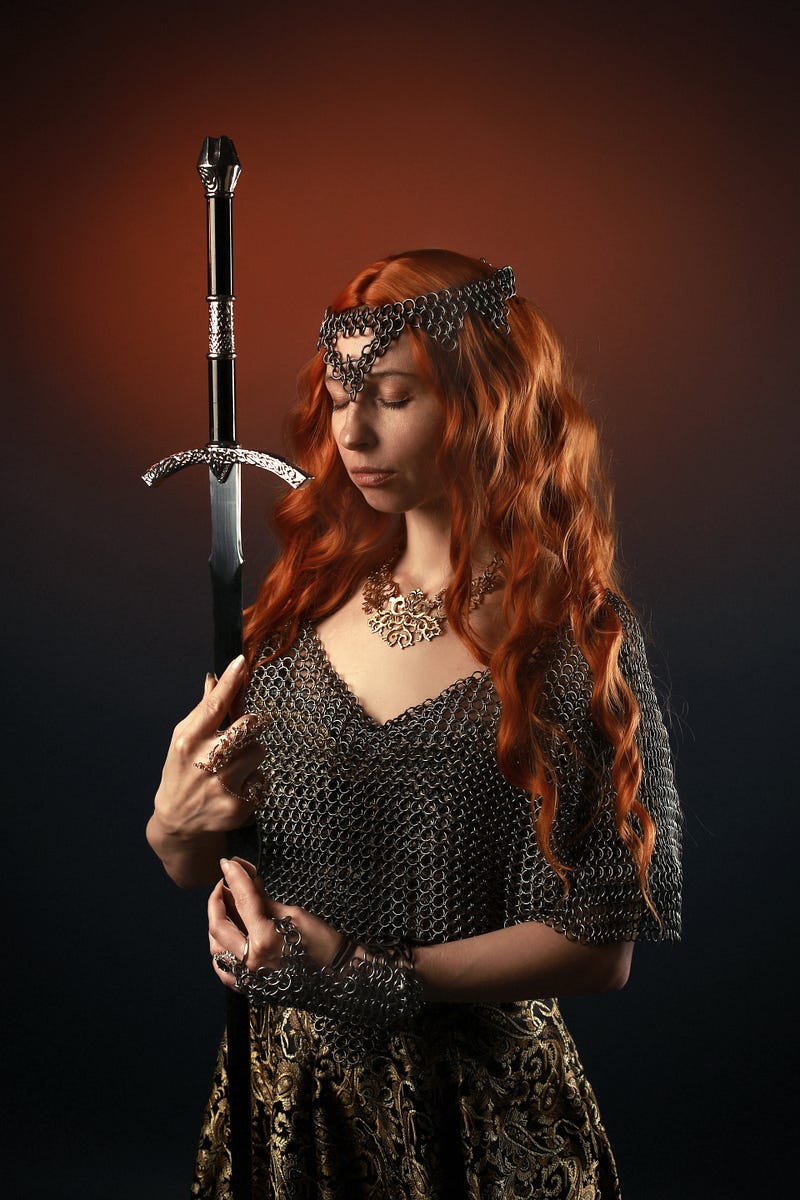
That icy Christmas morning, Caterina stalked the fortress ramparts like a lioness protecting her young. Her long skirts whispered under the gleaming steel of her armored breastplate. She was ready for battle.
Oh, and she was also seven months pregnant.
Legend has it that when the Borgias threatened to kill her children if she did not surrender, Caterina lifted her skirts, pointed to her genitals, and screamed to the invading army below, "Do it, if you want to: hang them even in front of me…Here I have what's needed to make others!"
Damn. That's cold.
This apocryphal scene has become known as the "skirt-lifting incidence" among academics. Most historians deny it happened and chalk it up to a little historical hyperbole handed down from Niccolo Machiavelli in his Discourses. Other historians claim she said the words but only made the symbol of the fig — the equivalent of giving someone the finger today.
Either way, "The Daughter of Iniquity" was renowned for cruelty. To avenge the murder of her husband, she ordered Andrea Orsi dragged through the square and dismembered, his heart and other bits thrown to a ravenous crowd.
Clearly, her haters didn't take the hint. Years later, enemies assassinated her second husband, Giacomo Feo. Caterina not only had the assassin murdered but also threw his wife and young sons down a well.
Now, I am not saying Caterina should be featured on the next postage stamp. It's clearly not cool to throw someone down a well. Violence is never the answer, kids.
However, Caterina Sforza didn't become the de facto ruler of Forlì by winning any Ms. Congeniality contests. She got to her position of power the hardwon way — bloodshed. Without question, Caterina would have signed her family's death warrant with a papal seal if she had kowtowed to Borgia's demands.
Her gamble paid off. Eventually, she was reunited with her children.
Today, the skirt-lifting incident has become a dubious footnote in history but reveals a more naked truth.
We don't like to imagine women capable of violence and cruelty.
Let's face it. No one would question the historical accounts if a king called his enemy's bluff and flashed his junk. But women are supposed to be soft, empathetic, chastised, caring peacemakers. Even Queen Catherine de Medici chided Queen Elizabeth I for ordering the execution of her meddlesome cousin, Mary Queen of Scots.
"It was never heard of that one Queen put another to death," Catherine tsk-tsked.
But was it unheard of?
In 41 B.C., Queen Cleopatra VII had no qualms about orchestrating the murder of her rival queen and half-sister, Arsinoe IV. In 1553, when overly ambitious factions put Lady Jane Grey on the throne for nine days, her cousin Queen Mary I didn't hesitate to order her beheading. And Isabella I of Castile certainly played a role in the capture and imprisonment of her niece Joanna La Beltraneja.
Queens not only violently discarded relatives to keep their crowns, but they also viciously disposed of rivals.
In 655, the concubine Wu Zetian became the first (and only) woman to rule China. There's a reason why you won't find any Disney princess movies about Wu.
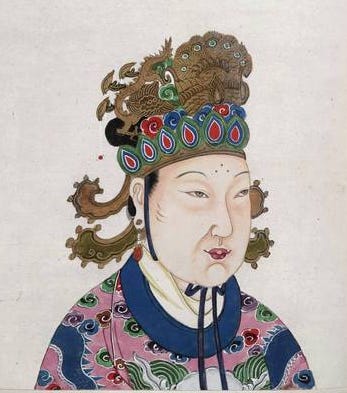
According to the recorded histories (add a grain of salt), Wu smothered her newborn daughter and blamed it on her rival, the current Empress Wang. Heartbroken, Emperor Gaozong locked up the Misses and replaced her with Wu.
Then to make sure her enemies got the message, Wu had Wang drowned in a vat of wine.
After Emperor Gaozong died, Wu held onto the reigns of power by acting as regent for her youngest son, Emperor Ruizong. In 690 AD, she forced her son to abdicate and ruled in her own right for 15 more years.
Conquering queens didn't only undermine female rivals. Sometimes, they disposed of husbands and kings. Such was the case with the Empress of Russia, Catherine the Great. Born a minor German Princess, she educated herself on Enlightenment philosophers while her ineffectual husband, Tsar Peter III, gambled, drank, and played with toy soldiers. And she waited.
Eventually, opportunity struck. In 1762, with the help of Peter's enemies, Catherine staged a coup. Dressed in military uniform and astride a grey stallion, she led a rebel regiment to dispose of the king. (Her lover, Grigory Orlov, was in the regiment's ranks.)
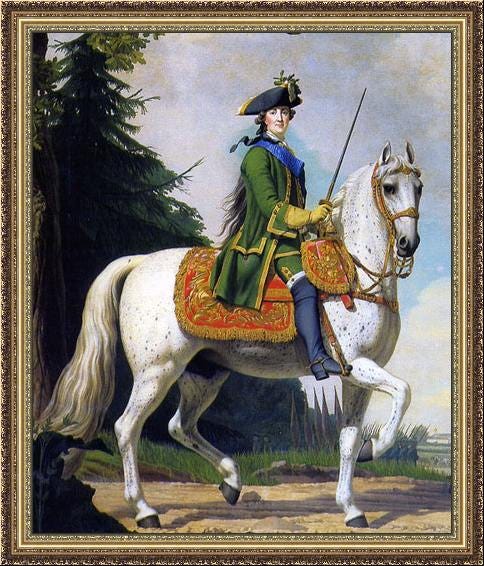
During Catherine’s reign, Russia celebrated seventy-eight military victories.
But while Catherine often deployed strategic diplomacy to avoid bloodshed, other queens were less restrained. In the nineteenth century, Queen Ranavalona I's 33-year reign of Madagascar earned her the title "the most murderous queen in history." Not only did she plunge Madagassacar into so many wars that the population declined from 5 million to 2.5 million, but she also cemented her power by beheading, boiling, and poisoning her enemies.
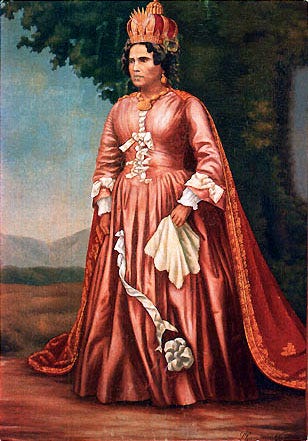
Unfortunately, women rulers often had to act more aggressively to be taken seriously. For example, in 1621, Queen Nzinga met with Portuguese diplomats to secure an alliance. The meeting had a rough start.
The Portuguese diplomats were given ornate chairs to sit on, but Queen Nzinga was offered a mat on the floor as if she were no better than a dog. Nzinga ignored the obvious disrespect. Instead, she motioned for one of her servants to crouch on all fours as a makeshift human chair.
After the meeting concluded, she supposedly slit the servant's throat, boldly declaring that the queen of Mbande never used the same chair twice. It was a psychotic diva move, but the Portuguese got the message.
Of course, it might seem like I am cherry-picking the most egregious examples of mercilessness, but these aggressive women were not outliers.
A 2017 paper from The National Bureau of Economic Research found that from 1480 to 1913, queens were 27% more likely to wage war than kings. The researchers crunched the data and theorized that queens were likelier to go to war for two reasons.
First, unmarried queens were more likely to be attacked because, without a husband, they were viewed as weak. (Incidentally, this is why I make male friends pose as my adoring husband when getting quotes from kitchen contractors.)
Second, married queens were more likely to wage war because their marriage alliances gave them the resources and military clout to brandish swords. It makes sense. Wars cost money. Even today, your income rises if you get married. Power couples are not a modern phenomenon.
But there is a third reason queens waged more wars than kings that researchers ignored. Look at the bloodiest battles throughout history, and you will find a common thread — religion.
Simply put, women tend to be more religious than men. Or at least they self-report that they value religion more. A 2014 Pew Research Center survey found that 60% of American women said that religion is "very important" in their lives compared to only 47% of men. This gender gap in religion exists in most countries, with notable exceptions for China, India, Canada, and, surprisingly, Israel.
Nor is female religiosity a modern phenomenon. Examples of deeply pious, militant queens are numerous. In the twelfth century, Empress Matilda waged battle after battle, leading to the civil war known as the Anarchy. As the "daughter of St. Peter," she became the Pope's military handmaiden, supplying the troops that would keep the Papacy in power.
Queen Mary I of England also took up the violence mantle in the name of religion. Mary squelched Catholic opposition by ordering hundreds of Protestants burnt at the stake, thereby earning her the sobriquet — Bloody Mary.
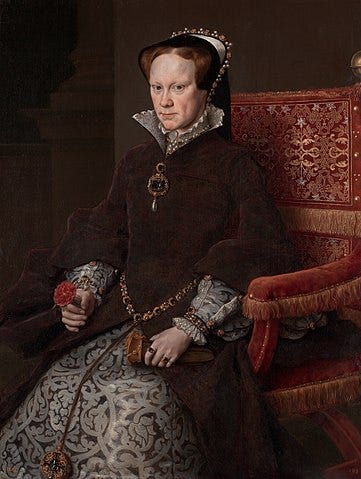
Isabella I of Castile, famous for bankrolling Christopher Columbus, wasn't just about ocean adventures. Isabella revolutionized warfare with her powerful artillery force. Castle walls, once ironclad, were no match for her cannons.
She also had God on her side.
In 1479, Isabella established a tribunal to crack down on anyone not toeing the Christian line. This tribunal, approved by Pope Sixtus IV, later became the Spanish Inquisition.
But it wasn't just about religion. (It never is.) The tribunal first acted as a secret police force that spread fear throughout the kingdom. They even had these scary public spectacles called the auto-da-fé in which they paraded heretics through the town square in yellow sackcloths to the quemadero or burning place.
But here's the part only a woman (or a writer) could devise. Prisoners in the auto-da-fé had no clue whether they would be tortured and killed or set free…until the last moment.
We all know how this story ends. In 1492, Jews were forced to either convert or go elsewhere. This marked the end of a seven-hundred-year-long era of religious mix-and-match called the Convivencia.
Better to be feared than loved? Yeah, sorry Machiavelli. Women invented that game.
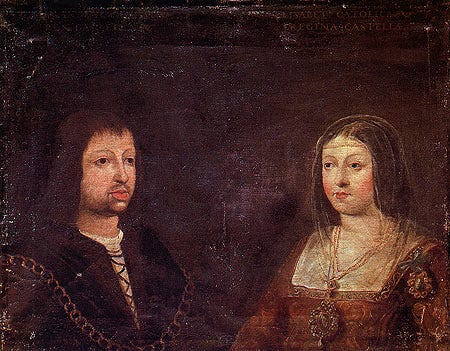
But in the history books, her husband Ferdinand gets the lion's share of credit for turning Spain into a Catholic superpower. The Florentine ambassador Francesco Guicciardini summed up Isabella's hawkish politics — "Everyone agrees that the greater part of it all should be attributed to her."
Hell hath no fury than a woman scorned, but a religious woman has both the flame and the fury.
And yet, throughout history, powerful queens have been viewed as aberrations. Confucius mused, "A woman ruler would be as unnatural as having a hen crow like a rooster at daybreak." Centuries later, The Protestant reformer John Knox groused that women were "weak, frail, impatient, feeble, and foolish…" Frederick II of Prussia repeated his sentiments; "No woman should be allowed to govern anything."
Not only did they govern, women waged war.
However, the statistics on gender violence paint a different picture. Men account for 80.4 percent of persons arrested for violent crimes. Overall, you are eight times more likely to go to jail if you identify as male. And this is not a U.S. problem. A recent survey found that 1 in 3 German men believe violence toward women is "acceptable."
Conversely, American women are 8% less likely to support military force during conflicts. In 1965, a Gallup poll found that only 59% of women said the United States should continue its "present efforts" in Vietnam compared to 73% of men.
But when it comes to the attitudes toward war, gender stereotypes are misleading. We shouldn't conflate female rulers with women in general.
In his best-selling book Corruptible: Who Gets Power and How It Changes Us, political scientist Brian Klaas researched why power corrupts people. In several studies, Klaas found that politicians with dark triad traits — Machiavellism, psychopathy, and narcissism — were more likely to get reelected but were less likely to pass legislation. In other words, folks with disagreeable personality traits could charm folks into giving them power, but they didn't use their power to get shit done.
It's a lose-lose situation for society. Ruthless leaders may climb the ladder, but then they drop the ball once they're at the top. (And we have seen plenty of ball-dropping in American policymaking.)
However, women rulers had a different impetus for aggressive political tactics. Simply put, queens often had to act more combative than kings to stay in power.
Not much has changed. From queens to CEOs, research on today's female leaders has found the same relentlessness. One study found that female leaders combat gender stereotypes by acting tougher. They were also less likely to back down during confrontations.
Unfortunately, stereotypes of the soft but powerful female leader only infantilize women. They also are a lot of pressure. As Shakespeare mused, "Heavy is the head that wears the crown." But it is even heavier if you have to embrace some bogus feminine goddess ideal while breaking a few skulls.
So next time you hear someone claim, "There would be no wars if women ruled," respond with a different maxim.
There would be no women rulers if women didn't wage war.
‘…in this battle we must conquer or die. This is a woman’s resolve. As for the men, they may live or be slaves.’
— Boudica

Carlyn Beccia is an award-winning author and illustrator of 13 books. For past articles grouped by subject, see my Table of Contents.
Update! I am launching Conversations with Carlyn soon to have more open and honest conversations with readers about sex, love, feminism, culture, and the latest science behind our most intimate human interactions.
If you enjoyed this article, please support my research and writing by becoming a paid pledge. You won’t be charged until the conversation gets rolling.


