
Queen Elizabeth's Bad Romances Are Powerful Love Lessons
Many men pursued the Virgin Queen, but she chose to remain single. History would have turned out very differently if she had followed her heart.
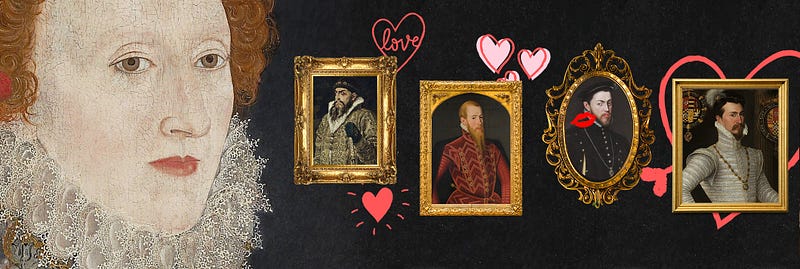
Imagine being one of the most desired bachelorettes in the world. Forget endless swiping and sterile coffee dates. Men cross deadly oceans to claim new territories in your name (Virginia). Suitors throw Gatsbyian parties to impress you. You are besieged with romantic poetry, art, gifts, and hot men in tights.
They all have one goal— to be your husband.
Now imagine choosing a husband could plunge your country into war. That was Elizabeth I's romantic life.
Elizabeth's precarious predicament didn't stop her Privy Council from pressuring their political pawn to marry. But Elizabeth was always ten moves ahead of them.
Or I should say, she was ten non-moves ahead of them. Elizabeth responded to the marriage pressures by playing a dangerous cat-and-mouse game. She would court a suitor and make her Council believe she had chosen her man. Then, she would find something wrong with him and be off to the next.
She basically breadcrumbed her suitors to buy time.
The Privy Council continued to pressure her. In November 1566, Elizabeth was thirty-three years old, unwed, without siblings, and childless. England needed a successor. So, a delegation of sixty lords and commoners met with the Queen, pleading with her to marry.
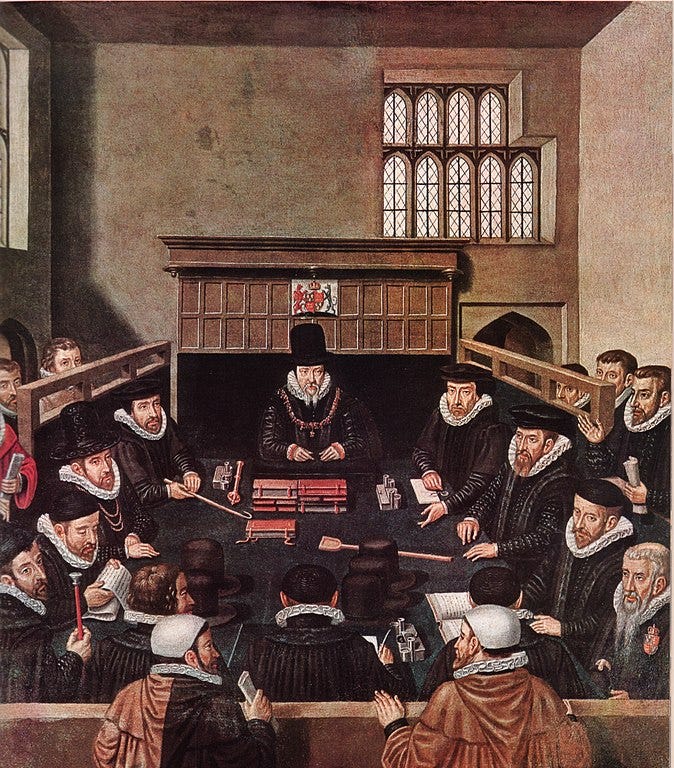
Elizabeth was no fool. In Tudor society, women were viewed as inferior to men, and married women were the property of their husbands. They could not vote, sue or be sued, own property, or leave a will. And they certainly couldn't rule.
Of course, Elizabeth couldn't argue, "Gosh darn it, if this marriage thing means I have as much rights as a housecat…I think I will pass." Women not having basic human rights was viewed as the natural God-given order. And since she couldn't exactly smash the patriarchy, she placated her court by claiming to be but a "weak and feeble" woman.
Instead, Elizabeth argued that a foreign husband by her side and a baby at her breast could lead to uprisings and her assassination.
Cue the damsel in distress…
Elizabeth played the ingenue because she was in a no-win situation. If she chose a Catholic husband, she would piss off her Protestant subjects. If she chose a Protestant husband, she would piss off her Catholic subjects. If she chose a foreign husband, her people would fear foreign powers meddling in English affairs. If she chose an English husband, her people would fear in-fighting between the nobility.
No matter whom she chose, there would be factions pissed off, fearful, and possibly civil war.
The Privy Council persisted. Without a successor, a royal power grab could ensue if she was to drop dead. Not to mention that dreaded female "hysteria" lurked around every corner. Or so it was believed.
Another delegation met in 1559 to pressure the Queen to choose a sensible husband. This time, they tried to circumvent her "no foreigners" argument by allowing her to choose an English husband.
Elizabeth refused again. Out of this delegation came her most famous declaration not to marry.
“And in the end this shall be for me sufficient, that a marble stone shall declare that a Queen, having reigned such a time, lived and died a virgin.”
Elizabeth wasn't playing games anymore. She would marry England and die a virgin. End of discussion.
But before she got to this point, she almost chose her man. Here are the stories and lessons behind some of Elizabeth I's most famous bad romances.
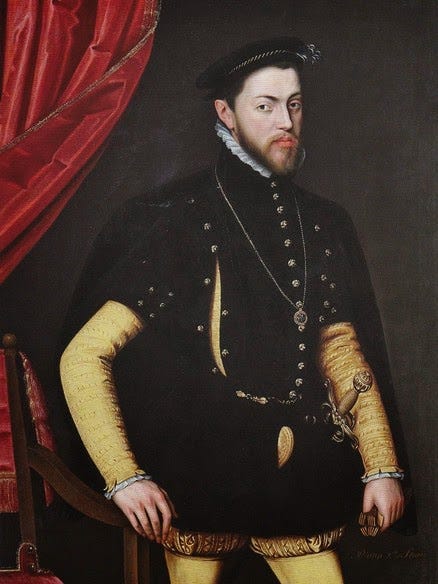
Prince Philip: The Machiavellian Suitor
Elizabeth had her share of family drama. Her father, Henry VIII, tore through six wives, ordering her mother and her stepmother beheaded. His erratic and cruel behavior forever tainted Elizabeth's marriage views.
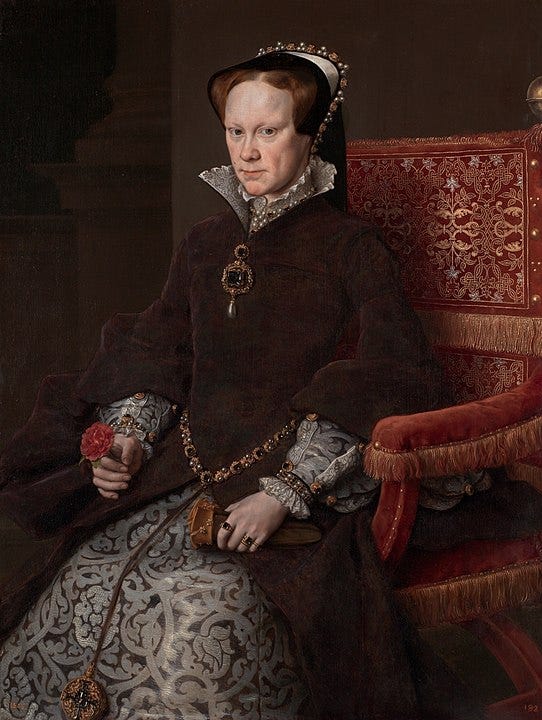
So naturally, when her half-sister Mary I married the future Philip II of Spain, Elizabeth wasn't exactly touched by their romance.
Unfortunately, Mary fell deeply in love with her new husband, while Philip preferred more voluptuous, darker-skinned women. According to the Spanish envoy, Mary was 'in no way beautiful; she is short, frail rather than fat, and very white and fair-haired; she has no eyebrows; she is a saint; she dresses very badly.'
Well, at least there was the saint part.
Of course, Philip didn't let on that he was not into his new bride. He had ambitions beyond romance. The Act for the Marriage of Queen Mary to Philip of Spain was passed in 1554. It decreed that Philip had all the honors of a King as long as he stayed married to Mary.
So he held her hand, performed his husbandly duties, and stayed away from England as much as possible.
After Mary died, Philip described his grief as "a reasonable regret for her death." We can imagine the reasonableness of his grief was due to him losing the perks of a king consort.
Instead of wasting tears, he proposed to the new Queen — Elizabeth.
Elizabeth told Philip no thanks. It was just too creepy to marry your dead sister's husband. But that wasn't the real reason. Philip had political and religious ambitions that didn't align with hers. After Mary had ordered hundreds of Protestants burnt to a crisp, no one wanted another Catholic ruler in England, especially Elizabeth.
Love Lesson: The silent types are sometimes silent because they are dead inside.
Elizabeth and Philip would have had serious personality conflicts if they had wed. First, there was religion. Philip's strict Catholicism made Elizabeth want to pour more starch on her ruff. He was also quiet, brooding, cold, and wore too much damn black.
In contrast, the outspoken Elizabeth had a sharp tongue and a sharper mind. She could be stern when necessary but also enjoyed witty banter and gaiety.
Trust me on this one. If you choose a dour partner, the grave moments of life will feel graver. Laughter is one of the most potent elixirs to keep passion alive.
However, this is partly the allure of the "strong but silent" type. From Edward Cullen to Christian Grey, women are often fooled by the "still waters run deep" mindset. But still waters can sometimes be still because there's no life beneath the surface. (Except for maybe flesh-eating bacteria.)
Philip was cold and silent, not because he had hidden depths. His silence hid his ulterior motives. "Politics have no relation to morals," wrote Machiavelli. Philip would have agreed.
“Do not take life too seriously. You will never get out of it alive.”
— Elbert Hubbard
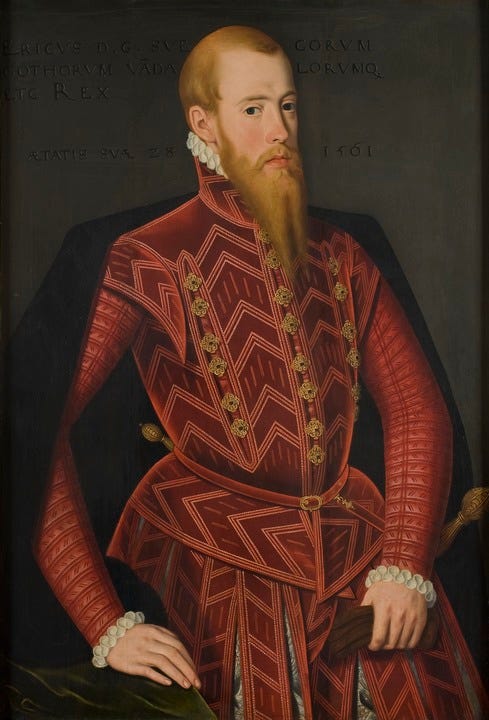
Erik XIV, King of Sweden: The Love Bomber
Prince Erik was a regal red flag from the start. Elizabeth toyed with him for years, writing him letters but never committing to a marriage. But when Erik insisted on setting sail to England and meeting, the jig was up.
Elizabeth fired off a letter with a gentle rejection, asking him to 'advance not beyond the laws of friendship.'
Yep. She friendzoned him.
But Erik wouldn't take no for an answer. In 1560, he set out for England in a ship stuffed with costly gifts to woo Good Queen Bess. Storms beat him back. He tried again. Again, Mother Nature intervened.
Elizabeth chalked the storms up to fate saving her arse. She was probably right.
Erik later married a peasant girl and made her Queen, angering his family and the nobility. Then he lapsed into madness and paranoia, imprisoned family members, stabbed a nobleman to death, and ordered the execution of his childhood tutor. Most historians believe he had schizophrenia or bipolar disorder.
Eventually, his half-brother imprisoned him.
In 1577, Erik died after being fed pea soup with a dash of arsenic.
Love Lesson: Love bombs are hard to dodge.
Love bombing is an excessive display of affection with the goal of lowering the recipient's guard. Unfortunately, once the bomber sweeps his target off her feet, he withdraws affection and can sometimes turn abusive.
Love bombing can often feel exhilarating at first. But a love bomber showers their target with attention because they are deeply insecure and need constant reassurance. In other words, love bombing isn't love. It's a transaction.
In Elizabeth's case, Erik showed he lacked self-regulation by setting sail to see her (twice) after she told him no. With healthy people, you only have to tell them no once.
“He that flatters you more than you desire either has deceived you or wishes to deceive.”
— Italian Proverb
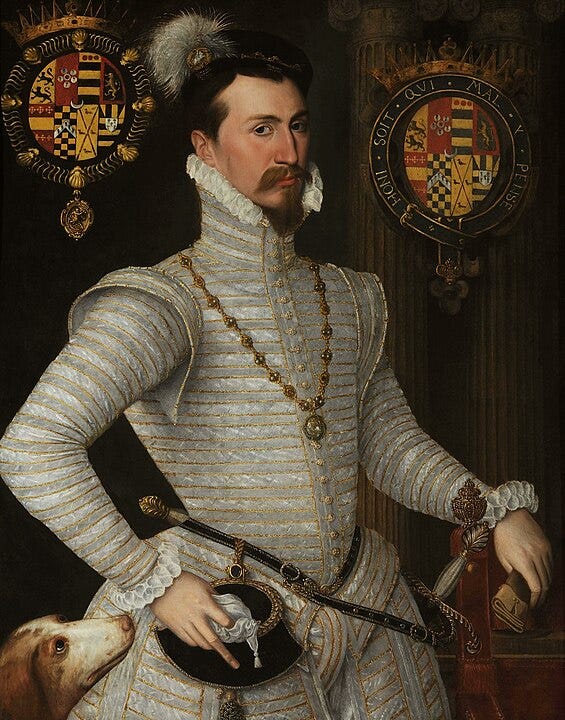
Robert Dudley, 1st Earl of Leicester: The F*ckboy
Hollywood likes to wax poetic about the romance of Dudley and Elizabeth, but the truth is less quixotic.
Their story begins with your usual trauma bonding. After the Wyatt Rebellion in 1554, Elizabeth and Dudley were thrown in the Tower of London and accused of treason. During this calamitous period, they became close friends.
The two survived the political machinations and were eventually released. Mary I died, and Elizabeth was declared Queen. England rejoiced. Dudley then jumped on his white steed and charged across the countryside to be the first to congratulate her.
I mean…come on. He literally has a white horse.
After she was crowned Queen, Elizabeth made Dudley Master of the Horse. That position was no lowly stable boy gig. The Master of the Horse got a lucrative salary and was responsible for state ceremonies and all the fanfare. Basically, he was the guy who threw all the lavish parties.
During this time, Elizabeth nicknamed Dudley "her eyes" and moved his bed chamber next to hers. They then spent every waking moment together — hunting, reading, dining, and doing the things sixteenth-century kids do when their hormones are raging.
Of course, their relationship stirred gossip. Tongues wagged that Dudley had given Elizabeth a "red petticoat" — taken her virginity.
Their story might have had a bodice-ripping ending except for one detail.
Dudley was already married.
In 1550, before Elizabeth had been crowned Queen, Dudley married Amy Robsart. Now, his marriage was the one thing standing in the way of him marrying Elizabeth and becoming king. Or so he believed.
And then, his wife ends up with a broken neck at the bottom of a staircase. It doesn't look good for these two lovebirds.
Of course, Elizabeth could not marry Dudley now without looking like a scheming murderess. Marriage was off the table.
The drama did not stop Dudley from pursuing her. When his wooing failed, he peevishly asked to withdraw to his estates. Elizabeth wasn't having it. The two had a lover's spat in front of the entire court. It got ugly.
"I will have but one mistress here and no master," she railed at Dudley.
And she meant it.
Over the following years, they both tortured each other with petty power plays and jealousies.
Dudley's romantic failures didn't stop him from his wenching. In 1578, Dudley secretly married Elizabeth's cousin, Lettice Knollys, without Elizabeth's permission — a treasonous act that could have got him beheaded. (She was also a younger dead ringer for Elizabeth.)
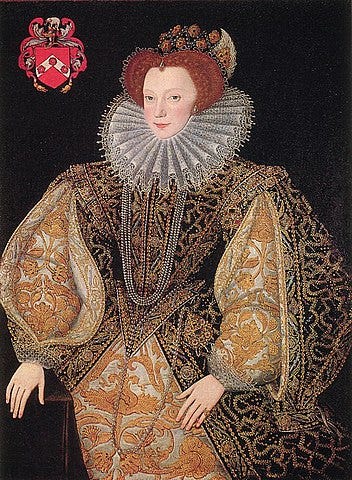
When Elizabeth found out, her red hair shot flames. She called Dudley a "she-wolf" and banished Lettice from court. After that, their relationship was never the same.
In 1588, Dudley died. Elizabeth locked herself in her apartments and refused to leave until members of her council broke down her door.
She kept Dudley's final letter to her in a casket by her bedside for the rest of her life.
Love Lesson: Don't choose a partner by how he looks in tights.
Of all Elizabeth's suitors, Dudley was the most attractive, charismatic, and charming. Our society tends to value charisma over authenticity. Yes, you can have both. But charmers often use their powers for evil and not good.
Still, some women will see a toxic track record of bad boy behavior and think, "But he will be different with me," or "I can change him."
The other woman rarely has a happy ending. There's an old divorce attorney joke that when a man marries his mistress, he leaves a job vacancy open. Sure, some people learn from the lesson of infidelity and do not repeat it. Others make it a habit.
Either way, Elizabeth and Dudley's love story still fascinates. They spent so much time together that they must have formed a bond. Whether that bond was healthy is another story.
“Infatuation is not quite the same thing as love; it’s more like love’s shady second cousin who’s always borrowing money and can’t hold down a job.”
— Elizabeth Gilbert
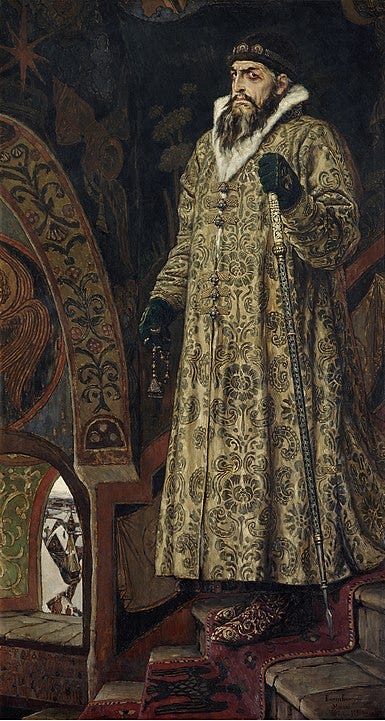
Ivan the Terrible of Russia: The Abuser
In Russia, when a ruler was described as "terrible," it meant strong or impressive. Still, one doesn't get the sobriquet without some serious bad boy behavior.
To seem impressive, Ivan carried a big stick. Literally. He never was without his heavy, thick staff. Ivan believed his um…big stick would seduce Elizabeth. He was in for a rude awakening.
In 1568, Ivan locked his wife up in a convent and threw his hat into Elizabeth's marriage ring. He first gathered intel and asked his court physician if he had a chance with the Virgin Queen. His physician told him in no uncertain terms that Elizabeth was notorious for breaking hearts.
Of course, Ivan was undeterred. Remember…big stick.
But by the time the 37-year-old Elizabeth got the 40-year-old Ivan's marriage proposal, her tolerance for machismo was as thin as her impending winding sheet.
When Elizabeth turned him down, Ivan called her a "vulgar wench" and derided her kingdom. "Moscow can do without the English peasants" was his best burn. What Elizabeth thought of his uncouth response was never recorded.
She was probably happy to be rid of him. Years later, Ivan ordered his next wife poisoned and murdered his son by beating him to death with his big ole' staff. Classy guy.
Love Lesson: Abusers always push boundaries.
Of all her suitors, Ivan's cruelty was ripped from her father's playbook. Elizabeth could have chosen him out of familiarity. But she did not. People borne out of tumultuous childhoods don't always repeat their past. Some choose to learn from it.
This love lesson is a no-brainer. How someone handles rejection reveals their inner character. When Ivan heard "No," he responded with abusive name-calling.
Abusers get rageful when they hear no because abuse is about power. A no signifies a loss of power.
“Don’t confuse “familiar” with “acceptable”. Toxic relationships can fool you like that.”
— Steve Maraboli
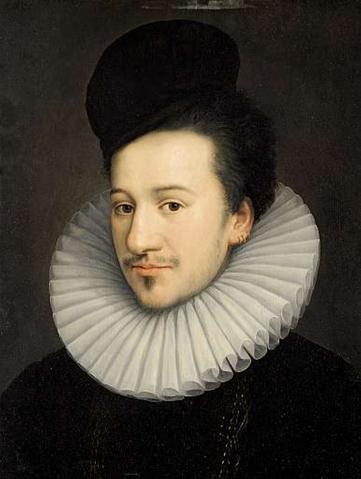
Francis, Duke of Anjou: The One That Got Away
Although Dudley is often viewed as Elizabeth's true love, I would have rooted for The Duke of Anjou.
In 1579, Anjou secretly visited Elizabeth at Greenwich. Elizabeth declared, "I have never in my life seen a creature more agreeable to me." She affectionately called him her "Frog," and the two became inseparable during his short visit.
Plans to wed were made, and they wrote passionate love letters to each other while apart.
Was Elizabeth finally in love or just up to her old tricks? We will never know. Two obstacles stood in their way.
First, there was a bit of an age difference. Okay, okay…a big age difference. Francis was 24, and Elizabeth was 46. So there's that.
The second obstacle was a bigger one. Although Anjou was moderate in his religious beliefs, he was Catholic and could not convert to Protestantism without sending France and his mother, Catherine de Medici, into a tizzy.
You can probably guess how this Romeo and Juliette story ends. The marriage never happened. A union between Catholic France and Protestant England was deeply unpopular. Then, publisher John Stubbs circulated a pamphlet spreading fear that France would swallow England if such a marriage occurred. (Elizabeth had Stubb's hands cut off for meddling in her affairs.)
Elizabeth was forced to break off her affair with Anjou.
A few years later, Anjou died of malaria at 29. Elizabeth carried a miniature of him around her waist for the rest of her life.
Love Lesson: Misery is born out of living a life on stage.
Elizabeth expressed genuine regret when she broke up with Anjou. Unfortunately, she was forced to be a queen first and a woman second. Without her council's approval, she could have never married Anjou.
Women today don't have such shackles. We can choose someone by their inner qualities and do not need the approval of others.
Yet so many people splatter happy vacation photos all over their social media when their relationship is crap in real life.
Interestingly, research has found unhappy couples are more likely to post details about their relationship on social media. Shocker. Love doesn't need public protests.
Sadly, many fail to live authentic lives because they are too busy presenting a mirage to the world.
“Other people’s perception of you is a reflection of them; your response to them is an awareness of you.”
— Roy T. Bennett
Elizabeth most likely never intended to marry. Her resolve was so strong that she even declared to her sister Mary that she "would rather be a beggar and single than a queen and married." Now those are fighting words.
Elizabeth was clever enough to know the power of "maybe." She kept each suitor hopeful and her council calm by strategic stalling.
But behind the veil was a woman who craved love. If she had been born to a lesser station, she most likely would have married. Instead, she chose England and fostered the cult of virginity over her earthly desires.
At the end of her life, she lamented, "…all my husbands, my good people."
Perhaps that is the most powerful lesson we can learn from Elizabeth's failed romances.
Not all great loves are romantic ones.

Carlyn Beccia is an award-winning author and illustrator of 13 books. For past articles grouped by subject, see my Table of Contents.
Update! I am launching Conversations with Carlyn soon to have more open and honest conversations with readers about sex, love, feminism, culture, and the latest science behind our most intimate human interactions.
If you enjoyed this article, please support my research and writing by becoming a paid pledge. You won’t be charged until the conversation gets rolling.


