avatarErika Burkhalter

Free AI web copilot to create summaries, insights and extended knowledge, download it at here

1676

Abstract

the mall, lost his job.</p><p id="539d">While everybody else was making a mad dash to the store, when this all began, he didn’t have enough extra cash to stock up on anything. By the time he made it to the store, the shelves were bare — no hand sanitizer, no hand soap, and certainly no dried beans or anything that could be stored for a while.</p><p id="c53c">Even so, he was lucky. He had us to bear witness to his dilemna and to help him through this time. The clinic where he goes, and his church, also gave him bags of food.</p><p id="7253">But there are so many others — so, so many countless others out there who need help.</p><p id="c431">And it just breaks my heart that so many of them will not be able to be saved.</p><p id="d00e">Sitting here at my desk, in front of an open window, I can hear the birds. I can feel the breeze on my skin. And I know that life will go on. There is beauty that will come from this time. The earth is breathing again.</p><p id="0cc8">But there is also pain.</p><p id="ba41">And I also know that this is a time for us all to come together, to help our fellow inhabitants of this planet. Every little act of kindness we do right now makes a difference, maybe more than we know.</p><p id="f76f"><i>Erika Burkhalter is a yogi, neurophilosopher, cat-mom, photographer, and lover of travel and nature, spreading her love and amazement for Mother Earth’s glories, one photo, poem or story at a time. (MS Neuropsychology, MA Yoga Studies). Erika is also an editor for <a href="https://medium.com/dharma-talk">Dharma Talk</a>.</i></p><p id="46d7">You might also enjoy:</p><div id="b31e" class="link-block"> <a href="https://readmediu

Options

m.com/bees-on-borage-7ce58db33ef4"> <div> <div> <h2>Bees on Borage</h2> <div><h3>These precious pollinators adore the purple-flowered, ethereally haloed borage plant.</h3></div> <div><p>medium.com</p></div> </div> <div> <div style="background-image: url(https://miro.readmedium.com/v2/resize:fit:320/1*ovbVfaHP6M9w4fNWIo9pIw.jpeg)"></div> </div> </div> </a> </div><div id="001c" class="link-block"> <a href="https://readmedium.com/to-the-elders-2a5d11a5d80b"> <div> <div> <h2>To the Elders</h2> <div><h3>We miss you</h3></div> <div><p>medium.com</p></div> </div> <div> <div style="background-image: url(https://miro.readmedium.com/v2/resize:fit:320/1*Xeud-Jnobt6h70MsHr3hzQ.jpeg)"></div> </div> </div> </a> </div><div id="517a" class="link-block"> <a href="https://readmedium.com/the-earth-has-spoken-bca89af1eac9"> <div> <div> <h2>The Earth Has Spoken</h2> <div><h3>Are we listening?</h3></div> <div><p>medium.com</p></div> </div> <div> <div style="background-image: url(https://miro.readmedium.com/v2/resize:fit:320/1*Z9C8IY86LRrnAxwwZr30lg.jpeg)"></div> </div> </div> </a> </div><p id="62fd">Story and photo ©Erika Burkhalter. All rights reserved.</p></article></body>

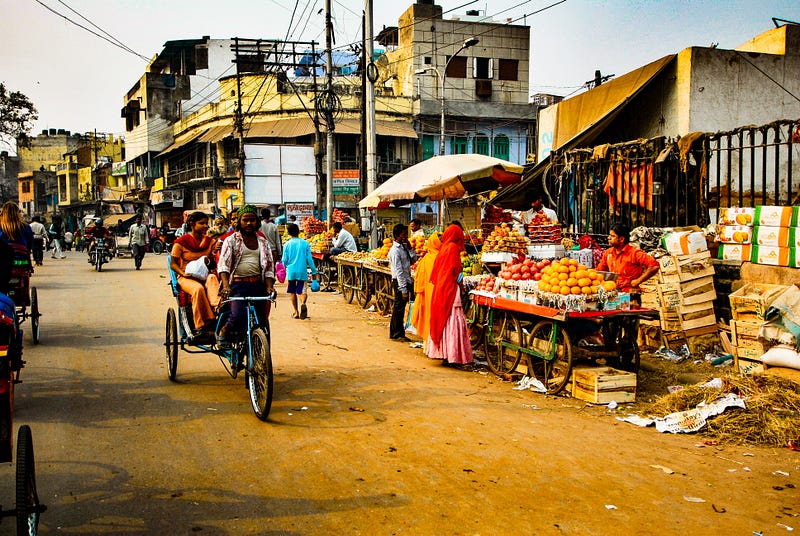
Delhi, India. Photo ©Erika Burkhalter.

Pandemic Essay

There is Beauty and There is Pain

The inequity of the virus

I just can’t stop thinking about how this pandemic started as a rich person’s disease, carried around the world on airplanes, spread by tourists. But now it is starting to spread like wildfire through places like the slums in Mumbai, India, with a ferocity I cannot even imagine. They will be decimated by it. And it is almost impossible to stop it there, where the alleys are sometimes no wider than a pair of shoulders, and a tiny tin and cardboard room often shelters an entire family.

I’ve thought many times about how fortunate I am to have a garden to be in, and to have hiking trails nearby, while others are crowded into dormitories or might even be homeless.

I’ve seen those slums in India. It’s a hard life there, with little privacy, and even less food.

And these are the people who will pay the most, both directly from the virus, and from the financial repercussions of the virus. The poor and the homeless have nowhere to hide.

Compared to many others, my gardener — an American citizen, although he hails from Mexico — lives a pretty good life. He and his wife and children have an apartment, with running water and air-conditioning. But I have seen the fear in his eyes, when his wife’s hours at a fast food restaurant were cut and his son, who works at the mall, lost his job.

While everybody else was making a mad dash to the store, when this all began, he didn’t have enough extra cash to stock up on anything. By the time he made it to the store, the shelves were bare — no hand sanitizer, no hand soap, and certainly no dried beans or anything that could be stored for a while.

Even so, he was lucky. He had us to bear witness to his dilemna and to help him through this time. The clinic where he goes, and his church, also gave him bags of food.

But there are so many others — so, so many countless others out there who need help.

And it just breaks my heart that so many of them will not be able to be saved.

Sitting here at my desk, in front of an open window, I can hear the birds. I can feel the breeze on my skin. And I know that life will go on. There is beauty that will come from this time. The earth is breathing again.

But there is also pain.

And I also know that this is a time for us all to come together, to help our fellow inhabitants of this planet. Every little act of kindness we do right now makes a difference, maybe more than we know.

Erika Burkhalter is a yogi, neurophilosopher, cat-mom, photographer, and lover of travel and nature, spreading her love and amazement for Mother Earth’s glories, one photo, poem or story at a time. (MS Neuropsychology, MA Yoga Studies). Erika is also an editor for Dharma Talk.

You might also enjoy:

Story and photo ©Erika Burkhalter. All rights reserved.

Covid-19
Covid Diaries
Yoga
Short Story
Pandemic Stories
Recommended from ReadMedium