
The Worst Advice You Can Give a Neurodivergent Person
Just be yourself
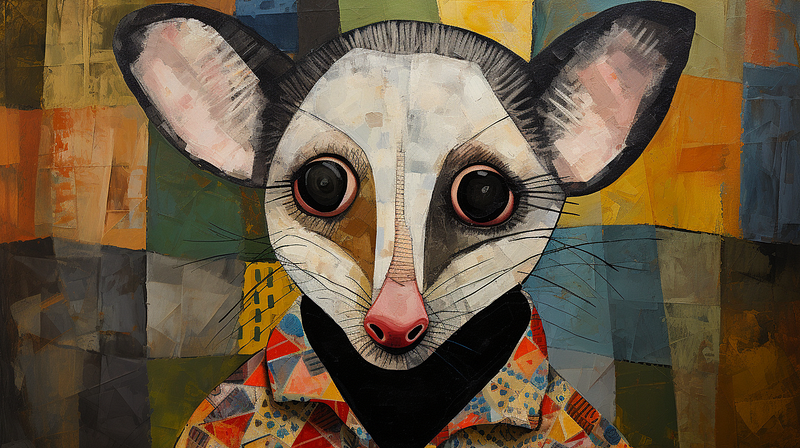
Somewhere in a dark corner of Disneyland is the place they send bad children. It’s full of Greek gods acting out the torments of humanity.
Sisyphus trudges up a mountain, sweating in the shadow of a boulder.
The children shield their eyes, vowing to never again disobey the rules.
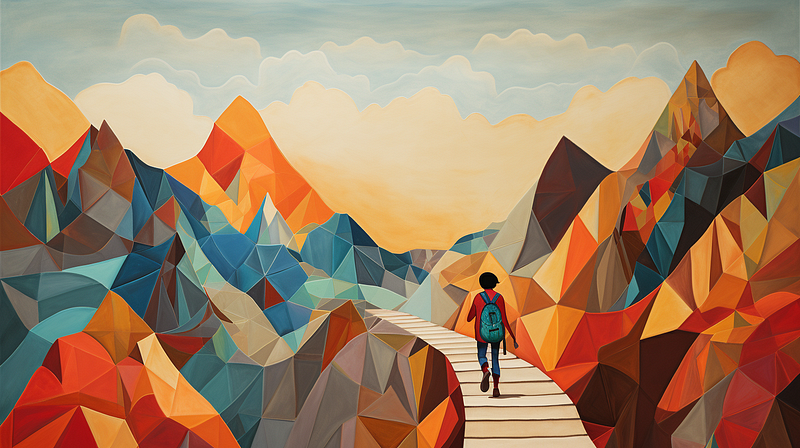
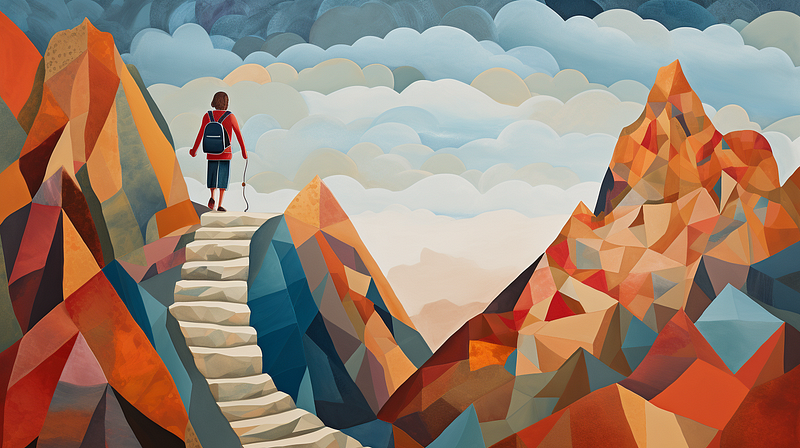
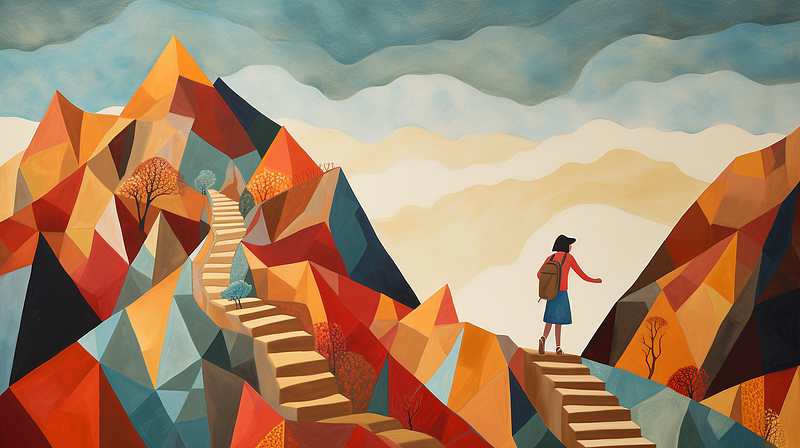
In the real world, neurodivergence has a Sisyphean edge, but instead of a boulder, it’s a backpack we cling to for our very lives.
You climb against a tide of normalcy, shouldering a backpack full of rocks, while all around a breezy flock of athletes stroll along a level promenade with their fashionable leather bags.
You show up at work exhausted. They glance over and realize they’ve already got the upper hand.
The backpack spills out a few rocks.
You feel embarrassed and make an excuse.
“I’m carrying all these rocks for a friend.”
They smile, and you remind yourself it’s impossible to tell if they are sincere.
“I carry a couple of rocks, too.” They open their designer satchel, inviting you to peer inside.
You see a selection of crystals, plus an energy bar.
“You just need the right accessory,” they say. “Change your diet. Develop a bulletproof morning routine!”
They write books about their morning routines in their spare time and make good money.
You wonder how anyone has the energy to maintain a routine, much less write a book about it. It’s all you can do to get to work.
We all shoulder heavy boulders, they say, with a wink.
Then they stand on one foot, dig into a loafer, remove a pebble, and toss it aside with a smile. It lands on your desk.
Lord of the Rocks
I have a dream I will wake up from this Sisyphean nightmare and lay down the load.
I want badly to let go of it, but without it, I don’t feel like myself. Besides, I need the backpack for other things, like my car keys and this set of masks I must don whenever I’m in public.
I have a million voices in my head correcting me. Just be yourself.
I have just as many eyes on me, disapproving. Don’t be weird.
What if myself is weird? What then?
The backpack is worn out and I’m short on cash to buy a fancy satchel.
I traded all my crystals years ago to buy this little house where I feel safe.
Sometimes, I wish Covid would return so I could stay inside without feeling guilty.
I watched the mass insanity when people railed against wearing a tiny, lightweight, cheap but slightly uncomfortable mask, and it opened my eyes.
I’ve been hauling a backpack of heavy rocks every day, and if I complain they tell me I should stop being such a rock magnet. I hate wearing masks, too, but I can’t risk them seeing my actual face.
Literal Backpacks
Neurodivergent folks have developed a network of safe places. In them, you will find us carrying backpacks.
They are called conventions.
CrimeCon, ComicCon, Renaissance Festival, Star Trek Conventions.
Maybe even most Science Fairs. Maybe Disneyland.
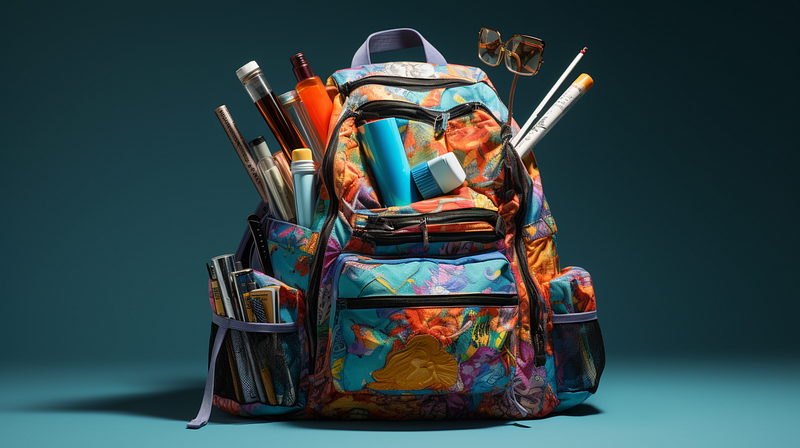
These are places where we can indulge our special interests without being judged. They are places where we can discard our metaphorical backpack of rocks and carry a literal backpack full of handy devices, balms, and trinkets.
We generally prefer backpacks over purses, totes, and wallets because we have sensory issues and we need lots of pockets for our sensory aids.
Noise-canceling earbuds, a laptop, sunglasses, chapstick, some kind of fidget device, maybe a plushie, a bottle of water, and a sweatshirt if it gets too cold. Drugs, medicines, reminders.
Our backpacks help keep us safe.
These festivals are underground but we invite anyone. Neurotypicals sometimes enjoy these caverns of nonconformity.
We serve food they like and sell them art. We wear costumes and entertain them, along with entertaining ourselves. We invite them to give talks.
Minority Report
Disability is a broad category and its universal symptom is the experience of being discriminated against. Invisible disabilities tend to be underreported for a simple reason.
They are invisible.
There are visible disabilities, like using a wheelchair or driving while Black, and invisible ones like having chronic pain or being dyslexic.
And there is a kind of netherworld, where your social handicap may or may not be visible: if you are LGBTQIA+, for example.
Learning disabilities can be visible or invisible — some kids get help, some get taunted, some get ignored, and some get put into gifted programs.
Many children don’t learn up to their potential, especially when they have an invisible disability — but also when they have a common visible disability in the family.
Kids who live with violence, who come from homes with illiterate parents, or who are traumatized by bad teaching or bad parenting.
Kids who experience any kind of discrimination.
Dyslexia affects 1 in 10 kids. Autism officially affects between 2% and 4% of the population but the numbers keep growing. Less extreme cases of autism get missed, and girls and BIPOC are (still) left out.
ADHD and autism usually co-occur. The official number of kids diagnosed with ADHD? Currently, it’s 9.4%.
I’m no mathematician, but if ADHD occurs in 80% of autistics, and nearly 10% of kids have ADHD. Well, hmmmm.
The number of autistic kids has been skyrocketing as we’ve learned to better identify all the ways autism presents, but educational assessment isn’t perfect.
It’s no stretch to say 1 in 4 people is disabled if you consider a new definition: people who experience chronic discrimination.
The Backlash
Every generation has been forced to reinvent feminism. This fact was brilliantly narrated in a recent film, The Disappearance of Shere Hite.
If any woman could’ve succeeded in helping redefine women, it was Shere Hite. She was beautiful, brilliant, fashionable, and industrious. She wrote about a wildly popular topic, sex, that propelled her to become a bestselling author in the 1970s.
The Hite Report is hard to find these days, although it was printed in the millions so it lurks still on the shelves of thrift stores.
It’s not in print anymore, because she was canceled.
Like many women before her, the backlash took her down. Some men hate being told that women are people. They are usually men of power, but sometimes they are just violent men, or sometimes a wave becomes a tsunami in the mainstream media.
In the 1970s, women became visible with “Our Bodies, Ourselves.” In the 1980s, we identified the invisible glass ceiling. In the 1990s, a woman was seen running for Vice President. In the 2000s, thousands of rape kits finally got looked at in police departments across the nation.
#MeToo shined a spotlight on the courageous faces of women and the cowardly faces of men who assaulted and raped them.
Every generation of minorities has to fight for civil rights because at every point there is a backlash from the Forces of Evil.
As we leap forward, the mindless privileged horde protests. Some of them will go so far as to say: “You are not a minority.”
They hate because of fear, and ignorance, and because they, too, might be different.
Every generation has had to reinvent inclusion.
Shedding the Mask
When we express what disability feels like from the inside, we can scrape a layer of paint off the mask. When I say I am autistic, it isn’t out of a desire to gain sympathy.
I want understanding, and I need to stand up and be seen and heard. I want that for myself and for people like me along the spectrum.
When we tell a personal truth, we form links that allow others to be honest.
I’m happy to put down my backpack of rocks, but then again — I’m privileged enough that I can. If I had to go to work each day, I’d have to haul it with me. I can, to some extent, avoid the thing that causes me to wear the mask.
That thing is other people, particularly in the workplace.
Removing a mask seems simple, but we know the price. Oscar Wilde wrote,
“Man is least himself when he talks in his own person. Give him a mask, and he will tell you the truth.”
But what happens when your mask, over time, erases you?
I can avoid other people, but there is a big downside called loneliness.
We who are autistic have used a mask to survive and in the process betrayed our inner selves. We put it on as soon as we realized everyone wanted us to wear it, and we keep wearing it because the fear of social rejection never goes away.
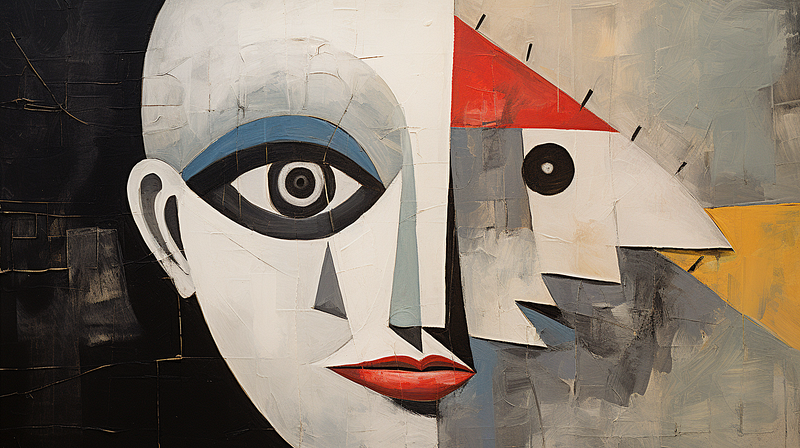
We had no choice. We were only children, forced to choose between truth and survival when we began to learn the power of playground games.
I do believe most people, neurotypical or not, wear masks. As Wilde wrote, it is necessary so we can be brave. The mask of the soldier, the comic, the mother.
The difference is that neurotypical people have the option of choosing a mask that resembles how they feel. They have a whole costume shop of masks they can choose when they get to know themselves.
We wear whatever we could forage and string together with Elmer’s glue, construction paper, and the best reasoning of a child.
When you grow up being told you are wrong from a young age, you take what cover you can find.
The Holidays on Planet Autism
In the spirit of Festivus, it’s time to air some grievances
medium.com
Want an email heads-up for new articles? Click Me.
Want to join Medium? Click Me.
Jean Campbell is based in Hot Springs, Arkansas. She has been writing on Medium for years and recently published her first novel, Down and Out on the Road South, with Wings ePress. She is serializing the first part of her second book, City of Lies, on Substack.


