
You Don’t Look Autistic
Take a look through the AI lens. It’s not a pretty picture.
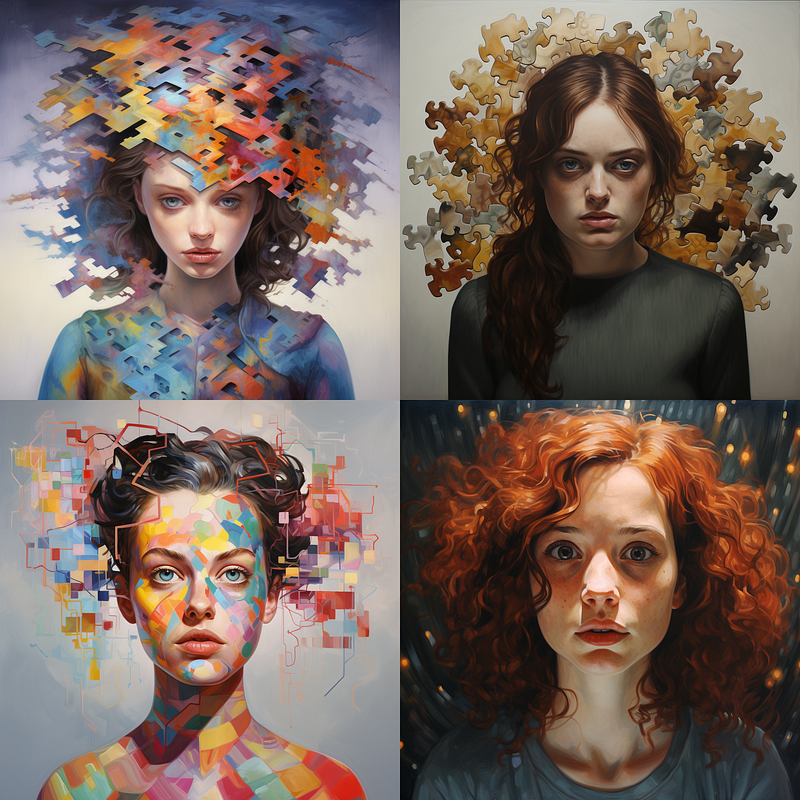
In the old days, 1 in 16 kids diagnosed with autism was female. Twenty years ago, 1 in 4 children with autism was female.
In a recent study funded by NIH, researchers concluded that a sample of 1711 participants revealed the ratio is actually 3:4:
“The true male-to-female ratio appears to be 3:4. Eighty percent of females remain undiagnosed at age 18, which has serious consequences for the mental health of [girls]….” R McCrossin · 2022 · Cited by 23
What is the reality of autism in females? Why not call it even?
AI is a mirror and a portal into society’s dominant narrative, and in the reflection, we can clearly see sexism, racism, and all sorts of baked-in bias.
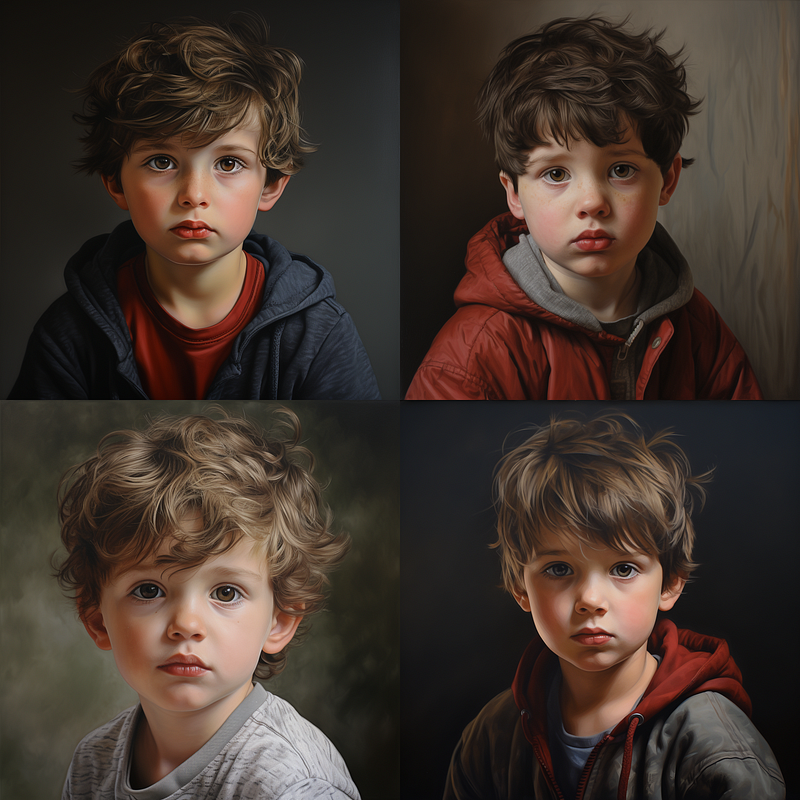
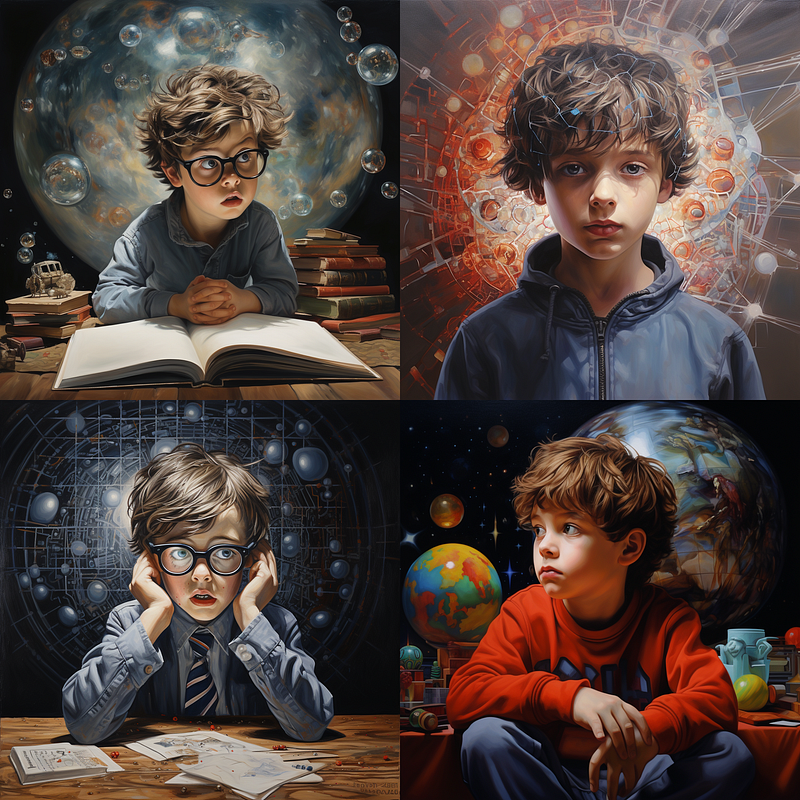
AI images for autism are heavily skewed toward white boys because we’ve been radically misinformed for so many decades about diagnosing girls.
The set of images below is typical.
Becoming Erased While Feeling Exposed
In the early days, researchers believed autistic children were in a hallucinatory state and bad mothering was at fault.
The term autism was coined in 1911, but it wasn’t until the 1940s that it was thought to be a separate condition and not a symptom. The Austrian scientist (and creep) Dr. Asperger called it “autistic psychopathy.”
In the 1960s, Asperger’s was the term for higher IQ autistics, and research began to focus on autism as a neurological deficit and developmental disorder.
Despite this murky picture, Nature has conserved the autistic trait.
A stunning catalog of autistic figures reimagined human thought and contributed to seismic shifts in human progress. Autistic inventors, scientists, philosophers, and writers have made tremendous contributions to culture, knowledge, and technology.
Michaelangelo, Isaac Newton, Charles Darwin, Thomas Jefferson, Marie Curie, Nikoli Tesla, Albert Einstein, Alan Turing, Steve Jobs, and many others are believed to have been autistic.
Among female authors, Mary Shelley (author of Frankenstein), Emily Dickinson, and Emily Bronte had autistic traits. Unfortunately, the biographies of women are usually too incomplete to know for sure if autism was present.
It’s easy to say, “Well, they were geniuses,” but autistic thinking is a particular type of genius. Autistic people have to work much harder to comprehend the world — it’s a survival tactic to process reality.
Autism is currently framed as a disorder, lack, problem, and in some circles, a medical illness. The story is much more complex, and like many of our stories about human behavior, it’s been told from a white male perspective.
The photographic evidence does not lie. AI scrubs and plucks all available images to create composites.
What happens with the simple prompt “autism?”
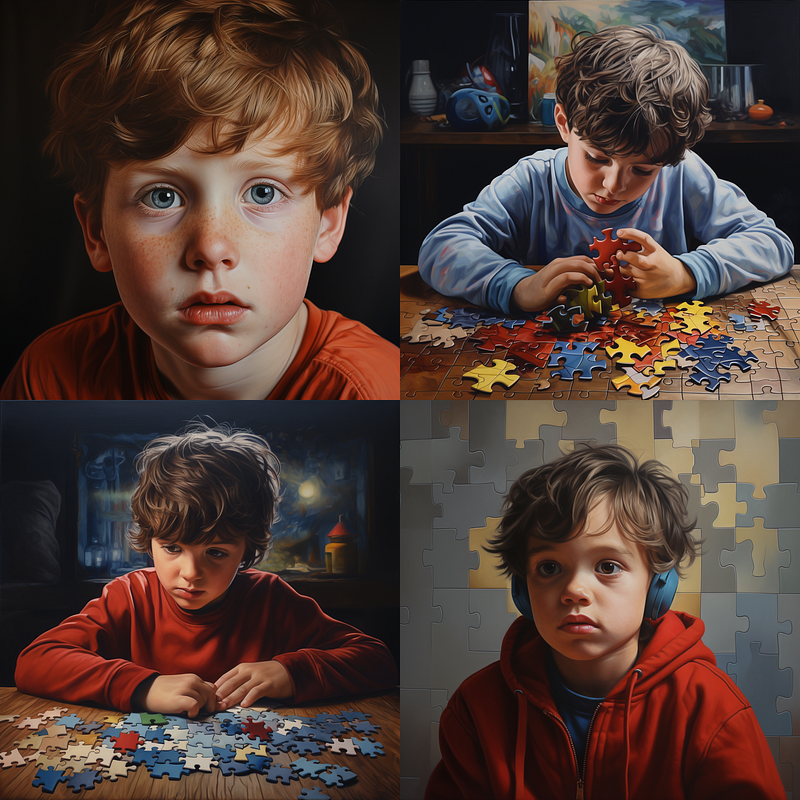
The sad white boy looks mildly disturbed, apparently stymied by putting together a puzzle.
Ironically, many autistic people can excel at puzzles because of a predominantly visual thinking style, and autistic people are happy when they are hyperfocused on a special interest.
It’s only termed a “special interest” if the child is autistic. Neurotypical children have “hobbies.”
Girl, Deleted
The numerical chasm between 1 in 16 and 3 in 4 is staggering. The fallout includes misdiagnosed mental health conditions, suicide, sexual assault, and well-documented failings of the criminal justice system.
It is estimated at least 80% of females under 18 never got a diagnosis. The percentage of autistic women undiagnosed over 18 is likely 90% or more.
Undiagnosed autistic women are getting diagnosed with depression, anxiety, eating disorders, and suicidal ideation. This is a major crisis in psychology, psychiatry, and medicine. All women presenting with mental health diagnoses should be screened for autism.
All women jailed and imprisoned should be screened.
Screening would go a long way to destigmatizing and normalizing this neurodivergent thinking style, instead of pretending only mentally slow boys/geniuses with odd personalities are autistic. It would also help bring some sanity to women like me, who spent a lifetime being told they were “lazy” and “willful.”

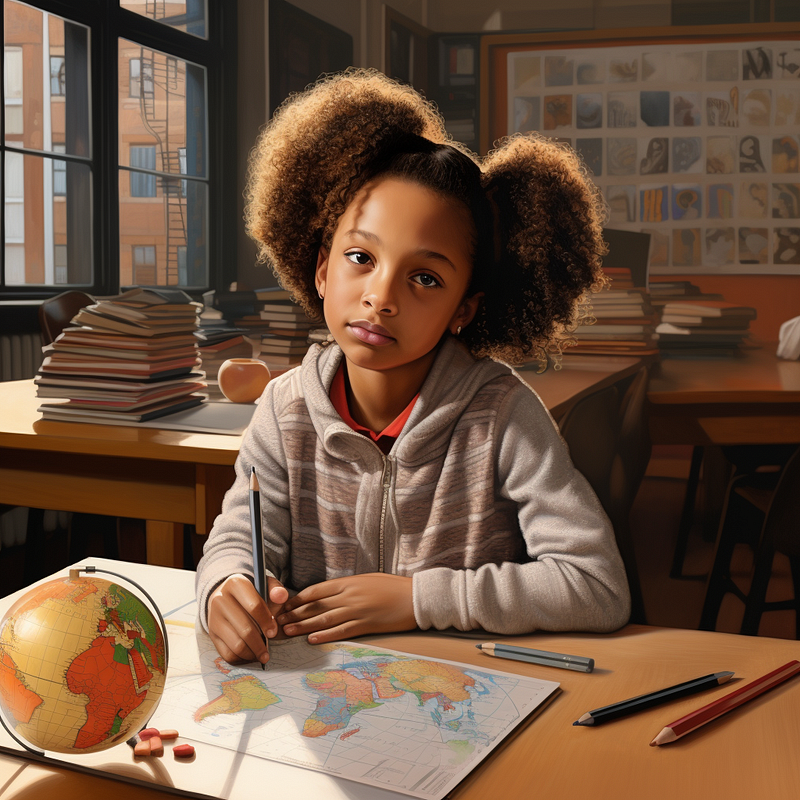
Autistic girls are not all white, but AI thinks they often have red hair and pale skin. Is this the lens of white privilege? Are girls who do get diagnosed usually white?
Until we find parity in diagnostics, we can’t help girls, women, and especially — females of color.
Gaining insight into “spiky profiles” is the magic elixir of correct diagnoses. Learning self-acceptance instead of unrelenting self-help techniques (that do more harm than good) is a balm.
Want to get a diagnosis of autism as a woman? You’ll pay. It’ll be out-of-pocket, anywhere from $700 up to $3,000.
Shopping around is advised.
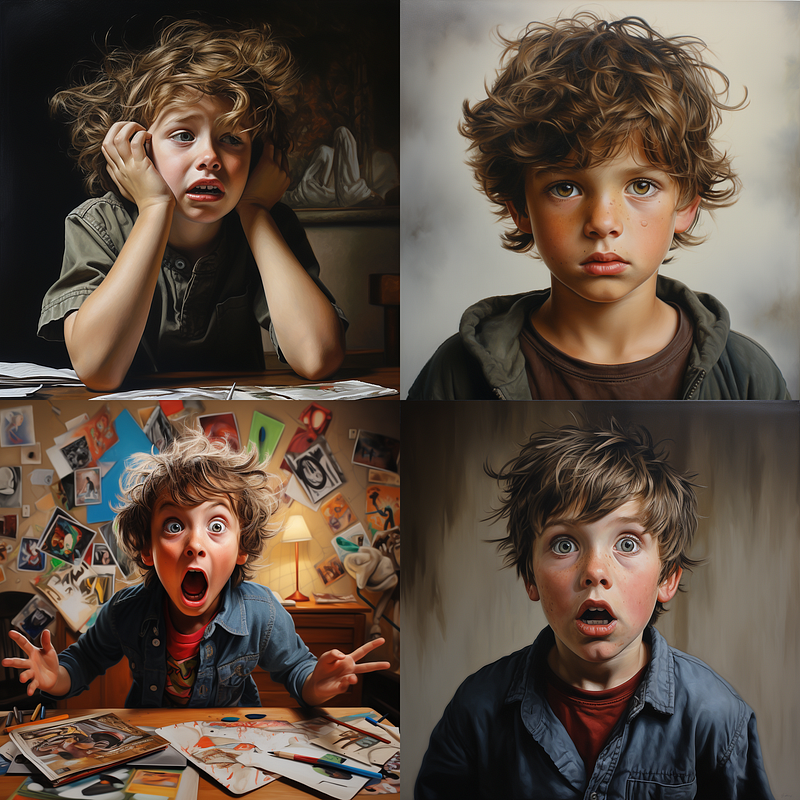
The spectrum isn’t represented in a photograph and many autistic people are well aware of that fact because we’ve been told, “You don’t look autistic.”
Do autistic people look ‘sad’? According to AI, they definitely do.
Being autistic means we mask but we experience the normal range of human emotions. We are either “cold” or “melting down,” and some of that comes from being excluded, blamed, and pigeonholed. Some of it comes from overstimulation. Some of it comes from fatigue and hard work.

Learning While Autistic
Autism is a distinct learning style. Autistic people collect data and use it to make multiple connections between separate and often far-removed data points, in contrast to the dominant (neurotypical) thinking style of moving from A to B to C in a linear pattern.
Think of it as “connecting the dots.” A neurotypical person will move easily and form a pattern, while a neurodivergent person might jump all around and come up with a completely different picture, perhaps one that is more complex but takes much longer to connect.
Autistic people tie disparate, remote pieces of data together. This is where the “out of the box” thinking style comes from.
Autistic people are highly detail-oriented because in order to make sense of the world, they must collect a great deal of information. They need a lot of dots to connect.
The more connections, the better able they are to construct the “big picture” and learn.
Are we surprised autistic kids speak later than their peers?
Children need time to accrue data through observation, and they need enough vocabulary to express complexity. They might not have the energy or critical mass of language to observe, connect, and express.
Autistic people like me ask endless questions in order to amass a database of facts before we can tackle the first basic steps of problem-solving.
In other words, I often have to do exhaustive research before I can understand something simple, but with enough exposure and repetition, I catch up and even exceed my neurotypical peers.
It takes a great deal of effort, but once my database is built it can be a powerful engine to handle many different scenarios and solve not only the original problem but tangential problems.
This can seem savant-like when the autistic person comes up with answers out of nowhere. Edison put this well:
“Genius is 1% inspiration and 99% perspiration.”
Autistics do a lot of invisible perspiring.
Tolstoy in Junior High
In 8th grade, my history teacher gave us a break every Friday with a trivia quiz. Whatever row we sat in was our team.
I missed school one Friday and when I returned on Monday, my row wanted to see if I could answer a “really hard” question.
Coincidentally, that weekend I’d gone to a mixed party (adults and kids). I’d played a board game called Masterpiece with the other kids, and later was hanging around with the adults. A book caught my eye on the bookshelf, the thickest book I’d ever seen.
I took it off the shelf. It was titled War and Peace, by Leo Tolstoy.
When I returned on Monday to class, they asked me the trivia question.
“Who wrote War and Peace?”
I remembered the sight of the book jacket and the cover design.
“Leo Tolstoy!” I said, quickly.
Everyone oohed and aahed. Later, a kid accused me of cheating because someone had told me that was going to be the question.
This is a small example of how my “special interest” (reading and authors) looked like magic. I had a lot of data about writers and authors tucked into my brain, so when one of the biggest books I’d ever laid eyes on came into view, I paid attention.
I also had a photographic memory as a child. I wouldn’t have remembered Tolstoy if someone had said it during a conversation, but I remembered seeing it.
It’s easy to assume this was luck, but I think the more likely explanation was my attention was on books, not people. Attention cannot be in two places at once.
If I’d been paying attention to the party chatter (and learning social skills!) I wouldn’t have been looking at the bookshelf. If I had been with my peers, I wouldn’t have been in that situation.
It’s a radically different way of interacting with the world, so is it any surprise autistic children struggle with learning the neurotypical language?

Because so many females and racial minorities have been left out of the conversation, we’ve gotten autism wrong.
This diagnostic error goes way beyond numbers and to the heart of what neurodivergence means. Autism is pathologized because it’s not ‘normal.’ Neither are women. Neither are racial minorities. Neither are immigrants.
If being female were ‘normal’ maybe some of our US Presidents would be female, instead of the current pathetic statistic of zero.
Because neurotypical people dominate institutions and social life, including educational and medical establishments, we got autism wrong.
Because racial minorities got left out, we got autism wrong.
Because autistic kids got labeled gifted or mentally retarded, we got autism wrong.
Maybe the funhouse mirror of AI will be a catalyst to talk about distortion, because as the old camera ad used to say, “Image is everything.”
In reality, being seen without the distortion is everything.
Want an email heads-up for new articles? Click Me.
Want to join Medium? Click Me.
Jean Campbell is based in Hot Springs, Arkansas. She has been writing on Medium for years and recently published her first novel, Down and Out on the Road South, with Wings ePress. She is serializing the first part of her second book, City of Lies, on Substack.


