
The Words I am Currently Reading
I’ve decided to add that “currently reading” thing to my signature block
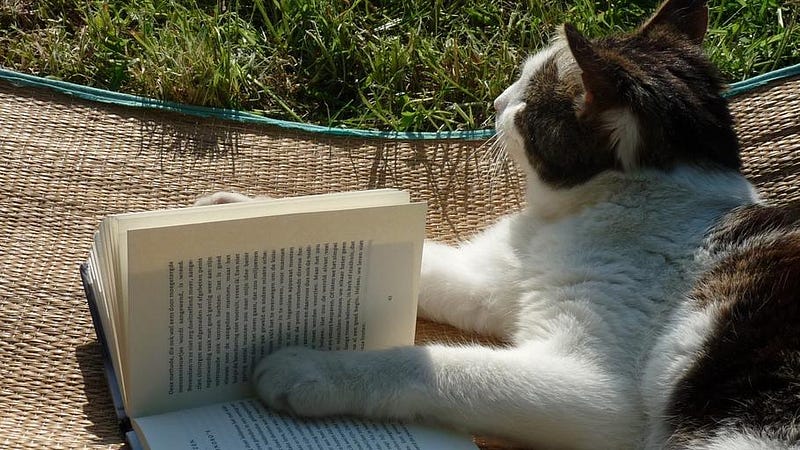
Where I work, it is fashionable to add a “currently reading” list of 2–3 books to a user’s signature block. It is a clever idea, and I enjoy getting — at times — to learn a little bit about my colleagues’ interests. I say “at times” because some lists are way too telling. If you are currently reading “How to Evade Capture By Colombian Drug Cartels”, “Is that Wound Infected? Three Easy Steps!””, and “Rain Forest Remedies for Large-Caliber Gunshot Wounds” you have — or will soon make — a series of very poor life decisions.
Conversely, you can also get people with exceptionally bland lists that reveal nothing about the sender. “Car”, “Re-usable Grocery Bag”, and “4.5 Pounds of Head Cheese”? Really? Are those books? Or did you just get back from the supermarket?
I could also go for some sort of icon that indicates that a neutral third-party has verified the “currently reading” list. I find it hard to believe that this is a real list for someone:
- “Origins of the Bangladesh Army: 1634–2009” by Sabir Abdus Samee
- “Handbook of Borehole Acoustics and Rock Physics for Reservoir Characterization” by Vimal Saxena
- “Cyanobactereia Biotechnology” by Rev. Nerd Nerdington
So far, I have managed to stave off the desire to add a list that includes “Dash’s Belly Ache: a Book for Children Who Can’t or Won’t Poop” by Wendy Hayden. (it is part of the “Dash Learns Life Skills Series”. I can only imagine what else is on there, but I hope that “Dash’s Big Meal: Dash Learns Modern Cannibal Recipes: forward by Paula Dean” makes the cut.) So…
Currently reading
So here is my list. However, in order to dodge some of the pitfalls I laid out above, I’ll first introduce the book, possibly liberally cutting-and-pasting from Wikipedia. Then, I’ll give two reasons as to why I am reading that particular book. One is satirical and/or humorous. The other is for real. Try to guess which is which!
My wife, e’er the killjoy, thinks that this is a fool’s errand — just a snapshot in time. But…at least two of these books should have lasting impacts on me. It remains to be seen if the third, a murder mystery about an immigrant who was mutilated after being killed, will have a similar effect. Also, these books are long. This post will be just as relevant when I turn 50 in a few years.
Therefore, my list:
- “When the Light of the World was Subdued, Our Songs Came Through: a Norton Anthology of Native Nations Poetry” edited by Joy Harjo
- “The Spirit of Laws” by Charles-Louis de Secondat baron de Montesquieu
- “The Alienist” by Caleb Carr
I can honestly say that I am currently reading all three.
“When the Light of the World was Subdued, Our Songs Came Through: a Norton Anthology of Native Nations Poetry” edited by Joy Harjo
No real mystery here. This is a collection of poems — an “anthology”, if you will — of Native poetry. It was edited by, you guessed it, Joy Harjo. The breadth of the collection is impressive. The big ol’ book covers centuries of poetry over various geographic regions (one of the regions is NOT titled “That Place that Refers to ‘Soda’ as “Pop’”). I just started out — it seemed like a solid pick up right before spending a few days reading, writing, and avoiding rattlesnakes with the family at a secluded mountain cabin in West Virginia. So far, so good. I won’t quote any poems here out of concern for copyright issues. (That’s not a joke — I honestly don’t know if there are any law-talkin’ hiccups.)
Why this book (first version)
Native Americans are cool! Tanto was a Native American, and he was pretty cool. He’d pal around and help the Lone Ranger do lone ranger-ish things. Like, put on his mask. And Velcro his boots. (I guess that makes him less of a “lone” ranger and more of a “friends with benefits” ranger. But I digress.) They must have done good things, like help Frodo blow up the Death Star, because Loney wore a white hat.
A plucky group of Native Americans — including the last member of the Mohican tribe — even managed to spice up a James Fenimore Cooper novel. In the middle of a 15-page run-on sentence about changing a door handle on the Kentucky frontier in 1743, one of them would up and kill a French soldier in a delightfully gory manner.
And there is more! Pocahontas seduced a white guy. Geronimo was such a daring bad ass that an entire generation of youth would yell his name before trying to jump over a large canyon on a bike with a rusty chain.
All of these examples are 100000000000% true and not at all stereotypical. I want to learn more. Especially how Tanto helped Frodo with that whole Death Star thing. Didn’t they already blow that up at the end of poem 4?
Why this book (second version)
Native poetry is cool — much more cool than some hack Disney mash up where Sitting Bull helps the USS Enterprise broker a peace between Romulus and Krypton. Think about this real life mash up:
One of the poets is a Native member of the Cherokee tribe who fought for the South during the Civil War. Shortly before he was killed in battle, he wrote the poem in question to a woman back home. She would later marry the soldier’s older brother.
I tried to think of an additional reason for why I wanted to read this, but I really can’t: that’s just one example of an exceptional and real story contained herein.
“The Spirit of Laws” by Charles-Louis de Secondat baron de Montesquieu
The Baron is one of the great thinkers of the enlightenment. Along with such notables as Immanuel U-Kant-Touch-This, John Its-a-Locke, and Michael Jurassic-Park-Made-More-$$$-Than-All-Y’all-Crichton, their works form the backbone of modern Western political thought. In this whopper of a tome, Montesquieu starts off with the laws of nature and paddles upstream for two volumes until he proves, beyond a shadow of a doubt, that In-and-Out Burger is tragically overrated.
Why this book (first version)
I like laws. Spirits seem pretty cool as well. I just wish that spirits would talk to me about laws. My legal seances are awfully dry — I’m the only one who talks about tort reform when the candles are lit. It seems to me that a book all about the Spirit of laws would be helpful in opening up the proverbial floor for debate. The damn thing is 700 pages stretched over two volumes. “How to” books/articles should only exceed six pages if they involve some sort of nuclear fusion. I’m a good chunk into this train wreck and I am still no closer to mystically conversing with Themis, Daniel Webster, or even a dead NFL referee.
Here’s a tip for the sake of brevity: don’t talk to me about what I already know. So far, Chuck the boring de Whocaresquieu has spent a ton of time on defining laws and the types of government. As a father, I adhere to one type of government — dadpotism — and know all I need to know about laws. Laws are nothing more than if/then constructs that are hopefully punitive enough to prevent my kids from doing something I don’t want them to do. “If you re-insulate the attic, clean out all of the air ducts, and plunge the toilet that has been overflowing for the last three days THEN you can read another graphic novel.
(Next on Oldest’s list? “Wolverine’s Bottom Itching: a Book for Comic Book Heroes Who Can’t or Won’t Clean Up Properly”, part of the X-Men Learn Life Skills Series. Admittedly, I kind of get the appeal. On one hand, Wolverine heals quickly. On the other, that’s still an awful lot of blood to temporarily fix a problem that could be conquered by better wiping habits.)
Nonetheless, I hope to get through this section and be chatting up dead litigators by Volume II of the book.
Why this book (second version)
I actually enjoy reading dense philosophy. In college, I came within 4 ounces of caring enough about it to tack on a phil. minor. However, I decided to get a job and earn money rather than pay money to argue with someone over whether or not my recollection of the taste of an overripe peach was an impression or a memory, and whether or not I had a piori knowledge of stone fruit. I’ve read this — and many other like it — before. The joy of comprehensive tomes is the ability to read and re-read with certain other angles in mind. This time ‘round, as a newly minted educator, I’m more focused on social/societal impacts and governmental responsibilities.
If nothing else, I’d like to head into the academic year with a heaping helping of logical thought on my noodle. I’ve only scratched the surface on educational perennialism, but parts of it seem appealing (I reserve the right to change my mind). I figure that the ability to read, digest, and critically think on complex issues is one of those skills that won’t get stale (like my humor).
“The Alienist” by Caleb Carr
This novel is a crime drama set in 1899 New York. Its main characters are a drunk, a quack, a dead immigrant and — for some reason — Teddy Roosevelt. It is the first in a series, but — so far — it seems like a good series. One that you can really get into for a period of time (like Dash Learns Life Skills) and not one of those never-ending drivel-fests that feature Elvish case law studies (like the Lord of the Rings). I’m also a fan of historical fiction, and this fits the bill.
Why this book (first version)
This book came out in 1994, but I only recently learned that it is now a TV show. If a TV executive thinks it is good enough to regurgitate the original content with superfluous “updates”, well…that is good enough for me! I figure that binge-watching the series will be a fitting reward for trudging through actual literature. Do you remember when Michael Bay rebooted “Hamlet” to change a scene to have a cyber-Hamlet blast a half-alien Polonius — who was hidden behind a cloaking device — in “Hamlet: The Danish Ghost Wars”? It was perfection.
The book also purports to be about police reform, led by Teddy Roosevelt. That Teddy Roosevelt. He of “walk like a boss and carry a high caliber handgun” fame. During those sections of the book, the body count would certainly rise like my cholesterol (the bad kind) after four hours in a Golden Corral.
Why this book (second version)
As I sit here reading and writing on the side of a mountain top, molested only by the sounds of frolicking deer who are smart enough to stay on the happy side of the “no hunting” signs, I am also facing down a trip to New York City in a few weeks. I’ve been there plenty of times before for work (although this time is to take a family trip) and know enough to know that it is a big city.
I like small cities. Baltimore is more my style. It is a few square blocks of well-policed tourist areas, chain restaurants, and two publicly funded professional-level sports stadiums. Marylanders do not know the math behind state lotteries. I have read that there are other parts of the city that are less well-to-do. They do not have moderately interesting architecture, large fish tanks, or Mr. Trash Wheel.Therefore, I have no interest.
Mr. Trash Wheel is a moored vessel that removes trash from the mouth of the Jones Falls river Baltimore’ Inner Harbor. Rubbish from the streets of Baltimore is flushed into storm drains that empty into the Jones Falls river.
Nonetheless, what better way to get in a New York state of mind than to read about real people (Jacob Riis, T-rizzle, etc.) and the hunt for a vicious serial killer in the turn-of-the-century Big Apple?
There you have it: what I am currently reading
For the near future, during my downtime, I’ll be alternating between poetry, philosophy, and a race to catch a killer who doesn’t like young, male prostitutes. I will try to update this as necessary, probably in the “comments” section. In the meantime, feel free to leave your list. Or make recommendations. Make sure that any recommendation 1) doesn’t suck and 2) is about what it says it is about.
If your book is “How to Conquer Rome”, I damn well better be prepared to lead an army down the Via del Corso by the end. I am not looking for some tired allegory about getting over major life hurdles like eating right or exercising. There are seven hills of Rome (Quirinal, Esquiline, Capitoline, etc). I’m looking for a read out on the strategic value of each. I have no interest in any information on the nutritional values of the seven hills of fried chicken (Cajun, Korean, Hawaiian, Kentucky, etc).
For more of my work on Medium, please see: