avatarPaula Bonilla

Free AI web copilot to create summaries, insights and extended knowledge, download it at here

2413

Abstract

mons</figcaption></figure><p id="5e8a">Breslau forged a lifelong relationship with another student, Madeleine Zillhardt. Her lover lived with her, wrote about her, and inherited her estate. A Paris street was named after them.</p><h2 id="d1ec">Indulging Our Curiosity</h2><p id="3f74">Zillhardt, with her full lips and tender air, was a frequent model of Breslau’s. In <i>La Toilette </i>(1898), she fixes her golden hair in front of a mirror. But instead of gazing at herself, she seems to watch us looking at her, well aware of our curiosity and choosing to indulge it.</p><p id="5084">In <i>Paresse-matinale </i>(c. 1900) Breslau shows an even more intimate side of a subject who might be Zillhardt. More than mere “morning laziness,” the pose shows an almost aching intimacy. There is no self-conscious attitude here. The arm flung across the young woman’s eyes speaks of trust and ease.</p><figure id="325b"><img src="https://cdn-images-1.readmedium.com/v2/resize:fit:800/1*65F86fA5kBjO2ptvDkqxjA.jpeg"><figcaption>Louise Breslau, Paresse-matinale, c. 1900, public domain, Wikimedia Commons</figcaption></figure><p id="5504">Louise Breslau said the choice of pose was all-important. So, too, was finding an emotional connection between artist and model, “a current of sympathy.”</p><blockquote id="c60f"><p>“A current of sympathy with [the model] will help [the artist] to create this supreme resemblance, which will be like a double existence. The work of art, as Goethe says, will be closer to the truth the further it is from reality.” — Louise Breslau, quoted in <i>Louise C. Breslau, </i>Arsène Alexandre, 1928, p. 50, my translation.</p></blockquote><p id="f51f">To that end, Breslau avoided a seamless illusion of reality. She strove to show a deeper truth.</p><h2 id="f70a">Tranquility with a Twist</h2><p id="9335">Breslau's scenes of domestic tranquility have a twist. In her <i>Tea at Five </i>(1883), home and hearth mean melancholy. A woman, perhaps herself, is backlit by the fading light, her face shadowed over.</p><figure id="17f3"><img src="https://cdn-images-1.readmedium.com/v2/resize:fit:800/1*GZe4lS9kAlF-pY3MR7ik4Q.jpeg"><figcaption>Louise Breslau, Tea at Five, 1883, public domain, Wikimedia Commons</figcaption></figure><p id="2259">Working in a field where women artists were largely invisible, Breslau credited the open-mindedness of Gilded Age Paris for fostering her success. She

Options

called the City of Lights “a motherland on this earth” for women like her.</p><blockquote id="2d65"><p>“Lucky Frenchwomen….one has to love this country! It has proven that the woman artist has a motherland on this earth.” — Louise Breslau, c. 1925, quoted in <i>Women Artists in Paris: 1850–1900, </i>2017, p. 16.</p></blockquote><p id="ba71">Even as Breslau struggled for breath in her lifelong bouts of asthma, she strove to make her way in a man’s world. It wasn’t until 1890 that she could join the Salon de la Société Nationale des Beaux-Arts after it had finally opened its doors to women.</p><h2 id="2b07">A Thinking Woman</h2><p id="165b">Not surprisingly, Breslau’s focus on her calling prompted her to paint other artists, including those working in other genres: Mezzo-soprano singer Bergliot Ibsen (1889) gazes straight at the viewer, a thinking woman rather than a showpiece.</p><figure id="9db5"><img src="https://cdn-images-1.readmedium.com/v2/resize:fit:800/1*xjREhBcHEVBFNj_cy_cUlQ.jpeg"><figcaption>Louise Breslau, Portrait of Bergliot Ibsen, 1889, public domain, Wikimedia Commons</figcaption></figure><p id="fcf7">A portrait of English poet Henry Davison (1903), strikes an equally bold note. His elongated figure, casual pose, and ironic expression suggest he is cocksure about his place in the established canon.</p><figure id="d154"><img src="https://cdn-images-1.readmedium.com/v2/resize:fit:800/1*LQkMn5_iOxvGNaLHI4rghA.jpeg"><figcaption>Louise Breslau, Portrait of Henry Davison, c. 1903, public domain, Wikimedia Commons</figcaption></figure><p id="3aa6">Louise Breslau, an immigrant artist with a skill for finding the truth in people, accepted the Légion d’Honneur medal in 1901, the first woman who was not French to receive the award.</p><figure id="06f6"><img src="https://cdn-images-1.readmedium.com/v2/resize:fit:800/1*xUIHWRy4ceg2pd-KLwpjXg.jpeg"><figcaption>Louise Breslau, self-portrait c. 1886, public domain, Wikimedia Commons</figcaption></figure><p id="d9c9">In an 1886 self-portrait, muted and warm, she turns her face away. Others’ faces, windows opening onto private battles of the heart, mattered most to her. Because she knew her own worth, she shows us ours.</p><p id="2bfa"><i>Read about a woman artist who <a href="https://readmedium.com/the-woman-made-an-impression-89689fd6c31e?sk=e2c143d00f161b4f16037088e4cb71d9">made an impression.</a></i></p></article></body>

The Woman Knew Her Worth: Artist Louise Breslau

An immigrant found breathing room in Paris as a portraitist with an empathetic eye for intimate connections.
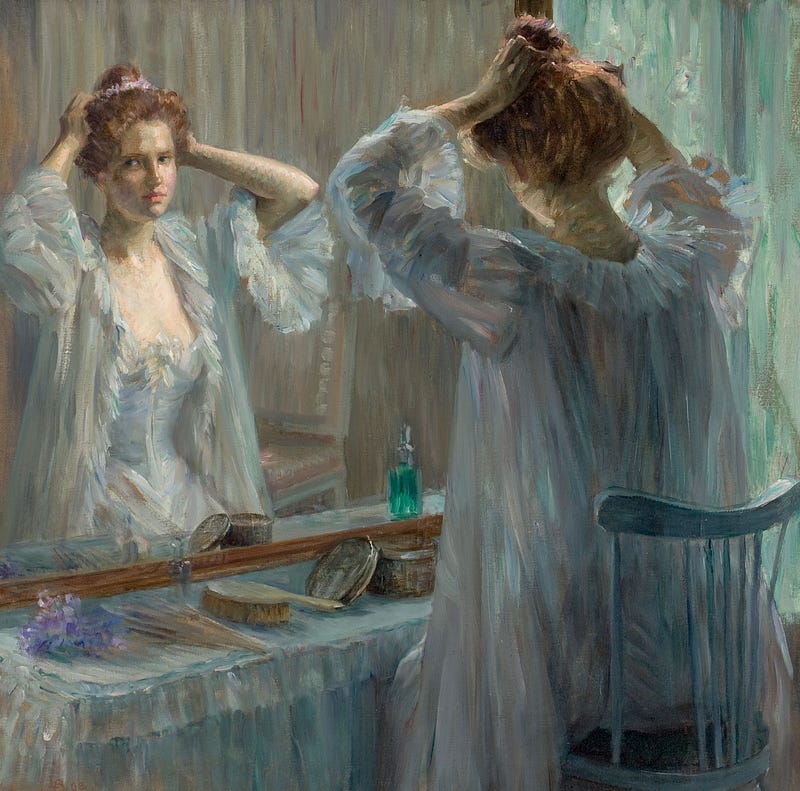
Louise Breslau, La Toilette, 1898, public domain, Wikimedia Commons

A portrait painter who exposed connections between souls, German-born Swiss painter and pastelist Louise Catherine Breslau (1856–1927) evolved from the asthma-ridden daughter of a Jewish doctor to a self-supporting artist in demand during a time when women artists were discounted. As a struggling artist and a friend to other female artists, the woman knew her worth.

Her Rival Vowed to Surpass Her

When she arrived in Paris, chaperoned by her mother, Louise Breslau was skinny, with deep-set eyes and a downturned mouth that said life had been hard and was expected to continue that way. Fellow students at the Académie Julian drew her caricature, scowling with fists on hips, but they respected her. Classmate Marie Bashkirtseff envied her and vowed to surpass her.
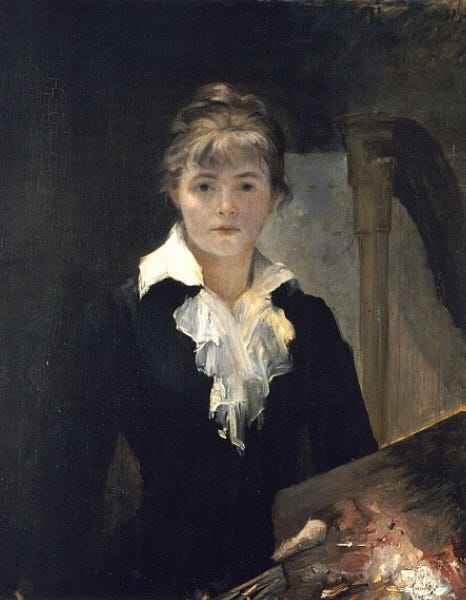
Marie Bashkirtseff, Self-Portrait with Palette (1880), public domain, Wikimedia Commons

In fact, her name crops up obsessively in Bashkirtseff’s diary entries: “I fear Breslau most.”

“I fear Breslau most….She will attract attention….I can’t forgive myself for not knowing as much as Breslau.” — Marie Bashkirtseff, November 15 and 16, 1877, The Journal of Marie Bashkirtseff, vol. II, Lust for Glory, 2012, Katherine Kernberger, translator.

Breslau did attract attention, exhibiting at the famed Paris Salon in 1879. The win was a springboard to success. She soon opened her own studio, making a living from portrait painting. These commissions financed her own inventive compositions that showed how ordinary women lived and loved.
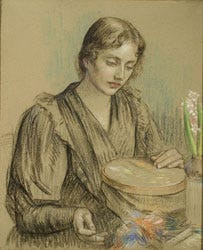
Louise Breslau, Portrait of Madeleine Zillhardt, (c. 1895), public domain, Wikimedia Commons

Breslau forged a lifelong relationship with another student, Madeleine Zillhardt. Her lover lived with her, wrote about her, and inherited her estate. A Paris street was named after them.

Indulging Our Curiosity

Zillhardt, with her full lips and tender air, was a frequent model of Breslau’s. In La Toilette (1898), she fixes her golden hair in front of a mirror. But instead of gazing at herself, she seems to watch us looking at her, well aware of our curiosity and choosing to indulge it.

In Paresse-matinale (c. 1900) Breslau shows an even more intimate side of a subject who might be Zillhardt. More than mere “morning laziness,” the pose shows an almost aching intimacy. There is no self-conscious attitude here. The arm flung across the young woman’s eyes speaks of trust and ease.
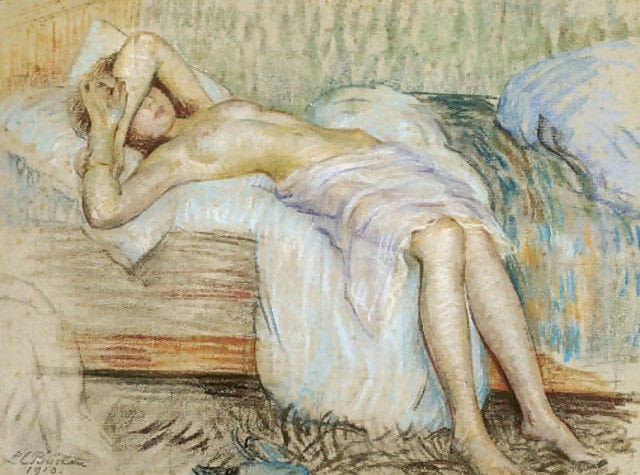
Louise Breslau, Paresse-matinale, c. 1900, public domain, Wikimedia Commons

Louise Breslau said the choice of pose was all-important. So, too, was finding an emotional connection between artist and model, “a current of sympathy.”

“A current of sympathy with [the model] will help [the artist] to create this supreme resemblance, which will be like a double existence. The work of art, as Goethe says, will be closer to the truth the further it is from reality.” — Louise Breslau, quoted in Louise C. Breslau, Arsène Alexandre, 1928, p. 50, my translation.

To that end, Breslau avoided a seamless illusion of reality. She strove to show a deeper truth.

Tranquility with a Twist

Breslau's scenes of domestic tranquility have a twist. In her Tea at Five (1883), home and hearth mean melancholy. A woman, perhaps herself, is backlit by the fading light, her face shadowed over.
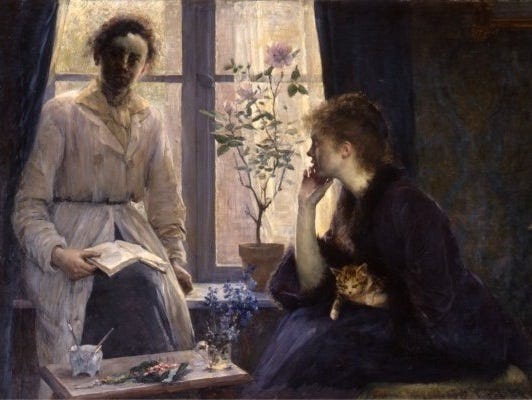
Louise Breslau, Tea at Five, 1883, public domain, Wikimedia Commons

Working in a field where women artists were largely invisible, Breslau credited the open-mindedness of Gilded Age Paris for fostering her success. She called the City of Lights “a motherland on this earth” for women like her.

“Lucky Frenchwomen….one has to love this country! It has proven that the woman artist has a motherland on this earth.” — Louise Breslau, c. 1925, quoted in Women Artists in Paris: 1850–1900, 2017, p. 16.

Even as Breslau struggled for breath in her lifelong bouts of asthma, she strove to make her way in a man’s world. It wasn’t until 1890 that she could join the Salon de la Société Nationale des Beaux-Arts after it had finally opened its doors to women.

A Thinking Woman

Not surprisingly, Breslau’s focus on her calling prompted her to paint other artists, including those working in other genres: Mezzo-soprano singer Bergliot Ibsen (1889) gazes straight at the viewer, a thinking woman rather than a showpiece.
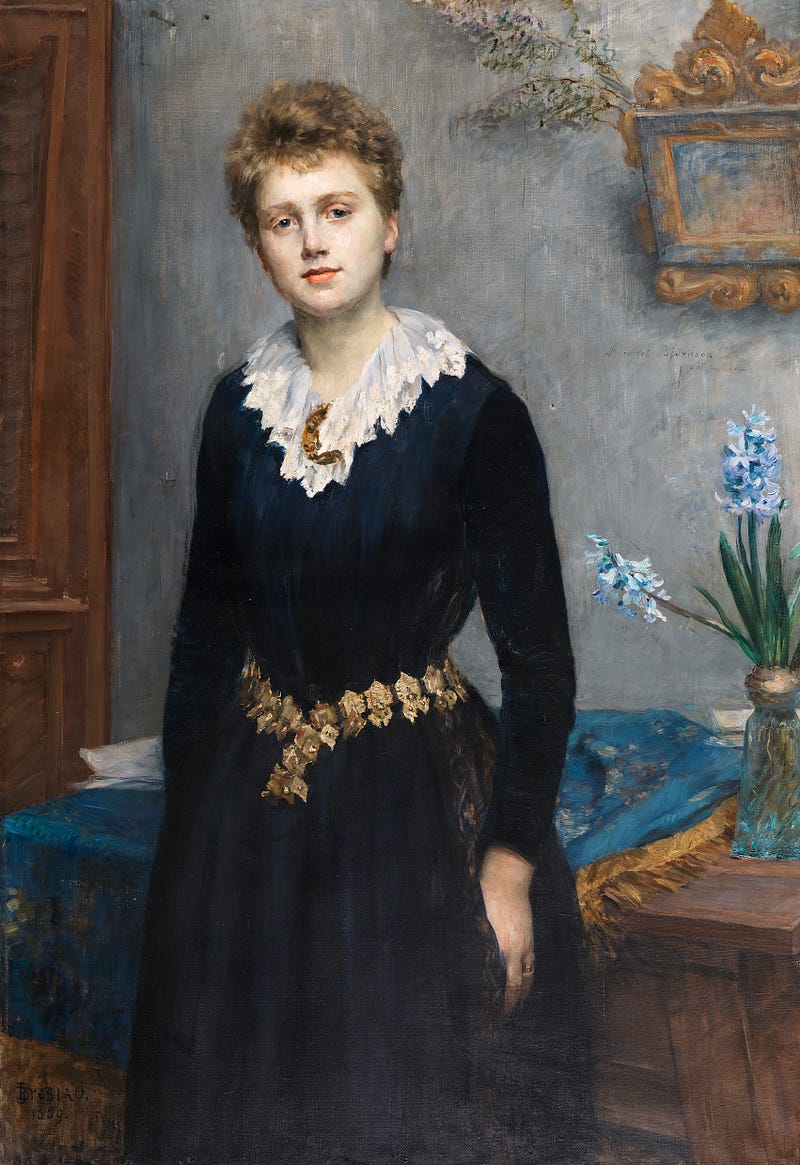
Louise Breslau, Portrait of Bergliot Ibsen, 1889, public domain, Wikimedia Commons

A portrait of English poet Henry Davison (1903), strikes an equally bold note. His elongated figure, casual pose, and ironic expression suggest he is cocksure about his place in the established canon.
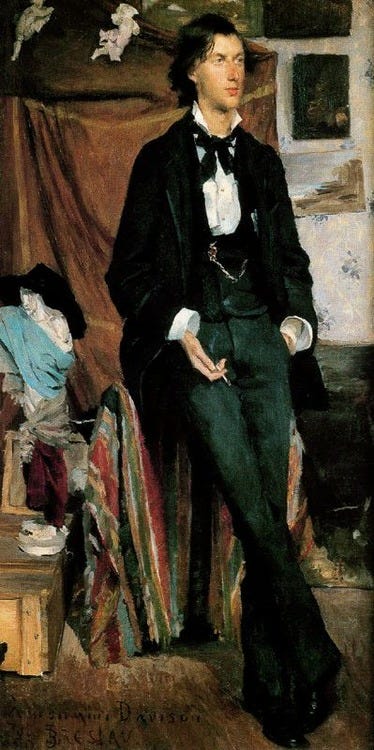
Louise Breslau, Portrait of Henry Davison, c. 1903, public domain, Wikimedia Commons

Louise Breslau, an immigrant artist with a skill for finding the truth in people, accepted the Légion d’Honneur medal in 1901, the first woman who was not French to receive the award.
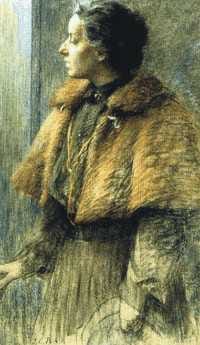
Louise Breslau, self-portrait c. 1886, public domain, Wikimedia Commons

In an 1886 self-portrait, muted and warm, she turns her face away. Others’ faces, windows opening onto private battles of the heart, mattered most to her. Because she knew her own worth, she shows us ours.

Read about a woman artist who made an impression.

Art
Artist
Feminism
Painters
Creativity
Recommended from ReadMedium