
The Weirdness of the Meer
Strange things in and around the Harlem Meer
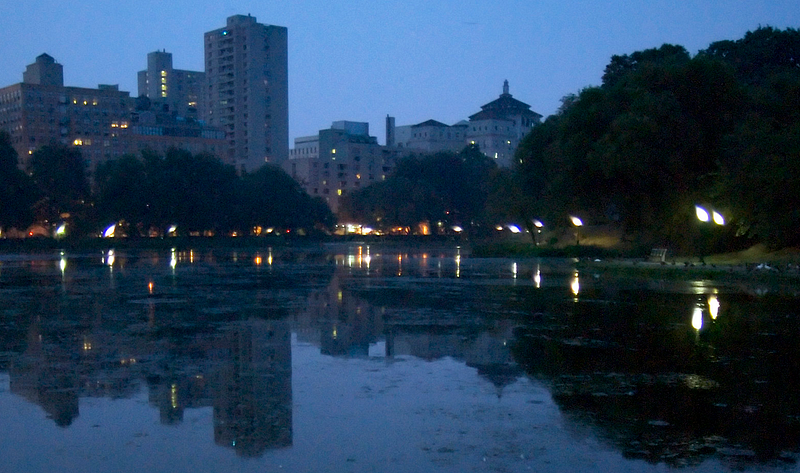
I live two blocks from Central Park and just inside our end of the park is the Harlem Meer. In archaic Dutch, a meer is a small lake or large pond. In 18 years, I’ve experienced some very strange, unsettling and wonderful things here.
The day it rained a turtle
It was really hot that day and I was walking along in front of the city-subsidized hotel for homeless families, directly across the street from Central Park, when I heard a sharp thud behind me.
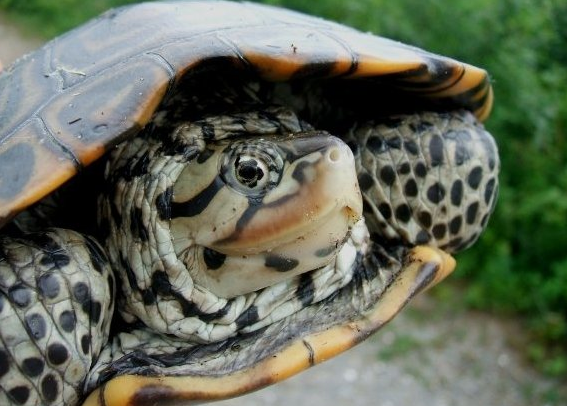
There was a not-small box turtle lying on his back on the sidewalk. He must have either managed to crawl out of a window or got tossed out (yeah, I know, but it’s that kind of world). He was lying there on his back and his shell had cracked but he was alive, wiggling his legs around. I didn’t want to touch the poor thing but a couple of kids were poking at him with their feet. It was getting to the point where they were going to start kicking the injured turtle around like a lopsided soccer ball so I had to take action.
I scooped the little guy up, carefully holding him so I didn’t jar his broken shell and walked back across the street to the Dana Discovery Center in the park. It’s this Hansel and Gretel type house next to the Harlem Meer where I figured I could find someone to help.
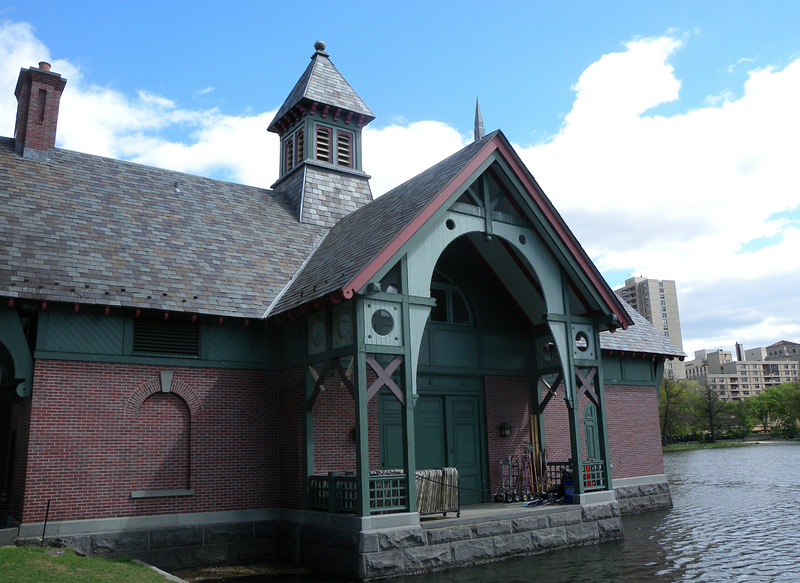
I was in luck. There were a couple of Discovery Center staff members just closing up for the day. I showed them the cracked turtle. They shook their heads, saying that unless the injured turtle had been found within the park, there wasn’t anything they could do. Then they just stood there looking at me. I’m a little slow on the uptake but then I got it and changed my story.
Once the story was that I’d found the injured turtle next to the Meer, they called for someone to come and take the poor little guy to whatever facility exists for injured wildlife found in the park. I hope he made it.
Scuba Divers
I’ve walked around the Meer countless times in every type of weather. And, yet, every so often I’ll see something in the Meer that I’ve never seen before.
Yesterday it was scuba divers.
Now, we haven’t had much of a winter here this year. I think we’ve had enough snow to cover the ground twice and both times it was gone within a day (dammit!). But the water in the Meer at the end of February is cold. I’d seen the divers from the other side of the Meer when I entered the park and that startled me, seeing guys in wet suits with tanks on their backs in the water.
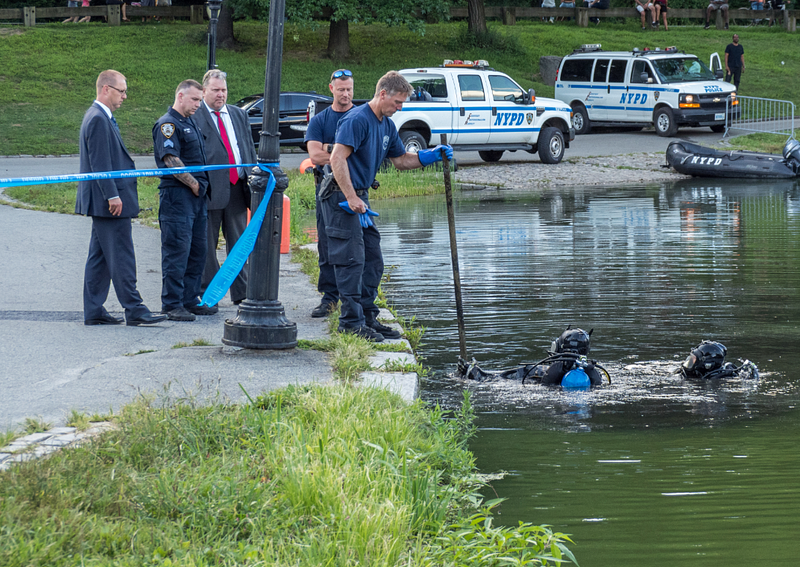
I decided that taking pictures of New York State Troopers doing their scuba training might not be a wise move. Law enforcement officers (LEO) are a pretty humorless crew who really can get their knickers twisted about the dumbest things. Better to pass on the photo op. Instead, I found this photo of the NYPD doing their scuba training in the Meer last summer. Apparently, it’s a thing.
Ohhh, baby, baby it’s a wild world
The Meer itself is 11 acres surrounded by tall stands of cattails and other wetland grasses as well as a wide variety of other vegetation. There’s a path that winds all the way around the Meer with benches here and there as well as willows, weeping willows, alders, maples, oaks, and other trees.
Fun fact: there exists a database containing the species and location of every tree in the 800+ acres of Central Park. In case you’re wondering there are 23,000 trees there.
There is also an astonishing array of wildlife within the park and a lot of it calls the Meer home.
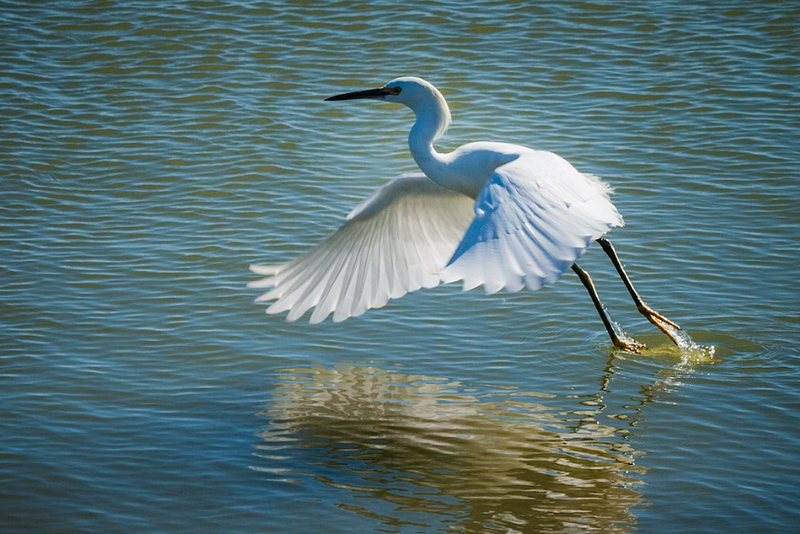
There are the usual suspects; gulls, Mallard ducks, Canada geese, squirrels, as well as pigeons and rats (of course). But for the past three springs, we get a breathtakingly beautiful pair of snowy egrets who glide low across the water, back and forth, until they find exactly the right place to wade around and have a snack. They were especially wonderful to see as they’d glide back and forth behind the musicians at a free bluegrass concert in the park a couple of years ago.
I was blown away one evening walking by the Meer when two large golden carp swam up from the brown depths and then flicked back down, disappearing. My guess is that someone dumped their goldfish in the Meer and they seem to have thrived.
We’ve also had swans come and go over the years as well as various species of herons and other wading birds. And if one bothers to look up from time to time there are often redtail hawks gliding around up there looking for dinner.
Don’t feed the wildlife!
There have always been a respectable number of turtles in the Meer. They sun themselves on rocks over by Little Duck Island, an artificial “island” created in 1989 meant to “bring a touch of Lake Placid to the edge of Harlem”.
But in the past couple of years, the turtle situation has begun to get out of control. Because (ignorant) people toss bread into the water for them to eat (everyone knows that all wildlife craves bread) when I stop by the water for more than a minute dozens of little turtle snouts appear and they begin streaming in my direction. I look at them. They look at me. Eventually, one by one the little snouts disappear as they realize I bring no bread.
Yesterday I was a little surprised when a couple of the now-resident Canada geese stopped nibbling at the grass and pooping to wander over and see if I had something for them. This is the first time I’ve had geese come right up to me like that. It’s not a great development.
We’ve had greater and lesser numbers of Canada geese up here by the Meer for years. They’re great big birds who are not to be fucked with. Those beaks mean business. They got to be so numerous back in 2007 that the city hired professional border collies to come in and scare them off. It seemed to work for a while but the geese are back. With a nice, steady food supply and no one shooting at them, they’ve ditched the whole migration thing and just stay put. And, sure enough, the grass and paths are green with goose poop.
Feral means stay TF away
Several years ago I’d had a lovely evening stroll around the Meer and was about to head home when I saw a tiny Siamese kitten staring at me from the knoll by the park entrance. I don’t like to admit how long I spent trying to catch that little thing before giving up.
Most of the feral cats in the neighborhood congregate where well-meaning ladies (sorry to be stereotypical here, but it’s the truth) put food and fresh water out. This keeps the cats on the streets where they can see to the rat situation. But occasionally there will be one or two feral kittens who haven’t gotten the memo wandering around the park.
And then there are raccoons. Who can say who the first intrepid raccoon was to venture into the city but there is a large, thriving population of them now. Where there are people there is trash and where there is trash there are animals who eat trash. Raccoons and rats and pigeons, oh my. Just about any summer night, you can see at least a couple on a casual stroll around the Meer. They, unlike the geese and turtles, keep their distance although they’re clearly curious. And adorable. Apparently down at the other end of the park, they’ve gotten so tame that they eat from charmed tourists hands but up here they aren’t so naive.
Algae takes over
There used to be this curious watercraft that appeared on the Meer as soon as the weather got nice. It was a boat with a conveyor belt contraption on the back to scoop up algae.
Oh, do we get algae on the Meer!
As soon as we start to get some warm days it appears and the more warm days, the more algae. In fact, recently, the algae blooms have been extensive enough and dangerous enough to warrant posted warnings. In the really hot weather, I’ll try to get up and out of the apartment early before it gets unbearable out and can remember one summer morning when the entire 11 acres of Meer was completely covered with lime-green algae. The ducks swimming through it left trails of clear water that closed back up after they passed.
Several years ago a couple of odd-looking apparatus appeared in the Meer. They resembled a couple of solar panels on little boats. I was told that they were electronic algae-zappers. I don’t think they worked very well because the algae would surround them, leaving about six inches of clear water on all sides. They haven’t been back.
Change is coming
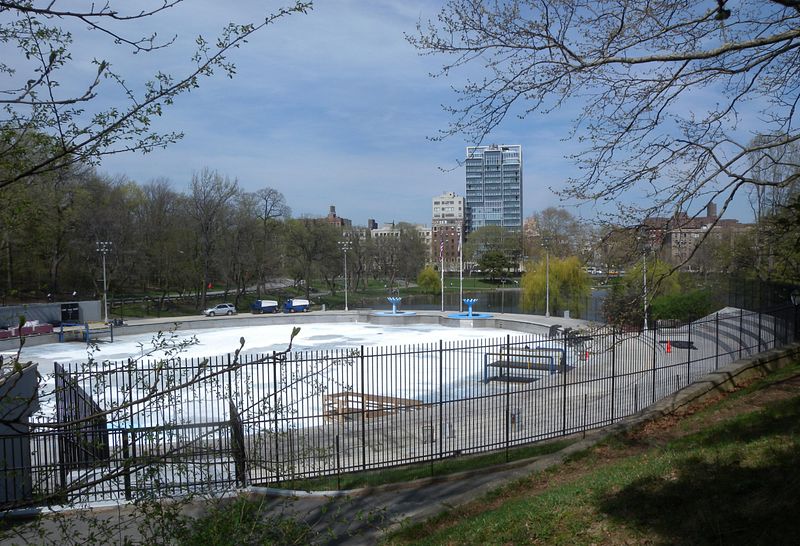
This past summer it was announced that over $100 million is slated to renovate the pool and skating rink that sit next to the Meer. It’s true that they are ungainly and ugly but there are serious concerns about what is coming. For one thing, the plans include getting rid of actual ice for the rink and installing “artificial ice” which is also known as plastic. It’s also going to be disruptive AF. I can’t imagine how they’re going to do that kind of major demolition and construction without negatively impacting the Meer itself.
But that’s life in the city. Especially this city. Everything is in flux all the time. And, who knows, before they even manage to start tearing things apart, our new landlord might have figured out how to pry us out of here. I’ll jump off that bridge when I get to it.
I’m just glad to have had nearly two decades of living next to 11 acres of weirdness and wildness.
© Remington Write 2020. All Rights Reserved.
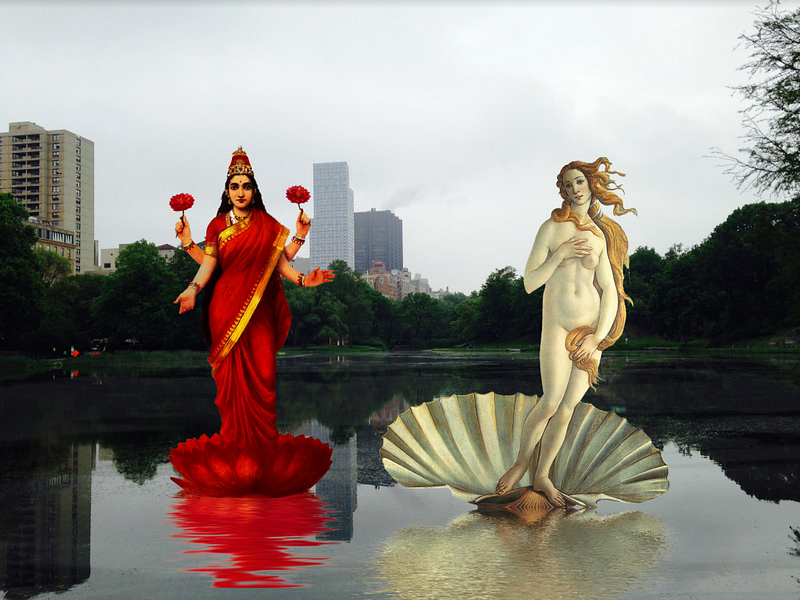
See? WEIRD! (thanks to AleXander Hirka for the art)


.jpg)
