
Nature is Basically a Very Large Menu
Every nature program ever is about who is eating who and who gets away
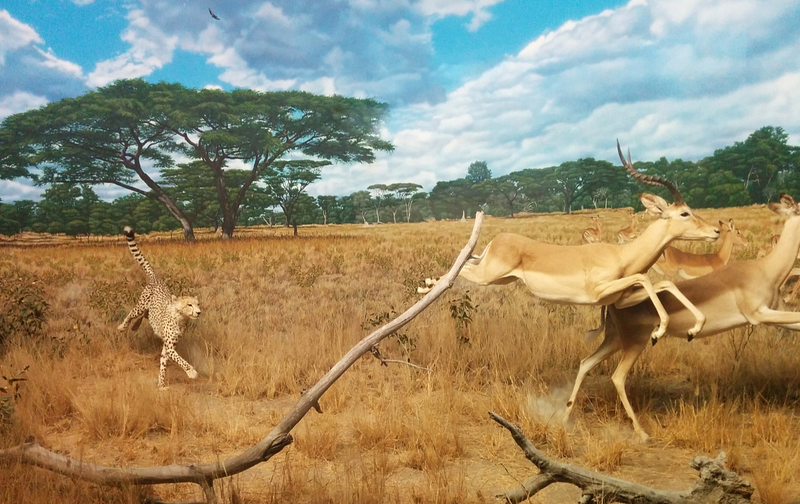
The music is straight out of a Bond car chase. Thrilling with soaring violins and fast edits to heighten the suspense. Zoom shots of the gazelle’s panicked eyes panning out to show the cheetah closing in for the kill. A driving drum beat underpins the action.
Then in a quick pivot, the music goes all cello and shit while the camera tastefully scans the horizon. We’re not savages here. There’s no need to see the cheetah pulling the entrails out of the still-twitching gazelle, right?
Ah, Nature.
Isn’t she magnificent? The glorious circle of life. Diversity, specialization, adaptability, strange and curious strategies. All with only two goals: to kill something and eat it or to avoid being eaten.
Breeding comes with its own set of strange and curious strategies and, yes, all those brilliantly filmed and clumsily written nature shows on PBS and the Discovery Channel give them their due attention. But it occurred to me one evening when I was curled up on the sofa watching David Attenborough wax rhapsodic about some animal’s hunting strategy that every single nature show ever is really about who eats who and what happens when dinner gets away.
Look at those sad-eyed wolf cubs as the gaunt adults return empty-mouthed after the big mean grizzly chased them away from their rightfully killed elk.
Don’t be too sad. Think instead about those adorable roly-poly grizzly cubs getting their first taste of elk. Those little darlings will sleep with full bellies tonight. In nature, some eat and some go to bed without dinner. That’s just the way it goes. When that mother antelope executes a series of dazzling switchbacks to evade an entire pack of hungry lionesses intent on killing her, it means that Momma Antelope will make it back to her confused twins in time to shove teats into their searching little mouths.
And those mewling lion cubs? Tough. That’s nature.
There is no social contract in nature
When the bigger lemur wants that nut, the little guy is just going to have to do without or finder an even smaller lemur to steal from.
Nature is brutal. Life may not be fair for us bipeds, as every mother since the dawn of time has reminded us, but it’s infinitely less fair out there on the savannahs and in the jungles and the forests. Newly born calves and deer and horses and gazelles are expected to be on their shaky little legs and ready to book at a moment’s notice sometimes even before getting all that sticky afterbirth goop cleaned off. All the camouflage and tricks and speed and caution in the world will only get you so far.
Some fine day a hungry leopard with cubs to feed is going to pull your number and down you go.
Hard to believe that there was ever a time when our biped ancestors were also on the menu but they were. Our ancestors were on the menu for such a long time that nature provided us with some dubious gifts that are now often enough what takes us out since we’ve pretty much written off lions and wolves now.
Nature just wants us breeding
And so she has ensured our bodies store calories much more efficiently than shedding them. But once we’ve successfully bred, nature has done her work. Now we’re on our own.
So as we accept that our wonderful New Year’s intentions are about shot and we sadly accept that delicious pie a la mode after dinner (because why not?), let’s at least count our blessings that we’ll have dinner for our litter after work tomorrow because there are no wolves to take us out on the way home.
We have our own problems.
© Remington Write 2020. All Rights Reserved


