The warmest day on record since measurements have been taken is behind us. This is very bad news
The U.S. National Weather Service Center reported that the first Monday in July was the warmest day on record since atmospheric measurements have been taken. Scientists expect the record to be broken as early as next year.
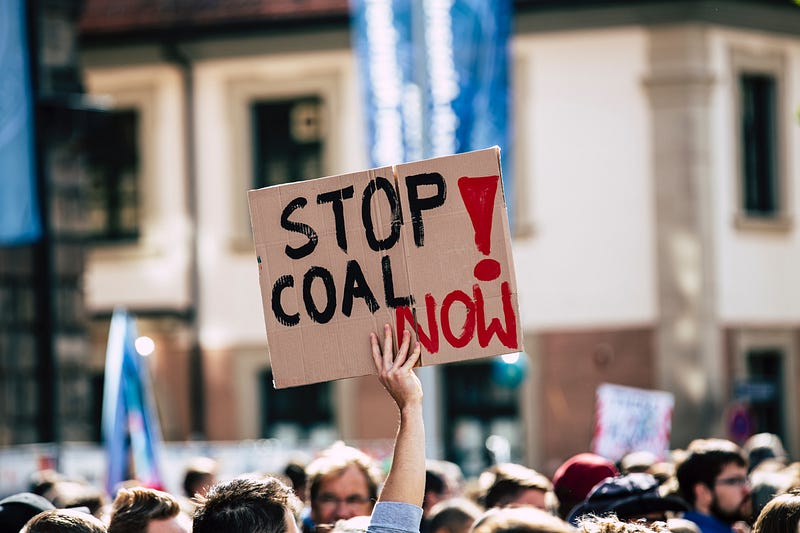
The planet is getting warmer. Experts have been pointing this out for many years, but nothing is changing. Governments around the world are trying to make changes, but it’s still not enough. The last 8 years have seen a huge increase in global warming. Scientists are already expressing concern that achieving the Paris Agreement is already less and less feasible.
The climate crisis is a fact
Last year’s UN report highlighted the most important problems facing our planet that are related to climate warming. First, glaciers, which are melting faster and faster, affecting sea levels. Increasingly, living organisms are beginning to lose their habitats, and rising air and ocean temperatures are affecting more frequent and much more intense coastal storms, including hurricanes and typhoons.
On the other hand, there are increasing concentrations of methane in the atmosphere. It is estimated to be nearly three times higher than before the industrial revolution. In addition, the UN warns that disasters and extreme weather events have increased over the past two decades. Many of them lead to the deaths of thousands or even millions of animals and people on Earth.

Warmest Monday on record
This time, more information is coming in that may be cause for concern. According to a study by the U.S. National Weather Service Center, Monday, July 3, was the hottest day in terms of average global temperature on record since measurements have been taken. Experts are under no illusion that this is no coincidence, but another effect of the climate crisis.
The global average air temperature reached 17.01°C. This means that it surpassed the highest temperature of August 2016. At that time, meteorologists indicated 16.92°C.
Experts remind that the south of the United States has recently been struggling with a wave of very intense heat and extreme weather conditions. The same is true in some regions of China, where temperatures have surpassed 35°C. In North Africa, on the other hand, thermometers indicate up to 50°C. Moreover, Antarctica, where winter is currently underway, is struggling with record high temperatures. Environmentalists indicate that these weather anomalies will have the effect of accelerating the melting of glaciers.

It will get even warmer
Scientists stress that global temperatures could be even higher next year. All because of the arrival of El Niño, the first of this magnitude in seven years. This is a weather and ocean phenomenon that involves the persistence of above-average high temperatures on the surface of the Pacific Ocean. Many researchers stress that we are facing downright “deadly” weather.
Thank you for reading! If you enjoyed this content, please consider giving it a clap, leaving a donation, or offering a tip to support my work. Your generosity helps me continue creating valuable content.