Meet Ava. This is what a Bronze Age woman who lived in Scotland looked like
Scientists have reconstructed the face of a woman who lived in Scotland more than 3,800 years ago. She belonged to a Neolithic culture that was called the “archer culture.”
Cicero Moraes has become a specialist in recent years in reconstructing the faces of people from thousands of years ago. Using 3D digital graphics, the Brazilian has recreated the appearance of, among others, Zuzu, a man who lived in Brazil 10,000 years ago, the oldest man found in Egypt, St. Valentine and even Mary Magdalene.
Reconstruction of a woman’s face from the Archer Culture
Moraes’ research and reconstructions are gaining popularity, and his work is shedding new light on archaeological knowledge. After all, people have always wondered what the people who inhabited our planet in prehistoric times and the saints described in the Bible looked like. This time, a Brazilian decided to create a digital 3D model of a woman from Scotland who belonged to a certain Eneolithic culture.
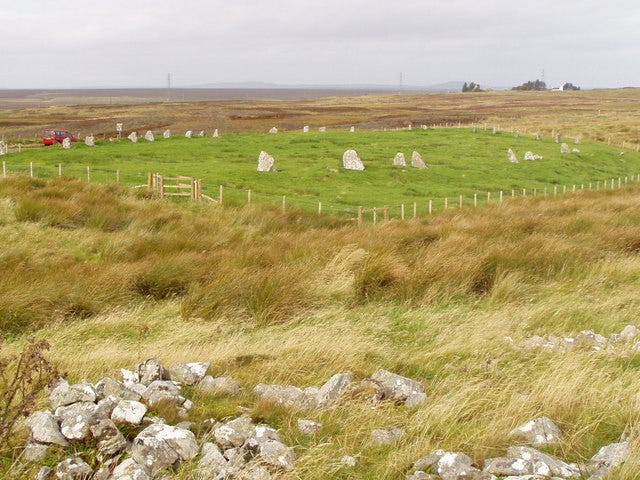
Her remains were found by chance in 1987. The discovery occurred in Achavanich, northern Scotland, during the construction of a new road. They were found in a stone “coffin.” Investigations showed that the bones belonged to a female person who died, aged 18–25. She was named Ava, after the village where she was found. The girl lived about 3,800 years ago. She was tall for those times. She was as tall as 171 centimeters.
The tomb also contained artifacts that were deposited with the deceased. These include a fragment of a cow bone, pieces of flint, and vessels that are identified with the Bell Cup culture. This is a culture that originated in the Pyrenean Peninsula and was formed on the basis of the Almer culture. Archaeological studies have shown that the economy of these people was based on semi-pastoral herding of animals, especially horned cattle and horses, and hunting.
Bell cup culture
They hunted mainly with reflex bows, and arrows were armed with small flint arrowheads, mostly heart-shaped. The forearm was protected from the impact of the string by a shallow protector (made of slate). This is why some historians call this culture the “archer culture.” These groups also engaged in fishing and gathering. Analysis of artifacts also showed that they had the ability to work copper (mainly javelin arrowheads) and perhaps gold and silver.
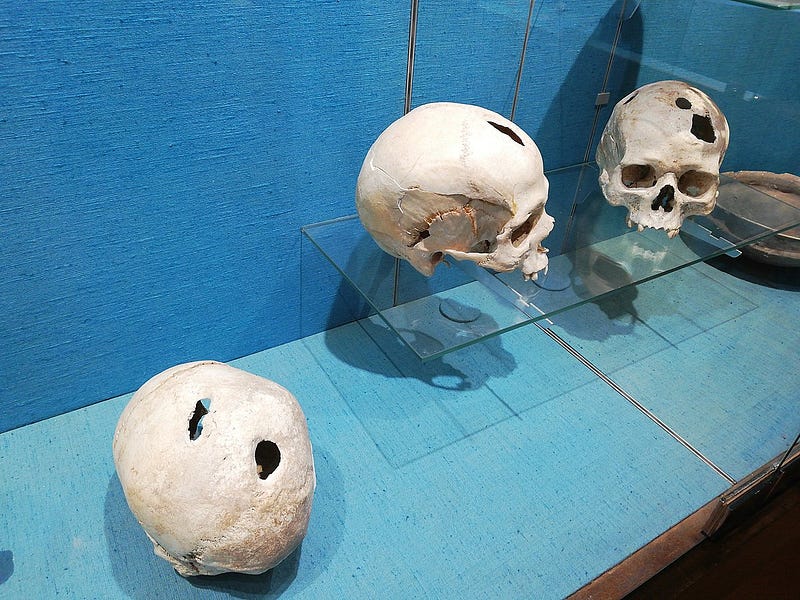
The discoveries also gave evidence that the people of this culture knew how to trepan skulls. Interestingly, cemeteries that this culture left behind have also been found in Poland. The largest necropolis, which contained as many as 19 graves, was investigated in Kornice in Upper Silesia.
The dead were usually buried with their hands bent at the elbows, palms placed near their faces, and their legs strongly contracted. Men were almost always laid on their left side, and women on the right. The men’s graves contained weapons and food dishes, while the women’s graves contained jewelry made of bone and amber.
What did a Scottish woman look like 3800 years ago?
The latest reconstruction by Cicero Moraes sheds new light on what a woman belonging to this culture may have looked like. The scientist used existing CT scans of Ava’s skull in his research.
“Thanks to anatomical, statistical and logical data, it was possible to reconstruct her face even without a mandible,” Cícero Moraes emphasizes in an interview with Live Science. — “I then decided to trace the profile of the face, which we do with a combination of soft tissue thickness markers that inform the boundaries of the skin,” the scientist explains.
According to a 2016 study, Ava may have had a fair complexion, blond hair and blue eyes. However, a 2018 DNA study rejected this theory. It turned out that the woman had brown eye color and black hair. On the other hand, her skin was darker than that of today’s Scottish residents.
“Because of her facial features and height, this woman may have been considered extremely impressive in her time”, Moraes says.
Research a few years ago showed limited genetic affinity between Iberian and Central European representatives of this culture. Researchers therefore considered little impact of migration on its spread. However, it was to be different in the British Isles. With the emergence of the Bell Cups, there were people who differed in DNA profile from the breakfast or dark-skinned and light-eyed population of the time. It is believed that 90% of the population of the British Isles at the time was replaced by groups of newcomers from the mainland.
Thank you for reading! If you enjoyed this content, please consider giving it a clap, leaving a donation, or offering a tip to support my work. Your generosity helps me continue creating valuable content.