The Wabi-Sabi Method to a Better Self
Everyone is Born To Be Beautiful
Who do you see when you look into the mirror? I see a person who is broken, imperfect, aging, and flawed. And no, I do not need “fixing”. I needed to understand and accept all my natural flaws, imperfection, decay, and brokenness.
The answers to looking and feeling better are not external to you.
Things do not go away because you put your head in the ground like an ostrich!
It is not that life is existentially imperfect. Life is just life. Our hopes oft-times that it can be definitely better make us shout out for better alternatives. No, there are no better alternatives offering good vibes, more love, less pain, fewer disappointments, no grief, no sickness, and more luck, happiness, joy, and blissfulness.
Feeling and being better relate to learning how to manage and deal effectively with life. Dealing with the challenges in what life imposes upon you — worry, pain, sufferings, unhappiness, loneliness, grief, and negative emotions. Our responses to these determine the state of our mental health.
Your mental health reflects the struggle against reality as it confronts you. You cannot change what has happened or is happening; the only effective solution is to engage it with the Wabi-Sabi Method.
The idea of perfection implies a Standard. There is in fact no “perfection standard” to adjudge life. Life does not conduct itself in accordance with some Standards. Life simply exists.
Life is essentially a feeling or a knowing, and must be experienced by the person rather than being taught or learned about. Wabi-Sabi encourages us to see the perfection in imperfection, the stability in impermanence, and find comfort in the knowledge that nothing is ever complete.
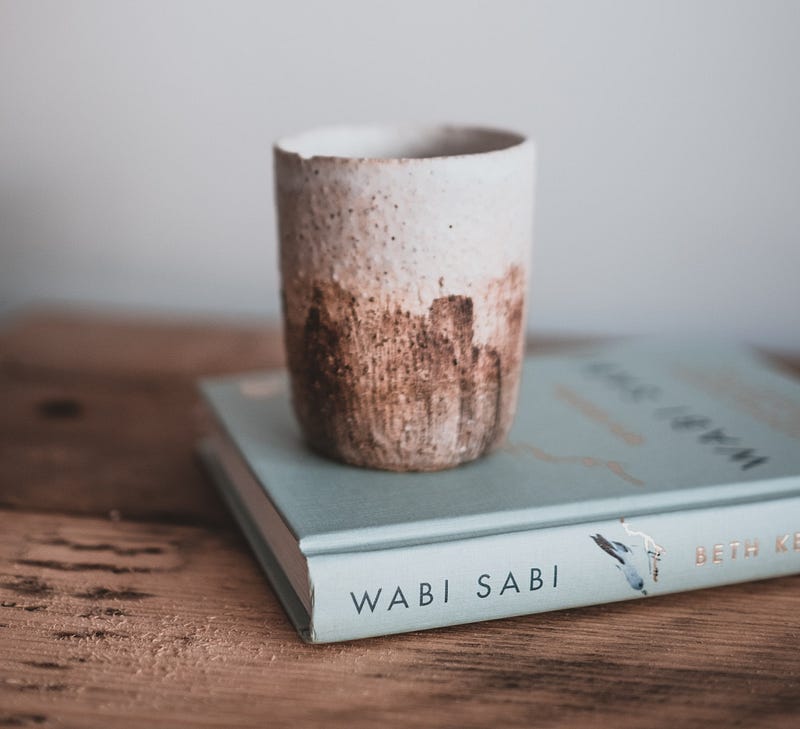
Wabi-Sabi is a concept from Japanese aesthetics, which perceives beauty in imperfection, appreciates simplicity, and accepts the transient nature of all things. The timeless wisdom of Wabi-Sabi, which originated in China before it became Japanised, is particularly relevant and material to our search for new strategies to obtain practical meaning beyond materialism so as to better engage life’s challenges more victoriously.
The Wabi-Sabi Method is an intuitive approach in appreciation of the transient beauty in the physical world that reflects the irreversible flow cycles of life. It is associated with simplicity, humility, imperfection, asymmetry, naturalism, and space celebrating the aging mellowing beauty of things and human experiences impacted by time and decay.
Using the Wabi-Sabi Method, extraordinary beauty is manifested in every aspect of imperfection in the ordinary things found in nature and around us. Wabi-Sabi perspectives regard the aesthetic of all things, whether living things or inanimate objects or technological inventions, as “imperfect, impermanent, and incomplete”.
The Wabi-Sabi impact is a lifestyle and mindware of liberation from a material world into transcendence to a simpler, meaning-rich life.
The philosopher Immanuel Kant points to a deep interconnection between the ability to have self-consciousness and the ability to experience the objective world. Whatever transcendental would play a role in the way in which the mind “constitutes” objects and makes it possible for us to experience them as objects in the first place. Where ordinary knowledge is objective knowledge; transcendental knowledge makes possible the experience of objects (and emotions) as if they exist outside the person.
Through a mental process of synthesis, the mind generates both the structure of objects (and experiences) and forms our consciousness to enable and associate a range of human emotions to focus on. Achieving excellent mental health wellness requires reflection and introspection of the human consciousness for effective solutions.
The intuitive Wabi-Sabi Method does not see the world with the logical mind but through the feeling heart. They make conscious the unconscious and empower me “to know what I think when I see what I say”, making victorious living possible.
Deploying the Wabi-Sabi Method means learning to live life through all the human senses of sight, sound, touch, smell, taste, and intuition to engage, not withdraw from, life as it happens. Self-mastery mindfulness in the discipline of Wabi-Sabi removes unnecessary and unhelpful thoughts.
Wabi-Sabi Mindfulness emboldens and empowers an unhurried calmness to soak, enjoy and absorb the energies of the world around you to facilitate your celebration in the art of doing and not the result. You will find beauty in imperfection and to accept the natural cycle of growth, decay, and death even as it promotes self-reflection and development.
Many find in Wabi-Sabi an aesthetic sensibility that discovers a melancholic beautiful quality in the impermanence of all things.
The impact of Wabi-Sabi Mindfulness is living in the moment and finding meaning and enjoyment in everything that you do. It liberates everyone who demands too much from themselves.
WHAT WABI-SABI IS NOT
Wabi-Sabi is not about escapism by simple living, but living naturally, spontaneously, and authentically by embracing the truth and reality of permanent change, imperfection, and continuous decay.
Wabi-Sabi is not about retreating from life; or to surrounding yourself with objects, natural or artificial, which are broken or aged; or to re-arrange your furniture to fit some format according to supernatural “laws” of energy flows, or to embrace man-made religious beliefs and superstitions which provide false cocoons of hope or future outcomes.
Wabi-Sabi does not encourage unhelpful asceticism and monasticism. Neither does deny yourself what you are attracted to whether it’s food, drinks or activities or reading, or just travels.
WHAT WABI-SABI IS
Wabi-Sabi is about finding happiness right where you are.
Wabi-Sabi nurtures authenticity by embracing the limits of three simple realities: nothing lasts, nothing is finished, and nothing is perfect.”
Wabi-Sabi is the art of embracing the imperfect and finding beauty in the imperfection of our life.
Wabi-Sabi recognises the feelings of loneliness, sadness, emptiness, solitude, leanness, rejection, pain and hopelessness experienced when living in nature.
Wabi-Sabi accepts aging, decay, and transience.
Wabi-Sabi liberates the mind from the slavery of words and the limitation of human logic.
Wabi-Sabi is a life transformation to become a better you.