
The Verdant Scottish Highlands And Its Sad History
Luminous green first supported people, until sheep took their place
Our Globetrotters’ Community presents opportunities for sharing with the wider audience of readers along with fellow travelers who’ve visited the same places. It’s fun to compare notes with them!
The “Green Challenge” directed my thoughts to our trip to Scotland, particularly to the short time we were in the Highlands. So, I was pleased to see the article by Michele Maize about Scotland, see the link at the end— her comments that Scotland was “mesmerizing” and a “feast” for eyes exactly described my impressions. I see my project as adding to hers and perhaps providing further context.
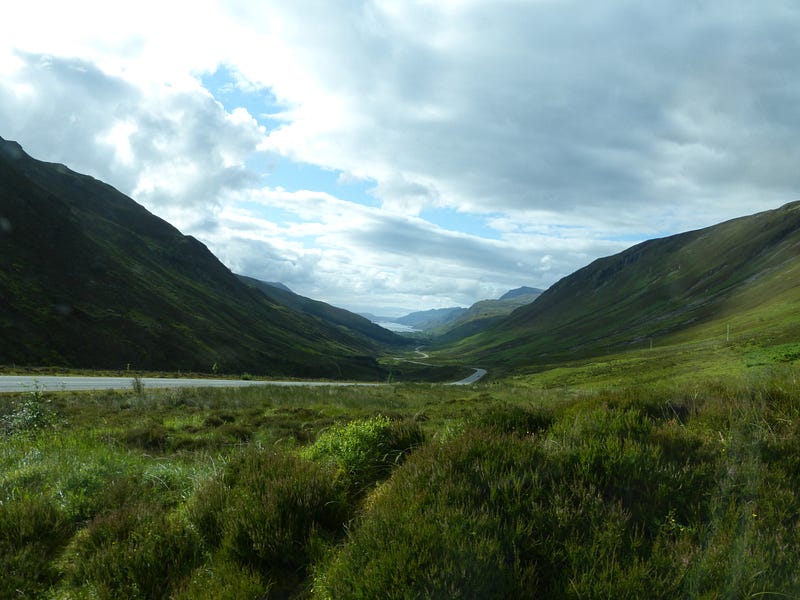
The vibrance of green in the Scottish Highlands has an intensity that is an all-encompassing experience. Few places have matched the intensity of color for me, perhaps only tropical regions. But as I discovered, this emerald paradise has a background intermingled with sadness.
Heading to the Highlands
Our visit to Scotland was bookended by Edinburgh and Glasgow, with Inverness and the Highlands in between. Edinburgh was incomparably captured by Lina Ignatova in the article linked at the end. From there, we took the train to Inverness, our jumping-off point for the Highlands.
Enlisting a guide to drive us through the Highlands for one day was one of our best trip decisions in retrospect. We would have missed so much scenery without him, and his commentary was equally valuable.
Departing Inverness, we were immediately part of the ubiquitous marriage of Scottish greenery and water. Inverness sits adjacent to sea channels called firths. We skirted the Beauly Firth and headed west towards the Highlands.
Our guide was eager to please and highly knowledgeable about the area and its history. He also was a former professional photographer and knew how to blend scenery into distinctive moments.
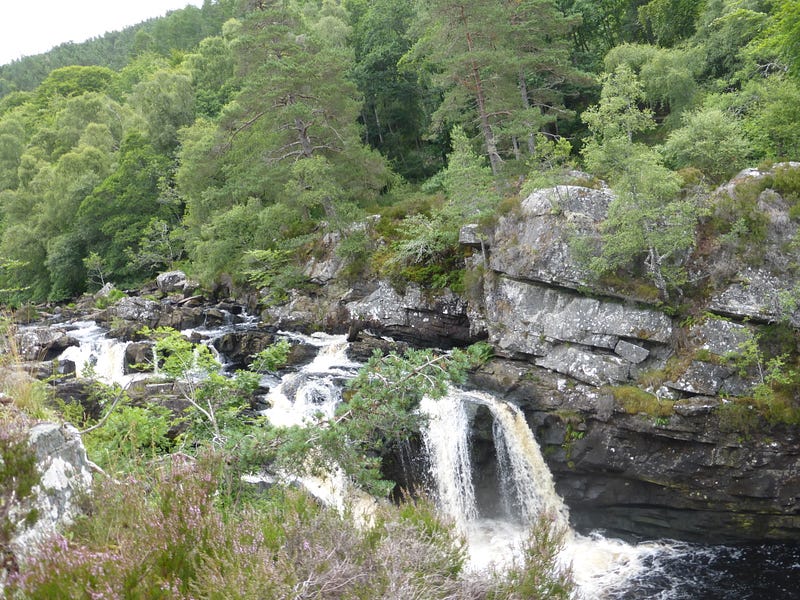
Our first stop was by a waterfall that we accessed by walking a short distance through a forest. Nothing quite sets a mood like a waterfall — the power, beauty, and romance.
We then set off in earnest for the Highlands.
The Scottish Clearances
Our guide was not a raving nationalist, though his sympathies were clearly for Scottish independence. His commentary as we progressed to the Highlands provided factual and illuminating explanations for what we were seeing. They were somewhat heartbreaking.
The industrial revolution shaped the Scottish Highlands in a manner that lives on to this day.
Previously an area of subsistence farming, the Highlands was perfect for producing the raw goods demanded by the booming factories of the industrial revolution— the wool of sheep that could be raised in huge numbers in the open spaces.
Over the course of a century from the latter 1700s to the mid-1800s, the Highlands were given over to raising sheep. The efficient way was to convert small farms into large enclosed tracts of land for raising sheep. Even more efficient was to expel the previous inhabitants, the poor farmers.
The term “Scottish Clearances” has been given to the century of emigration as the land was repurposed from the plots and shared grazing of farmers to the large-scale raising of sheep. At first, inhabitants were given incentives to emigrate. Later, they were forcibly expelled. Our guide referred to it as “ethnic cleansing”. While the term is laden and other factors were at hand, such as the mid-century Potato Famine, the effect of removing people for the motives of others is correct. The primary motive was the enrichment of the few.
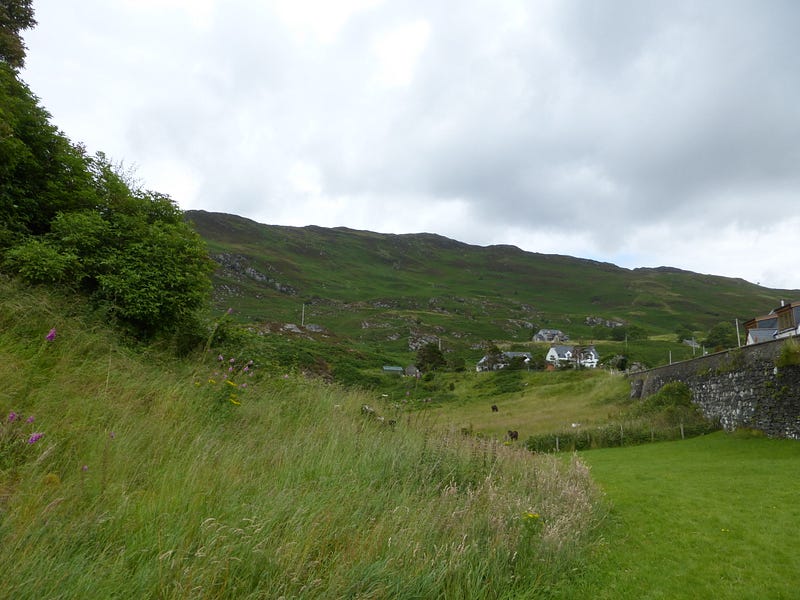
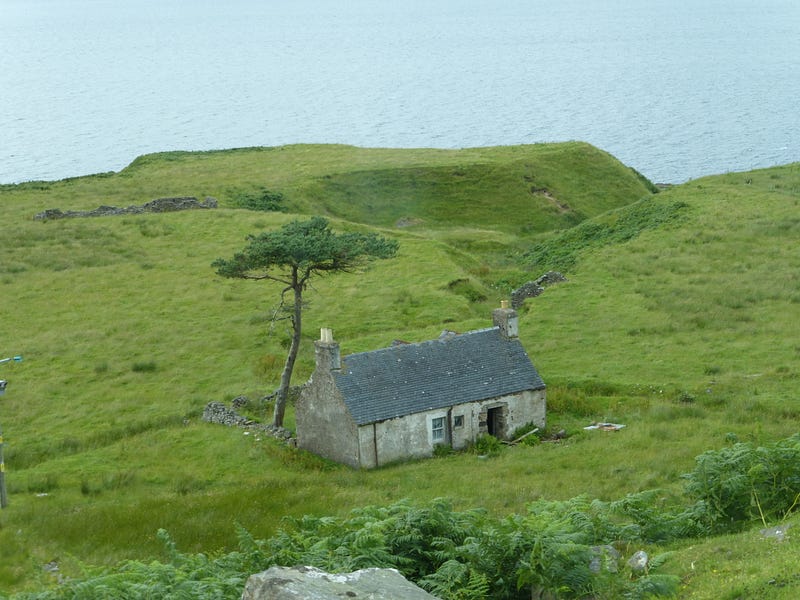
Its legacy is the scarcity of people in the Highlands and abandoned dwellings that have fallen into disrepair. It explained much of what we saw.
Lochs and the low Highlands
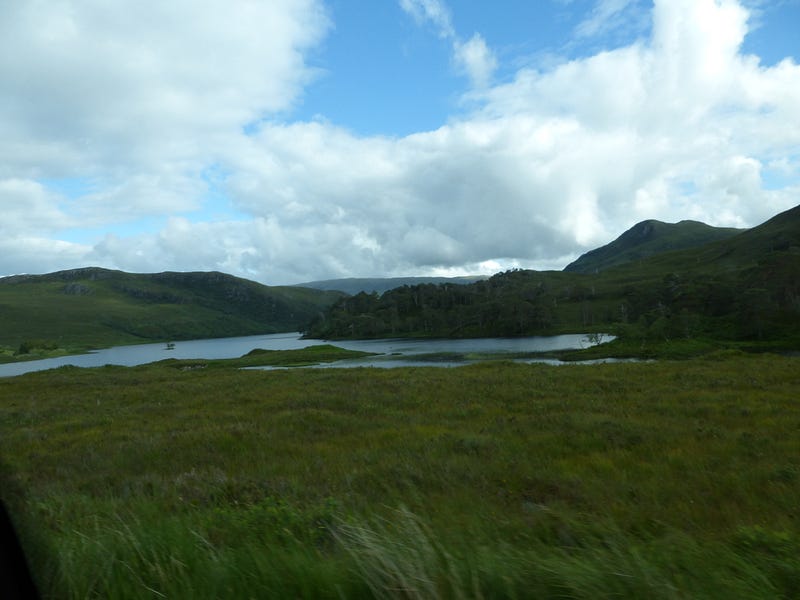
From Inverness to the far west coast is about 60 miles. As we headed there, we passed a landscape of luminous green broken by water and hills. The water ranged from small bodies to larger lochs. We didn’t expect to see Nessie, but conjuring the otherworldly is not hard since the region has an atmosphere both primitive and enchanting. We often stopped to take photos.
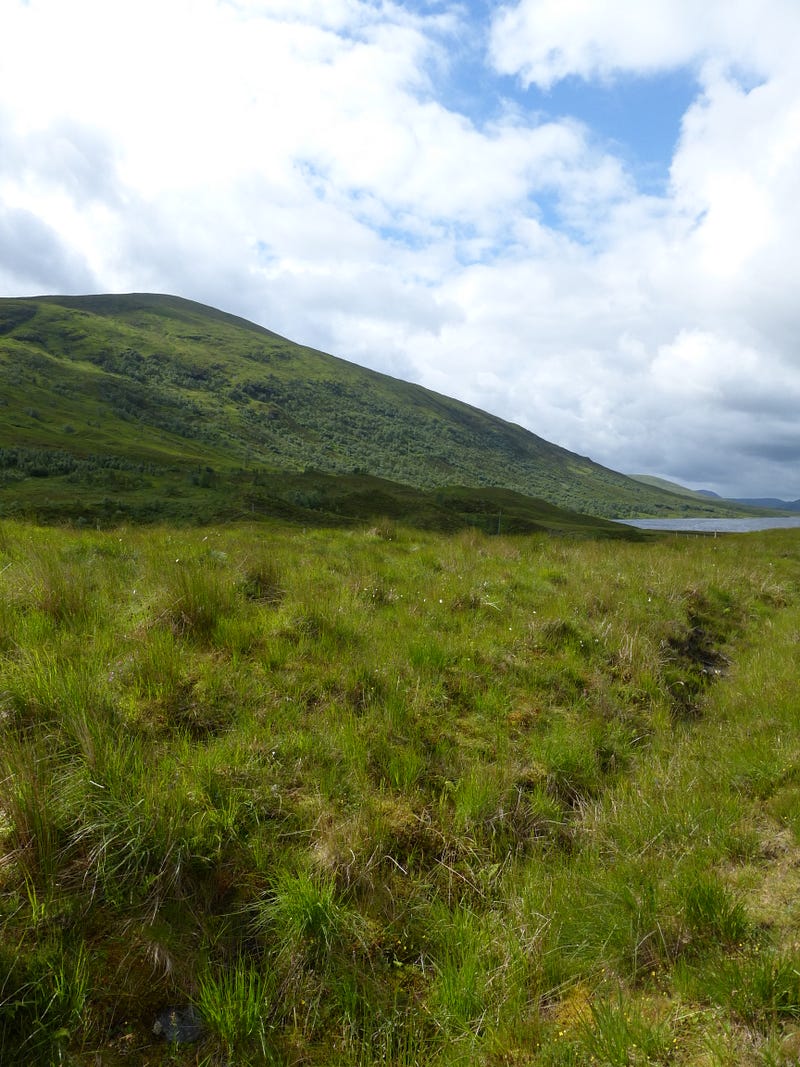
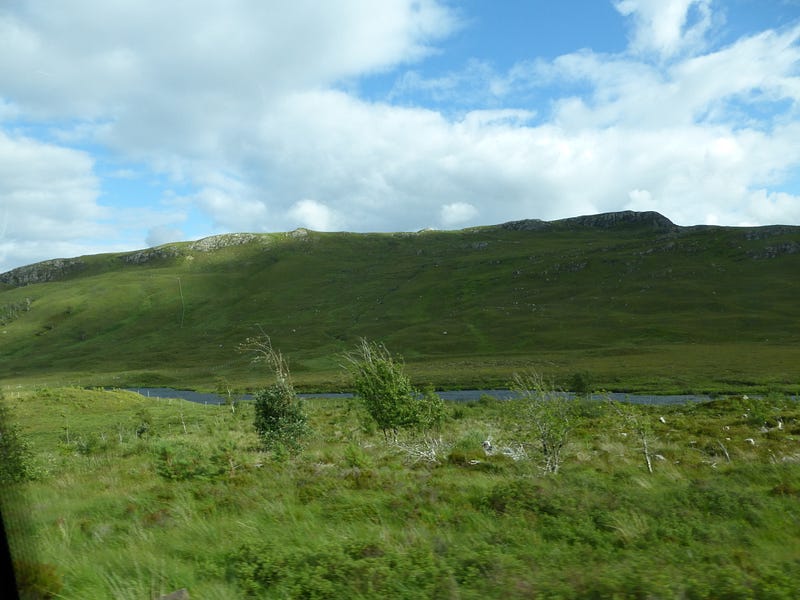
As we progressed, our guide pointed out the abandoned and dilapidated structures — homes of those evicted to make way for “progress”. They struggled to live in the midst of dramatic beauty, and then had to leave.
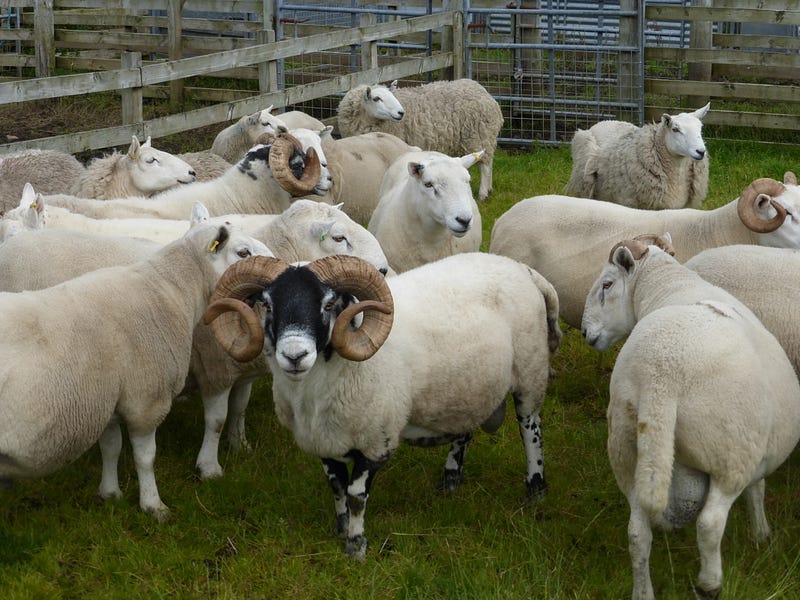
We saw many sheep along the way.
The Coast and the high Highlands
At last, we turned and headed upwards, a shortcut of sorts. We climbed and climbed. At the top, we gazed back upon the vale we had left.
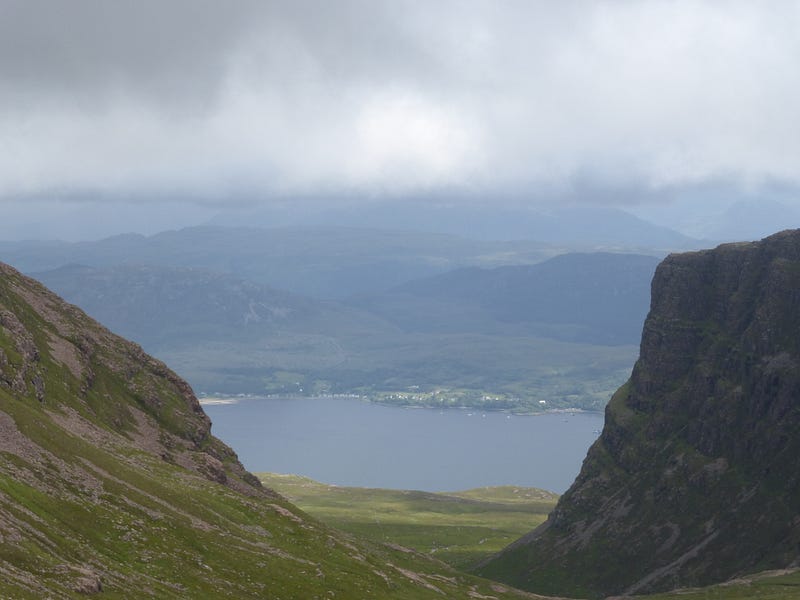
We descended to the coast. It had a wild beauty.
We encountered an isolated dwelling, uninhabited; it represented a lonely and perhaps unforgiving life. Maybe they were consoled in the surrounding vivid greenness, with the awesomeness of the sea on the doorstep.
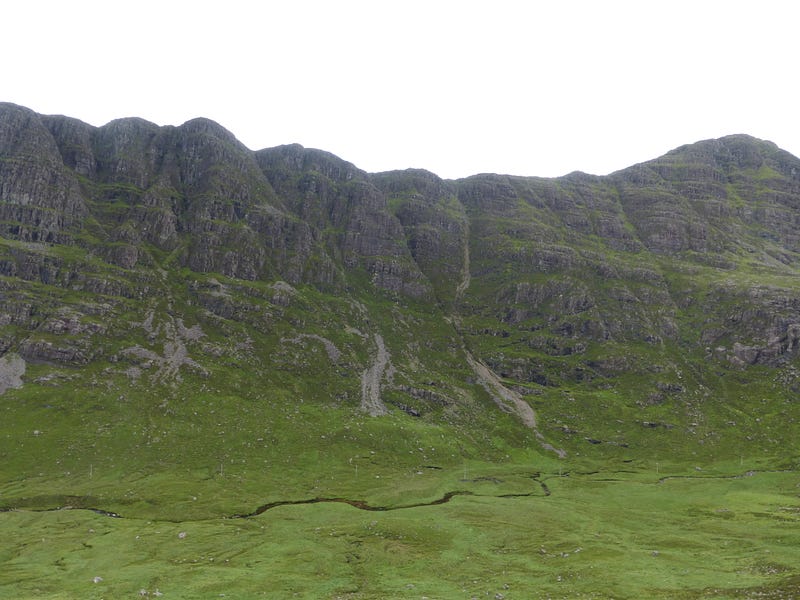
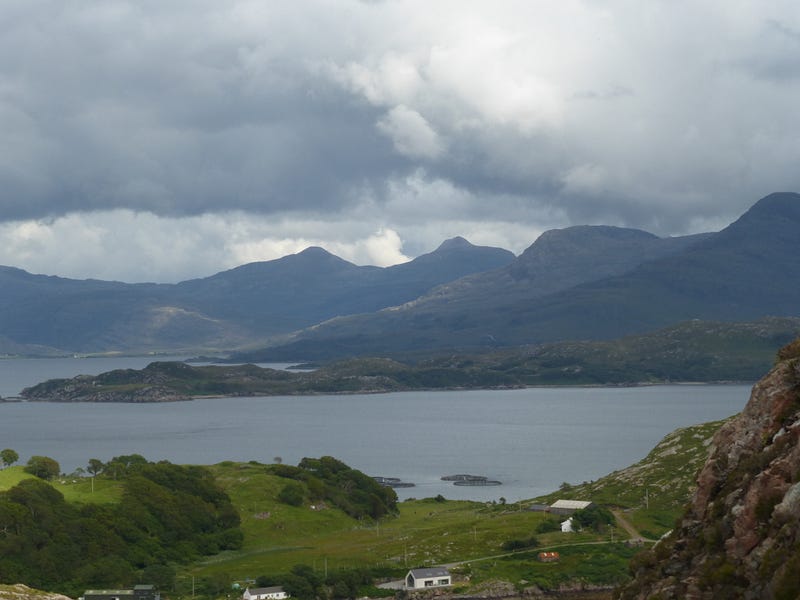
The last surprise before heading back to Inverness was the mountain range in the distance. We stopped to admire and take photos.
Reflections
The Scottish Highlands are lands of beauty tinged with history and hardship.
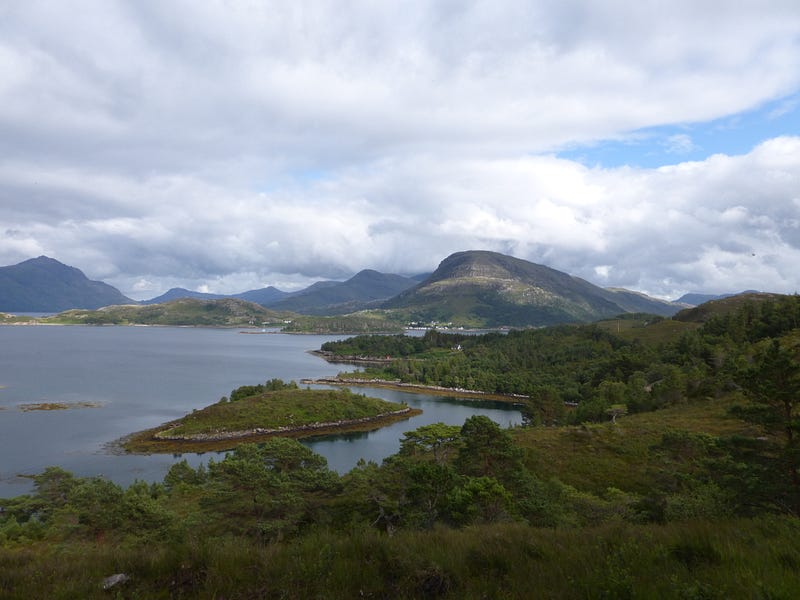
The scenery overwhelmed us — greenness contrasted by water and set off by hills and mountains.
But it is redolent of history. Farming gave way to large operations dedicated to profit and satisfying the needs of growing populations elsewhere. The people of the area got squeezed out. Now, it is one of the least densely populated areas in Europe.
But it is an ancient land. One stop was by a former castle, also lost to time.
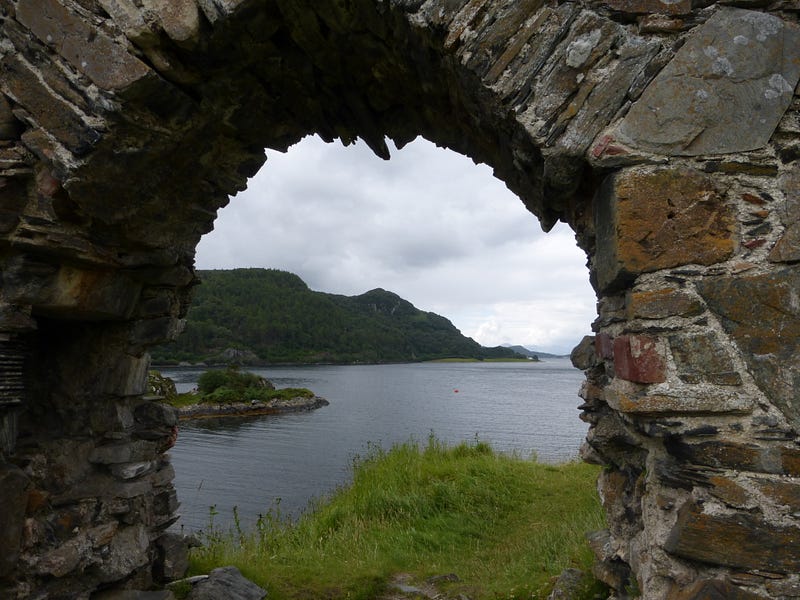
We were fortunate to have experienced the beauty but were touched by the losses. But its magic and enchantment endure.
The Incredible Stories by our Fellow Writers
Michele Maize was the first to share her experiences of the charm of Scotland. Her lovely photos and vibrant writing were inspiring.
I was completely taken by the story by Lina Ignatova about Edinburgh. Blending superb writing, acute observations, and amusing anecdotes, it was an enthralling read.
Last, CosmicDancer captured lovely terrain in several locations, including the Scottish Highlands.