
The Unseen Casualty in the Rise of Multigenerational Homes
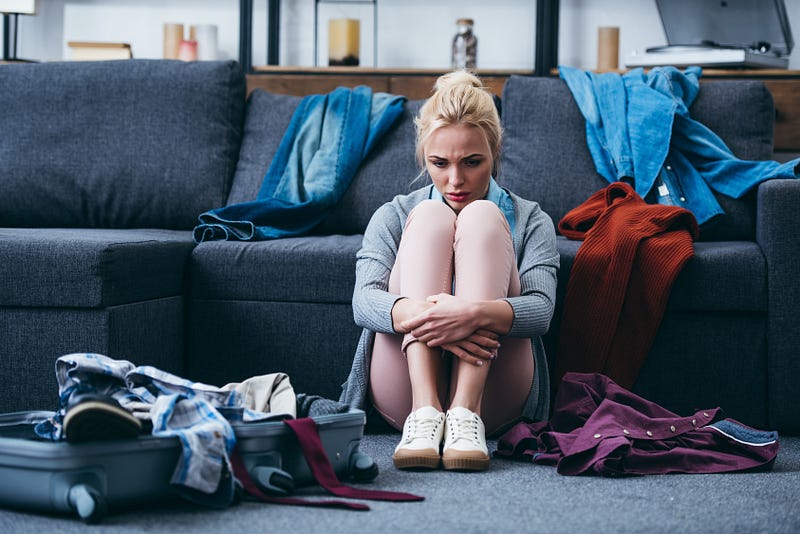
According to Wall Street Journal, 1/3 of Americans between the ages of 18–34 now live “at home”, meaning the home they grew up in with their parents/guardians (or for simplicity’s sake since individuals and families move, the home their parents currently occupy).
We could split hairs all day about how those stats are likely skewed towards the 18–24 set who just completed their debt-laden college degrees now demanded of minimum wage jobs answering phones or stuffing mattresses because we live in a very normal country. Or even bring up that because of those conditions, a significant number in the 24–30ish set are likely to be grad students or the new owners of Master’s degrees because we’re the most scholarly generation in American history and oh yeah, some asshole decided we needed those MBAs to deliver pizzas on the side. (What? I was a Postmate after I lost my last job in the financial industry!)
But I’m not going to do that. No, we’ve been furiously discussing how the American economy is rigged and the former middle class is the new precariat for quite a while now. Yes, pay is too low and living expenses are too damn high, especially housing. And triply so in areas that are major commercial centers and some of the most desirable places to live as a result. Okay, that’s out of the way.
Rather, I’m going to talk about the 18–34 set that you and millions of others likely ignore. Disabled youth. Queer people. The dots on those scatter graphs who are real actual people with trauma, familial disputes and abusive relatives, health issues, and/or present-day financial struggles and so much more whose flame is already flickering out before it even has a chance to truly ignite.
I’m talking about a group I belong to: child abuse survivors.
So Who Statistically Counts as a Child Abuse Survivor, Anyway?
Child abuse can happen to any minor at any given time regardless of family income, race, religion, region, and how many generations reside in the home. It can encompass physical, emotional, and/or sexual abuse as well as neglect.
If you’re the type who’s convinced by numbers, let’s start here.
- 3.2 million children are investigated by child services every year in America, out of 6.6 million referrals made (2014 HHS.gov report on child neglect)
- 80% of 21-year-olds who experienced and reported child abuse face the criteria for at least one psychological disorder (National Institute of Health study on long-term effects of adverse childhood experiences)
- 68% of child sexual abuse survivors report that a family member abused them, out of 90% who know their abuser. (Department of Justice)
- It is estimated 5 children in America die every day from child abuse. (Department of Justice)
Take a look at Childhelp.org to learn more about how child abuse survivors are impacted as adults: we’re more likely to have chronic conditions, die younger, get incarcerated at higher rates, and face disproportionately higher risks of intimate partner violence in comparison to other groups. This is among other horrors, some of which I got into in my 2018 presentation on basic income and adult survivors of child abuse (I’d recommend you take a look regardless of how you feel about UBI).
These dismal statistics are A) only the tip of the iceberg, and B) what actually gets reported.
Trust, you’re around more child abuse survivors (and sufferers, if still dealing with the abuser) than you’re aware of. Given that children are treated like possessions in America, it’s a problem that flies under the radar more often than traffic lights change color.
The Fear and Fatalism That Binds Abuse Survivors

Because of the highly personal nature of discussing child abuse, especially with many survivors being at risk for retaliation be it physical, financial, or otherwise, there’s a reason it tends to get unreported. Some would say justice is willfully blind in even some of the most catastrophic cases.
But I don’t just mean reported cases to social services or getting the police involved: look at all these governmental and academic studies surrounding adverse childhood experiences. If you’re participating in them, chances are you’re in a suitable environment to do so and have had enough time and headspace to sit down with professional researchers without fear of retaliation. To sum it up for you, dear reader: you can actually recognize you’ve been abused. Many survivors go for years, decades even, without realizing that they didn’t just have a few bad days as children, they were abused. You didn’t just hear a few offhand comments from your parent/guardian; you were abused.
Perhaps it’s because the concept is stained with the uniquely American brand of “what is already hellish must be made 10,000 times worse for no reason other than your rulers fetishize suffering and are out of touch with reality”, unlike other countries that do things like guarantee healthcare and have more robust social safety nets if you are sick, disabled, or seeking refuge from domestic violence. But cultural rot or none, it can take a great deal of suffering before you realize you’re being abused.
Plenty of young people can recognize when they’re being abused by the time they hit their teens. Some perhaps even younger, as this Twitter thread that made me bawl at the bus stop made evident.
Being able to recognize that you’ve been abused is the first step in overcoming many of the deleterious mental health effects that can destroy your quality of life if they go unchecked.
The next is safely getting away from that abusive environment to focus on meeting your basic needs and turning your life around before you can truly start healing and actualizing your potential.
So. This pokes a few holes in the whole “Oh well, get used to it, multigenerational homes are becoming a reality now.” attitude that’s become the norm when people point out that this is a problem despite multigenerational households being incredibly common in other cultures. In such a terrible economy where capitalism has delivered every social ill we were told socialism would deliver, it’s all too easy to be dismissive in the rise of housing shifts by deflecting to other cultures or how it was also common in America until the early 20th century.
If you reach legal majority at 18 and you want to leave voluntarily or your parents kick you out at that age, you should be able to afford housing and have a living wage. Your basic needs should not go unmet regardless of your skills and capability to work (gentle reminder that “young” doesn’t necessarily equate to neurotypical and/or able-bodied).
I remember when I was counting down the days until I could leave my household. My abusive mother died when I was 15 which caused my ability to recognize abuse to basically go into remission for seven years, but I still wanted to leave at 18 no less. Waiting it out was pretty much the only option then. So, why did I still want to leave anyway? Why have numerous other child abuse sufferers or survivors felt this way and what makes this rise of multigenerational homes so problematic?
Leaving the Place Itself is Ultimately What Many Young People Need

Note I said “need”. Not “want”. Abuse sufferers and survivors need to get the hell out. In some cases, far, far away. Let’s not even get into how the area in which a young person lives just might not be that conducive to the careers they’re building, even as telework, freelancing, and digital entrepreneurship are on the rise.
Now let’s say that there’s a young person who’s fortunate to have a fairly supportive family and being in the same household isn’t a major cause of distress. But that person happens to be queer in an area where their and/or their family’s safety is at risk if they come out. Or perhaps they just don’t have a culture fit where they are and long to go where they belong and can start to actually live and not just survive.
Because do you know what being in survival mode 24/7 mode does? It completely rewires your brain. Productivity and happiness go out the window.
Even if your safety isn’t directly in danger and you just don’t fit in with the culture of where you live so you only associate this place with pain and stagnation, wouldn’t YOU want to leave?
For some, a multigenerational home is harmonious and provides support. For others, it’s a stressor with adverse effects on mental health and self-actualization. But still living with your parents isn’t just about feeling like you can’t take a date or hookup home, still sharing meals you might dislike, or the other things that come with having a separate household. It’s the environment you’re still living in which for many young people, is something they can’t wait to get away from! Just like how not everyone is lucky to have a good nuclear family, not everyone is lucky to have good childhood memories in both the household and the town/city they lived in and they’re dying to move on to a new life which used to be a given after your 18th birthday.
Even if visiting your old childhood home doesn’t make you need a Xanax and hard liquor after frantically texting a therapist? There’s something fundamentally wrong when I paid $650 per month for a studio apartment around the corner from the subway in the north Bronx a mere two years after I left the nest, but that amount doesn’t even get you a room in many parts of the northeast corridor anymore. Thanks to rent stabilization, I was paying $805 per month in the tenth and final year of my lease before buying a condo.
Housing shouldn’t be a matter of luck. It’s a human right and an incredibly pressing issue for everyone, but especially the young and exploitable who may be at the mercy of abusive parents/guardians and need to get away from them to attain happiness and for all you work-worshipers, productivity. Thanks to the avarice of the FIRE industries, there is now an entire generation of child abuse sufferers and survivors who may be in perpetual gridlock or feel they may never find a way out now as people just shrug and say “Oh well, multigenerational living is the norm now.”
Even if it becomes a norm, those first few years after high school are such a volatile time of life. It’s not crazy to feel that in the richest country in the world, it should be feasible to start a new life that young, free from pain and fear in a new home.