
Fran Bow and Making Sense of Childhood Trauma
Trigger/content warning: this essay extensively discusses personal experiences of child abuse, death, and other trauma which may be upsetting to some readers. Reader discretion is advised.
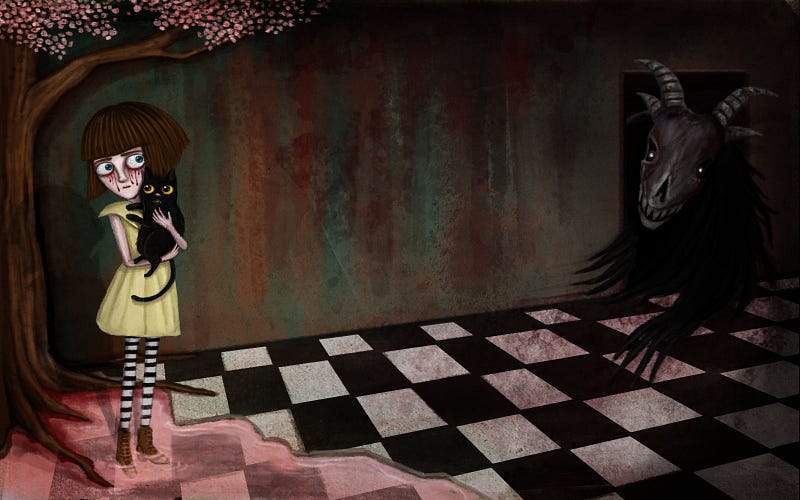
I’m a couple years late to the party, but I recently played Fran Bow and several ideas bloomed in me overnight. It’s a game rich in symbolism and nuance meant to be discussed and theorized, as Killmonday was purposely vague when talking about the game’s storyline and overall message. Regardless of narrative designer Natalia Figueroa’s intent, Fran Bow is a game that left me overcome with emotion. I felt a million things playing this game and it’s absolutely one of those titles that makes me remember why I wanted to become a game developer and clung to that dream.
There’s games I’ve enjoyed, then there’s games that I felt were transformational experiences. This is one of them.
Fran Bow hits home for me as a child abuse survivor. Childhood trauma, loss and grief, and mental illness are prevalent topics and themes in this game and numerous fan theories abound as to how these subjects answer questions the plot left them with. Two fan theory videos I enjoyed were Pushing Up Roses’ and Jordan Underneath’s videos. Pushing Up Roses discusses whether Fran Bow has a mental illness with a nuanced analysis based on her lived experience with mental illnesses and spending time in inpatient facilities, while Jordan theorizes Fran is a victim of the type of medical experiments performed in Nazi Germany with Dr. Oswald taking after Dr. Mengele.
This essay has a little fan theory about the game’s story and symbolism laced into a larger commentary on how I relate to it as a child abuse survivor. There’s commonalities in how children process trauma, abuse, and deep-seated mistrust in authority figures and how it can manifest in them as adults. Major spoilers ahead, I really don’t recommend reading further unless you’ve played Fran Bow at least once. (The game also isn’t for the faint of heart, its endearing children’s book art direction is a little deceiving.)
Alternate Realities and Living with Abusers, Gaslighting Can Be a Group Effort
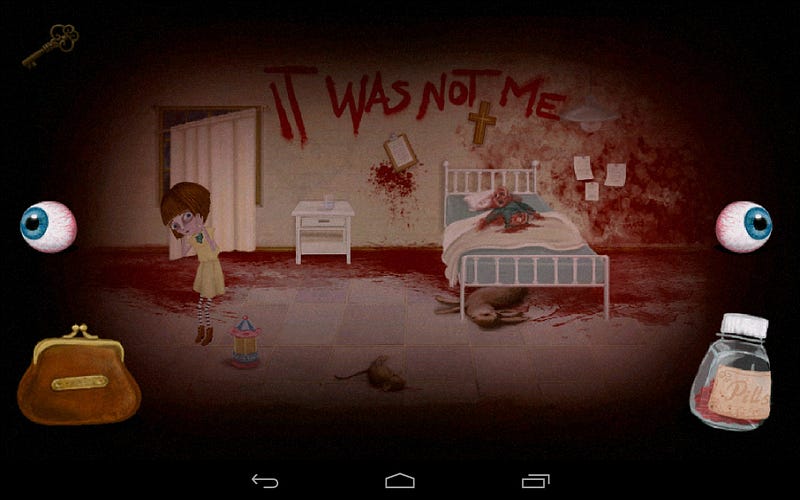
Childhood trauma isn’t monolithic in both the concept itself and how a child processes it. It’s also not monolithic in how a child carries that with them as an adult. There’s such a wide variety of factors like class, where the child grew up, culture, community, schools attended, other family members, and the era the child grew up in among others that also impact how childhood trauma is recognized and addressed.
There’s common threads among child abuse survivors and other types of childhood trauma, a major one being trying to make sense of what is happening. That was something I constantly tried to do as a child. I just wanted to make sense of things.
Why was I told by teachers and other authority figures that all parents unconditionally love their children when it seemed like all my mother ever did was scream at me over everything, and would say such horrible things to me while also basically expecting a child to have adult understanding of things? Why would I be shown these examples of what a mother should be like through my schooling materials and the media I consumed, then it slowly dawned on me she’s only like this a tiny fraction of the time then those fractional moments make me feel bad for hating her? Why did my father make me constantly apologize to her and seem to defer virtually every parenting decision to her? What the FUCK did I do that made her and everyone at school hate me so much? What was so wrong with me that I apparently deserved being constantly treated like this inconvenience and blight?
As adults with unanswered questions and unresolved trauma, we also can drive ourselves mad trying to make sense of it.
You probably have more adult survivors of child abuse around you than you realize. I guarantee that at your school, professional space, the gym, your favorite coffee shop or other places you frequent you will find someone in their thirties, forties, fifties or beyond who is still asking that last question in the above paragraph. Some may not even consider their traumatic experiences abuse, or be sure if they should.
Because my mother unexpectedly died when I was 15 and had no space to process both her death and my childhood, I didn’t fully realize the extent to which I’d been abused until my early twenties. There’s memories I’ve repressed that still randomly pop out during therapy to this day. But because I grew up with her always acting like this and school being such an antagonizing environment for the most part, I just didn’t REALIZE I had been abused. Like I knew I was unhappy and I’d get these occasional glimpses at lives I could be living, and would have these glimmers of hope from the occasional kind teacher or the summers I cherished going to the local community college’s summer program for kids. They showed me I could have a better life and the dreams games and other media put in me would propel me towards that. But I was told abuse only happened to kids whose parents left them alone for days at a time or would hit much harder than my mother did, that it only happened to poverty-stricken kids whose parents couldn’t meet their basic needs.
Child abuse can happen anywhere at any time.
It can be physical, psychological/emotional, sexual, neglectful, or any combination of these things.
And there’s many parents who think they can buy their children’s love at best, a ticket out of recognizing they’re abusive at worst.
The fact that it’s mostly impoverished parents who face consequences for intentional abuse or unintentional neglect is indicative of ever-deepening feudalistic rot in our society.
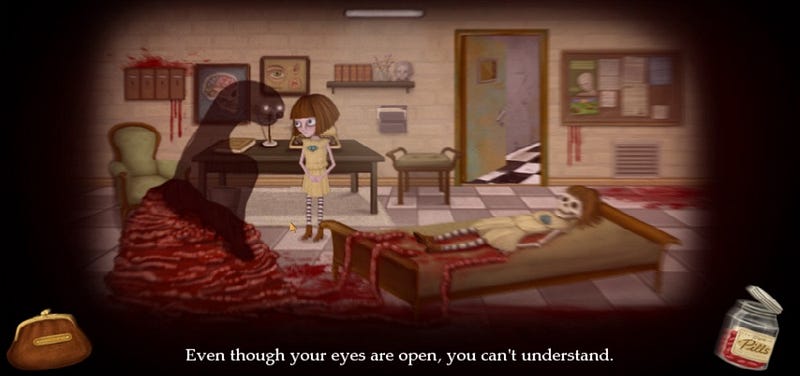
Living under constant abuse with a child’s worldview and imagination can make you feel like you’re living in a different reality than the people around you like classmates, co-workers, neighbors, and so on. I realize as an adult, my father just went to work then went home to his family like millions of people do every day. But to 8-year-old me, my father’s life sounded like an alternate reality. To have the respect he commanded! The ability to get in the car and go. I’d constantly envy my classmates when they discussed their lives, homes, and families. All of it sounded like alternate realities to me for sure. I always had an inkling something was wrong at home but couldn’t quite articulate it til I was around 8 or 9, one of the hallmark moments being when I accidentally spilled juice in a classmate’s kitchen and instinctively recoiled in defense when her mother came in. She looked at me strangely and calmly got some cleaner and paper towels and I gawped in wonder at how calm she was. It felt like I switched realities just like Fran would except it didn’t require medication, just a change of scene.
Thus, it was around this age I tried to talk about it but feared consequences if I did. I would get passed off as just a normal bratty kid who was put out I didn’t get that toy I wanted or something mundane like that.
Gaslighting can be a group effort if multiple family members are in on the abuse and/or just patently don’t care about you. My experience was that other adults in my life gaslit me and just may not have realized it. In some cases, attempts to look out for my well-being would just make things worse. I recall a conversation that went something like this:
Dr. Pretentious, School Guidance Counselor: The photographer says you’re feeling down and that’s why you wouldn’t smile when you had your picture taken. We want you to feel UP!
Me: Then I don’t want to go to this school. I will never feel “up” in this place. I hate it.
Dr. Pretentious: (laughs) Well, we can’t do that unless you move or your parents send you to private school.
Me: If I can’t leave school then I just want my mom to stop yelling at me all the time and leave me alone.
Dr. Pretentious: Why do you think your mom yells at you all the time? Why do you want to be left alone? What are you doing to make her yell at you?
Me: It’s just what she does. Screaming about really dumb things like a lobotomized banshee is an Olympic sport to her.
Dr. Pretentious: Maybe you need to put yourself in your mother’s shoes. She probably yells because she cares and doesn’t want to see you fail. After all, you’re such a bright girl yet your grades are so terrible. She’s probably under a lot of stress caring for your family and imagine how that makes her feel.
End scene with this white-hot rage bubbling up inside, knowing I can’t say anything else because that she means she calls my mother and/or more strange adults show up to ask stupid questions and observe me like a science experiment, and either one means things at home get worse.
This would be a recurring theme: my poor mother whose husband probably doesn’t appreciate her! Kids who don’t realize the sacrifices she made! I later realized how horribly wrong this was on both counts for reasons I won’t get into here, but I will say that the few times she interacted with the general public (she was very reclusive) she’d put on this very convincing show. After all, the beleaguered housewife living under eternal burden until the kids grow up is a plausible narrative. Gotta love patriarchy and a nonexistent social infrastructure that punishes women no matter what choices they make. Because parenthood in America is made so much harder and more stressful than it really has to be, it was too easy for the other adults nearby to relate to the impression she projected. When they had no fucking idea what I was dealing with. They didn’t know the real story, that as young as 7 it was totally common to go home and hear her screaming about how she wanted to burn the house down and/or kill herself. She would sometimes do random, unexpected malicious things or make good on threats so I knew all I could do was just…wait it out and try to survive.
But my late abusive mother was an embodiment of the duality seen in Fran Bow, really: motherhood in the US is so vaunted to the point that this isolationist abuser was discussed so reverently when alive then practically canonized by total strangers after she died; but it angers me to see so many mothers today who truly love and would do anything for their children are incessantly judged and mistrusted by the public, and constantly bearing actual emotional and financial burdens as a result.
Alternate Reality and Grief
Does gaslighting have a role in Fran Bow? It’s definitely plausible since it’s shown in later chapters that both Fran and Dr. Deern were deceived. In a sense, the player is also deceived because Aunt Grace is set up to look like a savior and Dr. Deern a villain. After all, the nurse in the asylum keeps a gun in her desk and it’s obvious Fran’s pills have been switched. Children are abused or neglected by the staff and ghastly medical experiments are being performed on them. All while Fran just wants to go home and believes her aunt is her…saving grace.
A theory I toyed with is that Fran’s alternate realities are a result of Aunt Grace’s abusive nature and true motives being revealed as Fran attempts to process the horror she stumbled upon and the subsequent grief. Fran could’ve run from her upon discovering her parents’ bodies, or she simply wanted to search for Mr. Midnight thinking that he ran away instead of Grace killing him.
Grace’s involvement with Dr. Oswald aside, her behavior is definitely in line with an abusive guardian. Regardless of how you interpret her saying Mr. Midnight is a traitor, abusers will often threaten, mistreat, or kill pets because they know how dear they are to victims. Numerous fan theory videos debate whether Grace actually kills Mr. Midnight or it’s just a horrible vision that gets reversed and he simply died after getting lost in the woods, but the action alone lines up with my lived experience having an abusive mother. Then Grace could be complicit in gaslighting Fran to believe she killed her parents to cover for Grace’s and/or Dr. Oswald’s nefarious deed.
Grief in and of itself can be a form of gaslighting.
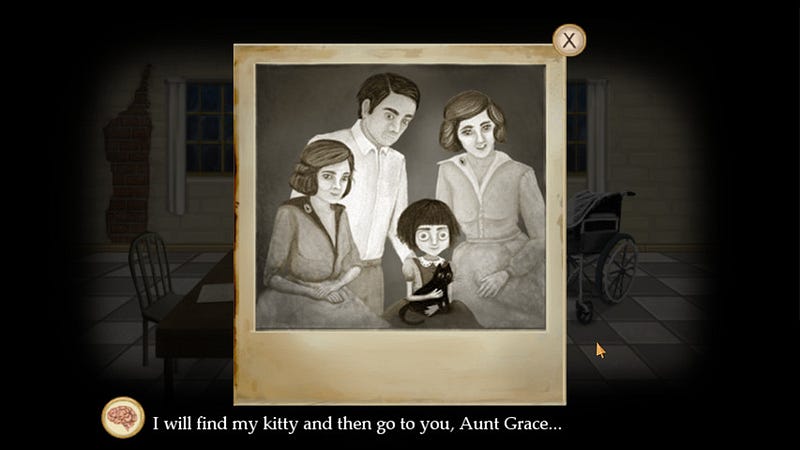
Grief can make you misremember many things about your past and present, as well as the memories you have of a person. It’s possible Grace was abusive all along aligning with the duality theme in the game where Lucia, Fran’s mother, is depicted as kind and loving. Look at the family photo: Lucia’s dressed more lightly while Grace has darker clothes. The intro of the game shows Fran having a nice time with Aunt Grace the night her parents are murdered which could just be a good memory — I have a couple of my mother’s good days — or it could be her purposely suppressing all the bad memories of Aunt Grace until it’s too late. I definitely had suppressed most of the bad memories of my mother around her death and the next few years. Because of the extreme state of vulnerability grief can put many people in, there’s people who will take advantage of this to make the grieving person do and/or believe things they might not have otherwise.
Fran and Dr. Deern exhuming her parents’ graves and seeing their corpses intact has spun tons of fan theories as to how Fran’s parents really died, and who is responsible. At the end of the game, Dr. Oswald essentially outs himself as the killer or at least as the person who arranged the murders. But whether he just shot them in their home and had Grace gaslight Fran into believing she killed them in a psychotic episode, or it was all the work of Remor, it made me think of something I saw happen in the aftermath of my mother’s death then other times I’d grieve in my life. Classmates and teachers alike would ask me if my mother died of cancer. I thought this was because she died not much longer after her 52nd birthday, not exactly young but definitely not old enough to be on the brink of death. I later realized it was because she was rarely seen in public so they assumed she must’ve been housebound in palliative care for a long time. After the usual litany of “I’m sorry” and “But you’re so young!”, 9 times out of 10 I’d always get asked how my mother died. (Pulmonary embolism despite a good prognosis when she first got sent to the hospital.) I then lost a friend and mentor at 20, his death shook the entire New York punk scene to its core and turned my world upside down. People constantly speculated on the cause of his death, was it a heart problem like his family said or did he overdose?
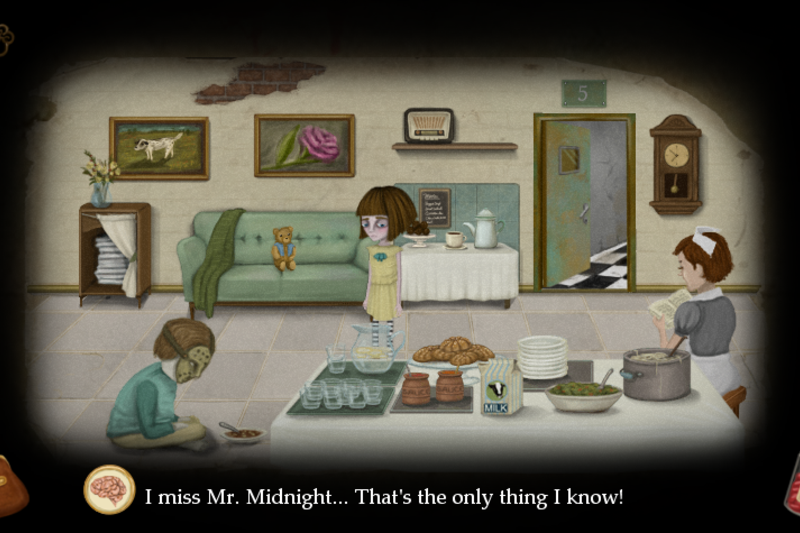
Both times of my life, I wanted to scream that it didn’t matter. Knowing the cause will not bring them back. I could see traces of this in Fran Bow for sure. While Fran is less concerned with how they died and just wants to know WHY, fan theories suggest that both the traumatic discovery and the grieving process make her question why they were taken from her and if knowing the cause could bring them back.
Even adults well aware of human limits will still ask why someone close to them died. Whether this person was a shitty abuser or they meant to world to you and your community, grief can force you to ask why. It can make you remember things differently. Hang over you like a persistent shadow, or cause you to create alternate realities where they never left you or perhaps where they were a better person than you recall.
Grieving for a lost childhood is something many child abuse survivors don’t permit themselves to do. It can feel like acknowledging someone just died or that someone you loved was dead all along. If you’re a survivor reading this, you have every right to grieve for what was denied to you. Even if you’ve got some happy childhood memories and not every single day was terrible, even if you grew up in relative financial privilege, you have permission to grieve for what you unjustly lost.
The Duality of Wishing Someone Would Save You But Also Wanting to Take Matters Into Your Own Hands
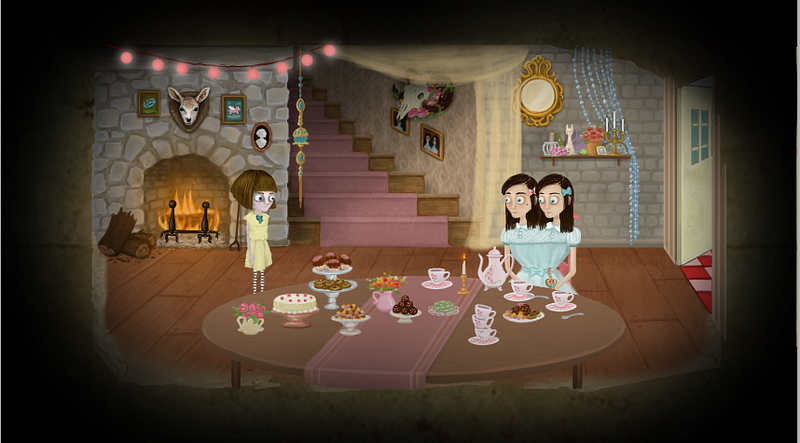
Duality is a major theme in Fran Bow. Fran’s mother Lucia and Aunt Grace are twins and Dr. Oswald performed gruesome medical experiments on twins, the most prominent being Mia and Clara who are ever-present in the game. And as my mind went in a million directions after playing the game, I thought about the duality in my own experience having to endure constant abuse.
The first was how I constantly heard adults justifying things they did “for the children” and that we were these sacrosanct beings who had to be protected at all costs, yet protected was absolutely the last feeling I felt. I constantly felt shit on and singled out, that I was always doing something wrong, and was never truly safe anywhere except perhaps my grandparents’ place in my true home several miles away. This led to me constantly wishing someone would save me so that things could be different and I wouldn’t have to wait until I graduated high school to be happy. That a social services agent would come sweeping in and have my mother arrested, or that my father would change jobs and go back to the city and I’d go with him assuming he won custody. Or I would go home to a totally new life and family with that coolly-dressed mom with ultra-teased hair like Taylor Dayne who I saw at a mall laughing with her daughter around my age, excitedly looking at beautiful clothes they bought.
But at the same time, I was yearning to not have to do what I was told for survival. It was rare I ever got to exercise any independence, at least to an extent suitable for a child. I wanted to take action like I was in a game, like the kids I saw in movies and on TV. I wanted to be independent and not have to rely on my family so I could live the life I dreamed of!
This hope that you’ll be saved can clash with that burning desire for autonomy in adulthood. It makes abuse survivors likely to continue the cycle by ending up with abusive partners who seem like they’re sweeping in to save them from utterly garbage home lives. Combined with my poor self-esteem from other factors like being bullied at school, it put me in situations with older guys that I now realize were creepy as fuck. It made me mistake surviving and living under constant abuse for maturity.
For yet even more duality, the abusive partners many survivors gravitate will either make these sweeping romantic gestures that are over the top that lead to controlling behavior, or they’re the type of partner my only notable involvements were: the aloof douchebag who treats you like this inconvenience and that you should be grateful for whatever scraps they give you.
Abuse can be cyclical. Numerous studies have found that child abuse survivors have an overwhelming likelihood of experiencing intimate partner violence later in life, with 30% likely to become abusers themselves: the latter being the case for my mother, as my maternal grandparents abused her but in different ways.
Still, once it was evident I wouldn’t be saved given that the other adults were convinced of this alternate reality where I was some brat who deserved all these terrible things and my mother was Homemaker of the Year? I knew my only choice was to just wait it out. She died before I became a legal adult, so it was then a matter of waiting out high school where I had assurance my 18th birthday was only about a month later. I was stuck in this negative feedback loop of waiting things out well into adulthood that didn’t necessarily have termination dates, like jobs and relationships. This didn’t bode well and I got fed up with waiting things out anyhow.
I suppose this essay is timely on a personal level given that my mother’s death anniversary was this past week. I would’ve let the day pass like any other except I had an eerily timely trigger the day prior on the subway, which gave way to this Twitter thread. Many responses to it describe this exact duality of wishing a random passerby would come save you but also dying to take charge yourself. I felt there was no better way to spend my mother’s death day than openly discussing my experience and lifting up other adult survivors of child abuse, and feel more attention needs to be drawn to this duality. It can manifest in both amazing and harmful ways.
Even discussing child abuse and coping with it has duality because it can be emotionally taxing reliving those memories. Hell, penning this was difficult at points. It can also be a relief and like you’re throwing off shackles, and declaring your life is now yours is victorious. It’s perfectly encompassed in this NYHC classic, “Contempt” by Warzone. I listened to it nonstop around the time I “came out” as not missing my late abusive mother. It seemed like just another upbeat hardcore singalong until you listen closely to the lyrics.
Magical Safe Havens and The Fantasy of Your Abuser Being Taken Out
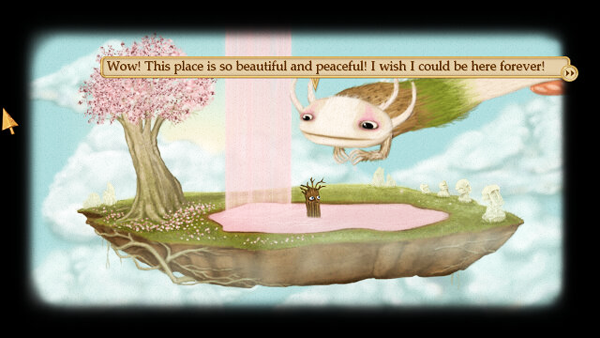
I felt like the devs crawled inside my head and put so many of my old thoughts and coping strategies into this game to a point that it was scaring me more than the actual content.
There are many ways one can interpret the Ithersta chapter of Fran’s journey. The genius wordplay on “vegetative state” comes to mind but I found it to be totally suitable mood whiplash from the rest of the game. People say “it can’t tell if it wants to be a horror game, sci-fi, or fairy tale and it just works” but I want to say this chapter is quite in line with how many abused children desperate to leave their situations or age out of them feel.
The games and other media I consumed combined with real-life places I visited would make me constantly dream of these fantasy lands like Ithersta. Some inspirations that come to mind are Etheria from King’s Quest VII and Erana’s Peace from Quest for Glory, the Frog and Toad books, and countless movies that I’d lose myself in whether they showed epic fantasy worlds like Labyrinth or the bucolic and variegated landscapes of California that would conflict me between wanting to go home to the city or move out there someday. I’d then picture the lush greenery and rollicking peaks in Rockland County and the sprawling pancake-flat lawns adjoining small main streets and party synagogues on Long Island as these realms that were so close to my real home just a few counties away but felt like an alternate reality. My childhood was rife with trekking to both regions for bar/bat mitzvahs as all of my extended family members’ kids came of age in the late 80s and early 90s, and those massive parties were one of the few blurbs of normalcy I felt in my childhood that gave me hope I too would one day have things to celebrate and feel some semblance of normalcy.
Still, all of these pixellated, celluloid, and real-life places converged into this unspeakably beautiful magical utopia where no one was hateful, all the evils of the other realities are carefully kept out, and it’s a land of plenty where nobody goes without. A place where I could finally experience feeling protected but not smothered, independent but cared for: truly safe havens where no one would ever hurt me again.
This is a common fantasy among many deeply unhappy children and survivors of childhood trauma. Sometimes these magical realms like Ithersta would serve as more than a coping mechanism, they’d provide hope that we’d have safe havens that would be waiting for us someday.
But it’s not the only fantasy abused children may have.
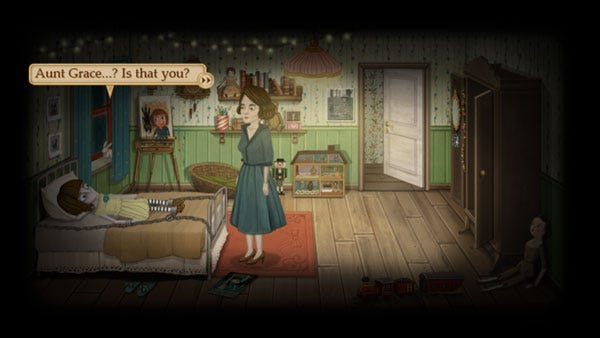
There’s a common fantasy that isn’t always discussed out of fear of stigmatization, and/or guilt for feeling this way. It’s the fantasy that your abuser is “taken care of”. So when I watched the ending cutscene of Fran Bow, I was totally transfixed on the screen with my jaw dropped because it was depicting something I used to think of so much as a child. I didn’t wish my mother would die necessarily, but that I’d want her to go away. To just…disappear?
But concurrent with the fantasy of being saved — after Fran spends the whole game saving herself and Mr. Midnight — Itward just shows up and brings her back to life after Dr. Oswald shoots her, and banishes both him and Aunt Grace. It’s implied they’re dead or perhaps just floating between realities. But no matter what happened to them, they can’t hurt Fran or anyone else now. This had me dumbfounded. They put to pixels something I had a hard time putting in words for years. I detailed my “AHA” moment in that Twitter thread, the day I realized I didn’t actually miss my mother: the day a frozen pizza fell out of the freezer.

But after that breakthrough, I developed a major guilt complex. I felt guilty for hating her, not missing her. Did this mean I was a bad person after all? It was a blend of fear and guilt beneath the polite veneer of someone saying “I’m sorry” upon asking about my parents then just saying thank you and changing the subject.
I didn’t stop feeling guilty and scared until I found other child abuse survivors in my interests and endeavors. The punk and hardcore scene is full of abuse survivors, some who were abused by both parents or just one like me. Others had siblings, aunts and uncles, and grandparents who committed these atrocities while their caregivers didn’t believe them, or were physically and/or sexually abused in foster care. A girl I became friends with talked about how when she was a child, her abusive alcoholic father was a dockworker and she’d fantasize that he’d drink too much and drown in the bay as a result. She felt guilty for this fantasy until she grew up and saw him continue to terrorize her mother by isolating her from friends and other family members and giving her an allowance like a child even though she had a job.
Then I saw that while it was a subcultural norm to bluntly say what you feel, there were plenty of other survivors all around me who just kept it under wraps. The scene was an alternate reality, if you will. I then befriended a girl in my statistics class who revealed that she had an abusive father and we helped each other through this time: me to no longer feel guilty for not missing my mother, and that she too wouldn’t feel guilty for wishing her father died of the heart attack he suffered shortly after we met. We had to reassure each other we weren’t bad people, they were, and it didn’t make us terrible to want their actions to catch up with them in life or death.
Wishing for an abuser to die or just to disappear without dying is an extremely common fantasy that child abuse survivors tend not to discuss with people who didn’t have adverse childhood experiences. It’s for a good reason too, as those fortunate enough to grow up without the influence of abuse could find this fantasy unspeakably horrible and think we’re evil people bereft of compassion and decency.
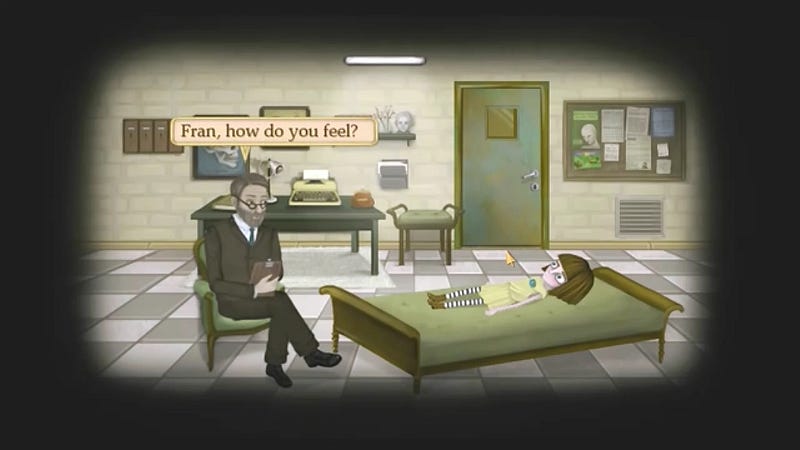
Some abuse survivors celebrate their abuser’s death. They can also grieve. It’s possible to do just one or the other or both. I felt INCREDIBLY guilty when my mother died, as if I willed it to happen and that I had to go along with this practical canonizing I was witnessing. It caused me to live a lie for years. If you’re a survivor, you don’t have to live this way. If you haven’t suffered adverse experiences like this, please remember that it’s not your place to tell a survivor how they feel or should feel. The same goes for forgiveness. It’s only the survivor who chooses to forgive or not.
Choosing Happiness
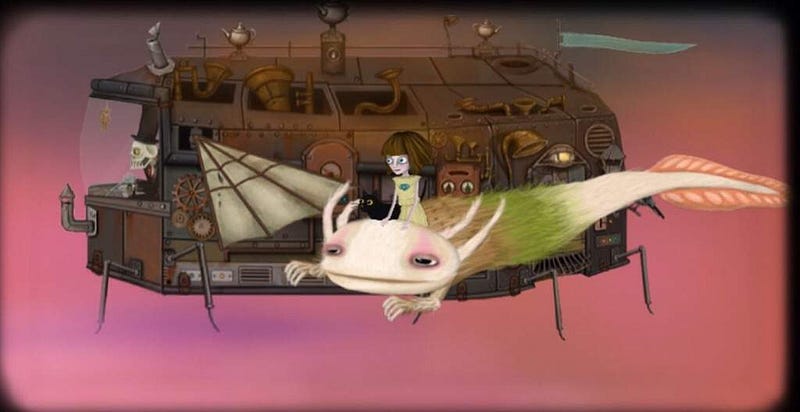
Fran Bow ends with Itward and Palontras saving Fran and Mr. Midnight, flying off to the magical safe haven of Ithersta after she makes the following remark:
“I still don’t know many things. But one thing I do know, that between guilt and fear, I choose happiness.”
Having spent my life in fear and guilt, I was left sobbing on the keyboard then slow-capping alone in my apartment as the room was flooded with this epic ballad that’s like a mashup of 90s adventure game triumph anthems and Type O Negative circa 1995 that bored straight into my soul just like Josh’s and Kenny’s respective keyboard and guitar work did when I listened to Bloody Kisses nonstop my entire teens.
Numerous comments on that video say that they didn’t feel triumphant when the game was over, just confused or unresolved. But to me, this ending is highly emblematic of surviving abuse and breaking free from abusive people and environments. No matter what it means to the game’s narrative, to me it felt like the devs reached right into my childhood brain and put my old fantasies into a game: I’d dream of someone coming to save me and whisk me off to this magical utopia where years of happiness await, never to have my abuser cause pain ever again. Not having to feel guilt and fear for feeling and coping how I did.
So, choosing happiness. Surviving child abuse and other childhood trauma isn’t monolithic. There’s ways these experiences stay with us and change us forever, no matter how happy and well-adjusted we are now. I definitely felt like the trauma I lived through and the way people tried to tell me who to be meant that I was stuck choosing guilt and sadness and not allowed to simply move forward. There’s also survivors who are trying to choose happiness but have extenuating circumstances preventing that, including depression or other mental health conditions separate of or perhaps resultant of surviving trauma.
I wrote this essay to both help other people better understand child abuse, and help other child abuse survivors come into their power to choose happiness.
I publicly discuss my adverse childhood experiences because no one can lord power over me anymore. I dictate the narrative now, just like how you can dictate your own interpretation of this game’s symbolism. Even if I only had 10 or no Twitter followers and didn’t have some degree of renown in the industry I always dreamed of being in: I would still be writing this essay and publishing it. I spoke about child abuse survivors and universal basic income in Hamilton, Ontario this year and regardless of how you feel about UBI from a public policy standpoint, I urge you to read more about how child abuse impacts survivors in their adult lives.
If I reach just one survivor and just one person who lacked a frame of reference for what it means to have lived through child abuse, then this wasn’t in vain.
There can be life after abuse. You can break the cycle. It is possible. Even if you never make sense of any of it or you had morbid fantasies about your abuser’s demise, or still have them, it’s not too late to grieve for what you lost and then choose happiness.


