
Homo Sapiens as a Problem
The Unattainable Dream of the European Enlightenment
How the Age of Reason flowed into a sequence of Calamities.
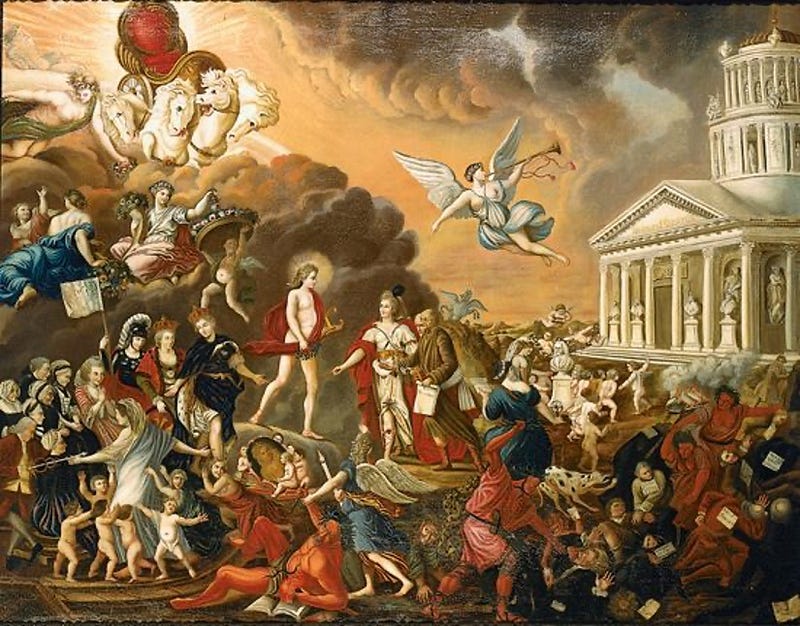
1. Progress and Ratio
It is easy to see the overwhelming part of the human race’s history as a struggle of Man for existence. In fact, human life was not much different from the eternal struggle of species for survival in the wild; rather, it was a continuation of the same ancient story. Humans were forced to spend almost all their time and energy trying to cope with the destructive natural forces or fight against other people for resources that were never enough for everyone.
Getting rid of this curse, full of violence and all kinds of suffering, and gaining peace and justice, was a cherished dream that Man passionately sought to achieve at all times. And that dream seemed somewhat unattainable since, for centuries, nothing had been changing. Human life for the vast majority remained solitary, poor, nasty, brutish, and short [1]. Periods of relative prosperity were often followed by invasions of hostile tribes; natural disasters overnight swept away results of hard work invested in sustaining life by decades, the plague wiped out populations of entire provinces, and justice could be only a dream. Sometimes only the capacity to feel pain could convince Man that the reality he found himself in here and now was nothing but life. The only hope that never left ordinary people was faith in God; Merciful Lord promised the miserable human beings that no matter how bitter their earthly existence was, their souls would obtain a better life after the body’s death.
But little by little, the world around began to change, and after a millennium of Dark Ages, and unlike all previous eras, signs of another time appeared in Europe. The endless loop of decay and regeneration seemed to have lost its integrity, and for the first time in history, the existential alterations could be felt within one’s lifetime. And even though, for the overwhelming majority, life remained unstable, unfair, and full of deprivation, a feeble light of new, never seen before, hope came to shimmer there as well. It was anticipation that human beings were not necessarily doomed to wait for ascension to heaven to obtain a dignified life.
That new epoch later had been called Renaissance. It had arisen as the resurrected creative spirit of Antiquity that engendered the blossom of culture and art, where Man appeared in the focus of its attention. And that new Man came to be perceived not like before. From now on, he was no longer only a servant of God, humbly awaiting His mercy; the sentence from the book of Genesis,
… God created man in his own image, in the image of God created He him; [2]
…got an extended meaning, asserting not human dependence or submission but — dignity. And since the capacity to comprehend reality is a conspicuous manifestation of the soul (or spirit), possessing reason gets most important in the image of Man.
Therefore, as the Enlightenment went on conquering Europe, belief in human reason started to replace, at least in the minds of many intellectuals, the faith in God’s providence; Man was more and more apprehended as a sentient creature, being capable of rational thinking, understanding Good and Evil, and realizing the purpose of his own existence. Finally, such a view took the shape of a philosophical movement called humanism.
That belief in Man was corroborated by the incipient technological revolution, a phenomenon that had never happened before. It was not just some separate inventions or advanced techniques occasionally appearing here and there; at the time, it could be recognized as a dynamic force, powerful enough to reshape the surrounding world consistently (so, it can be said that it was actually a birth of technology as we consider it today). That power, in turn, relied on science, which evidently was based upon rational thinking. So, the human capacity for logical analysis, free of superstitions or references to any supernatural forces, was thought to be the highest dignity of Man and an omnipotent means to transform reality; from then on, the public consciousness of European civilization had been changed forever. God was not the only creator anymore; His guise began to shrink and grow dull behind the eternal shining of human reason.
Of course, perceiving the capacity for reasoning as a unique and supreme human faculty did not appear as a revelation for the philosophers of that epoch. It has been represented in different forms since the very origin of philosophy [3]. Thinkers of all times used to assign a crucial value to human reason as a means to cope with numerous adversities that Man faced in life. However, at the same time, they were convinced of the limitations of human reason against the power of both nature and God (or gods). And it would not be surprising if it felt like essentially a tragic situation — to realize that although reason potentially is the most potent force in the Universe, in actuality, it is often powerless against the blind and devastating chaos.
But the human mind is not only capable of conceptualization; it is inclined to absolutize ideas as well. Because it never stops in the middle of inquiry, anything seen as having unlimited potential becomes absolute, at least in our imagination. That caused ancient thinkers to deliberate over reason not only as an internal property of the human mind but also as a part of the Universe. The Antique philosophy presented this idea as the concept of Logos.
However, it was long before the technological revolution that allowed making changes in human existence tangible here on Earth. The invention of the printing press, devices for obtaining energy from natural sources, and a means for mass production turned out to be the driver that managed to transform the human mind itself. So, regardless of the existence of either Logos or the Absolute Mind or God, the belief in the human capacity for rational thinking as an omnipotent means and a universal tool for solving any real problem kept growing. And if human beings could feel the power that only gods could possess before, nothing would appear as an insurmountable obstacle to the continuous improvement of life and society.
That was the idea of Progress that stepped onto the historical scene. The image of the endless cycle of ascent and decline represented in philosophy centuries ago [4] had to be replaced by another view. Now, human beings were not just a part of the Cosmos, having the same predefined destiny. From now on, they became its creators, starting the endless ascent of humanity to the heights of the achievements of reason.
This idea of constant development during human history turned out to be highly influential. It has become a matter of consideration for prominent thinkers of modern times — R. Bacon, Voltaire, Diderot, Condorcet, Kant, Hegel, Comte, H. Spencer, and others. And, perhaps, the pathos of progress and the glory of human reason had been expressed best by an English historian H. T. Buckle (1821–1862):
Therefore, it is that to write the history of a country without regard to its intellectual progress is as if an astronomer should compose a planetary system without regard to the sun, by whose light alone the planets can be seen and by whose attraction they are held in their course and compelled to run in the path of their appointed orbits. For the great luminary, even as it shines in the heaven, is not a more noble or a more powerful object than is the intellect of man in this nether world. It is to the human intellect, and to that alone that every country owes its knowledge. And what is it but the progress and diffusion of knowledge which has given us our arts, our sciences, our manufactures, our laws, our opinions, our manners, our comforts, our luxuries, our civilization; in short, everything that raises us above the savages, [5] who, by their ignorance, are degraded to the level of the brutes with which they herd [6]?
At the beginning of the passage, there can be seen an allusion to the great discovery of Isaac Newton (1643–1727) that makes a special sense; since the latter proposed a plausible model of the machinery of the Universe itself, then what else has to be required to prove the supreme significance of the human ability to make conclusions, based on logic?
However, the concept of progress has got not only supporters from the very inception of the Modern period but the criticism, continuing to the present day. Various thinkers argued that:
1. Its universal nature historically is not proven — (i.e., there is no evidence that the idea of Progress can be accepted by any society rather than by European only).
2. Technological progress is not tantamount to social one and does not guarantee the latter.
3. There is no proof that Progress is going to last forever. Over time it may stop or turn into something that essentially is not the advancement regarding society, at least in the meaning used by people in the present.
Maybe behind all those objections, not devoid of logic, one could also recognize some other, less rational motives. And indeed, amongst those who criticized the belief in Progress were philosophers of so-called irrationalism. This school of thought gained its name in the XIX century, but the idea emerged long ago. The term’s meaning is quite straightforward — those who follow such a view claim that reality can not be explained rationally. Thus, to effectively interact with the world, one has to consider those phenomena that Ratio either rejects or can not explain. Those include intuition, sensations or feelings, and other aptitudes of human perception, making sense of a particular part of reality solely through subjective experience.
One of the most prominent representatives of irrationalism was the German philosopher A. Schopenhauer (1788–1860), who claimed that the phenomenon of being responsible for the appearance of the real world is will, which is both a faculty of individuals and some transcendental entity. And since rationalism disowns such things, it constrains our ability to understand reality. Thus, it misleads the human mind.
There were other well-known people as well who expressed similar opinions. They appeared as adherents either of irrationalism or romanticism or some other philosophical and artistic movements. Amongst them were J. W. Goethe, Stendhal, A. de Musset, H. Heine, W. Blake, J-M. Comte de Maistre and many others. Another well-known person was Dostoevsky, the great Russian writer, and a deeply religious Christian. He saw religion as the only way to prevent people from committing Evil. And since he felt that the commandments of Christ were getting increasingly blurred, he was terrified by the oncoming epoch.
And finally, F. Nietzsche uttered his famous “God is dead.” [7] The true meaning of that phrase got clear not at once. Remarkably, the great German philosopher was perfectly aware of the inability of the public to embrace his prophecy in time. He used to say that society will unlikely be able to realize what is behind the loss of old values before the inception of the XXI century.
Nietzsche never believed in the “pure reason” (the term that I. Kant had utilized in the title of his most famous work [8]). He was confident that other forces drive human beings that we can only feel but not explain rationally. And Nietzsche was very concerned about that. Although he was not religious and persistently used to attacking Christianity (and Dostoevsky was one of his particular targets), he discerned a great menace for humanity in that denial. Because, as he anticipated, if no morally trustable belief is given to people instead of vanishing religion, we will come up to nihilism. And it would be a disaster.
But perhaps the most impressively grim anticipation of a nightmare that Progress ultimately can be turned into has been expressed in The Time Machine, a novel by H. Wells (it happened a bit later than the concerns expressed by Dostoevsky and Nietzsche — at the end of the XIX century [9]). In the view presented in that fiction, Progress caused an irrevocable degradation of the most essential human capabilities. It split humankind into two differently looking and existing separate races, apart from cases when representatives of one hunted and cannibalized representatives of the other… In a word, both of those races had much more in common with animals (where eventually ones appeared as predators and others as their prey) than with creatures deserving to be named humans…
Of course, any fictional narrative is a matter of imagination. However, sometimes, reality goes beyond either a dream or a nightmare. And today, it is tough to find anyone among scholars who would disagree that the implications of the Enlightenment turned out to be crucial for humanity. In fact, it was the Enlightenment that had formed the modern Western world, the outcomes of which profoundly impacted the entire planet. It boosted the development of human civilization, and for the first time in history, changes could be caused not only by the evolution of society but by its revolution as well. And results of that phenomenon emerged controversial as it has proven not only that Progress is real and achievable but that society and even the civilization as a whole could be advanced very quickly by the power of Ratio. It also revealed that the intentions of the human minds, which we still consider the best ones, may ultimately lead to numerous calamities resulting in tens of millions of innocent people being tortured, killed, or had their lives obliterated.
In a word, the influence of the Enlightenment’s ideas on the human mind caused not only creation; they summoned destruction as well. And despite several insightful forecasts of a general character, no one was able to predict the scope and severity of those consequences.
2. The emergence of the New World
The Great French Revolution is assumed to be a direct procreation of the Enlightenment, its final point, and, respectively, the first attempt to build a new world founded on reason. However, although such a view on the outcome of the Revolution is widely accepted, there is still no consensus amongst political scientists, philosophers, historians, and other scholars regarding the moral assessment of that event. While some claim it was the inception of Liberty in the West, others consider it a time of terrible massacres in the name of the idealistic doctrine created by abstract reasoning detached from both the social experience and human nature.
Anyway, it is accepted that society’s revolutionary (instead of evolutionary) transformation was neither peaceful nor reciprocally beneficial for the country’s citizens. And however complex, ambiguous, and controversial the Revolution’s impact on France, Europe, and the political course of Western Civilization was, it is well known that:
1. A new order used to be imposed by force instead of being taken by agreement between the members of society. Not surprisingly, such a turn caused fierce resistance from a huge amount of French people and led to numerous insurrections across the country, which can be classified as a civil war.
2. The revolutionary government had legitimized terror, institutionalized it, and massively applied it to suppress dissent. So, freedom, human dignity, and the very life were considered insignificant against “revolutionary necessity” and used to be sacrificed in favor of it all the time.
3. Political repressions quickly took the shape of massive punitive actions against entire French provinces or towns, which refused to accept the order enforced by Republican Paris. It caused unimaginable atrocities when not only were armed insurgents eliminated, but mass torturing and killing used to be applied to old people, women, and children. Thus, the attitude towards the inhabitants of the rebellious regions on the part of the revolutionaries appeared to be closest to the doctrine of religious war against the representatives of Evil, subjecting them to total annihilation.
4. The ultimate result of the Revolution for France appeared not as a society where the liberté, égalité, and fraternité [10] principle was established, but Napoleon’s dictatorship unleashed a war against the entire Europe. That, in turn, not only led to a vast number of deaths and suffering but ultimately caused disaster for the country that engendered the Revolution. France was defeated, humiliated, and suffered enormous human losses due to the insane ambitions of its “national hero.”
So, all this happened in the Age of Reason [11] came up to its completion. Is it possible that these tragic events were the outcomes of certain vices innate to them? And if it is, how to get along with the fact that not only The First Republic of France but all liberal societies today are based on those ideas? Does it mean there is a fundamental drawback in rational thinking, so praised by the Enlightenment thinkers?
We do not think so. We believe this is not a problem of rational thinking at all. In this sense, everything is perfect with it. Moreover, we agree to a large extent with H. T. Buckle (see above). There is no doubt that the European civilization, having such a principle in its foundation, appears to be the most potent and successful among others ever established on this planet.
However, this does not mean that no problem lies somewhere between the rational thinking principle and its practicing, performed by human beings, and speaking more precisely — by the biological species called “Homo sapiens,” which contemporary humans belong to.
From that perspective, the lesson of the Great French Revolution, which turned into a tremendous European tragedy, is difficult to overestimate. We consider the roots of most calamities, chasing the globalized world afterward, including both other “great revolutions” like the Russian and Chinese ones, which happened in the first half of the XX centuries, along with two world wars, can be discovered in that epic event.
So, what had happened, indeed? What was a crucial distinction between ideas ruling Europe before and after the Enlightenment? Why did the conflict between the old world and the new one appear so severe and so much violence committed? And finally, what had changed after it?
3. The Despotism of “freedom”
Nothing is more dangerous than a general idea in narrow and empty minds: as they are empty, it finds no knowledge there to interfere with it; as they are narrow, it is not long before it occupies the place entirely. Henceforth they no longer belong to themselves but are mastered by it; it works in them and through them, the man, in the true sense of the word, being possessed. Something which is not himself, a monstrous parasite, a foreign and disproportionate conception, lives within him, developing and giving birth to the evil purposes with which it is pregnant. He did not foresee that he would have them; he did not know what his dogma contained, what venomous and murderous consequences were to issue from it. They issue from it fatally, each in its turn, and under the pressure of circumstances, at first anarchical consequences and now despotic consequences.
Taine, Hippolyte [12].
One of the ideas that eventually possessed the consciousness of revolutionaries was especially remarkable. According to it, the entire previous social experience could be neglected and abolished, and something absolutely new, untainted, could be mounted instead. And such a belief is unlikely to emerge accidentally as perhaps something inside the human mind makes it obsessed with the idea of purity. What we mean here is humans’ proclivity sometimes to get rid of their past.
At first glance, such an aspiration may seem irrational, as it reduces our capacity for understanding reality, which exists for us not only in the present but in the past as well. However, humans have such a peculiarity for several reasons. One of them is that our experience painfully and eloquently proves our imperfection and, respectively, vulnerability. And insofar as it is natural for any living creature to avoid pain (either physical or emotional), this peculiarity gains a kind of sense.
So, as the entire old world is getting non-viable, then everything that before seemed unshakable and taken for granted is coming to be challenged, then refused, and, finally, dismantled. This rejection of a vicious past brings relief, but this is only half the deal because instead of old values that have lost confidence, people need to find new ones. And, of course, first of all, this concerns the understanding of Good and Evil, as well as the relationship on the one hand between them and on the other between them and Man.
The Old-World narrative told by the Christian [13] doctrine, is used to tell that Evil resides outside Man and appears as his external enemy. It can influence the mind and even occupy it for a while, but essentially, the human Soul and Evil are separate entities. But the revolutionary mind saw things differently. It had excluded God from the equation but kept Evil in place; undoubtedly, it is still there because human sufferings are real as long as we can feel them. Then, the attribute of Evil can be assigned directly to vicious individuals. And it has to be done if their worldview is not aligned with what the Idea prescribes, which provides the only reliable explanation of reality.
So, while earlier, Good and Evil had a transcendent, absolute, and immutable nature, in the new epoch, they became relative. Everything started to be evaluated regarding an individual’s attitude against revolutionary values, which became the epitome of Good and its yardstick.
After that, it does not take much to assign an individual an arbitrary moral assessment since the metric it is being verified is no longer metaphysically absolute. Instead, it gets determined by political expediency, which in turn, is established by those who are privileged to decide what society must be like.
Power, in turn, can only exist with its subjects, i.e., people. That means the relationship between power and the individual is, and always was, the alpha and omega of all societies, and power has always kept people subordinate. The first great social revolution had a chance to change this order and establish individual rights, freedom, and dignity as the highest values, replacing the value of absolute power by them. And this was the very idea that the brightest human minds used to elaborate for centuries, ultimately becoming a quintessence of the Enlightenment.
However, it did not happen. The great dream never came true, and Alpha and Omega remained in their places. And since everything comes down to possessing power, the rest becomes unimportant; as nothing fundamentally changes, the rules remain the same, and power usually relies on violence. People also stay the same, having very different opinions regarding a wide variety of questions that life consists of. Hence, time after time, their beliefs maybe not quite aligned with the revolutionary ideas or even contradict them. And this is the very gist of the conflict between Liberty and all social revolutions that have occurred so far [14]. Because the social revolution is not an affirmation of Liberty but changing one tyranny to another.
But how could it happen that the Revolution, declaring the liberation of Man, turned into the regime, making mass terror a primary means to achieve its political goals?
That question has risen many times and keeps resonating so far. And although asserting anything with certainty regarding history is a risky affair, some of its regularities can be discerned as many essentially the same events repeating throughout decades and centuries over and over again.
There was a remarkable momentum in the drama that unfolded during the advent of the New Society: the atrocities that accompanied its emergence appeared as a consequence not only of the immediate intentions of those who established the “Reign of Terror” and gave orders for mass executions and then ascended the scaffold one by another. The source of those atrocities took onset in the reasoning of some thinkers, considered the ideological fathers of the Revolution since their ideas already contained the philosophical rationale for establishing the essentially tyrannical regime. The fact that this time, the source of tyranny had been not a monarchy but so-called “people” affected only the slogans of those who aspired to power, but not the essence of the phenomenon.
The doctrine, fuelling the Revolution, enclosed an intricate quasi-logical claim, replacing Liberty, as the concept, based on individual freedom, with the need for “liberation of oppressed from the oppressors.” It was this vague definition that not only justified large-scale political repressions during the French Revolution but also set mass violence as the general method of achieving political goals for the most inhuman political regimes in the first half of the XX century.
So, it is hard to omit the philosophical work that many scholars consider as an ideological basis both for the Revolution and for the Reign of Terror policy, which became its integral part. It is the famous “Social Contract” by J.-J. Rousseau (it should be noted that many prominent revolutionaries believed him as their inspirer and the prophet of Revolution. His fame and the influence of his ideas were so enormous that in October 1794, his remains, with great pomp, were transferred to the Paris Pantheon [15]).
The treatise starts with a pathetical statement:
Man is born free, and everywhere he is in chains.
… that gives a reason to believe individual freedom is the author’s primary concern. However, then his train of thought takes on a very peculiar route. The last paragraph of chapter VII seems to us the most remarkable and revealing idea of the stated political doctrine. It says:
In order then that the social compact may not be an empty formula, it tacitly includes the undertaking, which alone can give force to the rest, that whoever refuses to obey the general will shall be compelled to do so by the whole body [16]. This means nothing less than that he will be forced to be free; for this is the condition which, by giving each citizen to his country, secures him against all personal dependence. In this lies the key to the working of the political machine; this alone legitimizes civil undertakings, which, without it, would be absurd, tyrannical, and liable to the most frightful abuses. [17]
Despite the paradoxicality of the phrase “forced to be free,” the idea presented here seems straightforward: an individual has to be subdued to something; here, it is mentioned as “the whole body” that possesses the power.
However, for many, it appeared differently because 1) by “body,” Rousseau meant people and their collective will. So, the general will could be considered just a sum of individual wills. 2) The Old Regime (monarchy) naturally felt like an epitome of oppression and injustice, so the proposition to take power out of the oppressor (monarch) and to transmit it to the oppressed (people) was perceived as an act of liberation. And since people are individuals, this means that everyone will be free.
It is not surprising that this idea fascinated so many idealists and, at the same time, provided the reason to deprive an individual of personal freedom: it promises Liberty to all and simultaneously takes it away from everyone.
Of course, this contradiction was noticed already by Rousseau’s contemporaries and had been criticized many times. However, no logical inconsistencies are essential for those who are eager to demolish the wicked Old World and build a shining new building in its ashes. Actually, the meaning of “to be free of tyranny” is much clearer than just “to be free,” isn’t it? Because tyranny implies that a tyrant is sitting on the throne. In other words, it is supposed to be personalized, while Liberty is a vague notion, and sometimes it seems necessary to constrain it not to allow “enemies of people” to get the tyrant back.
And throughout all the times, there were enough of those (and there are many today) who believe that compelled freedom is still freedom.
Thus, The Great French Revolution literally followed this doctrine for most of its path. “People” were considered “sovereign,” so it was they who made decisions regarding the rights and the very life of individuals. And as contradictions between the parts of the entire “body” were not allowed, those who conflicted with it were alien to people and hostile. This principle had been proclaimed literally, being reflected in the revolutionary term “enemies of people” (in the future, it will be widely used by the leaders of the successive social revolutions — in Russia, China, etc.). Such a definition provided an excellent opportunity to enlist an arbitrary number of people in the group of “enemies” and treat them as if they were not humans at all.
4. Children of Revolution
Terror was accepted as an official domestic policy in June 1794 when the leader of the First Republic, M. Robespierre, issued a decree proclaiming the establishment of a tribunal “to punish the enemies of the people. [18]” But by then, the repressions had already gained such scope and pace that the number of victims went beyond tens of thousands.
In fact, the terror started from the so-called “September massacres,” which occurred on 2–6 September 1792, when hundreds of prisoners were killed by an armed mob in Paris, Versailles, Lyon, and some other towns.
Two weeks earlier (August 18), La Commune de Paris issued a decree declaring which individuals should be considered “suspects.” Anyone could be put on this list since the criteria for this definition were very vague, being essentially outside of any legal formulation. It is easy to guess that the targets of this resolution rapidly became those who did not share the radical views of the revolutionaries.
Several days later, the minister of justice, Danton (who was executed later), demanded to arrest all “suspects.” So, the process was set in motion, and an excellent opportunity for unbridled violence had been provided for everyone who, for whatever reason, was inclined to it.
On the night of 29 to September 30, mass detentions took place in Paris (citizens were ordered to stay home until commissars visited them). However, the massacre itself began two days later when the news that the Prussians had seized Verdun, the last fortress preventing them from taking Paris, came. It triggered the mob to rush into prisons, killing anyone who was unlucky to be there at that time (remarkably, afterward, it turned out that most of the victims had nothing to do with politics. Many of them were either petty criminals or those who were awaiting a release from custody).
The revolutionary leaders made no particular inquiry, nor did they show any intentions to give a political assessment of the atrocities. Their position boiled down to regretting numerous killings, but at the same time, it was stated that it was the decision of the “people” and, therefore, impossible to prevent anyway. Thus, the first phase of the Terror had been implemented — it was justified. And after, all that was left was to go to the next stage and make it institutionalized.
“Law of Suspects” fitted the “revolutionary necessity” perfectly. It had been widely applied to those whom members of one or another “committee” considered as “enemy of liberty,” “enemy of the people,” or “partisan of tyranny,” and so forth. And ending up amongst the accused was tantamount to being executed very soon since those unfortunate, who found themselves in such circumstances, literally had no rights. Those people could neither ask for a defense counsel nor even refer to the testimony, as they were simply not eligible for that! It was nothing other than absolute judicial arbitrariness to level the value of human life down to the statistical record in an indictment.
But not only those who were set as “natural” “enemies,” i.e., — nobles and clergy — got squashed down under the grindstone of that annihilation machine. Along with the so-called “revolutionary tribunals,” there was a “watch committee” created to root out those who were considered the “counter-revolutionaries.” Insofar as the presumption of innocence was soon withdrawn from the legislative system, the number of cases surged. That, in turn, required an increasing amount of people to be involved in getting the job done, i.e., to maintain the effectiveness of the repression at the required level.
Finally, the practice of mass executions turned into a kind of autonomous process, driven more by its internal expediency rather than by the purpose it was initially declared for.
The slaughter’s scope peaked between September 1793 and July 1794, when about 17 thousand people were executed. Yet, this was not the whole harvest but only the victims of the “revolutionary tribunals” established by the National Assembly in March 1793. Besides, several notorious mass killings took place in French provinces, the most infamous of which occurred in the Vendee in 1793, where not only armed insurgents were killed, but thousands of women and children as well, only because they were residents of the rebellious region. The character of such atrocities prompted some scholars to call them the Franco-French genocide.
Thus, the revolutionary terror turned out to be indiscriminate in all senses. Anyone could be indicted as a counter-revolutionary and be imprisoned and then executed. And among those were mostly ordinary people, representatives of the so-called third estate (in other words, not noblemen or clergy, but ordinary citizens), i.e., the main subject of the revolution. Also, some famous people were among the victims of “revolutionary necessity,” including those who contributed to the advancement of ideas of freedom and Enlightenment, which, presumably, should have been brought to life by the revolution. In particular, among those people were poet A. Chénier, a scientist A. Lavoisier and none other than M. J. A. N. Condorcet, whose ideas and activity were recognized as a significant contribution to the Enlightenment, Progress [19], and Liberalism.
Another noteworthy aspect of this endless horror was the domino effect acquired by the executions, where executioners later got executed themselves. Very soon, this pattern became apparent, prompting one of the revolutionary leaders, Pierre V. Vergniaud (who, of course, had been guillotined afterward) to exclaim prophetically:
…the Revolution, like Saturn, will successively devour all its children and finally produce despotism with the calamities that accompany it.
And indeed, this fate befell many revolutionary leaders and the regime itself.
The arrest of Robespierre on July 27, 1794 (he was executed without trial on the next day) appeared as the final point of the Jacobin dictatorship and the beginning of the so-called Thermidorian Reaction. It was neither the immediate end of the Revolution nor of repressions, but this event is known as the completion of the Reign of Terror.
The revolutionary regime [20] existed for several years after that, until the end of 1799, when Napoleon Bonaparte took power over France, and the Republic turned into The First Empire.
5. No way back
It is dubious that mass executions, massacres run by the brutal mob, atrocities performed by the revolutionary forces in provinces, suppression of dissent, and cancellation of liberty during the “building” of the “new society” were exact things that the Enlightenment thinkers would be happy with.
However, it would be unfair to claim that atrocities and injustice were the only hallmarks of the Revolution. Otherwise, it unlikely would be called Revolution. And it was a revolution indeed; none of the scholars denies the tremendous impact of this epic event on Europe and that part of the humanity we call today “The Western World.” France turned out to be the very country that so dramatically had heralded the new world with all its novelty and contradictions to the civilization. The very logic of history was apparently enclosed in that transformation; the Republic had died but did not sink into oblivion. And when the Empire of Bonaparte was established after it, the emperor never tried to turn back to the Old Regime.
Certainly, Napoleon Bonaparte himself had emerged as a direct spawn of the Revolution; however, liberté, égalité, fraternité was not his motto. That man had been driven by an insurmountable thirst for fame. His hypertrophied ambitions (“ego,” as we would say today) were at the cost of millions of lives across Europe. But even that would not avert the compatriots away from him. And since France had been winning over its enemies, again and again, his popularity had been growing and eventually got an incredible height. In fact, he possessed absolute power. It was real power, not a surrogate that unlucky Louis XVI had, whose privilege to rule was corroborated by nothing apart from the inherited title. And, of course, the industrious militant ruler felt the irreversibility of the new epoch distinctively enough not to go against it but head it. So, many of the revolutionary gains formally remained in place. Of course, essentially, they went emasculated (that was especially conspicuous regarding the Constitution) in favor of the Emperor; nonetheless, a complete rollout back was not possible.
So, France seemed infected by the promise of Liberty; several years after Napoleon had lost everything, the next French Revolution (1830) happened, then the third one in 1848, which proclaimed the Second Republic. And finally, not too long after Napoleon III’s empire existed, the Third Republic was established, which hammered the last nail in the coffin of the monarchy.
Thus, the Gauls’ homeland had proven the possibility of reforming the entire society in a historically brief time, and some reforms emerged doubtless achievements.
The nation underwent a significant modification of the most important sides of life, including economics, the military, education, and legislation. And those changes impressed the rest of Europe a lot. For a long time, the French language remained as de facto the means of international communication (it spawned the term Lingua Franca), and no one in London, Vienna, or St. Petersburg could be admitted as a person of high society without knowing it. The French would have gained such popularity if it had not been unified instead of its previous state when it was diverted into several dialects across the provinces. And as the language proliferated worldwide, art, culture, and the very mindset followed it.
After the bloody Napoleonian wars, there was a more or less politically stable period in Europe without serious conflicts between large countries. It was the height of the epoch of imperialism; the world beyond the Old Continent was huge; it would seem that the European countries, with all their technological superiority, could enjoy lucrative trading (not neglecting plunder, though) with the rest of the planet without getting into a confrontation against each other.
But it was an illusion. Everything went awry. One catastrophe after another started to happen in Europe.
6. Counter-Renaissance
The back side of Progress
During the XIX century, Progress gained extreme momentum compared to all previous epochs. A multitude of key inventions for modern civilization emerged within several decades; those were various means of mass production like industrial machines and systems, vehicles like locomotives, automobiles, and airplanes, technology for managing energy (steam, electricity) and transmitting information across the globe, and so on. Industry, trading, science, and art blossomed. Man has obtained tools efficient enough to transform the environment literally before our eyes.
But whereas the power of the human mind became evident, the prudence of human beings was called into a big question. Suddenly, the war burst out in Europe, and unlike previous military conflicts, this time, not several countries but the entire continent got involved. That event has been called World War I, and this definition reflected well both the scope of disasters and the number of victims.
But even before its end, the Bolshevik Coup took place in Russia (which in the former USSR has been called the Great October Socialist Revolution), after which the colossal empire ceased its existence. And while its predecessor — the First French Revolution — turned out to be violent, bloody, and contradictory, the Bolshevik Coup surpassed it several times in the scope of injustices, killings, and all kinds of atrocities.
And before Europe recovered from the shock caused by all these political and social upheavals, the next world war fell upon it, and it came out even more terrible than the first one.
Finally, very little was left of the erstwhile Old Continent. Its geopolitical landscape had been wholly reshaped after several decades since the beginning of the 20th century (as the British historian E. J. E. Hobsbawm (1917–2012) put it, there were “long nineteenth century.” [21] and “short twentieth century.” [22]). Another crucial consequence was that faith in Progress no longer seemed unshakable. It turned out that its achievements can contribute to Evil no less than Good.
But why did history go on this unfortunate path? What was the reason that after the Enlightenment, which directed Man to conscious existence, violence, savagery, and massacres not only did not disappear from the agenda of mankind but, on the contrary, gained a worldwide scope?
What compelled Europeans to get involved in a suicidal slaughter in 1914 when there was no actual threat to anyone’s existence or development?
Why had the Russian empire failed to resolve its internal social conflicts, let freshmen revolutionaries seize power, and then drown the enormous country in blood?
Why, after the shock due to all those adversities, the Nazis came to power in Germany? Was not the antihuman essence of National Socialism clear enough for the successors of the Antiquity and the Enlightenment in the first place, and why did it demand millions and millions and millions of victims to realize that?
And do historians, politicians, sociologists, etc., have any more or less plausible conclusions regarding the causality of that bloody horror? Or do they merely believe (or even just pretend to believe?) that they do, while instead of giving a reliable answer, existing explanations just get tailored to public beliefs?
The total destruction precedent
So, the beginning of the 20th century has been marked as the first World War in the history of civilization [23]. Its consequences appeared catastrophic for the entire continent, but in addition to the obvious horror due to millions of victims, this event had one especially ominous circumstance: once again, mass violence took the shape of an autonomous process developing beyond anyone’s control and following its internal logic. As if a certain invisible but relentless force of destruction had been controlling everything, making people use their intellect to perform as much Evil as possible.
It was unlikely that anyone could foresee such devastating and far-reaching implications of the conflict that emerged between two European clusters of nations. That situation was, indeed, unprecedented: humans had never possessed such powerful forces with which Progress provided humanity during such a historically tight timeline.
In fact, there were no winners at all. But even worse, the Treaty of Versailles appeared not so much the war’s end as an overture of the next catastrophe. Assigning Germany as a scapegoat later allowed Hitler to play on the injured national pride of Deutschen and predetermine the nation’s political choice. Folk that spawned Leibniz, Kant, Hegel, Nietzsche, Bach, Beethoven, Goethe, Heine, and so many other brilliant thinkers and artists turned out to be unable to reject the anti-human Nazi ideology hostile to the very European spirit.
It is necessary to notice that all of that had been taking place against the backdrop of the coming of totality. Amongst a variety of meanings referring to this term, there is a philosophical [24] one. Depending on the context, it has slightly different interpretations, but the common feature appears as many entities fall into subordination to one that governs them on a systemic basis. The natural property of this system is to aspire to proliferate control over as many objects in the world as possible if those are of any interest to it.
Apparently, the emergence of totality is a natural outcome of Progress: time both for the transfer of information and for overcoming distances is shrinking; the pursuit of maximizing production leads to the standardization of its means and methods. Following this, many other aspects of life move toward unification; the whole world is becoming more and more interconnected. And this, nothing but totality (as the name implies), predetermined, among other changes, most important phenomena of modern times, such as globalism, totalitarianism, and world wars (since the latter get a total character), etc.
Despite some clearly negative manifestations of this phenomenon, it can hardly be regarded as something vicious on its own since it only facilitates the implementation of human intentions. And this regards Progress as a whole, but its impact on the character which the First World War I gained, somehow assigned a tangible dehumanized perception to it. Thus, the fears of Dostoevsky, Nietzsche, Wells, and some others appeared not baseless…
Man is an expendable
The significance of the so-called “Great October Revolution” went far beyond Russia. This phenomenon had a tremendous impact on worldwide politics, leading to the emergence of a global anti-liberal political system. Eastern Europe after World War II got under the yoke of the communist regimes, and the world security system was threatened, which almost led to a global nuclear disaster due to the Cuban Missile Crisis in 1962. But perhaps the most far-reaching consequence of this social and political experiment turned out to be a radical existential shift in the worldview of hundreds of millions of people: the value of human life and dignity had been proclaimed secondary to the ideological dogma.
This radical social revolution was not the first since the First Republic set itself to the same task. But Lenin, Trotsky, and other Bolsheviks having learned from the experience of their predecessors, turned out to be more consistent than them. They found no reason for any moral re-assessment of the Reign of Terror despite the fact that it was never accepted by the French people. On the contrary, they considered terror a justified means and a necessary tool, perhaps needing more efficient use. And then, they applied it as the primary method to shape a new society in the former Russian Empire. In real life, this meant literally going for the jugular, destroying tens of millions of people’s lives and their souls mutilating.
Essentially, the ideology Lenin and his comrades adopted used to assign the attribute of Evil to a particular group of people (designated by the Marxist doctrine as the class of “exploiters”). That was performed based on an arbitrary moral assessment and was enough to exclude those people from the members of society possessing human rights and freedoms.
It should be noted that K. Marx was barely the inventor of this idea. One of the most remarkable attempts to propagate it across public consciousness had been undertaken back in January of 1789 by Emmanuel-Joseph Sieyès (1748–1836) (that man was a kind of invulnerable member of the revolutionary government, who managed to avoid the common fate of many of his associates, i.e., guillotines). He had written a pamphlet titled “What is the Third Estate?” [25] which instantly became extremely popular in the run-up to the collapse of the monarchy. In that essay, he notably argued that the nobility, “by reason of its privileges,” is not a part of the nation, but “a nation within a nation.” The word “aristocrat” has since acquired an utterly negative connotation. For several months, nobles and clergy officially lost the right to participate in the political life of French society. And shortly afterward, they proceeded one by one to the scaffold.
But while that pamphlet was just an episode, the doctrine, having that idea as a core component, was developed methodically precisely by Marx, who put it into the foundation of the state of “social justice.” And then his ardent Russian successors did their best to implement it in real life.
And they did it. The country had been completely remolded. The slaughter of “enemies of the people” reached such a scale that it would make Robespierre and company turn green with envy and feel like pitiful amateurs. The great Russian culture and traditions that had been forming for a millennium were obliterated in several years, and the monstrous large soulless mausoleum, having neither history, memories, nor purpose, was erected upon the ruins.
After that, the societal attitudes turned upside down. Now, the government existed not for people since they were not seen as valuable anymore. Instead, there was a certain deity appointed in their place. It was represented by the Bolshevik ideology, and this idol demanded constant sacrifices. Of course, the children of the Revolution soon got among the victims: most of the Russian revolutionaries, like their French predecessors, were accused and then executed or secretly assassinated one after another in a deadly scuffle for power within the Communist party. Everything evolved according to the standard scenario, which required one party faction to exterminate all others. Naturally, then this process of assassinating turned against the power itself and ultimately cleaned up the way to its top for the most ruthless, cunning, and prudent monster amongst surviving ones, Stalin by name. Henceforth, the entire party got subordinated to the will of one, and each member of its leadership used to tremble every single minute for fear of losing his/her life.
But this is still not a complete picture of what was happening in the newfound “kingdom of justice.” The ever-pervasive fear, betrayals, and organic in such a paranoid atmosphere, killings due to suspicion were not limited to the circle of elites but were spreading across the whole society. Ordinary people quickly became demoralized and got involved in surveillance after each other, following the call of the guardians of the revolution to report all suspects, including acquaintances, friends, and relatives. Naturally, any disrespectful word about the party or its great leader was enough for arrest and judicial arbitrariness. And, as during the Reign of Terror, no solid evidence of guilt was required for this, which, again, provided an excellent opportunity for reprisal against someone for personal reasons.
Thus, morality, as it was understood in all previous eras, had evaporated. There was neither virtue of Christ, nor dignity of Man, nor compassion anymore. Everything was relative except for the only axiom — the crystal purity of the party and its leader. It meant that any action praising them was equated to Good; everything that put them in question was Evil and must, therefore, be extirpated immediately, without hesitation.
But the Sacred Idol is never saturated. After a while (in the thirties of the 20th century), an artificially caused famine started in the former empire. Its most infamous episode is now called the Holodomor (this event took place in contemporary Ukraine during 1932–1933). But this terrible atrocity, which took the lives of more than three million people, was only a fraction of the plan carried out in many areas of the USSR as a part of the Communist Party’s undeclared domestic policy.
Along with this event, many others had the exact characteristics of mass violence: peasants’ rebellions, drowned in blood, tens of thousands of people sent to concentration camps for slave labor, and so on. Indeed, the chronicle of the crimes of the communist regime against humanity is the story of Hell here on Earth. That regime appeared like a kind of device, elaborated by humans for systematic killing, torturing, and humiliating millions of other humans. And that machinery had been working without interruption for decades.
All this was set as an inalienable part of the state organism (quite following the spirit of the term which Rousseau proposed in his “Social Contract” — the whole body). The essence of domestic policy on this matter was straightforward: people were considered consumables. Among other things, this explains the enormous imbalance in human losses during World War II between Nazi Germany and the Stalinist USSR. While the first had lost about 6,5 million on all fronts, the Soviet Union had more than 26 million perished. However, this gap was not so much the result of the incompetence of the Soviet leadership but rather a deliberately developed approach to getting rid of the excessive amount of people. There was a rule established in the Red Army that required a certain percentage of losses during military operations to be reached, and, in particular, a period was set during which a large military unit, such as a division, should be depleted (in fact — wasted). And there was a certain logic in that since Stalin was wary of the emergence of large communities of people united by any purpose, especially being armed due to circumstances. Thus, the methodology was rational in itself: not to allow people to stay united for too long, which meant they simply should not stay alive. The significant superiority of the USSR over Germany in human resources allowed Stalin to stick to this kind of strategy without risking losing the war.
So, one of the strange results that Progress caused was the emergence of a state of a genuinely new type, where society had been mutated into a system reproducing endless repressions against Man. The fundamental function of this cannibalistic mechanism was the effective disposal of people if it became strategically beneficial for a narrow circle of people whose sole purpose was to retain power. And this inhuman system methodically crushed everyone who got suspected not only in actions but even in thoughts opposing the doctrine that the perverted mind of one outstanding philosopher had elaborated in the mid of the XIX century.
The supreme race
And the final chord of the tragic cacophony that toppled down upon Europe in the first half of the 20th century was played by Germany again. This time, the cause of the disaster was not a sophisticated idea of some insane genius. Although the man whose name later became synonymous with Absolute Evil was in his way both insane and brilliant. Like no other, he was aware that Evil could be turned into righteousness within the human mind. And he knew how to achieve this.
It was Adolf Hitler, and it was his febrile psychopathy about the “superior race” that inflamed hearts and turned off the minds of millions of Germans. He was going to demolish the very gist of the worldview formed by the ideas of Antiquity, Christianity, the Renaissance, and the Enlightenment since all their philosophical heritage was heralded wrong. That virtue that generations of the thinkers of the Old Continent believed in and for the right to follow, which the European Civilization fought to the death against hordes of all kinds of invaders, was denounced as a degenerative bias.
At the same time, the idea of Nationalsozialismus itself was so ridiculously simple that it could not have failed! Under a particular condition, of course. To make this work, it is necessary, first of all, to constrain the area of human perception. Their consciousness has to be tunneled towards forming a specific worldview, and anything challenging should not penetrate there.
Above all, that means eliminating those who did not agree to follow the only prescribed way, especially if those wanted others to keep looking around. So, after seizing power, Nazis rolled up their sleeves and vigorously took over the matter. They started building the concentration camps, methodically pushing untrustworthy people in there, pressing citizens’ consciousness with the massive and never-ending propaganda flow.
Although the National Socialists were not overwhelmingly popular in the Weimar Republic, it did not take too long to construct a different world inside the heads of ordinary people. And then it was enough to indicate where they should start to make sense of the quasi-reality already programmed for consumption by their sterilized brains. According to the data provided by that brand-new navigation system, both “clean” and “dirty” nations could be found on the world map. And this was a fair reason to get rid of all the inferior races since their very existence threatened the Third Reich like rats threatening to bring a plague into a beautiful city.
Thus, with all reverence to Russian communists who managed to achieve a scope of atrocities never seen before, it can be stated that Hitler lifted the art of dehumanization to a new high. That perfectly conformed to his doctrine, though. While Bolsheviks assigned a status of Evil to particular groups of people, Nazis managed to get the very notion of human being out of the discourse. They just excluded the notion of Man from their agenda regarding those who did not fit their view of “racial purity.” And since there were no humans among Untermenschen, then there were no issues with morality regarding them as well; and those were turned into spiritless stuff. They were animated things; however, they were pretty useful, as physiologically, they were very similar to Aryans. Their reactions appeared to be identical to human emotions: pain, fear, pleasure, and so on. So, they were perfectly suitable for scientific experiments on organisms. They could be put into various extreme conditions to see where the threshold of surviving lay. And after all, the Reich needed a labor force — to build factories where weapon to conquer the world was manufactured. So, since they were things, the most rational approach — was to utilize them for physical work until they got worn out to death.
Ultimately, the vast lands in the East should have been purged of savages and turned into a possession of the Reich. Then Western ones, populated by degenerative non-Aryan Europeans, would also fall under its subordination. Then the entire world would be fixed and run according to the will of Herrenrasse and its Führer. As a result, a new era would begin in the history of mankind.
Although the Nazis and the Russian Marxists regarded each other as mortal enemies, they had surprisingly much in common in their worldview: both denied the universality of human essence. For Marxists, a sufficient reason for excluding an individual from society is belonging to a particular social class; for Nazis — belonging to an “inferior race.” It does not matter that in the second case, there was a pseudo-scientific explanation (that had nothing to do with real science) proposed, and in the first one, all the reasons were based upon the necessity to achieve arbitrarily defined “social justice.” Both doctrines stated that all people must live according to morality that constituted a certain ideology. Any alternative view was proclaimed as wrong and had to be eliminated. Ultimately, in their view, both regimes were expected to reshape the entire world.
Remarkably, more similarities between the social revolution in Russia and WW-II than between the two wars may be found: intentions of leaders who facilitated WW-I on the one hand and those who committed a Bolshevik revolt and WW-II on the other seem to be based on different moral grounds. Whereas WW-I can be called a conventional war, WW-II does not fit that definition: the Nazis considered not only the armed forces of the opponents but also their civilian population as a subject of annihilation. According to the famous Carl von Clausewitz (1780–1831) adage, “War is the continuation of politics by other means.” [26]; from this angle, the Nazis’ politics itself was directed against humanity. And essentially, the same ethics underlies the actions of revolutionaries (French, Russian, Chinese, Cambodian, etc.) as certain moral qualities were assigned to an arbitrarily taken group of people. That gives a reason to talk about the emergence of an unconventional approach to achieving political aims. Thus, the crucial outcome of the Bolshevik revolt and the emergence of the Nazi regime was that those led to an anti-humanist coup in the system of human worldview.
And then, we can say that Nietzsche (in essence) and Dostoevsky (partially) were right, and we would define what happened to Europe at the beginning of the 20th century as a counter-renaissance. As for the continuous linear movement forward, in actuality, it turned out to be another dialectical twist upon the spiral of history. Once again, the force that radically changed the world was nothing else than a violent clash of opposites.
Thus, in the first half of the 20th century, Progress led not only to the impressive advancement of civilization. It became apparent that people do not hesitate to use its achievements for massacres and destruction; it turned out that this phenomenon can give people not only a solution to the most severe problems of mankind but also become a source of Evil.
And then, the very value of human reason unexpectedly came under question. Denial of religion, so resolutely promoted by the Enlightenment, did not liberate the world from violence and injustice. Instead of one dogma, humans adopted other ones. And whereas Judeo-Christianity was asserting ideals that did not contradict the idea of virtue, newly minted moral doctrines have reduced the value of human life and dignity to a minor formality, completely subduing them to the ideology.
So, if human reason turned out to be unable to prevent such calamities, can we rely on it at all?
Related story:
References
[1] Hobbes.
[2] Genesis 1:27
[3] In Greek philosophy, for example, the very similar term called Nous (νοῦς, νόος) was widely used in similar terms by numerous thinkers.
[4] Particularly — by Plato and Aristotle.
[5] Emphasis is ours.
[6] Buckle, p. 509.
[7] (Nietzsche, Thus spoke Zarathustra.)
[8] (Kant, The Critique of pure reason.)
[9] It was published in 1895.
[10] The motto of the French Revolution.
[11] Another name of the Enlightenment.
[12] (Taine, The origins of contemporary France.)
[13] We use the explicitly Christian meaning here, rather than a usual reference to the Judeo-Christian tradition, as the understanding of the essence of evil does not entirely coincide in Christianity and Judaism.
[14] We want to emphasize that we mean social revolution, i.e., such one that violently changes the social order. But this not necessarily regards similar events when that order remains the same.
[15] The former church of Sainte-Genevieve.
[16] The emphasis is ours.
[17] Rousseau, p. 27.
[18] (Furet, The French Revolution 1770–1814, 146)
[19] Many researchers believe Condorcet’s work Sketch for a historical picture of the Progress of the human mind (1794) is one of the essential works substantiating the idea of progress.
[20] It was a time of ruling the so-called Directorate (November 1795 — November 1799).
[21] (Hobsbawm, The Age of Empire: 1875–1914.)
[22] (Hobsbawm, The Age of Extremes: The Short Twentieth Century, 1914–1991)
[23] We mean here the European civilization, not the entire humankind.
[24] In particular, this term was presented in Hegel’s philosophy, but we use our own, which is not equivalent to the Hegelian one.
[25] Emmanuel Joseph Sieyès, comte.
[26] Clausewitz, Carl von, p. 87.


