
The Two Pains in Therapy
There are two kinds of pain in therapy: pain from avoiding our issues, and pain from going through them. To the patient, they feel identical, but to the therapist, they are night and day. I say night because the dream-image of the sleeping patient symbolizes stasis whereas awakening connotes the healing and consciousness that mark the true North of psychotherapy.
When a patient breaks into sobs, my human reaction is sympathy. But on the inside, my therapeutic reaction is akin to scoring a goal. Because those tears wanted out. To finally acknowledge how much we were hurt or how conditionally we were loved: those tears have waited, stored, festered for decades. Only once they leave can their space be filled with love, compassion, healing. Only once we let go our pain can we move past it.
Patients all too often deny the depth of their pain — my parents did their best; others have it worse; it was a long time ago — or deny their exit from that depth — I’ll never feel better; life is hard; didn’t everyone have a bad childhood? Everything we do to talk ourselves out of feeling our pain is a defense our pain creates so as to stay.
Most of the chronic issues patients bring to treatment — from mood (depression, anxiety) to attachment (rushing to or from love)— are manifestations of pain that started as a guest (acute) who ended up moving in (chronic).
When we suffer, pain is a natural guest. Those who do not open the front door to let pain spend the night may find in the morning that he came in through the back door and is now chained to the bed. Of course, your squatter will eat your food just as you will breathe his air. He will become a part of your home until you believe he is a part of you. That is what your pain wants, after all: to become a part of your life.
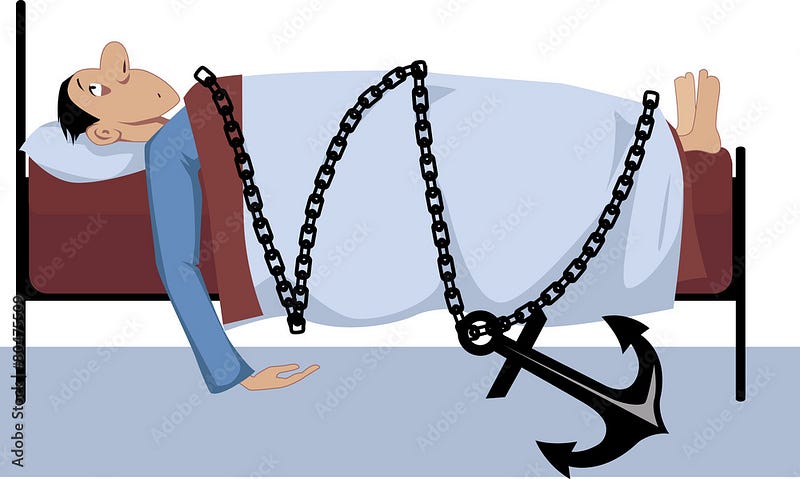
When you finally get him out, you will do what you were unable to all the years you were inured to his staying with you: you will feel him. Paradoxically, you will feel him in his absence, like the wound under your chains, and mourn him as you let him go. This is analogous to addicts feeling the pains of withdrawal once they finally stop their vice.
This is the pain you want to see your patient go through, for it is the payment they must make for their freedom. Pain that becomes life is meaning. Pain that becomes pain is misery. This is why therapy is not about lessening pain, or we would replace it with a pill. More than aspirin for the soul, therapy is about becoming conscious.
But it’s fun to be a narcissist much of the time just as it was often sad being Tolstoy. Just as we do not mistake pleasure for happiness, we needn’t confuse pain for lack of growth. Nor does misery means growth while pleasure is to be shamed. When my patients get laid, I say, ‘Good for you!’ If they are not also straight men, they are surprised at my reaction. As if an orgasm were a vice any more than is a depressive episode a virtue. And when we inhibit the one, we often find ourselves constrained or lost in the other.

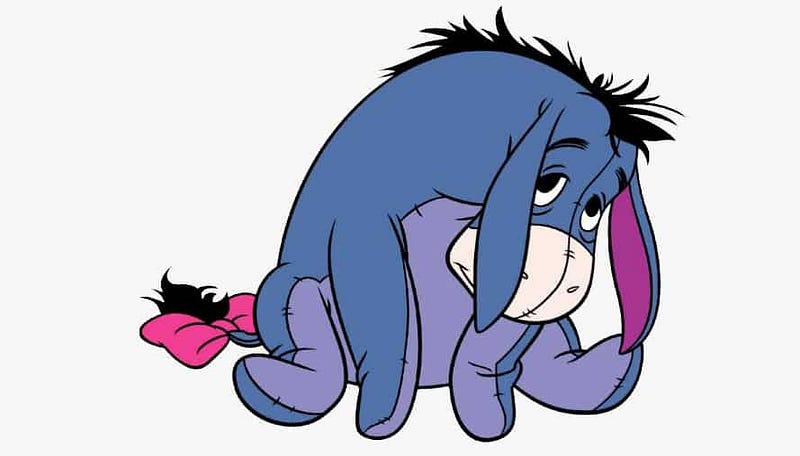
Jung teaches us that the therapist-patient dynamic is often complementary. Hence an Eeyore needs to be reminded of love just as a Care Bear needs to reunited with their shadow.
The patient all too often defends themself from their pain by pretending it is bigger than it is — I’ll never heal. — or smaller — Everyone has unresolved stuff, right? They also may believe it is more temporary than it really is — That happened a long time ago. — or more permanent — I’ll never be like other people. Hence the therapist must guide the patient out of making a false religion of their pain, or of forgetting to make a religion out of their love.
This is the key: the chronically miserable demonstrate a kind of mastery. For the miserable do with their pain what the happy do with their love. They centralize it, normalize it, real-ize it. We tend to believe that whatever is most vivid is most true. This is fine when our hearts occupy our center, but that is no more permanent than the rainbow after the rain. So we must remember to witness our pain without believing it.
I’ve had patients whose depression is 30 years old. That means nearly everyday, they practiced being depressed. Becoming happy is a new skill to which they must become habituated. After playing the violin in the minor key for 30 years, they are at concert level. Asking them to suddenly play piano in the major key takes time. Put them in a room with a violin and a piano, and they may play the violin even though it saddens them — because it is what they are good at; because it is what they know; because they identify as a violinist.
We are not what we hold but what we do. The violinist and pianist are the same person, just like the happy and depressed patient. We must all remember our song.
Also read Your Pain is a Parasite that Controls You and What we do with our Pain.
To follow me: https://medium.com/@myartman
To subscribe: https://medium.com/@myartman/membership