
The Two Divergent Worlds of Leadership:
And why they don’t always come together successfully

A prompt by my friend and fellow writer, Paul Myers MBA led to this article on leadership. I urge the others tagged by Paul, to jump in and follow suit with their own.
I’ve learned that people will forget what you said, people will forget what you did, but people will never forget how you made them feel.” Maya Angelou
If we casually scan through history, going back at least three to four thousand years, we’ll note that almost all “great leaders” had the title king, queen, pharaoh, emperor or some such written before their names. They were considered rulers of their particular kingdoms and by default, were the leaders of their people. How well they led, or how many of their subjects approved of their leadership, was moot. There was no vote involved, they became a leader through succession of the throne or through the might of their swords. Democratic selection was not a part of the process.
Over the last few hundred years, certainly since the advent of the industrial revolution, large businesses, companies and corporations have ascended into dominance, and their leaders, their CEOs, Presidents and Chairmen of the Board, have in large part moved into the foreground when assessing who would or would not make a good leader.
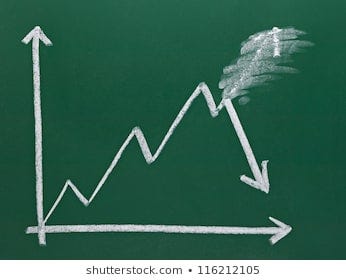
In other words, society nowadays, tends to gauge the success of an individual through their business accomplishments and will use this as a significant measure to determine whether he or she will be a good leader moving forward.
It is my position, and others may or may not agree, that a good business person; someone who has successfully built up market share, reduced costs, increased dividends, been innovative in the launching of new products or minimally getting existing ones more widely distributed into new markets, may actually not be someone that an individual would want to follow at all, if their paycheck was not on the line.
Being an excellent business executive does not automatically qualify that person as a good leader of people, when it comes to the management of a nation or any part of it.
These two “kingdoms” are sufficiently different in my opinion to make them incompatible at times.
While there are certainly defining similarities between an executive and a leader, there are sufficient differences to warrant a selection process that takes these differences into account.
In other words, many leaders have been borne out of the executive experience and have gone on to do great things. Many more have tried and failed, because they, for whatever reason, could not make the connection between their intentions and the people who were chosen to carry it out, or their desires and those of the people who they were now being held responsible for.

People don’t mind being led. It happens every day across the globe. It’s what greases the wheels of industry and civilization. Not everyone likes it. Not everyone gives into it easily, but if the leadership is sound and sane, then those doing the following are apt to not object. Why would they?
Business executives are driven my profit. They are guided by principles that clearly state, profit first, people second, because in their philosophy that is how it has been and that is what works best within the business environment. If someone hired too many people during better times and now need to reduce them by 30%, then the decision is straightforward, notwithstanding the loss of incomes to families.
While this continuing process of growth and reduction may work within the corporate world, it tends to grate heavily in the public sector where people are fighting to be treated as people and not as statistics. They don’t want to be important during one fiscal year and not so much the next.
Consistency of intention, communication and results are key to gaining the confidence of the people and essential in making that one person — a leader.
A person moving out of the corporate world where the hierarchy is that of a dictatorship, may have difficulties executing public policy, using the same skillset.
“The pessimist complains about the wind. The optimist expects it to change. The leader adjusts the sails.” -John Maxwell
So, what makes a leader?
Giving an order is easy. Figuring out what the order should be, is a little more difficult, but still on the easy side of management. Determining what the objective is that would require that order and a number of others, even more complicated. The higher you move up the organizational chart, the closer you get to the Goals of that organization, city or country, and by that action alone, you are now incorporating the individual goals of the populace into your decision making. This creates a whole new dynamic that I believe leads to be the undoing of many erstwhile chief executives.
They are no longer calling the shots and expecting those beneath them to snap to — simply because that’s the way it has always been. The intentions, lives, goals and general well-being of the people need to be taken into account and this new collection of factors makes the leadership role that much more layered and complex.

This period of transition is critical in bringing that executive up to the level of leader — and by default we are talking about a good or even great leader. Not merely some caretaker who is keeping the seat behind the desk warm, until an actual leader shows up.
ASSUMPTION OF LEADERSHIP QUALITIES
People, those who every day of their lives are at the effect of leaders, are in a way, desperate to determine what makes a good leader, so that when it comes time to vote, they have some sustaining confidence that this act will bring about change.
As a result, they look to what they see and hear and know: They look to their past experiences for guidance. How have these prior experience with executives informed their eventual decision?
Even though they may not have any personal experience with the candidate, they at least can relate to what he or she did and use this as a basis for casting their vote.
A similar corollary of sorts enters this as well. Since cities, states and countries are guided by law then those well-schooled in them — lawyers — should make good leaders as well, right? The same reasons for the success and failure of this formula applies. A skilled lawyer is an advocate for a single client and is often motivated by the challenge to defend them successfully and indeed, incentivized to do the same as well. Thus, a different dynamic, but one that can transition to leadership — just don’t assume it’s automatic.
Leadership is all about confidence. Whether you are a soldier being ordered to charge the hill and fight the enemy, or trust the decision to reduce wages for a period of six months, to help bring the company back to health, you are relying on what you see and hear in that person to take the next step on your own volition.
Without confidence, you’ll have serious doubts about their menu selection, let alone the direction they are taking your economy.
Leadership Qualities
Competence
Compassion
Courage
Reason
There are no doubt others, but a leader that manifests confidence and backs it with a burning determination to make things right while demonstrating an uncanny knowledge of the situation and the inevitable outcome of their conviction, makes those following them at least breathe a little more easily in their day-to-day lives.
Leaders are not perfect. They do not look like any one type of person. They are not all male or female. They may not even be very likable. But their actions will inevitably determine their effectiveness and how they are viewed by others. Their actions and how they respond to crises around them and how they deal with their impact on people, will ultimately label them a leader or someone who just showed up for the job.
“To handle yourself, use your head; to handle others, use your heart.” — Eleanor Roosevelt.
Joe Luca is writer and editor for ILLUMINATION and a published author and writer of children’s stories, short fiction, non-fiction articles, screenplays and poetry. Publications include Child’s Life, Children’s Playmate and others. There are some other articles below — have a read. And thank you for stopping by.