
The Magic of Political Surveys
You can believe them if you want …But here’s why I don’t

So, did you cast your vote in the last election based on political surveys? Did they influence you at all?
Do you still believe in them?
I distrust political surveys for a specific reason that I will get to shortly. But for similar reasons I distrust most political commentators as well. They are frequently biased and are selling one side or another. Watch 30 minutes of FOX News or CNN and listen to all 14 members of the panel volley their opinions back and forth, and then ask yourself, do you feel well-informed on the issue or on their opinions?
What’s missing is the whole process of vetting that information.
In the days before the Internet, Television was a major source of information. TV News personalities were respected, listened to and believed, above most people, including those they reported on. Edward J Murrow, Walter Cronkite and others were the gatekeepers of information that most Americans had zero access to.
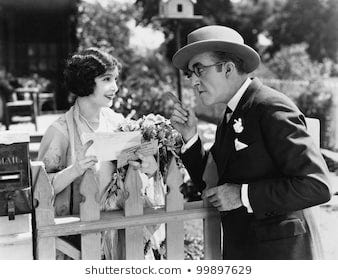
Without them, we simply didn’t know. Or knew too late, after the information trickled down to local news outlets or over your neighbor’s fence.
Sitting at home, we weren’t privy to the latest problems and concerns two blocks from our house, let alone in Washington, DC. We relied on these reporters to tell us what was happening in America, in our home towns and streets and once in a while, the rest of the world.
We trusted them. Not just because of who they were, but because of what they were supposed to be doing behind the scenes. Making sure the information was vetted, accurate and worth passing on.
Lookalike facts and lookalike truths that are fuzzy information masquerading as the real thing — for a reason.
That trust in personalities has carried over into more modern times — that is, after the Internet came into existence. When someone comes on the TV in Ads or editorials or into our lives via videos and YouTube, if they look and dress like professionals, if they speak clearly and use the same kind of language used in the past, then we tend to believe them at face value. Not all the time, but enough, to make problems for all of us.
What’s missing is the whole process of vetting that information. We assume it’s being done. We assume we’re getting correct data. We assume these personalities are principled and believe they are providing a public service. But are they? Do we know for a fact either way?
Times have changed. Fact checking is done by some, but compared to the tens of millions of articles, stories, anecdotes that are on the Web, probably 1/1000th of 1% of the information has been filtered in any way.
But much of it looks like it has. Therein lies my biggest concern. Lookalike facts and lookalike truths that are fuzzy information masquerading as the real thing — for a reason.
So, why are there political surveys?
When kings and queens ruled the world — who needed to know what their citizens/subjects were thinking. There wasn’t a whole lot of give and take.
But when democracy came into fashion and “rulers” were elected, knowing in advance how the guys down at the Pub were thinking became important. In America, this game of hide and seek apparently started during the Andrew Jackson and John Quincy Adams election in 1824.
Did they get it right? Not really, but did it matter?
I believe that knowing what the citizenry is thinking is only half the function of a political survey, the other half is being able to influence the voters with the results.
When someone like the Gallop Poll gets a sampling of 632 average voters (made up number based on reading past articles on surveys) and asks them a series of questions about the upcoming election, I personally have serious doubts about the accuracy of anything coming out of that survey.
In America there are over 209,000,000 people over the age of 18 who are eligible to vote. A sampling of 632 or 1018, in my opinion is simply not enough to accurately predict what car people will buy, let alone the outcome of a national election.
I have driven with people in my car to a restaurant and chatted about what to order along the way, only to find that NO ONE ordered what they said they would. They saw the specials when they got there; they thought about the last they ordered the carnitas and got heartburn … anything can change their minds.
I have watched home sales shows on TV, where the couple was absolutely positively going to move and then decided to stay in their home, because in their hearts …
We’re human, we change our minds. But more importantly for the purposes of a survey, we react to the questions themselves depending on how they are asked, (the wording), the time of day, the mood we are in.
Surveys therefore serve two functions:
First, they try to let someone know what others are thinking about them or their ideas.
Second, intentionally or unintentionally they influence other voters through the information they provide. Please keep in mind that all this information comes from the accumulated Opinions of the respondents.
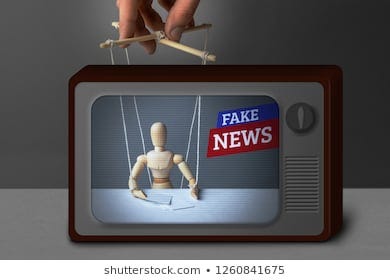
We are in a time of Fake News, False News, I Never Said That News, and every permutation known to man.
If you’re racing to get to the Polls and the radio newscaster talks about the latest survey that shows your candidate has fallen behind by 70/30, you might detour to the donut shop and head back home. Especially, if he failed to mention that only 8% of the polls had been counted.
If you’re thinking that the author sounds a little jaded about our political process, please let me shed a little light on that.
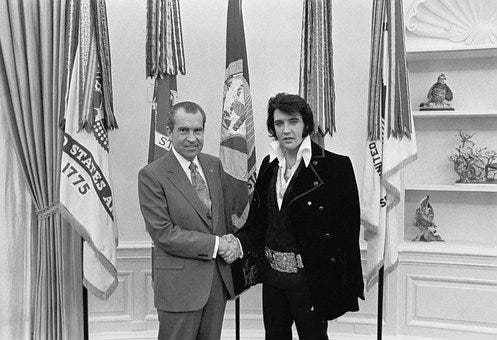
I am of the Nixon … I am not a Crook, period of time, when it was proven beyond a doubt, that he actually was a crook. I am of a time when said crook, Nixon, got immediately pardoned by the new President Ford.
I am of the time when Vietnam was on nightly television, when we got the stats on the wounded and the dead Americans, like baseball scores, and were being told by every president involved, that it was a just war, and one we were winning. Only to find out … not so much.
I am of the time of the Pentagon Papers, secret testing on American soldiers, Weapons of Mass Destruction being horded, all the way to — Who won the election last night?
But all this really says, is that I have taken notice. And I ask that you do the same.
Don’t let any political ad, political survey or political person influence you or your vote. While it is harder to determine the truth today, it is still possible. We unfortunately cannot rely 100% on the News personalities as we once could (pretty much) but there are still a great many reliable sources out there and people who take public trust to heart.
Just saying, keep it real. Listen carefully. Read between the lines … always. Protect your vote.
Joe Luca is writer and editor for ILLUMINATION and a published author and writer of children’s stories, short fiction, non-fiction articles, screenplays and poetry. Publications include Child’s Life, Children’s Playmate and others. There are some other articles below — have a read. And thank you for stopping by.