
Expletive Deleted
A Brief History of the F-word and Our Love Affair with it.
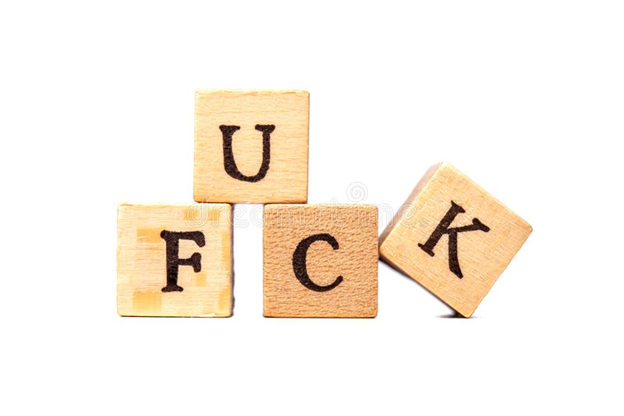
During a recent moment of equanimity, when the trees and flowers all merged effortlessly with a soft breeze whistling through the branches, and as my mind cleared itself of extraneous worries and upsets that had piled up over the days of isolation and continued stress, I had this clear and distinct recollection of the first time I heard the word F**k.
It was one of my earliest memories of Brooklyn, as I watched from my stroller, my dad was putting up a framed pictured on the living room wall. Hammer in hand, his mouth filled with small nails (never understood that) while he carefully aimed a hammer and … there it was.
A rather brilliant sound that echoed throughout the house and an important one too I discovered, for my mother came rushing into the room, and as an apparent sign of solidarity, cried out, What the f**k are you yelling about.
And there my friends, was my introduction to one of the most versatile words in the English language. And one that I am not ashamed to say, I have never stopped using.

So, where the F**k — did F**k come from?
There is no clear etymological trail for the word F**k. It’s most likely from words of German, Dutch or Swedish origin, meaning, “to strike,” or “to move back and forth.” Or as attributed by some, to a very Old Norse text meaning, to hit repeatedly with a sled.
Finding the true source of the word, seems irrelevant at this stage. It has become a mainstay, not only in the English language, but in every written and spoken language in the world — give or take.
But I have to admit it does sound better and more emphatic in English.
F**k it, as an example, has a certain classic ring to it, that sums up an entire week’s worth of frustration and anger, and lets go of it all, with two words. You can’t beat that for efficiency.
Plus, if you said it otherwise like this: Fjandinn, which is Icelandic for the same phrase, it loses something in the translation.
The quintessential brilliance of the word, and I think it fair to say, that no other word comes even close to being as useful, is its flexibility in being used as a verb (transitive and intransitive), a noun, an adjective, an adverb (with a little finesse) and as a key member in numerous phrases that have that certain, je ne sais quoi , that simply would not exist without the use of this versatile four letter word.
But why do we use it?
I would venture a guess that F**k has come into greater use over the centuries because it is hands down the best cuss word ever invented. Other words have been used and discarded because they just didn’t have the same pizzazz that this little four-lettered gem did.
Seriously, can you see yourself, crashing through the ceiling, while trying to store away that fake Christmas tree in the attic and shouting out — Dagnabbit? I didn’t think so.
Or for those overseas, putting your Range Rover into reverse instead of drive, while exiting the garage, and plowing through the living room wall, missing the TV but catching old Rufus unawares, and screaming — Dash it All! Right. I thought not.

But, if you had the moment, the opportunity, and the pent up anger after being stuck in traffic for 2 hours and found the need to roll down the window and express your true feelings — shouting out our little friend at 87 decibels just has a certain sense of finality to it. A release, not quite on the order of an orgasm or a photo finish at the Daytona 500, but darn near close.
And as noted, the word is as useful as a salt shaker or a bottle of ketchup. It can be used damn near everywhere.
F**k off - F**k me - F**k up - F**k knows - on and on. The list is endless.
But perhaps most important, the word has been used so many times over the years, in so many different and unique situations, that most people, with some exceptions, believe this word to be as acceptable as “the” or “and” or “perpendicular.”
Most won’t blush or get angry, and even if they don’t particularly like using it themselves, understand that as far as clarity of speech goes or the invaluable role it plays as a fill-in word, when you can’t think of the right one to use, will move on with the conversation without a moment’s hesitation.
I, myself believe that F**k should be moved out of the role of an expletive, because it’s usefulness far outweighs any pejorative effect it may have once had. It’s earned its place rightful among other frequently used and universally accepted words, like: Amazing, awesome, fantastic and far out.
Imagine what our language would be like if we had another 50 or 100 words just like this one? Single words speaking volumes in one syllable, and shortening the time it takes to communicate an idea or concept to anyone!
Fuckin’ A. The possibilities are endless.


